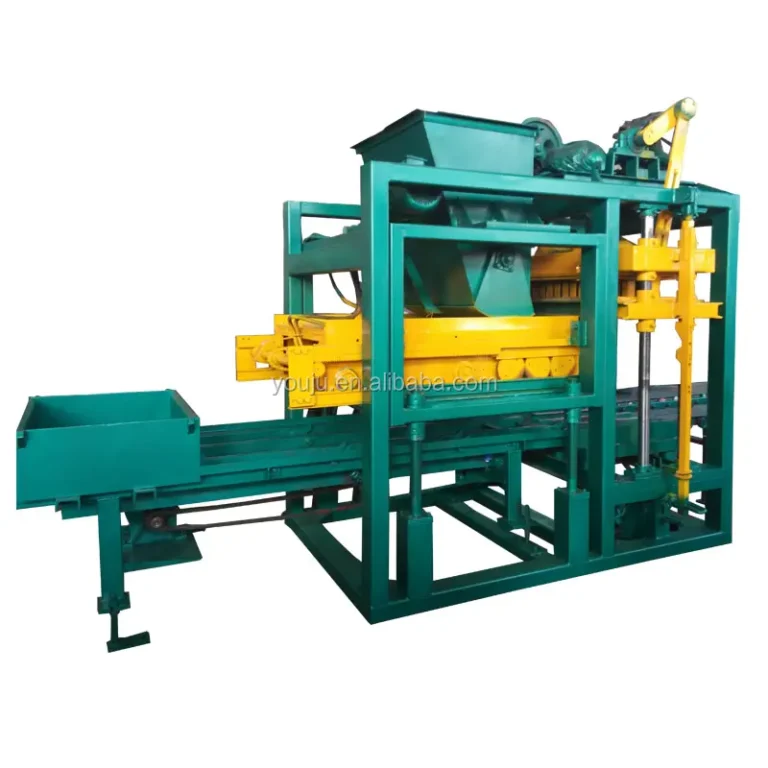
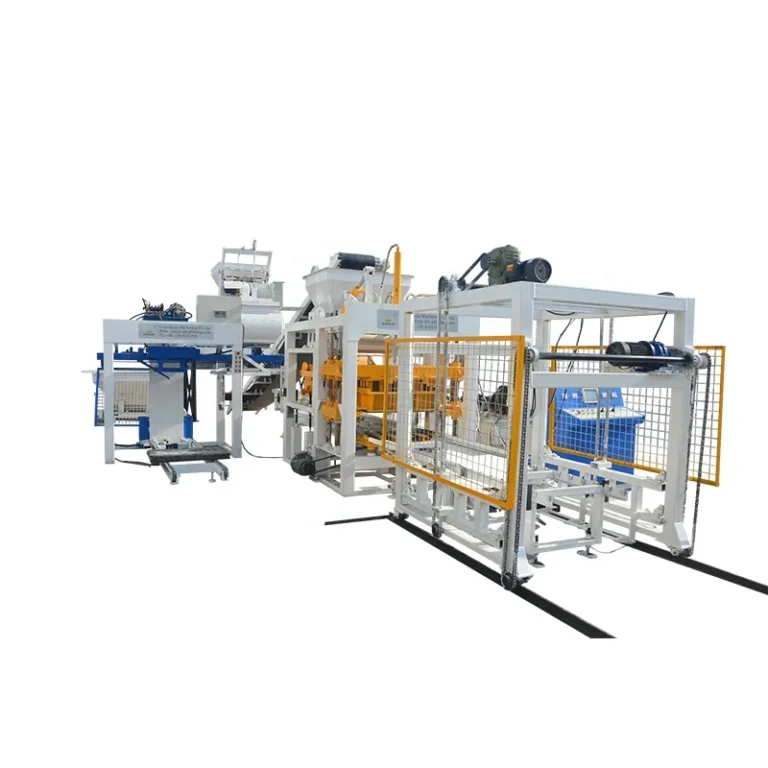
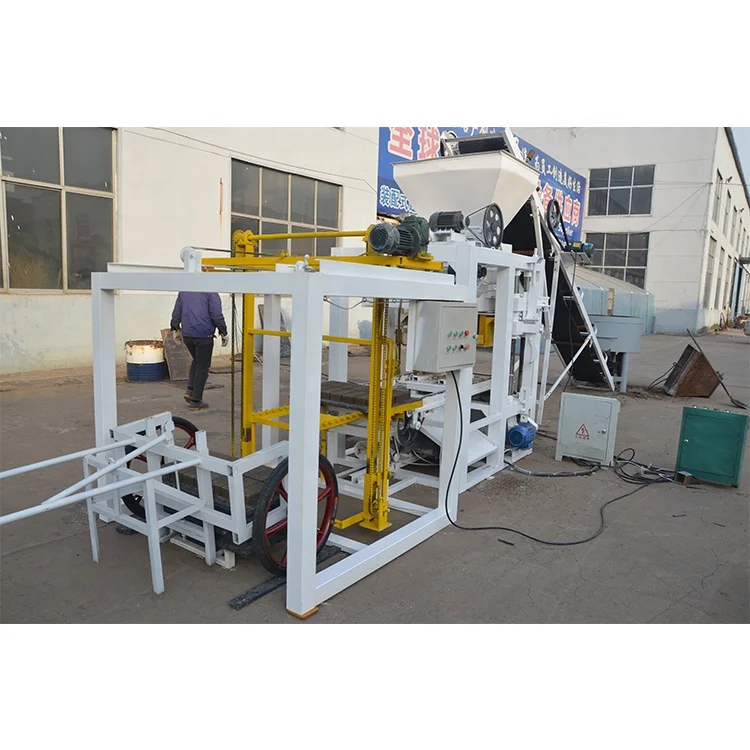
Matched System Sizing — every QTJ4-24 block machine manufacturer proposal we issue ties pallet size, vibration force and spiral feeder to your actual block format, so the 24–26 s cycle reflects a named product, not a catalogue guess.
Technical Specifications
| Parameter |
Value |
| Model |
QTJ4-24 |
| Product Type |
Stationary Block Making Machine |
| Molding Method |
Mechanical (integrated pressure + vibration) |
| Overall Dimensions (L×W×H) |
3600 × 1700 × 2560 mm |
| Pallet Size |
850 × 450 mm |
| Molding Cycle |
24–26 s (basis not stated in source — confirm block format / material / thickness) |
| Overall Power |
11.95 kW |
| Vibration Force |
45 kN (2×3 kW lower + 2×1.5 kW upper vibrators) |
| Total Mass |
2 T |
| Material Feeding |
Full-automatic spiral distribution |
| Reducer for Mold Lifting |
350-type |
| Raw Materials |
Cement, sand, stone |
| Automation Level |
Semi-automatic (automatic spiral feeding; pallet handling not stated) |
| Mould Format Range |
Interlocking, paving, hollow, solid |
| Voltage & Frequency |
Not stated — confirm before commissioning |
| Control System |
Not stated — confirm PLC / MCC / manual before dispatch |
| Warranty |
1 year for the whole machine (excluding spare parts) |
Application Suitability
| Application |
Material or Output |
| Interlocking brick production for driveway and landscape projects |
Cement + crushed stone + sand blend, 850×450 mm pallet |
| Hollow block production for non-load-bearing walls |
Cement + river sand + fine aggregate, 24–26 s cycle per format confirmation |
| Paving block production for pedestrian zones |
Cement + granite dust + sand, mechanical pressure + 45 kN vibration |
| Solid brick production for boundary walls |
Cement + quarry dust + stone dust, spiral-fed uniform distribution |
Why the 24–26 s Cycle Tells Only Part of the Story
A molding cycle is meaningless without the block format and pallet load it assumes.
Many stationary block making machine for sale listings quote a single cycle time and let the buyer multiply it into a daily output figure. In practice, a hollow block, a paving brick and an interlocking block each demand different vibration duration, feed depth and compaction stroke on the same QTJ4-24 stationary block machine. I once watched a plant owner in Southeast Asia size his curing racks based on a paving-block cycle, only to discover his hollow block cycle ran considerably longer and his daily pallet turns fell far short of the layout he had approved [NEED_CITE: block cycle variation by format and mix design]. When the daily output is calculated per format and written into the line layout before dispatch, surprises at commissioning disappear.

Where the QTJ4-24 Sits in the Full Stationary Range
The QTJ4-24 block machine manufacturer lineup spans from small workshop units up through high-capacity hydraulic presses. This model occupies the lower-investment mechanical tier, making it an entry point for entrepreneurs and on-site contractors who need interlocking, paving, hollow or solid formats without committing to a fully automatic stacking line. Buyers planning to scale later can start here and migrate to hydraulic tiers when demand justifies the upgrade.
What the Mechanical Molding Method Means for Your Plant
Mechanical pressure combined with super vibration keeps the overall power envelope at 11.95 kW, which matters when your site supply is a shared transformer or a diesel generator set. The QTJ4-24 stationary block making machine does not require a dedicated high-pressure hydraulic circuit, so maintenance complexity stays low and wear parts concentrate on the vibrator bearings, mold springs and spiral feeder bushings [NEED_CITE: mechanical vs hydraulic block press maintenance scope]. For a first block plant with limited technical staff, that simplicity translates directly into uptime.
Reading the Specs That Actually Affect Block Quality
The 45 kN vibration force comes from four motors — two 3 kW units below the table and two 1.5 kW units above the mold. Upper vibration compacts the face mix and sharpens edge definition, while lower vibration settles the body. If your local sand carries high silt content, as I have seen repeatedly in Southeast Asian river sand, the upper vibrators cannot compensate for poor grading; the mix must be adjusted first. The 350-type reducer on the mold lifting mechanism is sized to handle repeated daily cycling without premature gear wear. The 850 × 450 mm pallet governs how many blocks you produce per cycle and must match the curing rack spacing and forklift tine width you already have on site.
The Hidden Cost of Skipping Pallet and Voltage Confirmation
Pallet size and material affect every downstream step. A pallet chosen without regard to your curing area means workers reshuffle stacks by hand before the concrete gains strength. Voltage and control language confirmed after shipment delays commissioning by weeks while panels are rewired or operators struggle with unfamiliar HMI text. I have seen plants sit idle because the frequency mismatch tripped the motor overload on the first test run [NEED_CITE: voltage and frequency standards by export market]. These issues cost nothing to resolve before the machine ships and everything to fix afterward.
Why Source the QTJ4-24 From This Manufacturer
Block machinery is our single focus, which means the QTJ4-24 stationary block making machine ships with mold, pallet and feeder specified as one matched system rather than assembled from unrelated suppliers. We set the configuration against your local aggregate and target block format, not a catalogue default. Custom mold design follows your drawings when the standard format list does not cover your market. Automation level is selectable so you can begin semi-automatic and add pallet handling later. Installation support includes operator training on your specific mix and format sequence.
Documentation & Verification
- Line layout with capacity calculation stating the block format assumed for the 24–26 s cycle
- Machine specification sheet matching the 850 × 450 mm pallet to your curing rack dimensions
- Mold drawing and format list covering interlocking, paving, hollow and solid options
- Voltage, frequency and control language confirmation record before dispatch
- Factory test record on your target block format and local material sample
- Operation and maintenance manual with wear parts list for spiral feeder and vibrator bearings
Installation, Commissioning & Support
- Foundation pad leveled to suit the 3600 × 1700 mm footprint with anchor bolt template provided
- Dedicated circuit sized for the 11.95 kW total load plus motor starting surge
- Machine shipped assembled with mold and feeder attached; on-site alignment of vibration table required
- First-run parameter setting for spiral feed rate and vibration duration matched to your mix
- Operator training on mold change procedure using the 350-type reducer lifting mechanism
- Wear parts schedule for vibrator bearings and spiral bushings based on daily cycle count
Before You Request a Quote
Tell us which block format your market sells most — interlocking, paving, hollow or solid — and the daily volume you need to sustain. Share your local aggregate source, cement grade and any silt or clay concerns. Confirm your site voltage, frequency and the language your operators read on a control panel. If you already have curing racks and a forklift, give us the pallet dimensions they accept so the 850 × 450 mm pallet either matches or is adapted before the QTJ4-24 block machine manufacturer builds your unit.
Frequently Asked Questions
Q: How is the 24–26 s molding cycle converted into realistic daily output per block format?
A: Each format — hollow, solid, paving or interlocking — requires a different feed depth, vibration duration and compaction stroke on the QTJ4-24 stationary block making machine. We calculate daily output per format based on pallet load, shift hours and curing cycle, then write those numbers into the line layout so your capacity plan reflects the actual block you will produce.
Q: Which automation level does the QTJ4-24 provide compared to fully automatic tiers?
A: The QTJ4-24 operates semi-automatic with full-automatic spiral material distribution, while pallet handling and stacking remain manual unless you add downstream modules. Fully automatic tiers add pallet feeding, stacking and cubing to remove manual labor. Starting here keeps investment low and leaves an upgrade path open.
Q: What pallet size, curing area and forklift are required to match this machine?
A: The machine uses 850 × 450 mm pallets. Your curing racks must accept that dimension with spacing for air circulation, and your forklift tine width must clear the pallet runners. Confirming these measurements before shipment avoids reshuffling blocks by hand during the critical early curing hours.
Q: Which block formats and molds are available, and how long does mold change take?
A: Standard molds cover interlocking, paving, hollow and solid bricks. Custom molds follow buyer drawings. Mold change involves lifting the assembly via the 350-type reducer and swapping the mold box. Exact change time depends on operator familiarity and is addressed during on-site training.

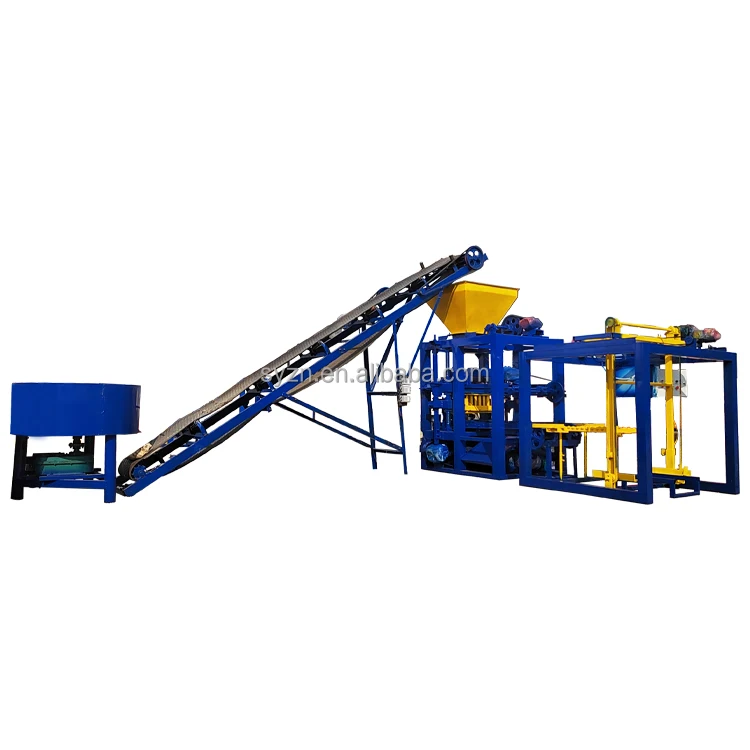
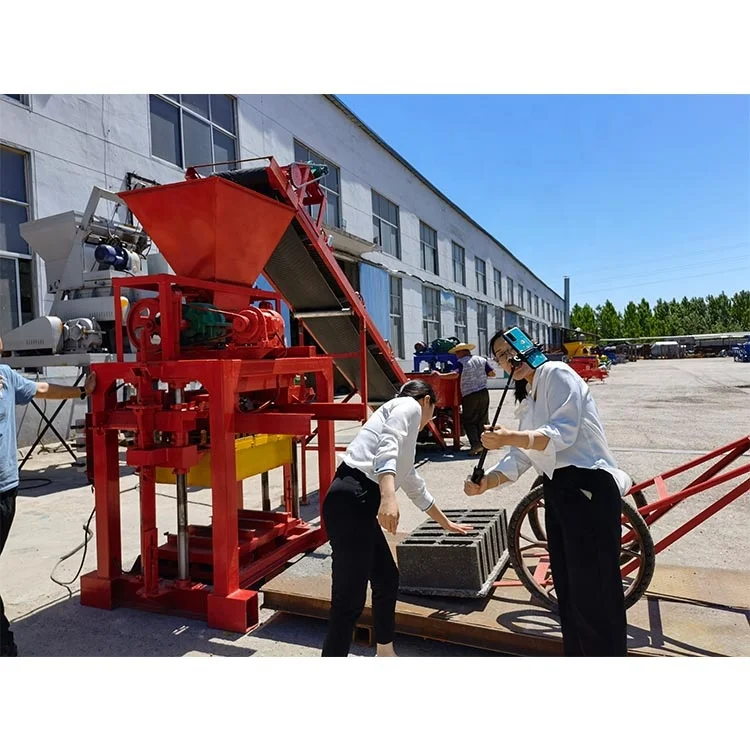 Stationary block machine