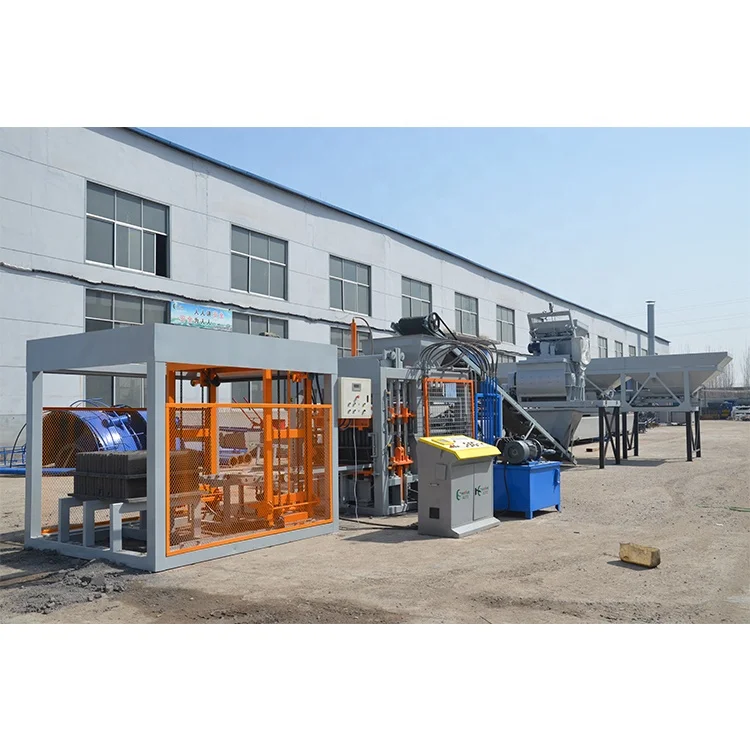
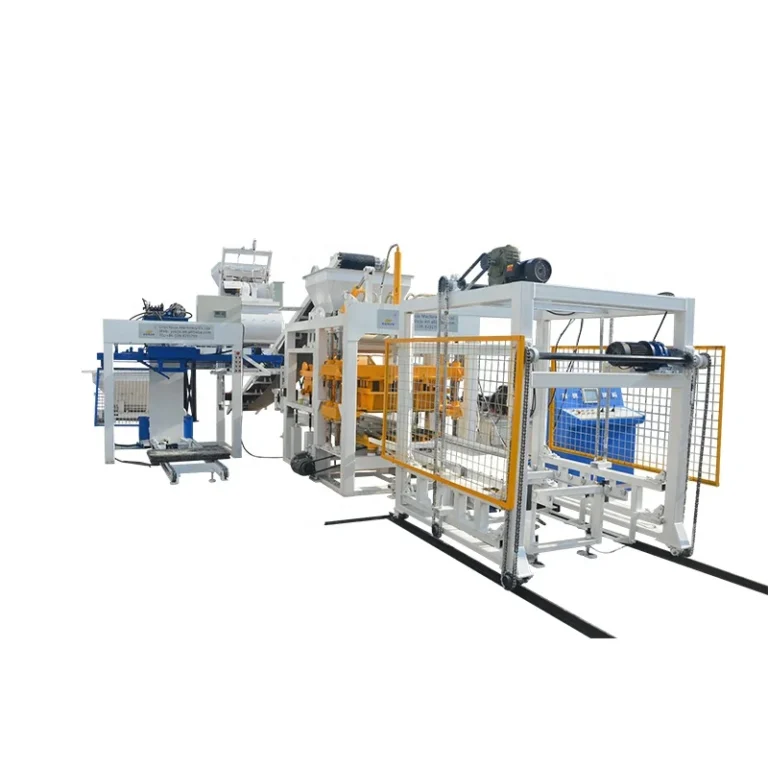
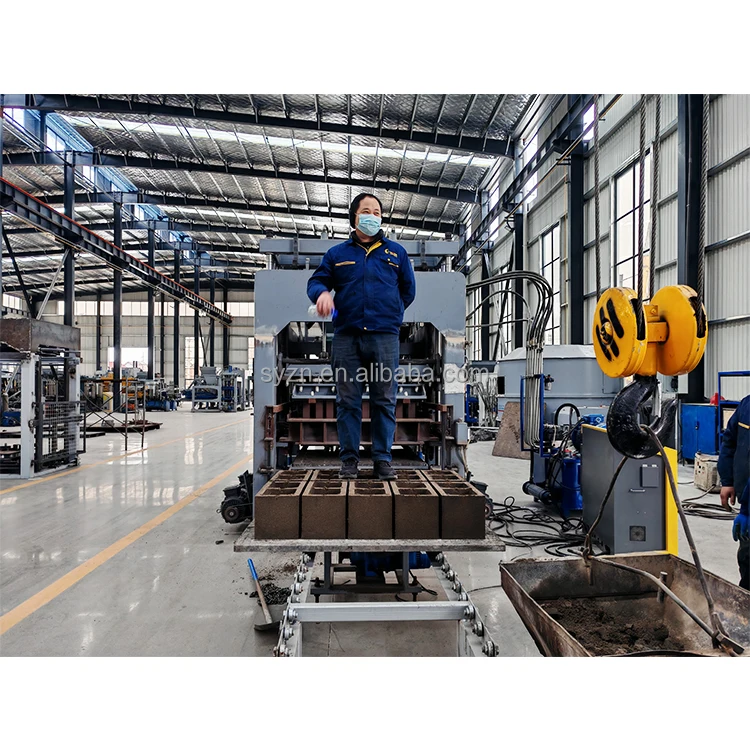
Matched system specification — The QTJ4-25 is positioned within our stationary range so the press, mould, pallet and mixer arrive as one verified line rather than a collection of separate purchases.
Technical Specifications
| Parameter |
Value |
| Model |
QTJ4-25 |
| Product Type |
Automatic Hydraulic Concrete Block Making Machine |
| Rated Power |
17.9 kW |
| Overall Dimensions (L×W×H) |
6400×1500×2700 mm |
| Net Weight |
2500 kg |
| Moulding Cycle |
25 s |
| Output Capacity |
960 pcs/h based on 400×200×200 mm hollow block, 4 pcs/mould |
| Daily Output |
7680 pcs/day based on 400×200×200 mm hollow block |
| Pallet Size |
850×550×20 mm |
| Vibration Frequency |
2800 r/min |
| Vibration Force |
60 kN |
| Hydraulic System |
High-pressure hydraulic station |
| Control System |
PLC |
| Configuration Supplied |
Host machine 1 set, block mould 1 set, JQ350 mixer |
| Automation Level |
Semi-automatic |
| Stacking Method |
Manual pallet handling and trolley transfer |
| Block Formats Supported |
Hollow, solid, paver, kerbstone (standard 8", 6", 5", 4" sizes; custom on request) |
Application Suitability
| Application |
Material or Output |
| Small to medium concrete block plant |
Hollow and solid blocks from crushed stone, sand and cement |
| Paving block production for local infrastructure |
Interlocking pavers and kerbstones from fine aggregate mixes |
| On-site housing project supply |
Hollow blocks produced locally to reduce transport cost |
| First block plant for entrepreneurs |
Semi-automatic line with room to add automation stages later |
What the "960 Pieces per Hour" Figure Actually Means
Capacity only matters when the block format behind the number is named.
Many quotations list a cycle speed or hourly output without stating which block size that figure assumes. A QTJ4-25 automatic hydraulic block making machine manufacturer quoting 960 pieces per hour is referencing a 400×200×200 mm hollow block at four pieces per mould. Switch to a smaller solid block or a paving format and the pieces-per-cycle count changes, which means daily totals shift accordingly. I have walked onto sites where the owner expected a certain daily volume, only to find the quoted capacity assumed a format they never planned to sell [NEED_CITE: block format assumptions in capacity quotations]. Stating the format up front keeps your production target honest before the machine ships.

Where the QTJ4-25 Sits in the Stationary Range
The QTJ4-25 occupies the semi-automatic tier of our stationary block machine lineup, aimed at buyers moving beyond a manual workshop setup toward a structured small plant. It bridges the gap between mobile egg-laying machines, which need no fixed foundation but limit format variety, and fully automatic lines with integrated stacking and cubing. For a buyer surveying options for a first or replacement machine, this model provides hydraulic pressure and PLC control without the footprint and investment of a high-capacity automatic press.
Semi-Automatic Means You Choose Where to Add Labour
Semi-automatic operation on the QTJ4-25 means the press cycle, vibration and hydraulic compression run under PLC control, while pallet feeding, block removal and stacking remain manual tasks. This configuration keeps the initial investment contained and lets you add automatic pallet feeders or stackers later as demand grows. The key is understanding which stations require operators from day one so you can plan labour and floor space before the machine arrives [NEED_CITE: automation upgrade paths for semi-automatic block lines].
Reading the Specs That Shape Daily Output
The 60 kN vibration force works together with the hydraulic station to compress the mix into a dense block; vibration alone settles the aggregate, but hydraulic pressure locks it into shape before curing begins. The 850×550×20 mm pallet size determines how many blocks sit on each board and how those boards stack in your curing area — order pallets that match your existing forklift and rack dimensions, not a generic default. At 25 seconds per moulding cycle, the press itself is fast enough for a small plant, but the real bottleneck is often how quickly operators move finished pallets away and feed empty ones back in.
The Hidden Cost of Skipping the Pallet Conversation
When pallet size and material are chosen without checking the curing area or the forklift already on site, the result is a pile of boards that do not fit the racks and a handling system that slows the entire line. I have seen plants where the press ran fine but operators spent half the shift rearranging pallets by hand because the dimensions did not match the curing shelves [NEED_CITE: pallet handling mismatches in block production]. That lost time is never reflected in the hourly capacity figure on the quotation.
Why Source the QTJ4-25 Through This Range
Block machinery is our single focus, which means the QTJ4-25 press, its mould, the pallet specification and the JQ350 mixer are configured as one matched system rather than assembled from separate suppliers. We set the vibration and hydraulic parameters against your actual mix design and local aggregate, not a catalogue default. Mould design covers the formats your market sells, including custom drawings for non-standard sizes. Automation level is selectable, so a buyer can start with the semi-automatic configuration and plan an upgrade path without replacing the press.
Documentation & Verification
- Line layout showing the QTJ4-25 footprint with pallet flow and curing area marked
- Capacity calculation sheet stating 400×200×200 mm hollow block as the basis for output figures
- Mould drawing and format list covering hollow, solid, paver and kerbstone options
- Pallet specification matched to your curing rack dimensions and forklift capacity
- Voltage, frequency and PLC display language confirmed before production begins
- Factory test record on your selected block format before dispatch
Installation, Commissioning & Support
- Foundation plan sized to the 6400×1500 mm footprint with anchor bolt positions marked
- Dedicated power circuit for the 17.9 kW rated load with correct voltage and frequency verified
- Machine arrives as a single host unit with mould and JQ350 mixer for straightforward unloading
- On-site commissioning includes vibration force and hydraulic pressure tuning to your mix
- Operator training covers PLC operation, mould change procedure and daily maintenance routines
- Wear parts list and mould inventory sheet provided for first-year planning
Before You Request a Quote
Tell us the block formats your market actually sells, the daily volume you need to hit, and the raw materials available locally — including aggregate type and moisture range. Share your workshop dimensions and curing area layout so we can confirm the 850×550 mm pallet will work with your existing space. Let us know the voltage and frequency at your site and the language you need on the PLC display so the QTJ4-25 automatic hydraulic block making machine manufacturer configures everything correctly before production starts.
Frequently Asked Questions
Q: How is the QTJ4-25 capacity calculated and what block format does the 960 pcs/h figure assume?
A: The 960 pieces per hour figure is based on producing 400×200×200 mm hollow blocks at four pieces per mould with a 25-second cycle. If your target format is a different size, the pieces per mould and cycle time will change, so we provide a separate capacity calculation for each block type you plan to produce.
Q: Where does the QTJ4-25 sit within the full stationary block machine range?
A: It sits in the semi-automatic tier, above mobile egg-laying machines and below fully automatic lines with integrated stacking. It is aimed at buyers setting up a structured small plant who want hydraulic pressure and PLC control without the investment of a high-capacity automatic system.
Q: What voltage, frequency and PLC language options are confirmed before shipment?
A: We confirm your site voltage, frequency and preferred PLC display language during the order stage and document them on the specification sheet before production begins. This prevents commissioning delays caused by electrical mismatches after the machine arrives.
Q: Which block formats and moulds are included with the QTJ4-25?
A: One block mould set is supplied with the host machine, and you can specify hollow, solid, paver or kerbstone formats in standard 8-inch, 6-inch, 5-inch and 4-inch sizes. Custom mould sizes are available on request with drawings provided for your approval.
Q: What supporting equipment comes with the machine and what must be sourced separately?
A: The configuration includes the QTJ4-25 host machine, one block mould set and a JQ350 mixer. Pallets, trolleys and curing racks are specified separately so they can be matched to your existing handling equipment and workshop layout.

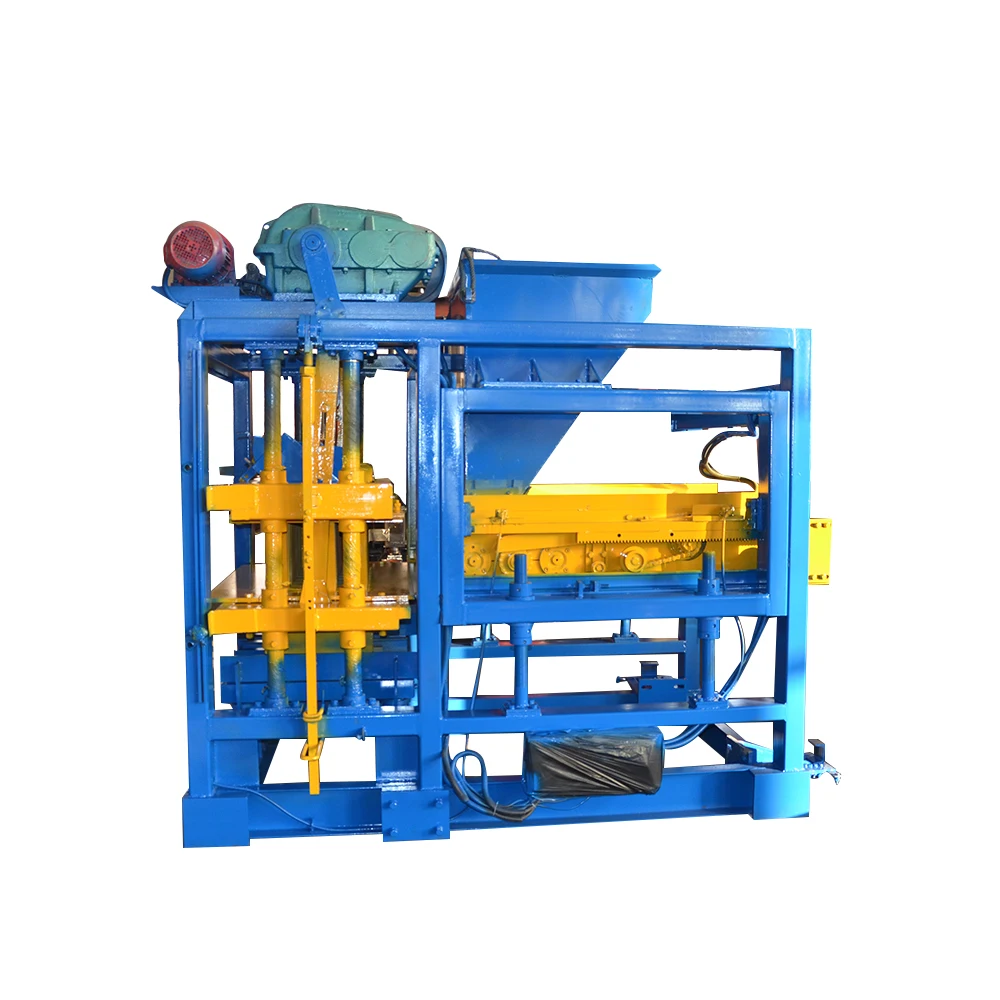
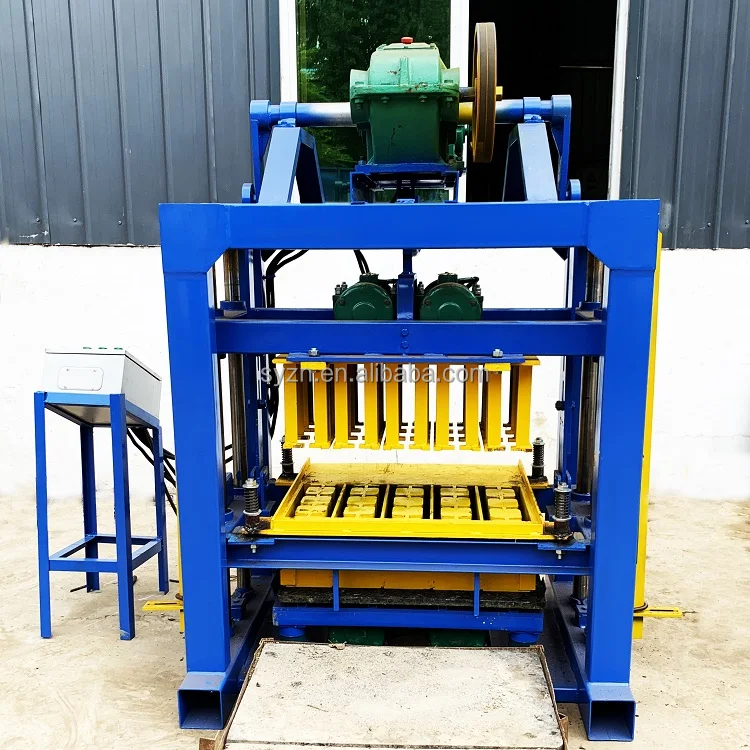 Stationary block machine