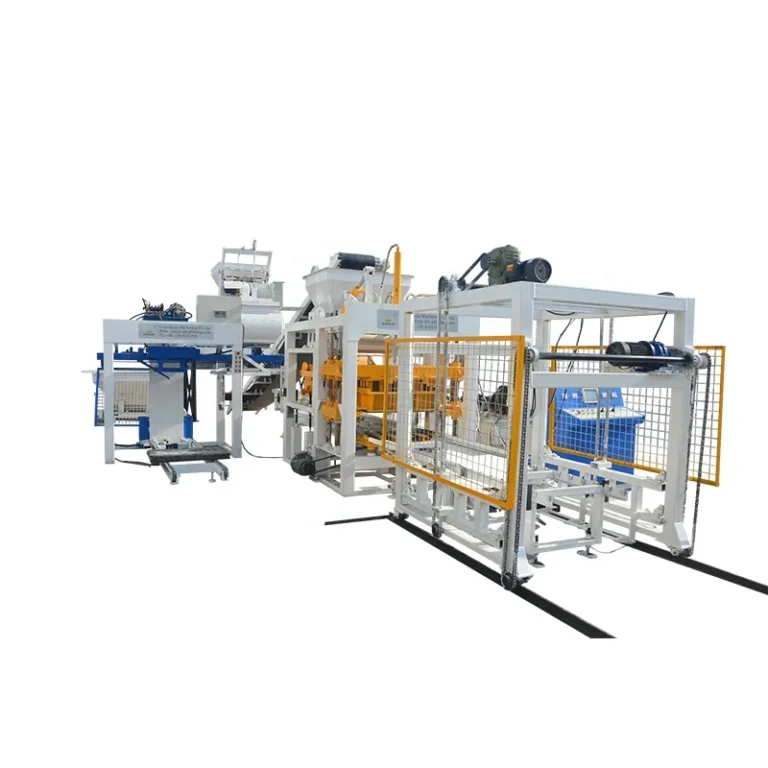
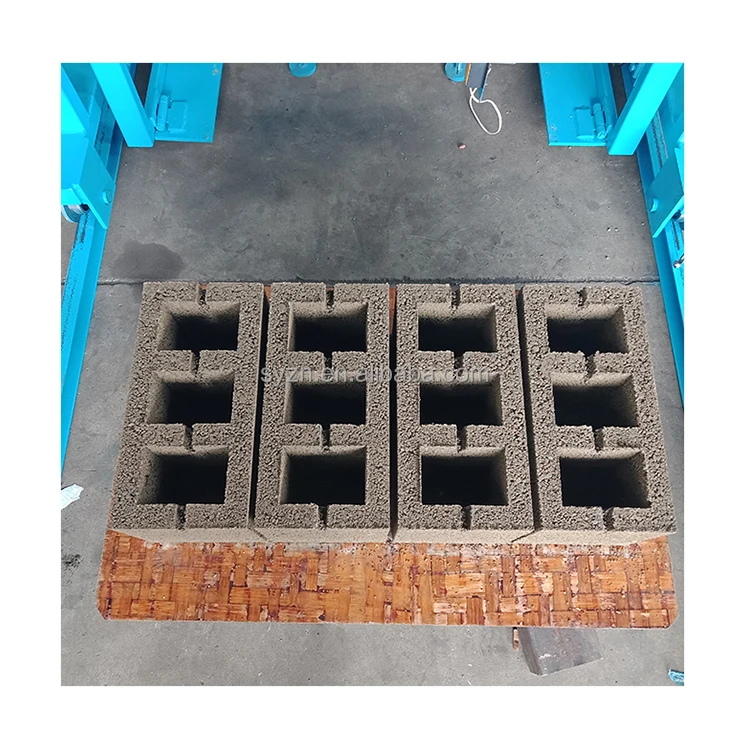
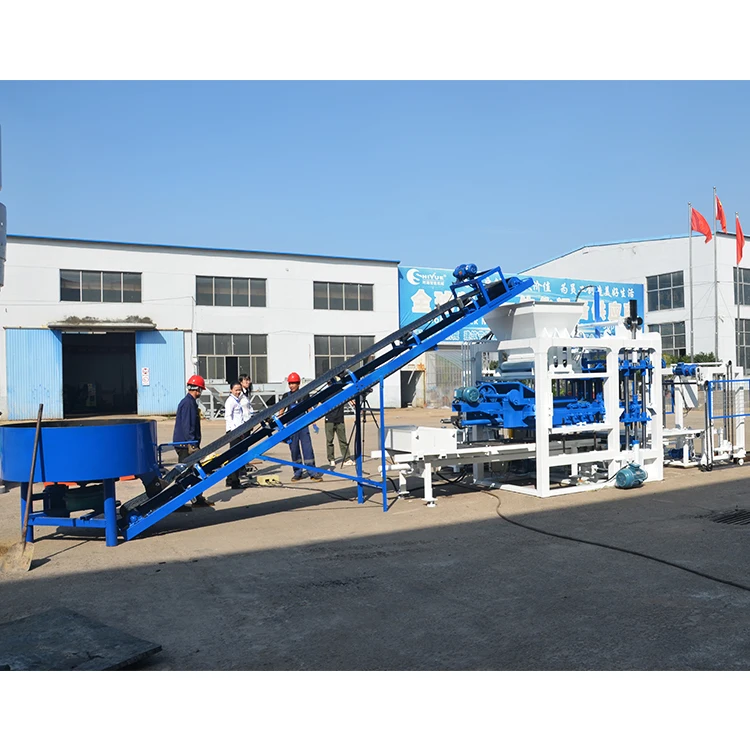
Mechanical press with matched vibration — the QTJ4-24 uses a 45 kN dual upper-lower vibrator setup rather than a hydraulic press, keeping installed power at 11.95 kW while still reaching the density needed for load-bearing hollow blocks.
Technical Specifications
| Parameter |
Value |
| Model |
QTJ4-24 |
| Product Type |
Stationary Concrete Block Making Machine |
| Overall Dimensions (L×W×H) |
3600 × 1700 × 2560 mm |
| Pallet Size |
850 × 450 mm |
| Molding Cycle |
24–26 s (basis not stated in source — confirm block format and material) |
| Total Installed Power |
11.95 kW |
| Vibration Force |
45 kN |
| Vibration Configuration |
2 × 3 kW lower vibrators + 2 × 1.5 kW upper vibrators |
| Total Mass |
2 T |
| Molding Method |
Mechanical (pressure + super vibration) |
| Material Distribution |
Full-automatic spiral feeder |
| Mold Lifting Reducer |
350-type |
| Automation Level |
Semi-automatic |
| Raw Materials |
Cement, sand, stone |
| Hydraulic Pressure |
Not applicable (mechanical molding) |
| Control System |
To be confirmed (PLC / relay / manual) |
| Voltage & Frequency |
To be confirmed before production |
| Warranty |
1 year for the whole machine (excluding spare parts) |
Application Suitability
| Application |
Material or Output |
| Hollow block production for small-to-medium block plants |
Cement, sand, crushed stone aggregate |
| Solid block manufacturing for load-bearing walls |
Cement, sand, stone with standard mix proportions |
| Interlocking brick production for paving and landscaping |
Cement, sand, fine aggregate |
| On-site block production by construction contractors |
Local sand and stone, site-mixed cement |
Why "Cycles per Hour" Tells Only Half the Story
The 24–26 second cycle means nothing until you know which block format and wall thickness that figure was measured on.
Catalog sheets for semi-automatic stationary machines often quote a single cycle time, but a 150 mm hollow block and a 60 mm paving brick demand different vibration durations and material fill depths. Buyers who sign a purchase order based on a headline number frequently find their real daily output falls well short once the machine runs their target format. As someone who has watched a QTJ-class machine produce half its nameplate output because the local aggregate had high clay content, I verify the cycle against the buyer’s actual block drawing and material report before any capacity figure goes into a proposal [NEED_CITE: block cycle time verification standards for concrete masonry equipment].
When evaluating a stationary block machine manufacturer, the question to ask is not "how many cycles per hour" but "how many finished blocks of my exact format per eight-hour shift, at my local material density."

Where the QTJ4-24 Sits on the Machine Range
The full stationary block machine manufacturer lineup typically spans three tiers: mobile egg-laying machines at the entry level, semi-automatic stationary presses like the QTJ4-24 in the middle, and fully automatic hydraulic lines at the top. The QTJ4-24 occupies the tier where a buyer has outgrown mobile production but is not yet ready for the capital outlay and floor space of a high-capacity automatic line. Its 3600 × 1700 mm footprint fits a compact workshop, and the 11.95 kW total power draw runs on a standard industrial supply without a dedicated transformer.
Semi-Automatic Means the Operator Still Matters
Semi-automatic here means the spiral feeder distributes material automatically across the mould cavity, but pallet feeding and product stacking are handled by the operator. This configuration keeps the machine price and maintenance complexity lower than a fully automatic line, which suits entrepreneurs setting up a first block plant or contractors who need blocks on a job site for a defined project duration. The trade-off is labour: plan for at least two operators per shift on the press side, plus one for pallet return and curing area handling [NEED_CITE: labour allocation guidelines for semi-automatic concrete block plants].
Reading the Numbers That Actually Matter
The 45 kN vibration force comes from four vibrators — two 3 kW units below the mould table and two 1.5 kW units above — creating a compressive wave through the material that mechanical pressure alone cannot achieve in a machine of this size. This dual-direction vibration is what allows the QTJ4-24 to produce hollow blocks with adequate wall density from a relatively low-power mechanical press. The 850 × 450 mm pallet size determines how many blocks are formed per cycle; a standard 400 × 200 mm hollow block typically yields four cavities per mould on this pallet area. The 350-type reducer on the mould lifting mechanism is sized for continuous cycling without overheating, which matters when the machine runs six or more hours straight. Buyers should confirm that the pallet dimensions match their existing curing racks and forklift tine spacing before the machine ships.
What Happens When Pallet and Curing Are an Afterthought
A semi-automatic stationary press only controls what happens between material feed and mould release. If the quotation does not include pallet handling, stacking, and curing rack logistics, the buyer is left moving wet blocks by hand — a bottleneck that cancels out any cycle time advantage the press itself offers. Mismatched pallet sizes also force a buyer to purchase new curing racks or modify forklift equipment, adding unplanned cost after the machine arrives. These downstream gaps are the most common reason a first-time block plant owner feels the investment did not deliver the expected output [NEED_CITE: common causes of output shortfall in new concrete block plants].
Why Source This Tier from a Single-Focus Supplier
The QTJ4-24 is specified as one system: press, mould, pallet, and handling are matched before the quotation is issued, not assembled from separate vendors after the order is placed. Configuration is set against the buyer’s actual mix design and local aggregate, not a catalogue default that assumes ideal sand. Mould design covers the formats the buyer’s market sells, and custom mould drawings are accepted. The automation level is selectable, so a buyer can start with manual pallet handling and add automatic stacking later. Installation includes on-site commissioning and operator training so the crew understands vibration timing, material moisture, and mould change procedure from day one.
Documentation & Verification
- Machine specification sheet confirming vibration force, pallet size, and total installed power
- Line layout with capacity calculation stating the block format assumed for the 24–26 s cycle
- Mould drawing and format list for the specific blocks your market sells
- Voltage, frequency, and control language confirmation document before production begins
- Factory test record on your target block format and material mix before dispatch
Installation, Commissioning & Support
- Foundation pad sized to the 3600 × 1700 mm footprint with level tolerance for vibration stability
- Dedicated 11.95 kW circuit with correct voltage and frequency confirmed before wiring
- Machine arrives as a single-unit assembly; vibration table and mould frame alignment checked on site
- First-run commissioning includes cycle timing adjustment for the buyer’s block format and material
- Operator training covers mould change procedure, spiral feeder calibration, and daily vibration motor inspection
- Wear parts list with mould liner and vibrator bearing replacement intervals provided at handover
Before You Request a Quote
To size the QTJ4-24 correctly, share your target block format with dimensions and wall thickness, your daily output requirement, and a sample analysis of your local sand and stone aggregate. Confirm your site voltage, frequency, and preferred control language. If you have existing curing racks or forklifts, send the pallet dimensions they accept so the 850 × 450 mm pallet can be verified or adjusted before production starts.
Frequently Asked Questions
Q: How is the QTJ4-24 daily output verified, and which block format is the cycle time based on?
A: The 24–26 second cycle is a general figure. Real daily output depends on block format, wall thickness, and material density. We calculate capacity per specific format after receiving your block drawing and aggregate report, so the proposal states output for your exact product, not a catalogue average.
Q: Where does the QTJ4-24 sit between semi-automatic, automatic, and mobile tiers?
A: It occupies the semi-automatic stationary tier — above mobile egg-laying machines in output consistency and format range, below full automatic hydraulic lines in capital cost and floor space. It suits first-time plant owners or contractors needing reliable on-site production without a large infrastructure investment.
Q: What voltage, frequency, and control language must be confirmed before shipment?
A: These are not preset defaults. We need your site voltage, frequency, and preferred HMI or manual language before production starts. Confirming these early avoids commissioning delays and ensures the control system matches your electrical supply and operator requirements.
Q: Which mould formats are available, and can custom moulds be supplied?
A: Standard moulds cover hollow blocks, solid blocks, interlocking bricks, and paving bricks on the 850 × 450 mm pallet. Custom moulds are produced to buyer drawings, including non-standard dimensions and cavity counts, so the machine produces the formats your local market actually demands.
Q: What is the plant footprint and investment level compared to higher-tier automatic lines?
A: The QTJ4-24 measures 3600 × 1700 × 2560 mm with 11.95 kW total power, fitting a compact workshop on a standard industrial supply. Investment is lower than automatic lines that require larger foundations, hydraulic power units, and automatic stacking systems, making it a practical entry point for smaller operations.

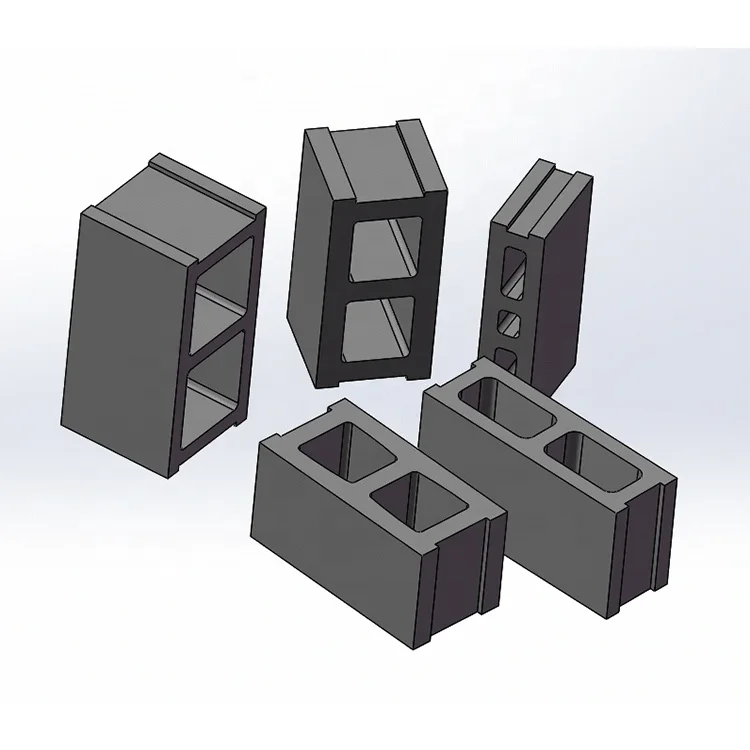
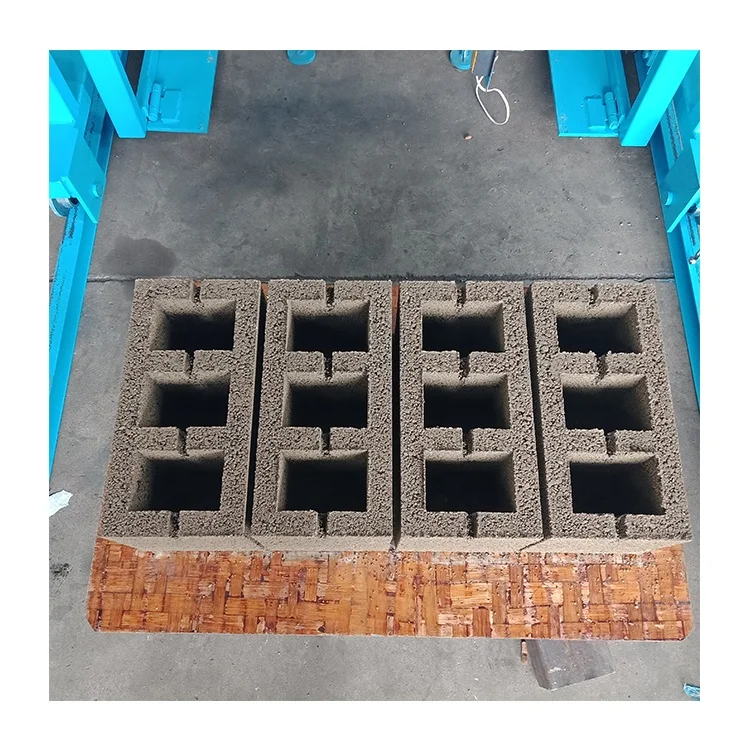 Stationary block machine