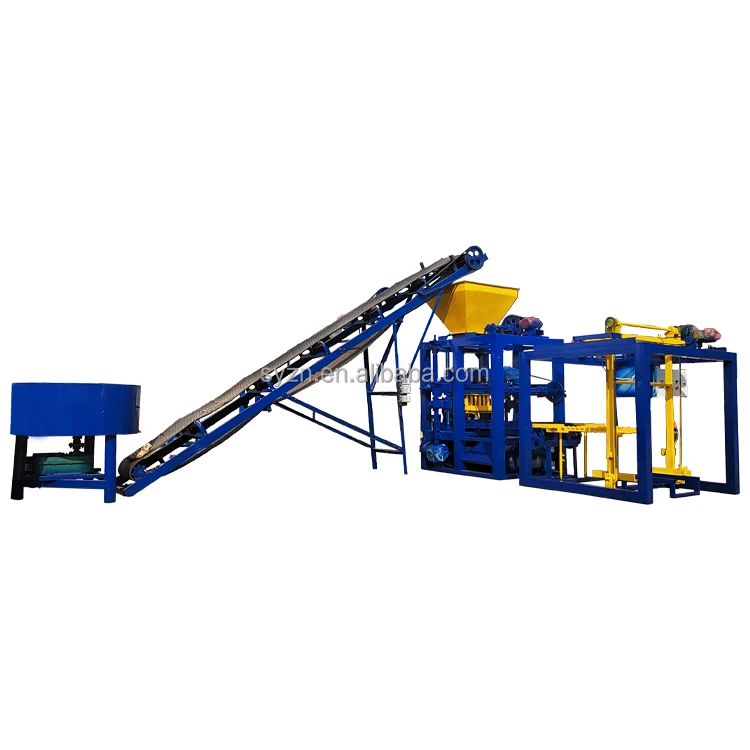
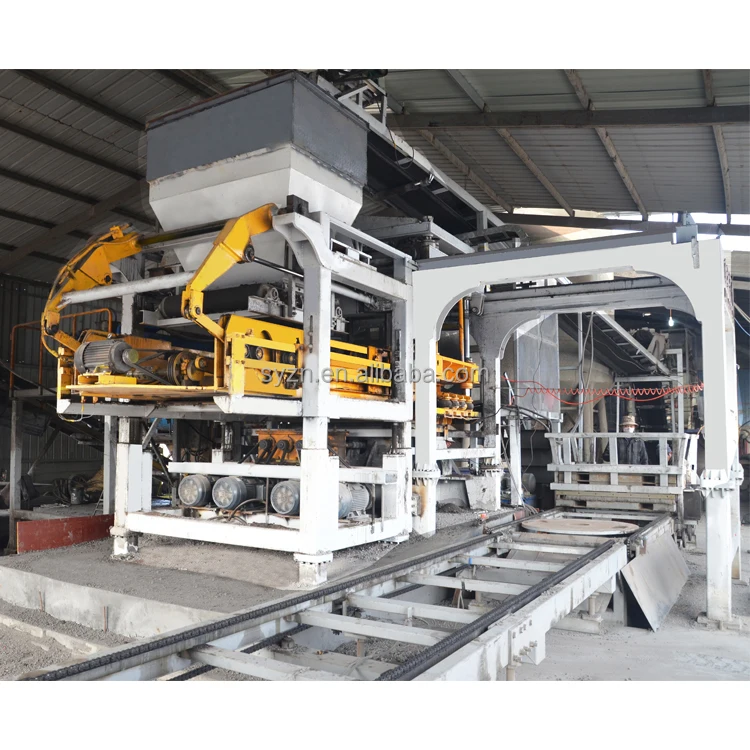
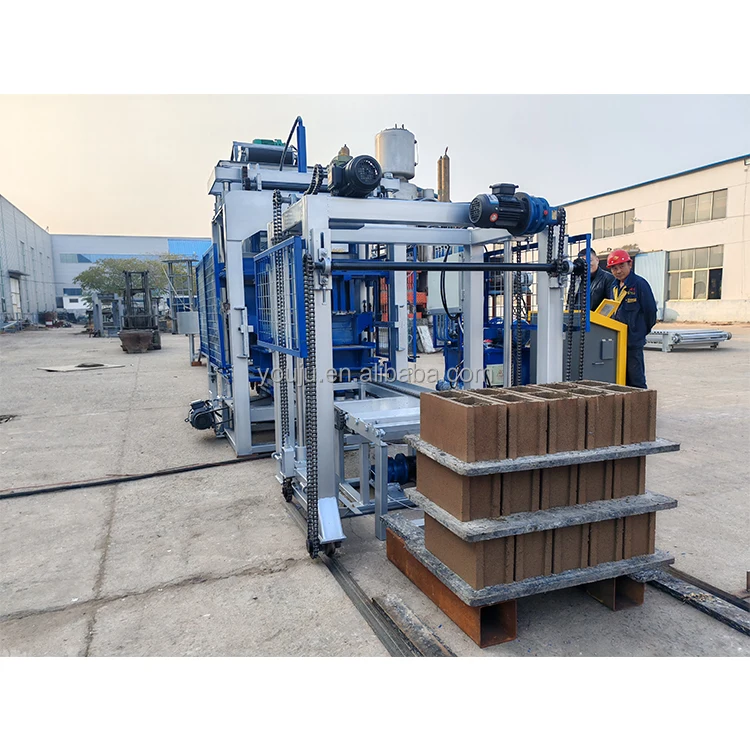
Matched System Approach — The QTJ4-25 is specified as one coordinated block production unit, with mould, pallet and mixer aligned to the buyer’s target format and local aggregate rather than sourced independently.
Technical Specifications
| Parameter |
Value |
| Model |
QTJ4-25 |
| Product Type |
Semi-Automatic Concrete Block Making Machine |
| Rated Power |
17.9 kW |
| Overall Dimensions (L×W×H) |
6400 × 1500 × 2700 mm |
| Net Weight |
2500 kg |
| Moulding Cycle |
25 s |
| Vibration Frequency |
2800 r/min |
| Vibration Force |
60 kN |
| Pallet Size |
850 × 550 × 20 mm |
| Hydraulic System |
Hydraulic station equipped |
| Mixer Included |
JQ350 |
| Output Capacity |
960 pcs/h, 7680 pcs/day (based on 400×200×200 mm hollow block, 4 pcs/mould) |
| Block Formats Produced |
8 inch, 6 inch, 5 inch, 4 inch hollow/solid/paver (basis not stated in source) |
| Voltage & Frequency |
Configurable to target market (basis to be confirmed) |
| Control System |
Semi-automatic operation |
| Certification |
Confirm CE or other declarations (basis to be confirmed) |
Application Suitability
| Application |
Material or Output |
| Small to medium block production plants |
Crushed stone, river sand, cement, fly ash mixes for hollow and solid blocks |
| On-site block production for construction contractors |
Locally sourced aggregate for wall blocks and pavers without a fixed plant setup |
| Entrepreneurs setting up a first block plant |
Standard concrete mixes for 4–8 inch hollow blocks at limited investment level |
| Building material distributors adding formats |
Paver and kerbstone production by swapping moulds on the same host machine |
What "960 Pieces per Hour" Actually Means for Your Plant
Output figures only hold weight when the block format behind them is stated openly.
I once saw a buyer receive a semi-automatic concrete block making machine manufacturer quote listing a peak hourly number with no format attached. When the machine arrived and ran his locally sourced 6-inch solid block, real output dropped significantly because the cycle assumed a larger hollow format. The curing area sat half-empty and labour costs per block climbed. Always ask which block size, mould cavity count and cycle time the capacity figure rests on before signing anything [NEED_CITE: block format assumptions in capacity quotations].

Where the QTJ4-25 Sits Across the Shiyue Range
The Shiyue lineup spans mobile egg-laying machines at the entry tier, semi-automatic stationary presses like the QTJ4-25 in the mid tier, and fully automatic lines with pallet feeding and cubing at the top. This semi-automatic concrete block making machine manufacturer model occupies the position where buyers need consistent stationary output but are not yet ready to invest in full automation. It requires a fixed foundation and a separate curing area, distinguishing it from mobile units that produce directly on the ground.
The Upgrade Path Within the Same Product Family
Starting at the semi-automatic tier does not lock a buyer into manual pallet handling permanently. The Shiyue range allows moving to higher automation levels — adding automatic pallet feeding, stacking and eventually cubing — without replacing the press itself. For contractors and first-time plant owners, this means initial capital stays manageable while future expansion remains within reach. The QTJ4-25 serves as the base from which a growing operation can step up as market demand justifies it [NEED_CITE: automation upgrade paths in block machinery].
Vibration Force, Hydraulic Pressure and Block Density
The 60 kN vibration force works in combination with the hydraulic station to compact the concrete mix inside the mould cavity. Vertical vibration from the bed mould and compression vibration from the upper mould together determine how densely the aggregate particles pack before curing. A 25-second moulding cycle gives the hydraulic pressure enough dwell time to reach full compaction. The JQ350 mixer feeds a consistent mix to the hopper, and the 850 × 550 × 20 mm pallet must be matched to the buyer’s existing forklift and curing rack spacing so that wet blocks move smoothly from press to curing zone without bottleneck.
The Hidden Cost of Skipping Pallet and Voltage Checks
When pallet dimensions are chosen without considering the curing racks and forklift already on site, blocks end up stacked by hand and output slows to a crawl. Equally, when voltage and frequency are not confirmed before the machine ships, commissioning stalls while transformers or motor replacements are sourced locally. These two oversights together can delay production start by weeks and inflate the real cost of a supposedly budget-friendly purchase [NEED_CITE: commissioning delays from unconfirmed electrical specifications].
Why Source This Tier from Shiyue
Block machinery is the single focus here, so the QTJ4-25 press, mould, pallet and JQ350 mixer are specified as one matched system rather than assembled from unrelated suppliers. Configuration is set against the buyer’s actual mix design and local aggregate, not a catalogue default. Mould design covers the formats the buyer’s market actually sells, including custom drawings when standard sizes do not match. The automation level is selectable, allowing a buyer to begin semi-automatic and step up later. Installation support includes operator training so the crew can run the machine independently from the first week.
Documentation & Verification
- Line layout and capacity calculation stating the specific block format assumed for the QTJ4-25
- Mould drawing and format list confirming which block sizes are covered
- Pallet specification sheet matching the 850 × 550 × 20 mm size to site equipment
- Hydraulic and electrical schematic for the 17.9 kW rated power configuration
- Voltage and control language confirmation document before shipment
- Factory test record on the buyer’s target block format before dispatch
Installation, Commissioning & Support
- Foundation pad sized to the 6400 × 1500 mm footprint with level tolerance specified
- Dedicated circuit for the 17.9 kW rated power with confirmed voltage and frequency
- Machine arrives partially dismantled; reassembly and alignment completed on site
- First-run moulding cycle set to 25 s and adjusted for local aggregate consistency
- Operator training covers mould change procedure and hydraulic station maintenance
- Wear parts list provided covering vibration components and hydraulic seals
What to Share Before Requesting a Quote
Send the target block format with dimensions, the daily output you need, and a local aggregate or material description. Include your site voltage and frequency along with the pallet size your existing forklift and curing racks accommodate. This lets the configuration match your actual conditions before any capacity figure is committed to paper.
Frequently Asked Questions
Q: Where does the QTJ4-25 fit compared to automatic and mobile tiers in the Shiyue range?
A: The QTJ4-25 occupies the semi-automatic stationary tier, positioned above mobile egg-laying machines and below fully automatic lines with pallet feeding and cubing. It requires a fixed foundation and separate curing area. Buyers who need reliable daily output without full-line automation investment start here and can upgrade within the same product family later.
Q: How do I confirm real daily output for my specific block format?
A: Request a capacity calculation that names your exact block dimensions and mould cavity count, not just the 400×200×200 mm reference figure. The 25-second moulding cycle and 4-cavity mould yield one output number for hollow blocks, but solid blocks or pavers with different cavity counts will produce different daily totals. Always verify against your target format before ordering.
Q: Can I start semi-automatic and move to higher automation later?
A: Yes. The Shiyue range is structured so that buyers can begin with the QTJ4-25 semi-automatic configuration and add automatic pallet feeding, stacking or cubing as production volume grows. The press itself does not need replacement; supporting equipment modules are added to the existing line layout when the investment is justified.
Q: What plant footprint and supporting equipment does this machine require?
A: The QTJ4-25 measures 6400 × 1500 × 2700 mm and needs a level concrete foundation. The JQ350 mixer and raw material feed area sit upstream, while the 850 × 550 × 20 mm pallets must travel to a curing zone sized for daily output. Plan for forklift access between press and curing racks to keep the cycle running without manual pallet搬运.
Q: What separates this semi-automatic tier from the next automatic tier in investment terms?
A: The automatic tier adds pallet feeding, automatic stacking and cubing systems that reduce manual labour and increase consistent throughput. The semi-automatic tier keeps the press and mixer but leaves pallet handling and stacking to operators. The investment gap reflects the additional automation modules, and buyers typically cross that threshold when daily volume justifies the reduced labour requirement.

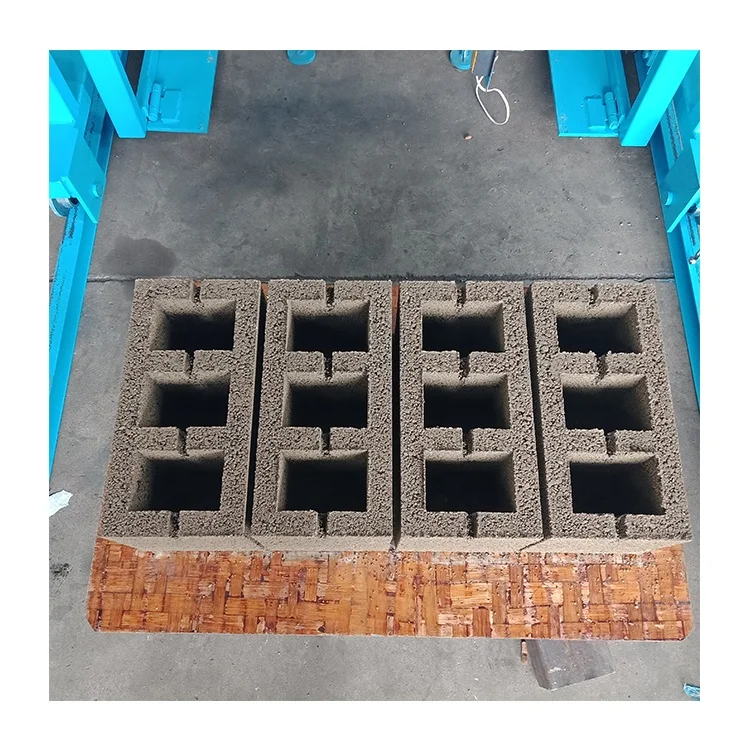
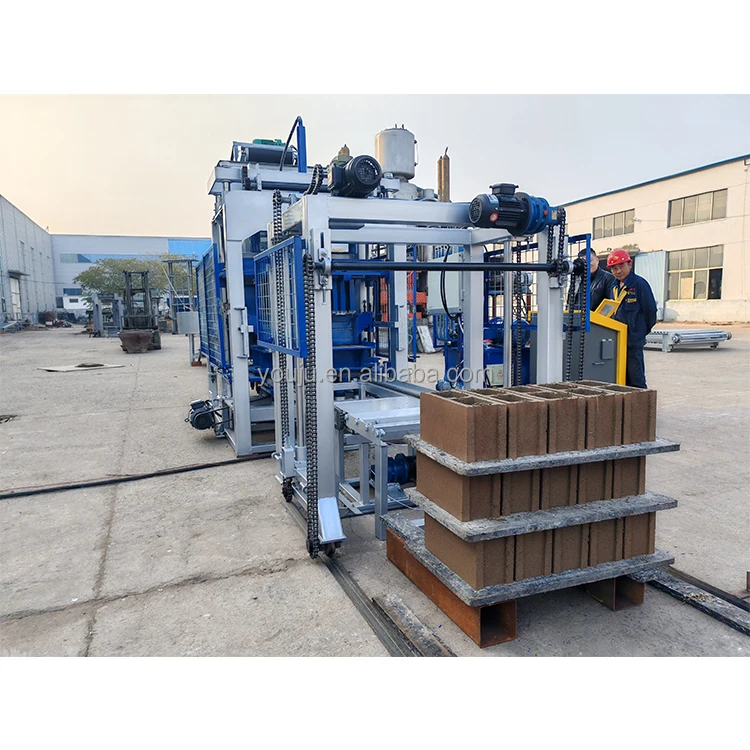 Stationary block machine