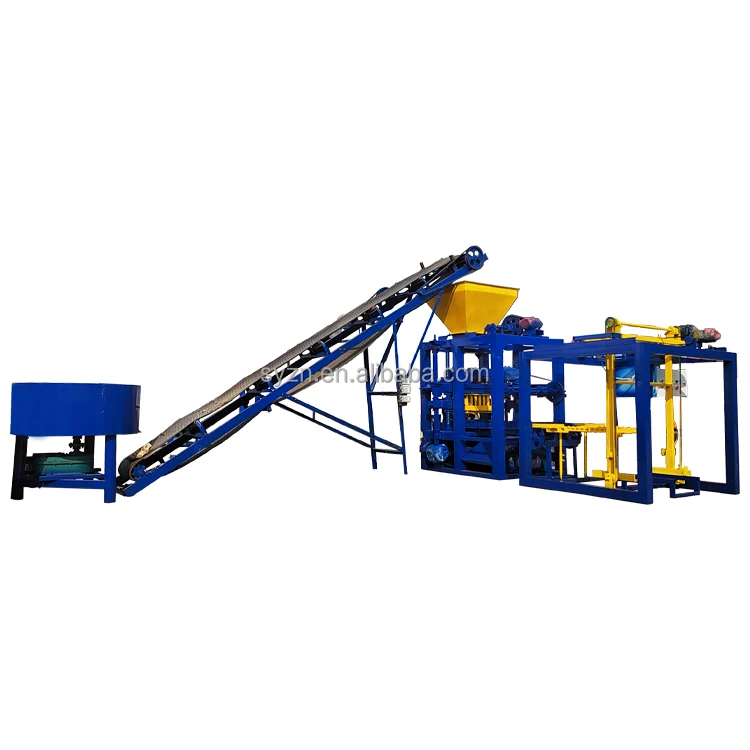
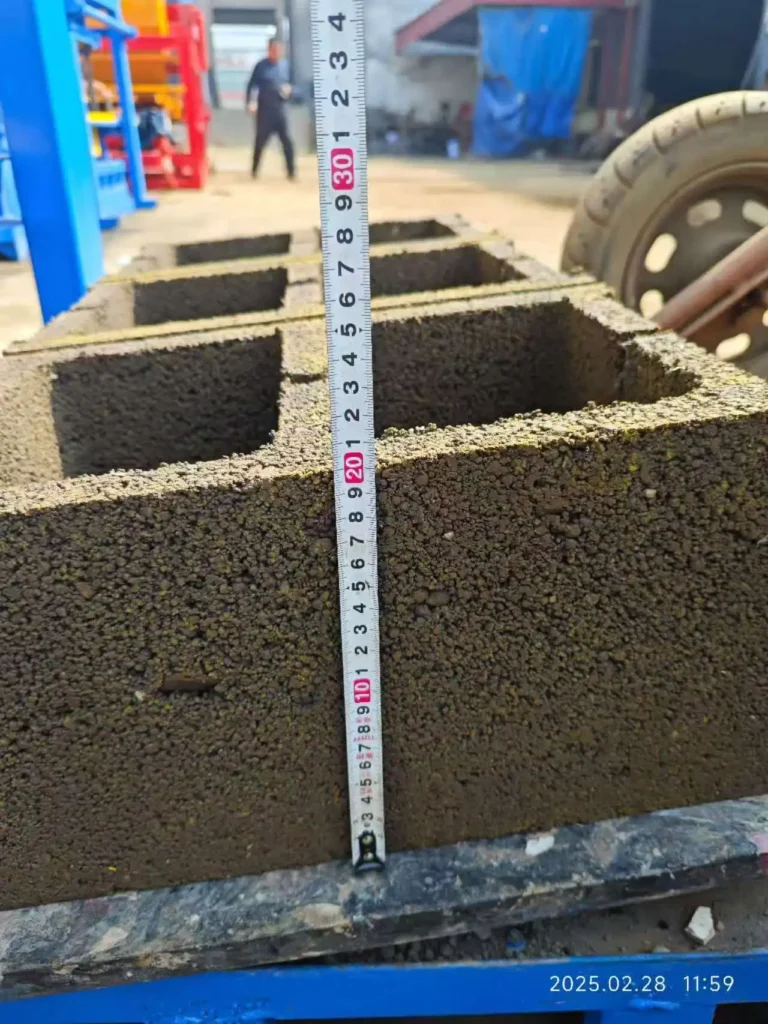
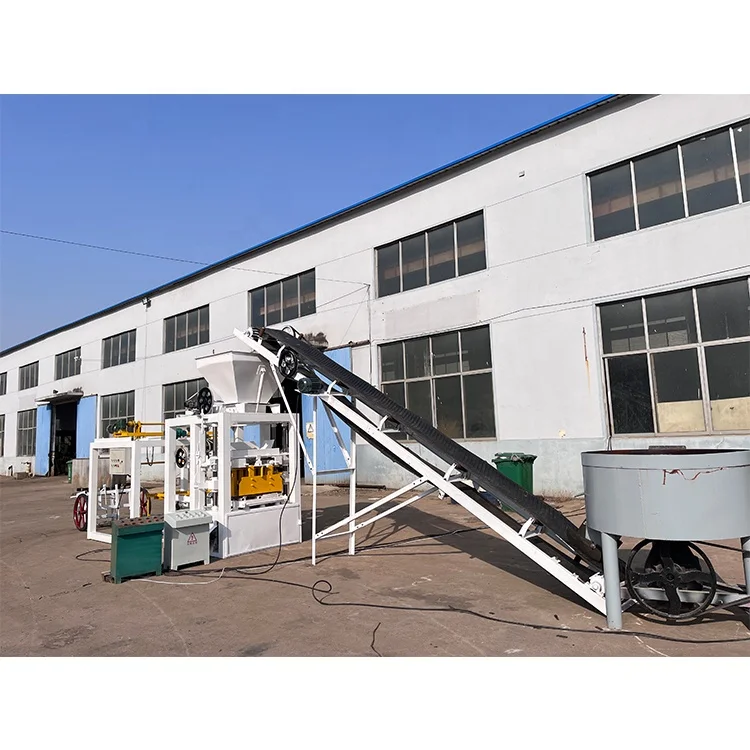
Single-Focus Block Machinery — Every QTJ4-24 configuration pairs the press, mould, pallet and handling into one matched system, sized to the buyer’s actual block format and site conditions rather than a catalogue default.
Technical Specifications
| Parameter |
Value |
| Model |
QTJ4-24 |
| Product Type |
Semi-Automatic Concrete Block Making Machine |
| Molding Type |
Platform Vibration |
| Overall Dimensions (working state) |
3600mm × 1700mm × 2560mm |
| Total Mass |
1750kgs |
| Pallet Size |
850mm × 450mm |
| Overall Power |
14.25kW |
| Lower Vibration Power |
2 × 3kW motors |
| Upper Vibration Power |
1.5kW |
| Mould Format Options |
390×190×190mm (4 pcs/mould); 240×115×53mm (21 pcs/mould) |
| Elevating System |
Cone-shape motor with JZQ250 speed reducer |
| Delivery Device |
Cycloidal pin wheel speed reducer with chains and V-belt |
| Frame Style |
Dragon gate, super steel |
| Mould Change Method |
Hang pin and balance pin connection |
| Mixer (Support Equipment) |
JQ350 pan mixer |
| Conveyor (Support Equipment) |
6m belt conveyor |
| Stacking Method |
Optional auto stacker (3-6 layers) or manual with trolley |
| Control System |
Electronic control (basis to be confirmed) |
| Cycle Time |
(basis not stated in source — confirm block format / material) |
| Output Capacity |
(basis not stated in source — confirm block format / material / thickness) |
| Voltage & Frequency |
(basis not stated in source — confirm with buyer’s site) |
Application Suitability
| Application |
Material or Output |
| Hollow concrete block production |
Crushed stone, cement, sand, and water mix for 390×190×190mm cavity blocks |
| Solid brick manufacturing |
Dense aggregate-cement blend for 240×115×53mm wall bricks |
| Small-scale block plant setup |
Single-shift production with JQ350 pan mixer and 6m belt conveyor feed |
| On-site contractor production |
Compact footprint for hollow and solid block runs at a construction site |
Why "Pieces per Hour" Means Nothing Without the Block Format
A capacity number detached from its mould format is the single most misleading figure on any semi-automatic block machine quotation. When a supplier states a cycle rate without naming the block dimension, the pallet size, or the compaction time behind that number, the buyer has no way to verify whether the daily output will actually cover the project schedule.
I learned this the hard way on an early export order. A buyer in the Middle East had calculated his entire wall-building schedule around a quoted hourly rate, only to discover the figure assumed a thin paver mould while his market demanded 190mm hollow blocks. Real throughput dropped by more than half, and his crew stood idle waiting for blocks that never came off the press fast enough. [NEED_CITE: block machine capacity calculation based on mould format and cycle time]
That gap between brochure output and actual production is what separates a working plant from a stalled one. Every output figure tied to this Semi-Automatic Block Machine must name the exact mould — whether 4 pieces of 390×190×190mm hollow blocks or 21 pieces of 240×115×53mm solid bricks per cycle — so the buyer can map daily shifts to real demand.

Where the QTJ4-24 Sits in the Stationary Machine Range
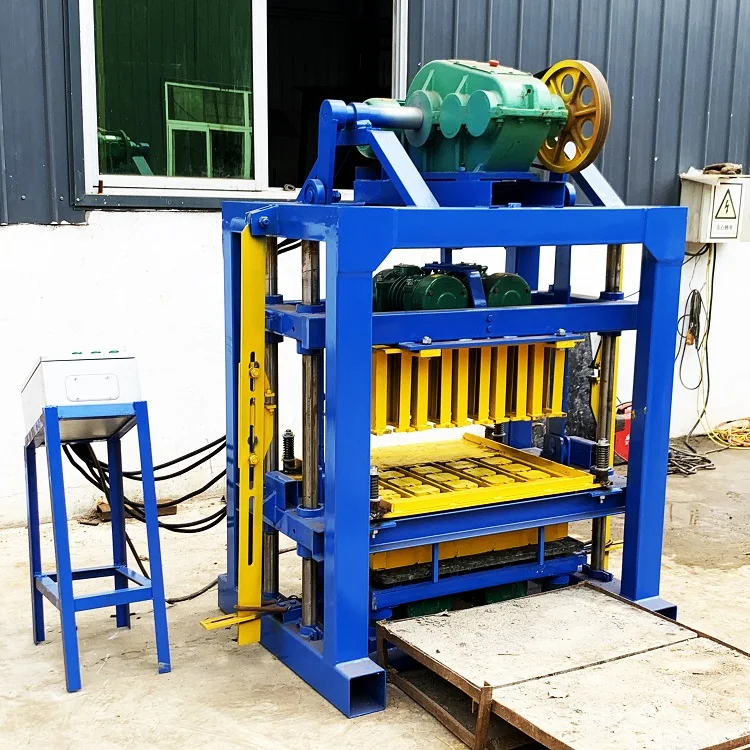
This Semi-Automatic Block Machine occupies the entry tier of the stationary line-up, built for buyers who need dependable daily output without the capital commitment of a fully automatic plant. Its 850×450mm pallet size keeps the curing area compact, and the dragon gate frame with four wear-resisting vertical shafts gives the platform vibration system a rigid base for consistent compaction.
For a buyer comparing tiers, the key distinction is that the press itself delivers the same vibration force across formats — dual 3kW lower motors plus a 1.5kW upper vibration device — while the automation level around it changes. The QTJ4-24 leaves pallet handling, stacking, and curing to operators or an optional stacker, keeping the initial outlay manageable.
Reading the Automation Tier Before You Commit
Choosing between semi-automatic and fully automatic operation is less about today’s labour cost and more about the upgrade path once production volume grows. With the QTJ4-24, a buyer can start with manual trolley stacking and add an auto stacker later — the machine’s elevating system and mould hang-pin connection remain the same, so the upgrade is an add-on, not a replacement. [NEED_CITE: automation level selection criteria for block production plants]
This matters because many first-time plant owners over-invest in automation they cannot yet fill with orders, or under-invest and spend months paying for extra hands to move pallets by wheelbarrow. Matching the tier to actual market demand, rather than aspirational capacity, keeps the business cash-positive from the first production run.
How Vibration Force and Frame Rigidity Shape Every Block
The QTJ4-24’s dual 3kW lower vibration motors and 1.5kW upper vibration device work in concert to compact the mix from both directions. This platform vibration approach is effective when the hydraulic pressure is absent — the vibration energy alone must be sufficient to settle aggregate particles tightly, so motor rating and frame stiffness matter together.
The dragon gate super-steel frame with four vertical guide shafts ensures the mould box seats squarely on the pallet every cycle. If the frame deflects under vibration, block dimensions drift and the mould wears unevenly. At 1750kgs total mass, the machine has enough weight to absorb its own vibration rather than transmitting it into the foundation, which matters for plants operating on compacted soil rather than poured concrete floors.
The 14.25kW overall power draw reflects the motor combination plus the conveyor and mixer. Buyers should confirm their site can deliver this load on the correct voltage and frequency before the machine ships, because rewiring a control panel on arrival delays commissioning and risks motor damage.
The Cost of Skipping the Mould-Format Conversation
When a buyer orders a machine without locking the mould drawing to the block their market actually purchases, the first month of production becomes a lesson in lost revenue. A mould that produces the wrong format sits idle while the buyer scrambles for a custom replacement, and the machine’s cycle time — calibrated for the original mould — no longer matches the new one. [NEED_CITE: mould format selection impact on block plant profitability]
Worse, if the buyer’s local aggregate differs from the mix the mould was tested against, the blocks may crack during curing or fail a compressive strength check. This is why confirming the raw material source and running a test batch before shipment is not optional — it is the only way to verify that the vibration force and cycle time produce a saleable block with the buyer’s own mix.
Why Sourcing This Semi-Automatic Block Machine Here Works
Block machinery is our single product focus, which means the QTJ4-24 is specified as part of a matched system — press, JQ350 pan mixer, 6m belt conveyor, pallet size, and stacking method are chosen together, not assembled from separate catalogues.
Configuration is set against the buyer’s actual mix design and local aggregate, not a default test recipe. Mould formats are designed for the block dimensions the buyer’s market sells, including custom drawings when standard formats do not match. The automation level is selectable, so a buyer can begin with manual pallet handling and add an auto stacker as orders grow. Installation support includes operator training and a documented wear parts list so the first replacement cycle is planned, not a surprise.
Documentation & Verification
- Machine specification sheet with voltage, frequency, and control language confirmed before production
- Line layout and capacity calculation stating the mould format assumed for the quoted output
- Mould drawing and format list matched to the buyer’s target block dimensions
- Factory test record and packing photographs provided before container loading
- Operation and maintenance manual covering mould change and daily greasing intervals
- Wear parts and mould list identifying first-replacement items and lead times
Installation, Commissioning & Support
- Foundation must support 1750kgs static load plus dynamic vibration on a level concrete pad
- Electrical supply must match confirmed voltage and frequency for the 14.25kW total load
- Machine ships partially assembled; dragon gate frame and vibration platform bolt on site
- First production run verifies cycle time against the buyer’s specific mix and mould format
- Operator training covers mould change via hang pin and balance pin connection procedure
- JQ350 pan mixer and 6m belt conveyor alignment checked during commissioning
Before You Request a Quote
To size the QTJ4-24 correctly, I need the block format your market actually sells — dimensions, wall thickness for hollow blocks, and whether solid bricks are also required. Share your local aggregate type and source, because the vibration force must be matched to the material you can actually get.
Confirm the site voltage, frequency, and the language you need on the control display so the machine arrives ready to run. Let me know your available curing area dimensions and whether you already have forklifts, because the 850×450mm pallet size and optional stacker must fit what is already on the ground.
Frequently Asked Questions
Q: Where does the QTJ4-24 sit compared to automatic and mobile tiers?
A: It occupies the entry stationary tier. Compared to a mobile egg-laying machine, the QTJ4-24 produces on fixed pallets for higher format flexibility. Compared to a fully automatic line, it leaves pallet handling and stacking to operators or an optional stacker, keeping initial capital lower while preserving an upgrade path to higher automation later.
Q: What plant footprint does this semi-automatic line require?
A: The press itself measures 3600×1700mm in working state. Add the 6m belt conveyor and JQ350 pan mixer, plus a curing area sized for 850×450mm pallets and operator walkways. A typical single-shift layout fits inside a modest workshop with adequate ceiling height for the 2560mm machine elevation and pallet stacking.
Q: How is output capacity calculated per block format?
A: Every capacity figure must name the mould format — for example, 4 pieces of 390×190×190mm hollow blocks or 21 pieces of 240×115×53mm solid bricks per cycle. The cycle time then depends on the buyer’s mix design and target block strength, so the quoted daily output is tied to a specific format, not a generic hourly rate.
Q: Can I start with the QTJ4-24 and add automation later?
A: Yes. The press, elevating system, and mould connection remain the same across tiers. A buyer can begin with manual trolley stacking and add an auto stacker that handles 3 to 6 layers once daily volume justifies the investment, without replacing the core machine.
Q: What investment separates semi-automatic from fully automatic?
A: The gap comes from pallet feeding, stacking, and cubing systems rather than the press itself. A fully automatic line adds these stations plus higher-capacity mixing and batching. The upgrade pays off when daily volume consistently fills the automatic line’s capacity; below that threshold, the semi-automatic tier keeps the operation lean.

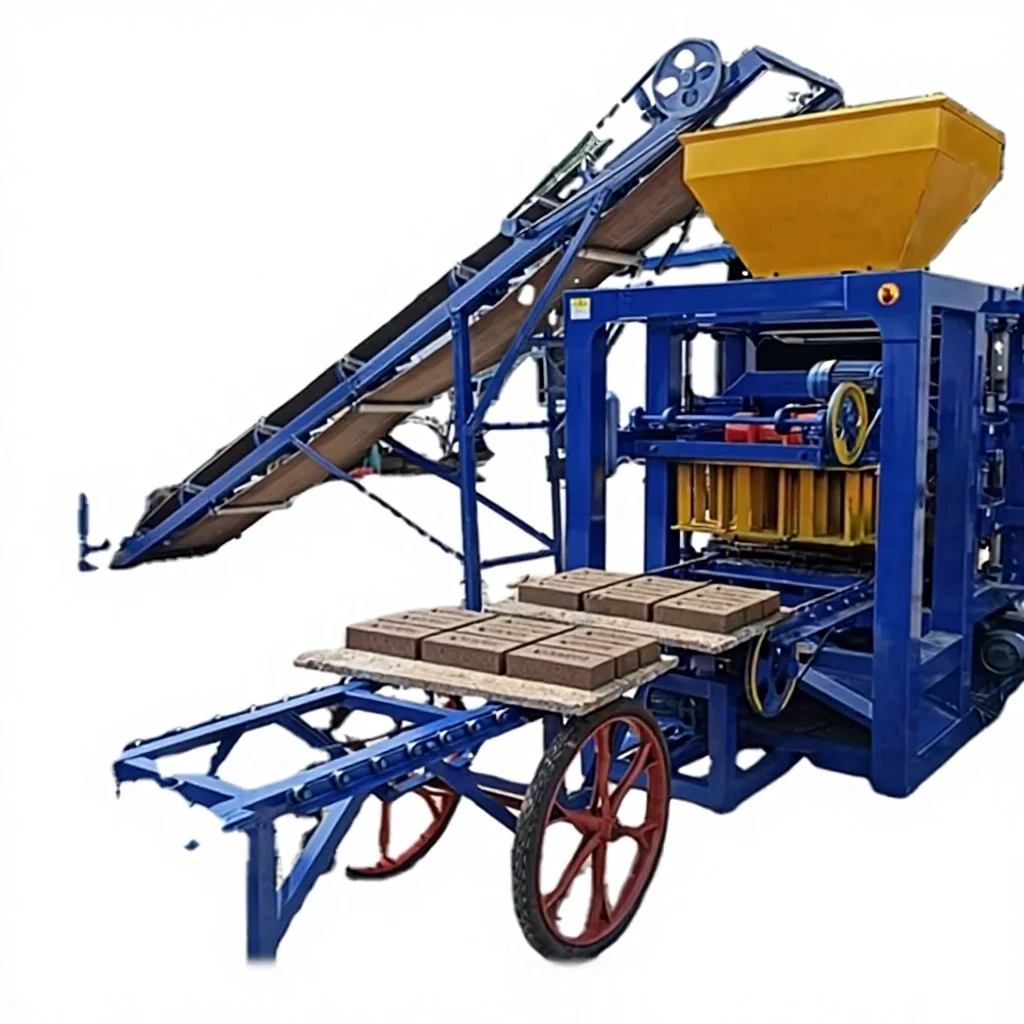
 Stationary block machine