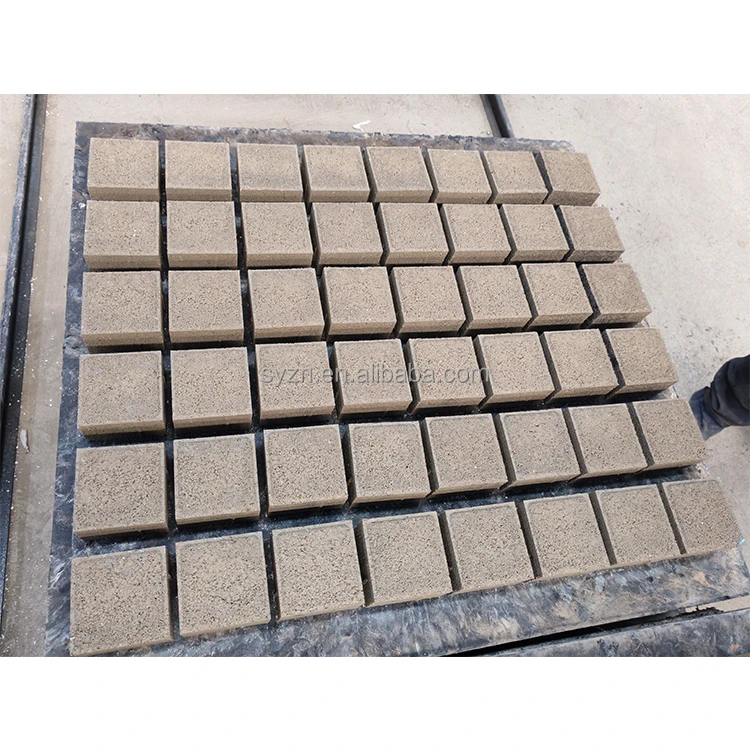
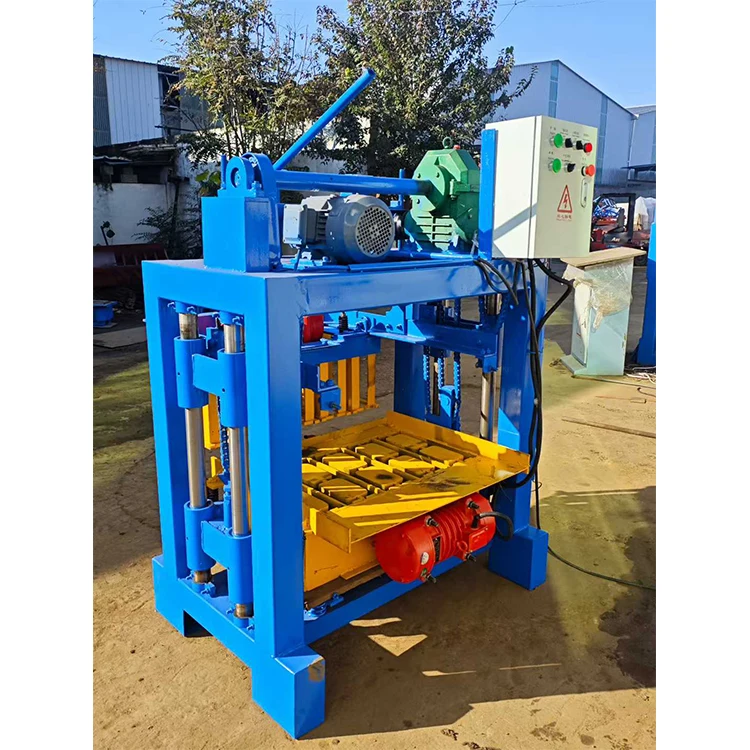
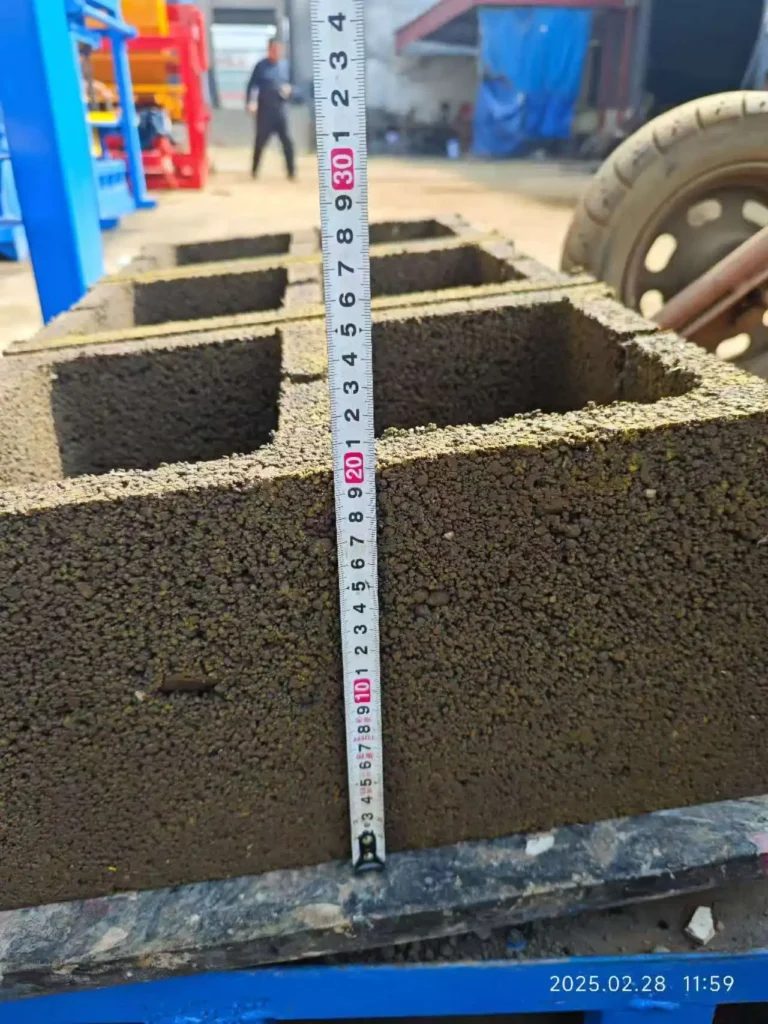
Complete Block Machine Range — every output tier from mobile egg-laying to fully automatic line sits in one catalogue, so a buyer can place their investment level and plant footprint on the scale before narrowing down.
Technical Specifications
| Parameter |
Value |
| Model |
QTJ4-40 |
| Product Type |
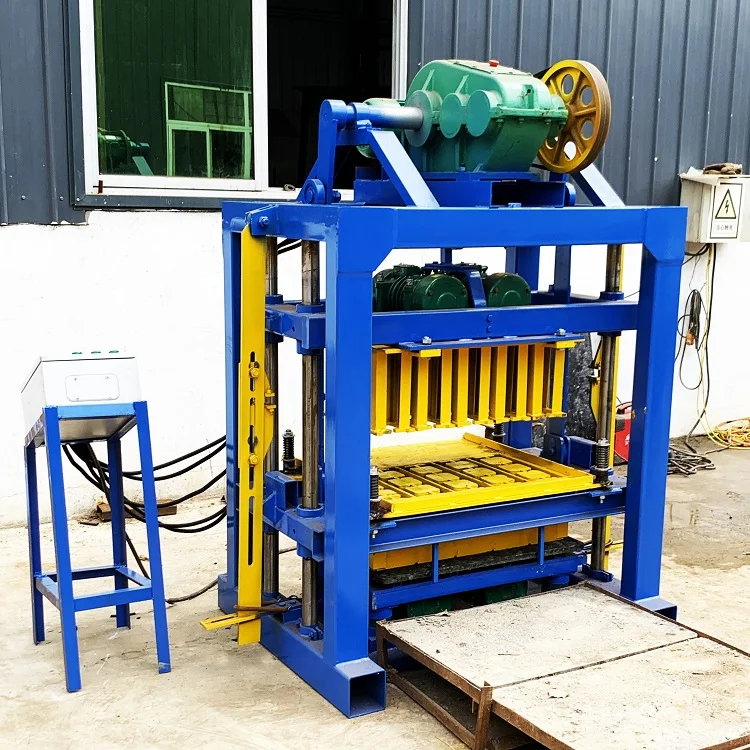
Semi-Automatic Concrete Block Making Machine |
| Output Capacity |
2880 pcs/day based on 400×200×200mm hollow block, 8-hour shift |
| Output Capacity |
4000 pcs/day based on 400×150×200mm block, 8-hour shift |
| Output Capacity |
7200 pcs/day based on 225×112.5×60mm block, 8-hour shift |
| Production Capacity (per hour) |
360 pcs (400×200×200mm); 500 pcs (400×150×200mm); 900 pcs (225×112.5×60mm) |
| Mould Format |
400×200×200mm (4 pcs/mould); 400×150×200mm (5 pcs/mould); 225×112.5×60mm (9 pcs/mould) |
| Main Vibration Form |
Platform Vibration |
| Vibration Frequency |
2800 r/min |
| Pallet Size |
850×450mm |
| Raw Material Ratio |
cement 8-10%, sand 30-40%, stone 50-60% (approx. 1:4:5) |
| Overall Dimensions |
1350×1460×1800mm |
| Machine Weight |
1T |
| Factory Area Required |
200 m² |
| Labor Requirement |
1-3 people |
| Automation Level |
Semi-automatic (top die push and pull, automatic scraper) |
| Applied Products |
Concrete blocks, hollow blocks, solid blocks, pavers, interlocking blocks, curbstone, colored pavers |
Application Suitability
| Application |
Material or Output |
| Small to medium block plant start-up |
Hollow and solid blocks from local crushed stone and cement |
| On-site production by construction contractors |
Hollow blocks using site-available aggregate with limited space |
| Building material distributor adding formats |
Pavers, interlocking blocks and curbstones on one machine platform |
| First-time block plant entrepreneur |
2,800–7,200 pcs/day depending on chosen block format |
What the Capacity Label Hides When Format Is Not Stated
Output numbers only mean something when the block size, mould cavity count and shift length sit right next to them.
I once took a call from a buyer who had ordered a block machine based on a brochure figure, only to find his daily output landed at roughly half the quoted number. The reason was straightforward: the capacity had been measured on a small solid block, while his market demanded large hollow blocks with fewer cavities per mould. The QTJ4-40 block machine manufacturer specification here lists each tier with its exact format — 360 pieces per hour on 400×200×200mm hollow blocks, 500 on 400×150×200mm, and 900 on 225×112.5×60mm pavers. Without that level of detail, buyers routinely sign contracts expecting one volume and plan their curing space, labour and delivery schedule around a number that never materialises [NEED_CITE: common buyer complaints in block machine procurement]. A semi-automatic concrete block machine for sale at this tier should always be compared on a per-format basis, not a single headline figure.

Where the QTJ4-40 Sits in the Full Machine Range
The complete block machine range runs from mobile egg-laying units that produce on the ground without pallets, through semi-automatic stationary presses like the QTJ4-40, up to high-capacity fully automatic lines with stacker and cubing. This model occupies the entry-to-mid tier of stationary equipment, aimed at buyers who want a fixed plant but do not yet need the output volume or labour reduction of a fully automatic system. Understanding where it lands helps a buyer decide whether to invest in this tier now or stretch the budget toward a higher automation level.
Deciding Between Semi-Automatic and the Next Tier Up
Choosing between a semi-automatic press and a larger automatic line comes down to daily volume targets, available curing area and how many shifts per day the plant will run. A buyer producing a single block format in steady volume across two shifts will find the manual pallet handling on the QTJ4-40 increasingly labour-intensive, while a buyer rotating through three or four formats across shorter runs benefits from the simpler changeover on a semi-automatic platform. The semi-automatic concrete block machine for sale here leaves room for a future automation upgrade — adding an automatic pallet feeder or stacker at a later stage — without replacing the press itself [NEED_CITE: automation upgrade paths in block production plants]. This flexibility matters most to entrepreneurs planning a phased investment.
Reading the Numbers That Shape Daily Output
Platform vibration at 2800 r/min is the primary compaction method on this machine, meaning the vibration motor sits beneath the mould table and transmits force upward through the pallet into the concrete mix. Combined with the manual top die push-pull mechanism, the system relies on vibration and mechanical pressure rather than hydraulic ramming, which keeps the machine weight at 1T and the footprint within 200 m². The 850×450mm pallet size directly governs how many blocks fit per cycle: four cavities for a 400×200×200mm hollow block, nine for a 225×112.5×60mm paver. Buyers need to match this pallet dimension to their curing rack spacing and forklift fork width before confirming the order, because a mismatch here means blocks cannot be transported efficiently from press to curing area. The raw material ratio of approximately 1:4:5 (cement, sand, stone) assumes a standard semi-dry mix; local aggregate with higher clay content will require mix adjustment to maintain block strength.
The Cost of Skipping the Pallet and Voltage Check
Overlooking pallet specification before shipment is one of the most frequent reasons a new block plant stalls during commissioning. A buyer whose existing forklift has a narrow fork spread may find the 850×450mm pallets unstable during transport from press to curing area, forcing an unplanned forklift replacement. Similarly, arriving machines wired for a voltage or frequency that does not match the local grid require an on-site transformer or a rewind of the vibration motor, both of which delay production start by days or weeks [NEED_CITE: voltage mismatch issues in exported machinery]. These are not engineering failures — they are specification gaps that a short pre-order checklist eliminates.
Why Source the QTJ4-40 Through a Single-Focus Block Machinery Supplier
Block machinery as a single product focus means the press, mould, pallet and handling equipment are specified as one matched system rather than assembled from separate catalogues. Every configuration is set against the buyer’s actual mix design and target block format, so the 2880-piece daily capacity on 400×200×200mm hollow blocks is verified against the buyer’s own aggregate sample before the order is confirmed. Mould design covers the formats the buyer’s local market actually sells, and custom drawings can be produced where standard cavity counts do not match regional demand. The automation level on the QTJ4-40 is selectable, meaning a buyer can commission the machine in semi-automatic mode and add pallet feeding or stacking automation as output grows. Installation support includes operator training on mix ratios, mould change procedure and daily maintenance routines, reducing the commissioning period on site.
Documentation & Verification
- Line layout drawing stating 200 m² factory area and curing zone pallet flow
- Capacity calculation sheet listing output per block format with mould cavity count
- Mould drawing and format list confirming block dimensions match local market
- Pallet specification sheet with 850×450mm size and material grade
- Voltage, frequency and control display language confirmation before production
- Factory test record on buyer’s chosen block format before dispatch
Installation, Commissioning & Support
- 200 m² factory area required with level concrete floor for platform vibration stability
- Dedicated electrical circuit matching confirmed voltage and frequency for the 1T machine
- Machine ships partially assembled; vibration motor and top die mechanism bolted on site
- First-run commissioning includes mix ratio adjustment using buyer’s local aggregate sample
- Operator training covers mould change, pallet loading and daily vibration motor inspection
- Wear parts list supplied with recommended replacement intervals for scraper and vibration pads
What to Prepare Before Requesting a Quotation
A useful enquiry for the QTJ4-40 block machine manufacturer should include the specific block formats your market demands, the daily output you need to hit on each format, and a sample or description of your locally available aggregate. Confirm your workshop or yard dimensions so the 200 m² footprint can be checked against your space, and state your site voltage and frequency to avoid motor rewinding after delivery. If you already own pallets or a forklift, share those specifications so the 850×450mm pallet size can be verified or adjusted before the machine enters production.
Frequently Asked Questions
Q: How is the daily output figure calculated for the QTJ4-40?
A: Each output figure is tied to a specific block format and an 8-hour shift. The 2880 pieces per day applies to 400×200×200mm hollow blocks with 4 cavities per mould, while 7200 pieces per day applies to 225×112.5×60mm blocks with 9 cavities per mould. Cycle time varies by format, so always confirm the capacity against the block size you intend to produce.
Q: What pallet size does the QTJ4-40 use, and can I use my existing pallets?
A: The standard pallet size is 850×450mm. If you already own pallets, share their dimensions and material before ordering so compatibility with the press table and your curing area can be confirmed. Mismatched pallets cause handling delays and can damage the vibration table over time.
Q: Which voltage and frequency options are available?
A: The machine motor can be wound to match the voltage and frequency standard of your local grid. This must be confirmed before production begins, as rewinding a motor after arrival adds delay and cost. State your site supply specification when requesting the quotation.
Q: Can I start semi-automatic now and upgrade later?
A: Yes. The QTJ4-40 platform allows automation additions such as automatic pallet feeding or stacking at a later stage without replacing the press. This suits buyers who want to manage initial investment while keeping the option to increase output and reduce labour as demand grows.

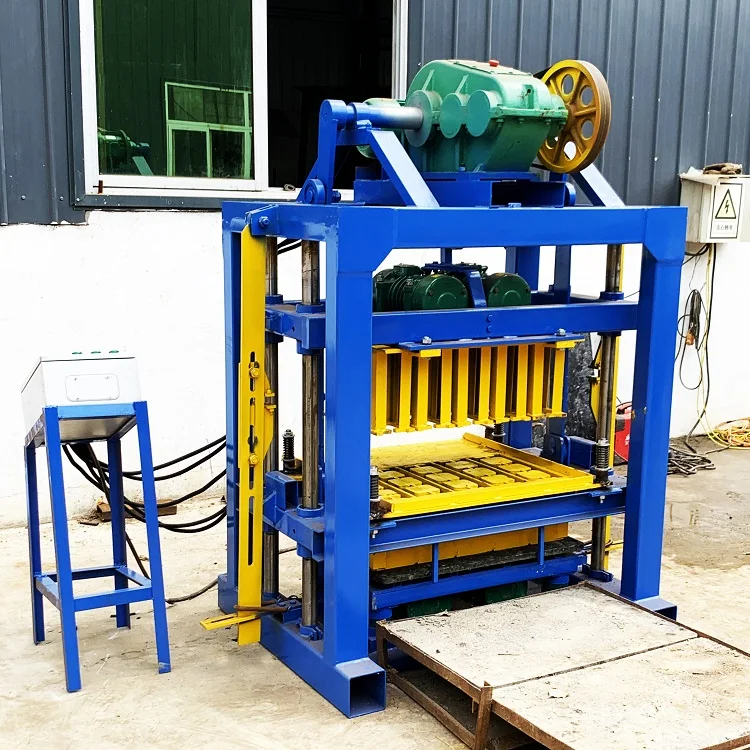
 Stationary block machine