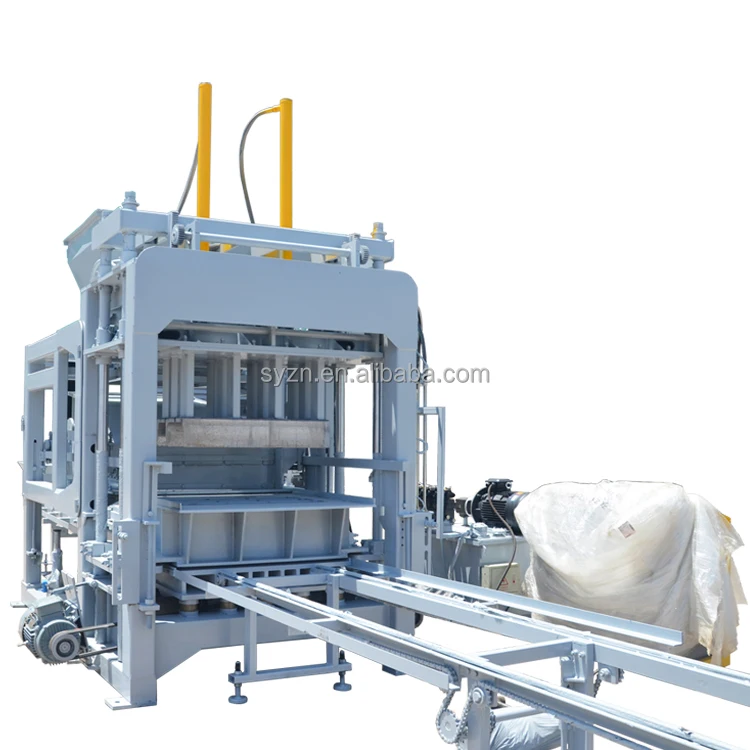
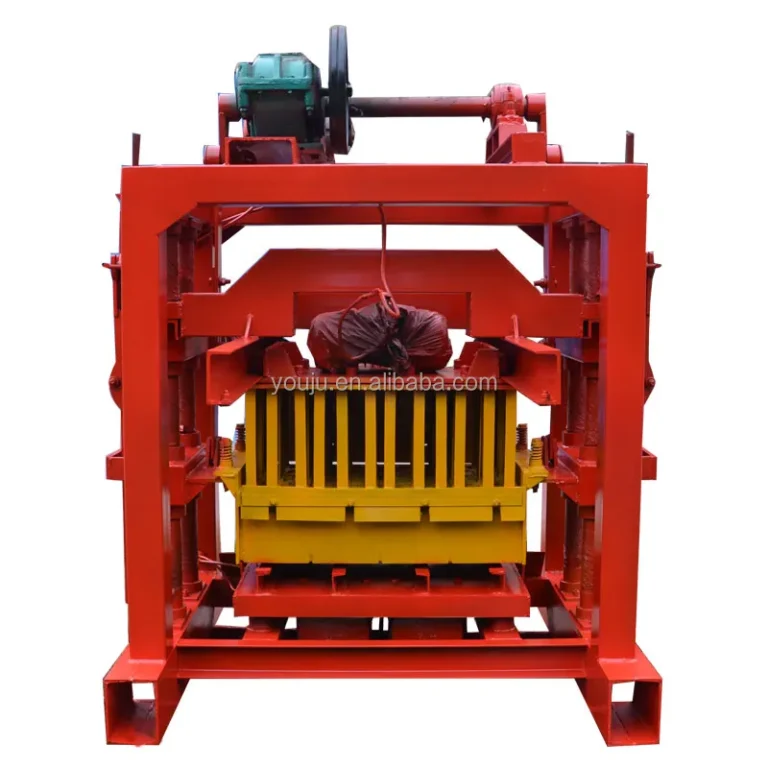
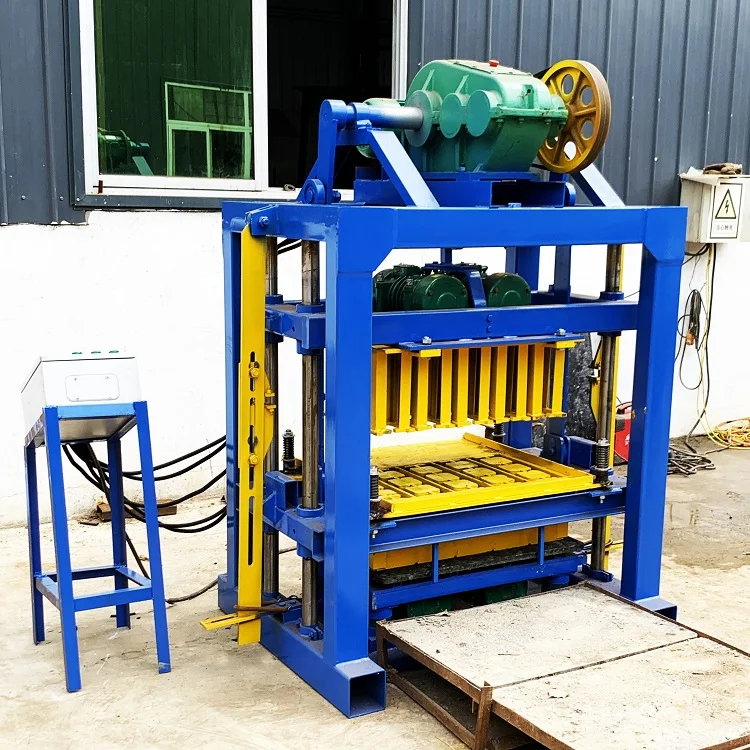
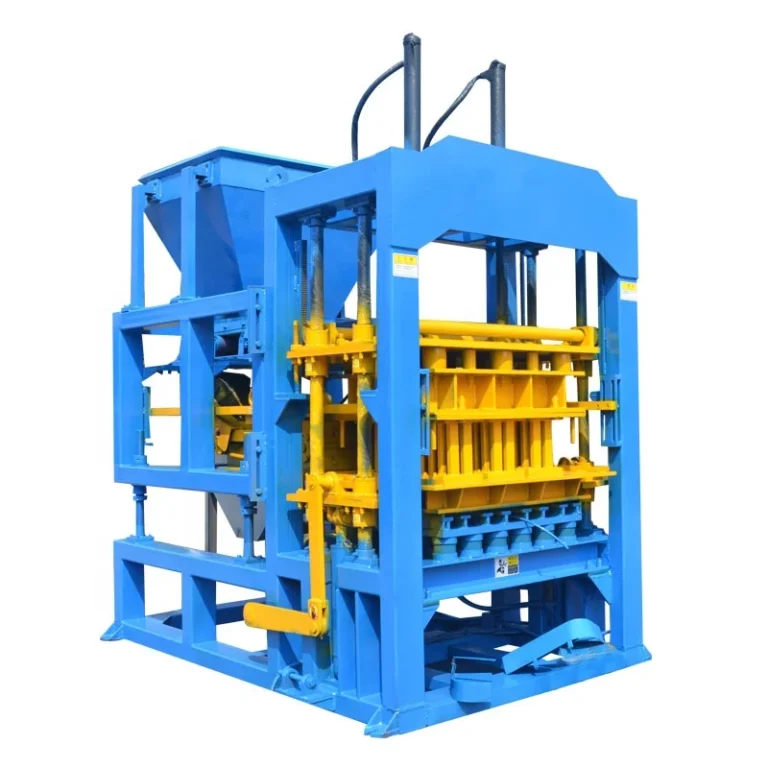
Single-focus block machinery — the QTJ4-24 is specified as part of a matched press, mould and pallet system rather than sourced as a standalone unit from a catalogue.
Technical Specifications
| Parameter |
Value |
| Model |
QTJ4-24 |
| Product Type |
Semi-Automatic Concrete Block Making Machine |
| Overall Dimensions (L×W×H) |
3600 × 1700 × 2560 mm |
| Pallet Size |
850 × 450 mm |
| Molding Cycle |
24–26 s (basis not stated in source — confirm block format / material / thickness) |
| Overall Power |
11.95 kW |
| Vibration Force |
45 kN |
| Total Mass |
2 T |
| Molding Method |
Mechanical |
| Vibration Configuration |
2 × 3 kW lower vibrators + 2 × 1.5 kW upper vibrators |
| Reducer (Mold Lifting) |
350-type |
| Material Distribution |
Full-automatic spiral |
| Raw Materials |
Cement, sand, stone |
| Control System |
Not stated in source (basis to be confirmed) |
| Voltage & Frequency |
Not stated in source (basis to be confirmed) |
| Hydraulic Pressure |
Not applicable (mechanical molding) |
| Automation Level |
Semi-automatic (manual pallet handling implied) |
| Warranty |
1 year (excluding spare parts) |
Application Suitability
| Application |
Material or Output |
| Hollow concrete block production |
Cement, crushed stone, sand mixes for standard walling units |
| Solid block production |
Dense aggregate blends for load-bearing masonry |
| Interlocking brick production |
Finer sand and cement ratios for dry-stack formats |
| Paving block production |
High-strength mixes with graded stone dust |
| Small to medium block plants |
First mechanized line for entrepreneurs entering block manufacturing |
| On-site contractor production |
Project-based hollow and solid block runs using locally sourced aggregate |
Why "24–26 Seconds per Cycle" Does Not Tell You the Whole Story
Cycle time is only meaningful when tied to the exact block format and wall thickness being produced.
Buyers often receive a cycle figure and multiply it across an eight-hour shift, only to find that the number assumed a thin paving block while they actually need a 200 mm hollow block. With the QTJ4-24, the 24–26 s molding cycle is a baseline that shifts depending on the cavity depth, vibration dwell needed for the local aggregate, and the cure time before pallet stripping [NEED_CITE: capacity calculation methods for mechanical block presses]. When a QTJ4-24 block machine manufacturer quotes output, the responsible approach is to pair that cycle with a named block format so buyers can plan real daily volume.

Where the QTJ4-24 Fits in the Stationary Range
The QTJ4-24 occupies the entry-to-mid tier of stationary block machines, sitting between manual egg-laying models and fully automatic hydraulic lines. Buyers stepping up from hand-operated presses gain mechanical vibration and spiral material distribution without committing to the higher power draw and PLC complexity of a hydraulic press. This QTJ4-24 block machine manufacturer positions it for first-time plant owners and contractors who need consistent density but are not yet ready for full automation.
Choosing the Right Tier Before Committing Capital
A semi-automatic machine like the QTJ4-24 requires manual pallet handling, which means labor must be factored into shift planning. If a buyer’s daily target eventually demands continuous pallet cycling, the step up to an automatic line with stacking and cubing becomes the more economical route [NEED_CITE: automation upgrade paths in stationary block production]. Placing the QTJ4-24 correctly on the range prevents both over-investment in capacity that sits idle and under-investment that forces a second purchase within a year.
What the Vibration and Reducer Numbers Mean on the Shop Floor
The dual-level vibration system — two 3 kW lower vibrators paired with two 1.5 kW upper vibrators — delivers a combined 45 kN of vibration force. Lower vibrators compact the mix from the pallet upward, while upper vibrators settle the face, reducing surface voids on exposed blocks. The 350-type reducer on the mold lifting mechanism handles repeated cycling without premature gear wear, which matters when the QTJ4-24 runs multiple shifts in hot climates where thermal stress accelerates component fatigue. At 11.95 kW overall power, the machine draws considerably less than hydraulic counterparts, making it viable on sites with limited transformer capacity.
The Cost of Skipping Pallet and Curing Area Checks
When a buyer orders a block press without confirming that the 850 × 450 mm pallet fits existing curing racks and forklifts, pallets end up stacked by hand in aisles not designed for the volume. Blocks cure unevenly, strength varies across the batch, and the output advantage of the QTJ4-24 is lost before a single block leaves the yard [NEED_CITE: curing rack compatibility and pallet handling in small block plants]. This mismatch surfaces weeks after installation, long after the machine has been paid for.
Why Source This Model Through a Single-Focus Supplier
Block machinery is the only product line here, so the QTJ4-24 is not bolted onto a catalogue of unrelated equipment. Machine, mould, pallet and handling gear are specified as one matched set. Configuration is adjusted to the buyer’s local aggregate and target block format rather than a default setting. Mould design covers the formats that actually sell in the buyer’s market, including custom drawings when standard options fall short. Automation level is selectable, allowing a buyer to begin with the semi-automatic QTJ4-24 and plan a later upgrade without replacing the entire line.
Documentation & Verification
- Line layout showing QTJ4-24 footprint with pallet flow and curing area marked
- Capacity calculation sheet naming the block format assumed for the 24–26 s cycle
- Vibration force and pallet size confirmation matched to buyer’s aggregate and site power
- Mould drawing and format list verifying achievable blocks on the 850 × 450 mm pallet
- Factory test record captured before dispatch with buyer’s specified mix
Installation, Commissioning & Support
- Foundation pad leveled to 3600 × 1700 mm footprint with anchor bolt template provided
- Dedicated 11.95 kW circuit with voltage and frequency confirmed before wiring
- Vibration table alignment checked on-site to maintain 45 kN output accuracy
- Mold lifting reducer greased and cycling tested across all supplied mould formats
- Operator training covers spiral feed timing and manual pallet change sequence
- Wear parts list supplied with recommended replacement intervals for vibrators and reducer
Before You Request a Quote
Share the specific block formats your market demands, along with wall thickness and target daily volume. Include the type of aggregate available locally — river sand, crushed stone, or laterite — so vibration settings can be matched before production. Confirm your site voltage, frequency, and any existing pallet or curing rack dimensions to ensure the QTJ4-24 integrates without rework.
Frequently Asked Questions
Q: What daily output can the QTJ4-24 realistically produce, and for which block formats?
A: The 24–26 s molding cycle is a baseline that changes with block wall thickness, aggregate density, and vibration dwell needed for full compaction. A capacity calculation naming the exact format — such as a 400 × 200 × 200 mm hollow block — is the only honest way to plan daily volume. Request this document before comparing machines.
Q: Where does the QTJ4-24 sit in the full machine range?
A: It occupies the entry-to-mid tier of stationary mechanical presses, suited for first-time plant owners and project contractors. Buyers whose volume eventually requires continuous pallet cycling and automatic stacking should evaluate hydraulic models higher in the range to avoid a premature second investment.
Q: What pallet size does this machine require, and is it compatible with my curing setup?
A: The QTJ4-24 uses an 850 × 450 mm pallet. Before ordering, verify that your curing racks, forklift tines, and yard layout accommodate this dimension. Mismatched pallets lead to hand stacking, uneven curing, and inconsistent block strength across the batch.
Q: Which voltage and frequency configurations are available?
A: Voltage and frequency are confirmed during the quotation stage to match the buyer’s local grid. Specifying this before production avoids commissioning delays on arrival and ensures the control panel labeling and motor wiring align with site electrical standards.
Q: What is included in the quotation beyond the press itself?
A: A complete quotation covers the QTJ4-24 press, selected moulds, pallets sized to the curing area, and any supporting handling equipment agreed upon. Confirming the scope upfront prevents surprise costs for items like pallets or mould change tools that are sometimes excluded by other suppliers.

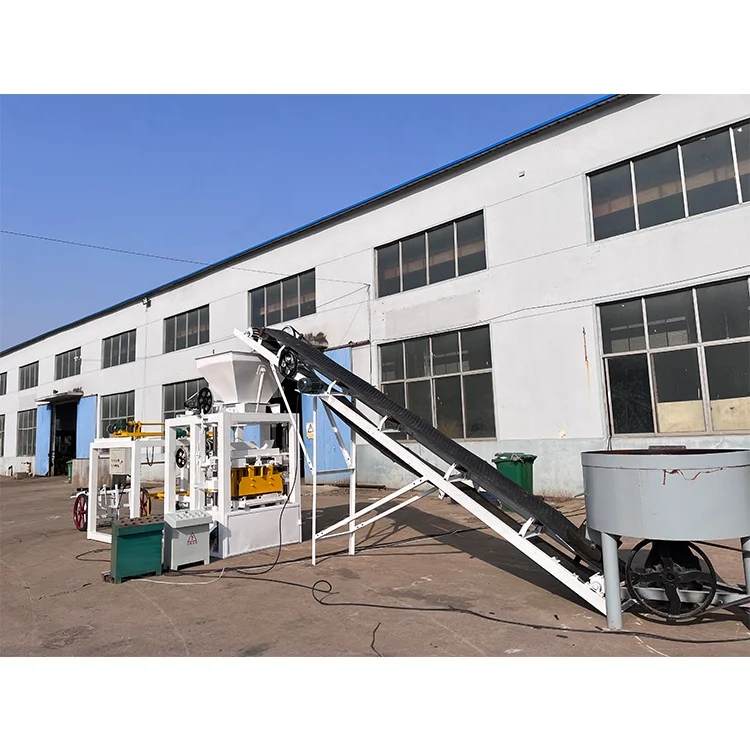
 Stationary block machine