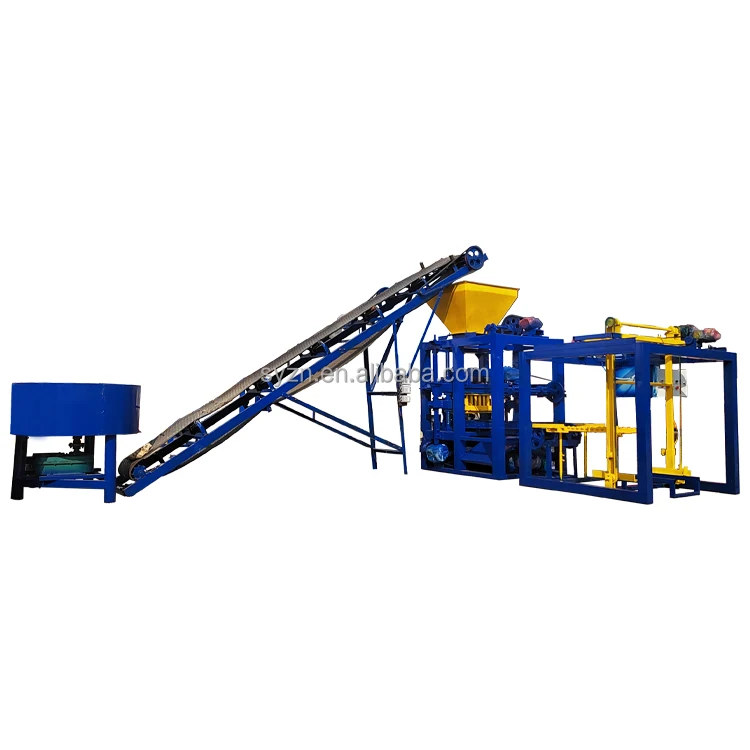
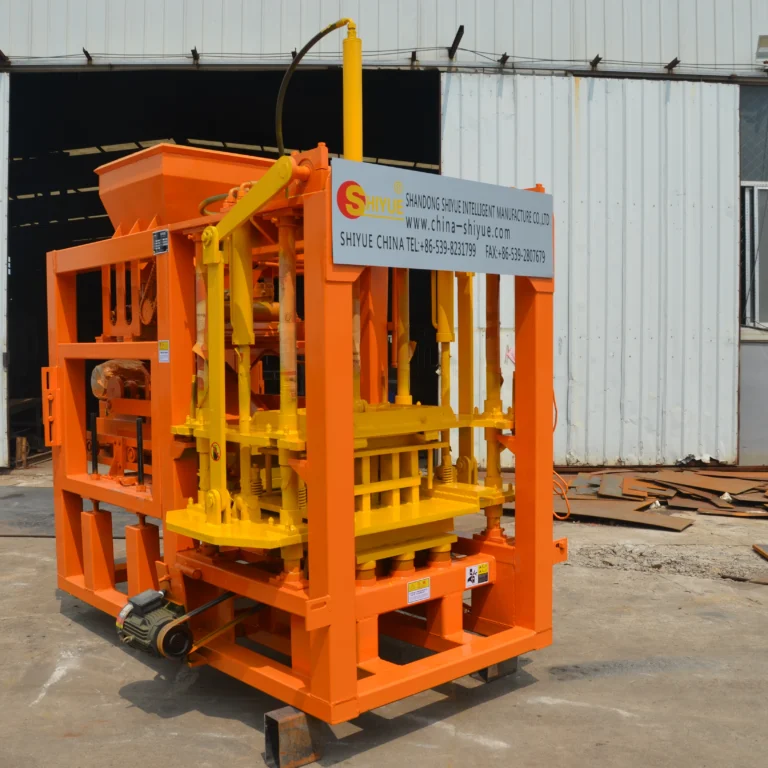
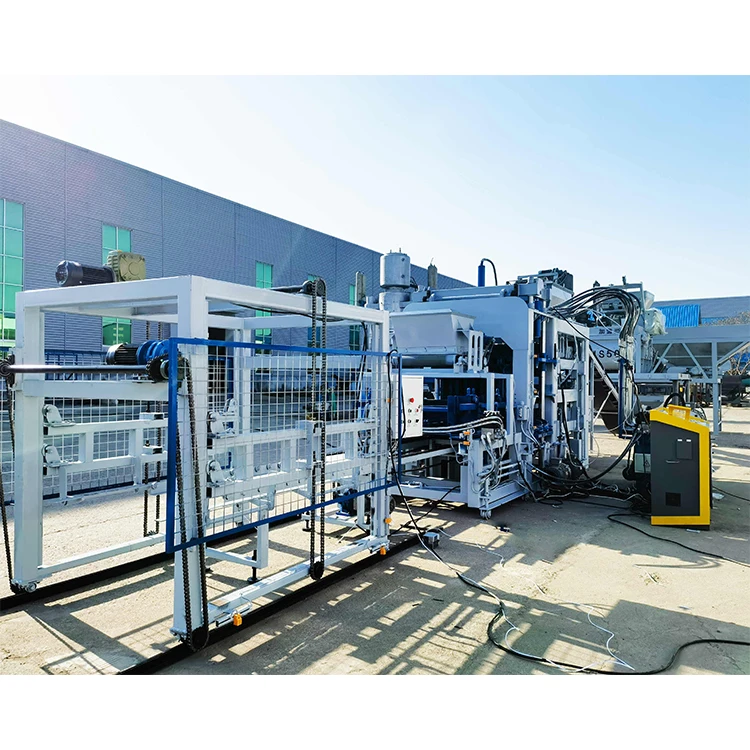
Single-focus block machinery — every QT5-15 configuration pairs the press with matched moulds, pallets, and handling gear so the whole line runs as one system instead of separate supplier add-ons.
Technical Specifications
| Parameter |
Value |
| Model |
QT5-15 |
| Product Type |
Automatic Hydraulic Block Making Machine |
| Control System |
PLC with fault diagnosis and long-distance controlling capability |
| Vibration System |
Synchronization vibration, adjustable frequency (low for feeding, high for compaction) |
| Material Feeding |
Dedicated storage and dispensing system for feeding accuracy |
| Output (400×200×200mm hollow, 5 pcs/mould) |
900–1,200 pcs/h |
| Output (400×150×200mm hollow, 6 pcs/mould) |
1,080–1,440 pcs/h |
| Output (240×115×53mm solid brick, 32 pcs/mould) |
5,760–7,680 pcs/h |
| Output (200×100×60mm rectangular paver, 25 pcs/mould) |
3,600–4,500 pcs/h |
| Output (225×112.5×60mm zigzag paver, 16 pcs/mould) |
2,304–2,880 pcs/h |
| Cycle Time (hollow block & solid brick) |
15–20 s |
| Cycle Time (rectangular & zigzag paver) |
20–25 s |
| Daily Output — 8 hr (400×200×200mm hollow) |
7,200–9,600 pcs |
| Daily Output — 8 hr (400×150×200mm hollow) |
8,640–11,520 pcs |
| Daily Output — 8 hr (240×115×53mm solid brick) |
46,080–61,440 pcs |
| Daily Output — 8 hr (200×100×60mm rectangular paver) |
28,800–36,000 pcs |
| Daily Output — 8 hr (225×112.5×60mm zigzag paver) |
18,432–23,040 pcs |
| Mould Formats |
Hollow block, solid brick, rectangular paver, zigzag paver |
| Automation Level |
Automatic |
| Hydraulic Pressure |
To be confirmed per buyer specification |
| Vibration Force |
To be confirmed per buyer specification |
| Pallet Size |
To be confirmed per buyer specification |
| Voltage & Frequency |
Configurable to buyer site supply |
Application Suitability
| Application |
Material or Output |
| Hollow block production for building walls |
Crushed stone, cement, sand aggregate mixes |
| Solid brick manufacturing |
Cement and fine aggregate blends |
| Rectangular paving brick for walkways and yards |
Coarse aggregate with cement binder |
| Zigzag interlocking paver for driveways |
Graded aggregate and cement mix |
| On-site block production for housing projects |
Locally sourced raw materials adjusted to mix design |
What "1,200 Pieces per Hour" Really Means for an Automatic Block Making Machine Manufacturer
Every capacity figure on this page is tied to a specific block size, mould cavity count, and cycle time — not a single headline number.
Buyers often receive quotations stating a peak hourly output without naming the format behind that figure. A QT5-15 rated at 1,200 pieces per hour assumes a 400×200×200 mm hollow block with five cavities per mould. Switch to a 240×115×53 mm solid brick with thirty-two cavities and the same press delivers up to 7,680 pieces per hour, yet the machine footprint and power draw stay essentially the same. Without that context, daily production targets fall short and buyers blame the equipment. I have watched contractors plan entire project timelines on a catalogue number that never matched the format they actually sold [NEED_CITE: common block format dimensions and cycle time assumptions in capacity quotations].

Placing the QT5-15 on the Full Machine Range
The QT5-15 sits in the mid-range automatic tier of a stationary block machine lineup focused exclusively on block making machinery. Below it, semi-automatic models serve smaller plants with lower investment and manual pallet handling. Above it, higher-output automatic lines add full stacking and cubing stations. This tier covers the volume a growing block plant needs while leaving room to add pallet handling automation later without replacing the press itself. An automatic block making machine manufacturer that only builds block equipment can size the press, mould, and pallet as a matched set rather than bolting together components from unrelated suppliers.
Choosing the Right Tier Before You Sign
A first-time block plant entrepreneur typically needs to understand whether a stationary automatic machine fits the daily volume their local market absorbs. Building material distributors comparing automatic versus semi-automatic options benefit from seeing output stated per block format, not per abstract cycle count. Construction contractors working on a single large housing project can evaluate whether the QT5-15 output tier covers their total block demand before deciding on a larger or mobile unit. The decision hinges on format, not just throughput — a buyer selling mainly 400×200×200 mm hollow blocks needs a different daily target than one focused on 240×115×53 mm solid bricks [NEED_CITE: block format demand patterns in developing construction markets].
How Vibration and Hydraulic Settings Shape Block Density
The QT5-15 uses synchronization vibration with adjustable frequency — low frequency during material feeding to settle the mix into the mould evenly, then high frequency during compaction to drive density. If a buyer’s local aggregate carries high clay or silt content, vibration force alone may not produce adequate block strength; hydraulic pressure must compensate. On a past order for a Middle Eastern site, the aggregate’s clay content was far above the standard test mix, and daily output dropped sharply until vibration and hydraulic parameters were re-tuned to that specific material. Pallet size also matters: if the curing yard uses a particular forklift, the pallet dimensions must match that equipment, not just the press opening. Mould change time determines whether switching from hollow blocks to pavers eats a full shift or finishes during a lunch break, directly affecting format flexibility.
The Hidden Cost of Skipping Configuration Details
When voltage, frequency, and PLC display language are not confirmed before shipment, the machine arrives and sits idle while electricians source transformers or operators struggle with an unfamiliar interface. Moulds and hydraulic wear parts that are not included in the initial spare parts list force the buyer to wait weeks for a replacement the first time a component wears. Pallet handling and stacking omitted from the quotation mean fresh blocks are stacked by hand, erasing the labour advantage the automatic press was supposed to deliver. Each of these gaps turns a planned commissioning week into a month-long delay [NEED_CITE: industrial machinery commissioning delays caused by specification mismatches].
Why Buyers Source This Automatic Block Making Machine Here
Block machinery is the single product focus, so the QT5-15 is never treated as one item in a broad catalogue — every configuration starts with the buyer’s actual mix design, target block format, and local aggregate. Moulds are designed and supplied for the formats the buyer’s market sells, including custom drawings when a regional format is not in the standard list. Automation level is selectable; a buyer can start with the QT5-15 in semi-automatic mode and add pallet feeding or stacking stations as demand grows. Installation support includes operator training on the specific PLC interface and mould change procedure. Line layout documents state the exact block format behind each output figure, removing guesswork from daily production planning.
Documentation & Verification
- Machine specification sheet listing hydraulic pressure, vibration force, pallet size, and voltage confirmed to your site
- Line layout and capacity calculation showing output per block format, not a single aggregate number
- Mould drawing and format list with cycle time stated for every block type included in your order
- Factory test record on your specified block format before the QT5-15 leaves the workshop
- Packing photographs and customs documentation support for smooth port clearance
Installation, Commissioning & Support
- Foundation plan accounts for the QT5-15 vibration table load and hydraulic power unit placement
- Electrical supply confirmed for your site voltage and frequency before the PLC is programmed
- Press, hopper, and conveyor shipped in bolted modules for container loading and on-site reassembly
- First-run commissioning includes mould installation, vibration tuning, and cycle time verification per format
- Operator training covers PLC fault diagnosis screen, mould change procedure, and daily greasing points
- Wear parts list identifies hydraulic seals, vibration springs, and mould liner replacement intervals
What to Include in Your Inquiry
Send the block format your market sells most — dimensions, wall thickness, and target compressive strength. State your daily output target and the number of working hours per shift. Include the local aggregate type, any known clay or silt content, and your available voltage and frequency. With these details, the QT5-15 configuration can be quoted as a matched system rather than a bare press.
Frequently Asked Questions
Q: How is the QT5-15 output capacity verified and which block format is each figure based on?
A: Every capacity figure is tied to a specific block size, mould cavity count, and cycle time. For example, 900–1,200 pieces per hour assumes a 400×200×200 mm hollow block with five cavities and a 15–20 second cycle. The quotation includes a line layout document stating the format behind each number so daily targets are honest before you commit.
Q: Where does the QT5-15 sit in the full block machine range?
A: It occupies the mid-range automatic tier among stationary block machines. Below it are semi-automatic models for lower investment and manual pallet handling. Above it are higher-capacity automatic lines with full stacking and cubing. The QT5-15 lets buyers start automatic and add handling stations later as volume grows.
Q: What voltage, frequency, and PLC language options are confirmed before shipment?
A: Voltage and frequency are configured to your site supply — typically three-phase 380 V, 415 V, or 440 V depending on the destination market. The PLC display language is set to your operator’s preference before factory testing so the machine runs from day one without interface translation delays.
Q: What supporting equipment is included or available as add-on with the QT5-15?
A: The base quotation covers the press, vibration table, and PLC control. Pallet feeding systems, automatic stacking, curing rack handling, and cubing stations are available as add-on modules. Each supporting station is sized to match the QT5-15 cycle time so the press is never left waiting for a pallet or stacked output.

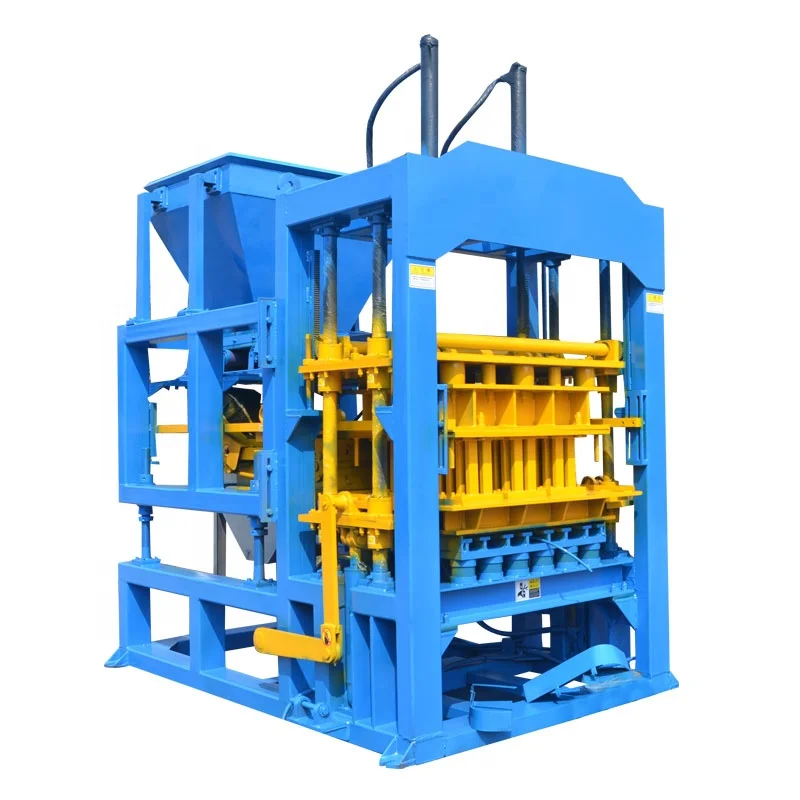
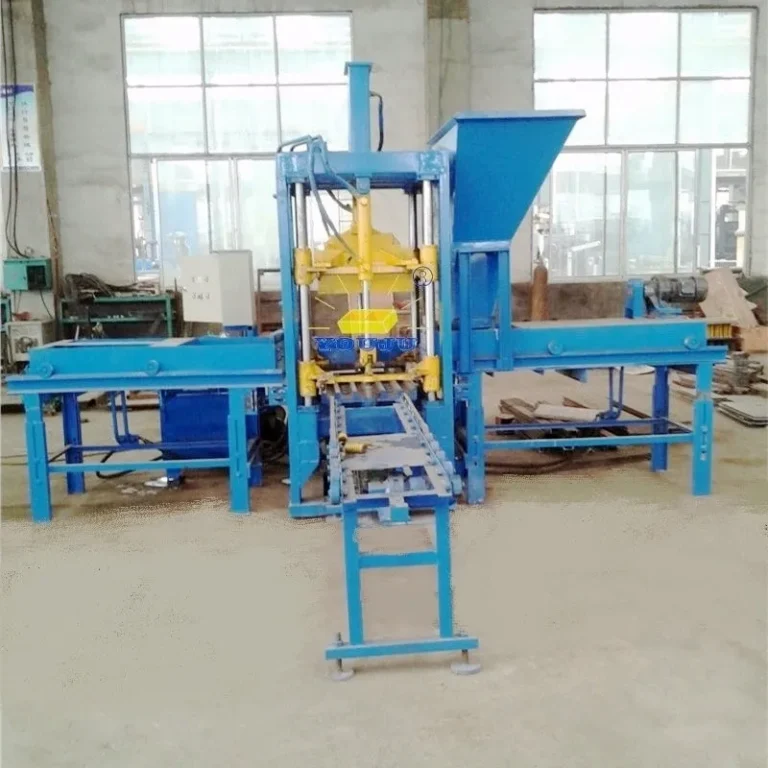 Stationary block machine