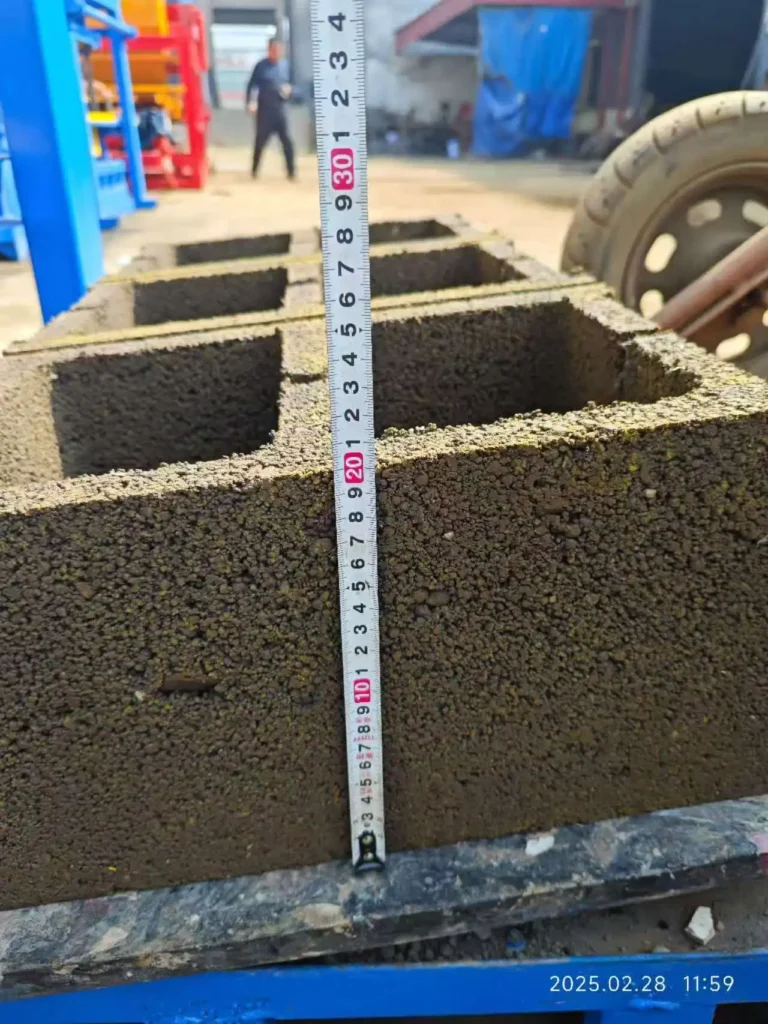
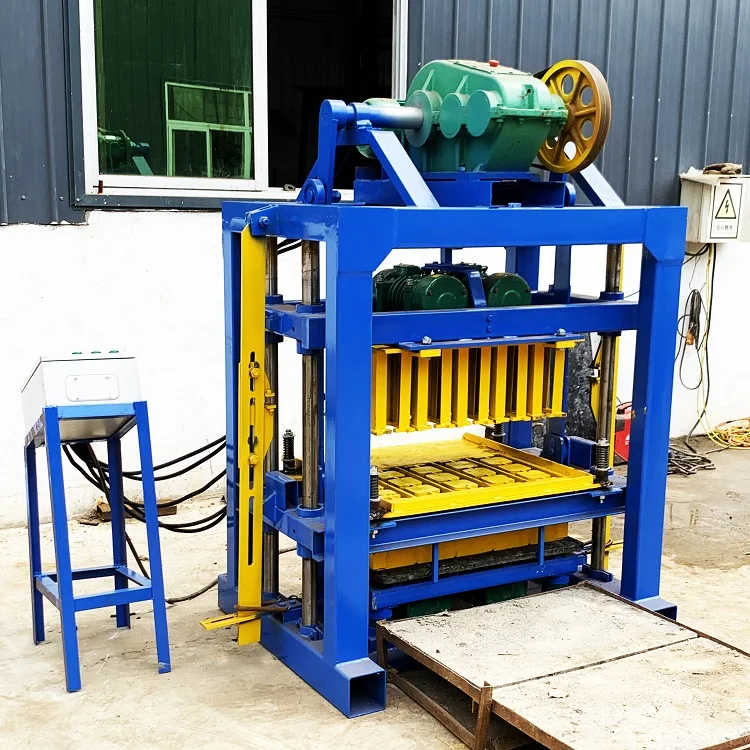
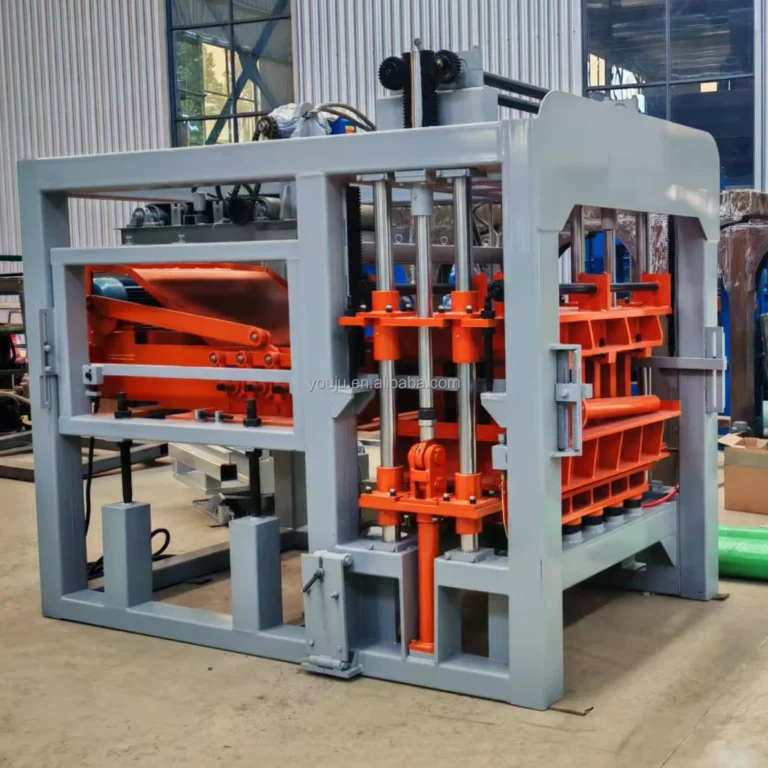
Single-Focus Machinery Alignment — the QT8-15 is specified as a matched system of press, mould, pallet, and handling rather than sourced from fragmented suppliers, ensuring the output tier fits your plant footprint before you commit.
Technical Specifications
| Parameter |
Value |
| Model |
QT8-15 |
| Product Type |
Automatic Stationary Concrete Block Making Machine |
| Overall Dimensions (L×W×H) |
8400×1700×2950 mm |
| Overall Power |
37 kW |
| Machine Weight |
10000 kg |
| Vibration Frequency |
2800–4500 r/min |
| Main Vibration Form |
Platform Vibration |
| Molding Cycle |
15–25 s (basis to be confirmed per block format and material) |
| Pallet Size |
950×900 mm |
| Factory Area Required |
600 m² |
| Control System |
PLC with fault diagnosis and long-distance controlling capability |
| Automation Level |
Automatic |
| Feeding System |
Particular storage and description material system for feeding accuracy |
| Voltage |
Customized to buyer’s local voltage and frequency |
| Applied Products |
Concrete blocks, hollow/solid blocks, pavers, interlocking blocks, curbstone, colored pavers |
| Key Features |
Platform vibration, PLC fault diagnosis, remote control capability, adjustable frequency |
| Warranty |
1 year for the whole machine (excluding spare parts) |
Application Suitability
| Application |
Material or Output |
| Hollow block production |
Crushed stone, sand, cement, water — common for load-bearing and partition walls |
| Solid block production |
Dense aggregate mixes for structural masonry units |
| Paving block production |
Fine aggregate with pigment for colored surface layers |
| Interlocking brick production |
Graded sand and cement for dry-stack retaining walls and driveways |
| Curbstone production |
Coarse aggregate with high cement content for roadside and kerb applications |
Where the QT8-15 Fits When Capacity Quotations Leave Buyers Guessing
A cycle-time figure means nothing unless the block format behind it is stated upfront.
I once reviewed a quotation where the supplier promised a certain hourly cycle count without specifying which block was running. The buyer assumed standard hollow blocks, but the test was done on thin pavers. When real production started with the local hollow block spec, daily output dropped sharply. With the QT8-15 automatic stationary block machine manufacturer quotations, the capacity line must state the assumed format, wall thickness, and mix before any number is meaningful. Buyers who skip this step end up with a machine that technically meets spec on paper but underdelivers on the factory floor [NEED_CITE: block format assumptions in capacity calculations for stationary block machines].
Positioning the QT8-15 in the Full Automatic Range
The QT8-15 sits in the mid-to-high automatic tier of the stationary block machine range. It targets buyers who have outgrown semi-automatic workshop volume and need consistent daily output without jumping straight to a high-capacity line that demands a much larger plant. The 600 m² factory area requirement places it between entry-level setups and full-scale production plants, making it a realistic step for entrepreneurs and expanding contractors alike.
From Semi-Automatic Volume to Automatic Consistency
Semi-automatic machines shift pallet handling onto the operator, which caps throughput and introduces variability. The QT8-15 automatic stationary block machine manufacturer configuration removes manual pallet feeding from the critical path, letting the PLC coordinate pressing, feeding, and pallet advance. This does not eliminate labour entirely but moves the operator’s role from physical handling to monitoring and quality checks [NEED_CITE: automation levels in stationary block production lines].
Reading the Numbers That Matter
The platform vibration system runs between 2800 and 4500 r/min, which allows low frequency during material feeding and high frequency during compaction. This two-stage approach matters because local aggregate varies — a sandy mix with high fines needs different vibration behaviour than a coarse crushed-stone mix. The 37 kW overall power rating covers the hydraulic pump, vibration motors, and conveyor drives as a combined load. Pallet size at 950×900 mm determines how many blocks form per cycle, and this dimension must align with whatever curing racks and forklifts the buyer already has on site. The molding cycle of 15–25 seconds varies depending on block height and material, so any capacity estimate must be recalculated per format rather than treated as a fixed number.

The Cost of Misjudging Your Tier
Choosing a machine too small for the target market forces overtime shifts and rushed mould changes that damage tooling. Choosing one too large leaves the buyer paying for idle capacity and a plant footprint that sits half-empty. I have seen contractors order a high-tier line only to discover their local curing yard cannot absorb the output, so freshly pressed blocks pile up on the floor waiting for rack space. Matching the QT8-15 to a realistic daily target avoids both extremes and keeps the investment proportional to actual sales volume [NEED_CITE: consequences of oversizing block production equipment].
Why Source This Tier Here
Block machinery is the single focus of this operation, so the QT8-15 is not assembled from unrelated suppliers and then bolted together on site. The machine, mould, pallet, and handling equipment are specified as one matched system. Configuration is set against the buyer’s actual mix design and local aggregate rather than a catalogue default, which matters because a QT8-15 automatic stationary block machine manufacturer setup tuned for river sand performs differently than one tuned for crushed limestone. Mould design covers the formats the buyer’s market actually sells, including custom drawings when a standard catalogue mould does not fit. Automation level is selectable, so a buyer can start at a basic automatic configuration and add stacking or cubing later as volume grows. Installation support includes operator training so the first production run is not a costly learning exercise.
Documentation & Verification
- Line layout and capacity calculation stating the block format assumed for each output figure
- Machine specification sheet matched to the ordered QT8-15 configuration
- Mould drawing and format list showing every block type the machine will produce
- Pallet specification confirming size, material, and compatibility with existing curing racks
- Voltage and control language confirmation recorded before production begins
- Factory test record covering the buyer’s target block format before dispatch
Installation, Commissioning & Support
- Foundation planning based on the 8400×1700 mm footprint and 10000 kg machine weight
- Dedicated power circuit sized for the 37 kW total load at the buyer’s confirmed voltage and frequency
- Machine dismantled for container loading and reassembled on site with alignment checks
- PLC fault diagnosis system calibrated and display language verified during commissioning
- Operator training covering mould change procedure, feeding system adjustment, and daily maintenance routines
- Wear parts and mould list provided with recommended replacement intervals
What to Share Before Requesting a Quote
To size the QT8-15 correctly within the range, the buyer should provide the target block formats and daily volume goal, the local raw material available with any known aggregate grading, and the confirmed voltage and frequency at the installation site. Details on existing curing rack dimensions and forklift capacity help match pallet specification. If the operation is upgrading from semi-automatic, noting the current output and bottleneck helps determine whether this tier is the right step.
Frequently Asked Questions
Q: Where does the QT8-15 sit between semi-automatic and high-capacity automatic lines?
A: The QT8-15 occupies the mid-to-high automatic tier in the stationary range. It suits buyers who need more consistent output than a semi-automatic machine provides but are not ready for the plant footprint and investment of a high-capacity line. The 600 m² factory area requirement marks a practical midpoint for expanding operations.
Q: How should capacity be calculated before comparing this machine to others?
A: Capacity must be stated per block format with wall thickness and mix composition defined. A molding cycle of 15–25 seconds applies differently to a hollow block versus a thin paver. Without naming the format behind the cycle figure, any comparison between machines is unreliable.
Q: What plant space and utility setup does the QT8-15 require?
A: The stated factory area requirement is 600 m², which covers the press, material feeding, pallet handling, and basic curing rack access. The 37 kW power demand needs a dedicated circuit at the buyer’s local voltage and frequency, confirmed before production starts to avoid commissioning delays.
Q: Can automation be expanded after the QT8-15 is installed?
A: Yes. The automation level is selectable, so a buyer can begin with basic automatic operation and add automatic stacking or cubing modules later as production volume grows. The PLC control system supports this upgrade path without replacing the core press.
Q: What documents confirm the configuration matches the buyer’s needs?
A: The documentation package includes a line layout with capacity calculation per format, a matched specification sheet, mould drawings, pallet specification, voltage and language confirmation, and a factory test record run on the buyer’s target block format before the machine ships.

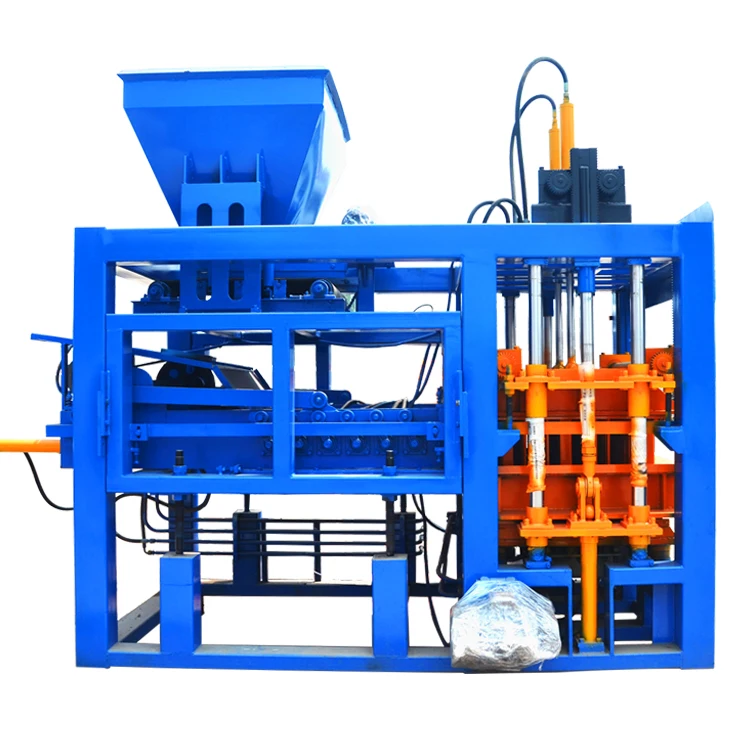
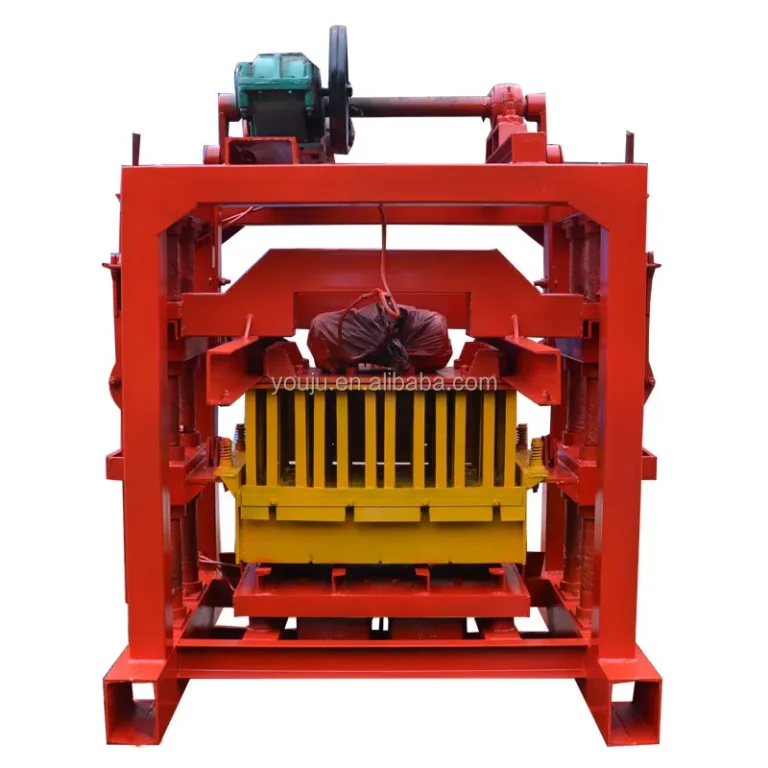 Stationary block machine