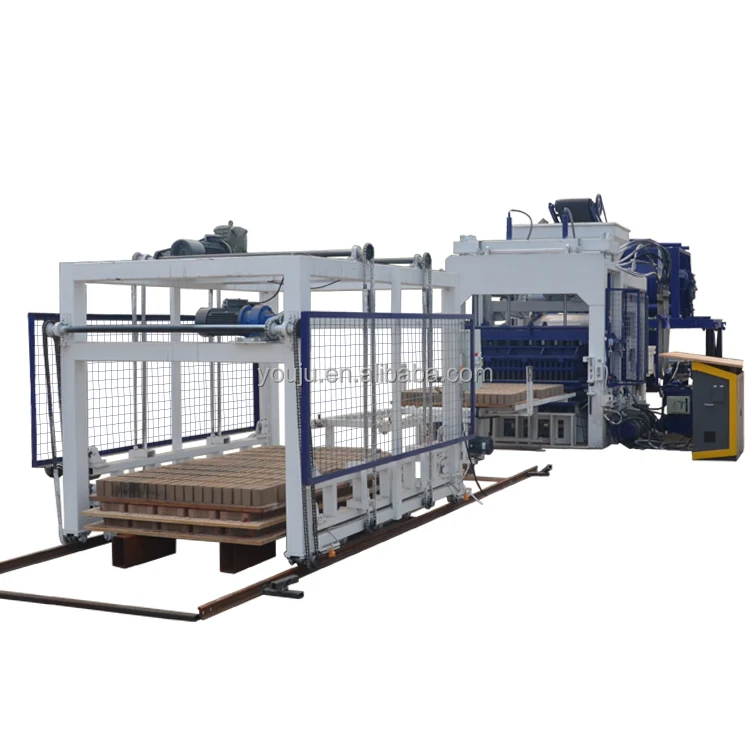
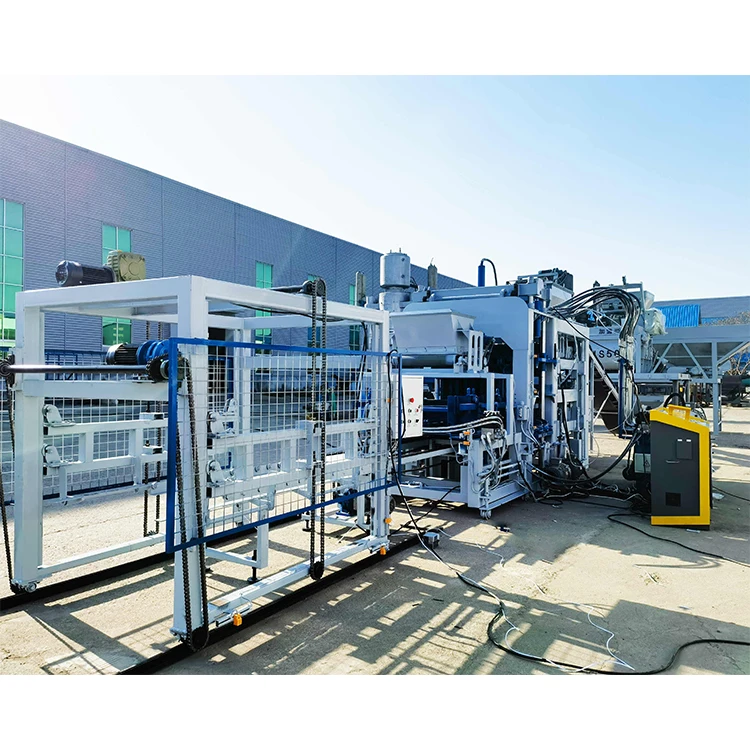
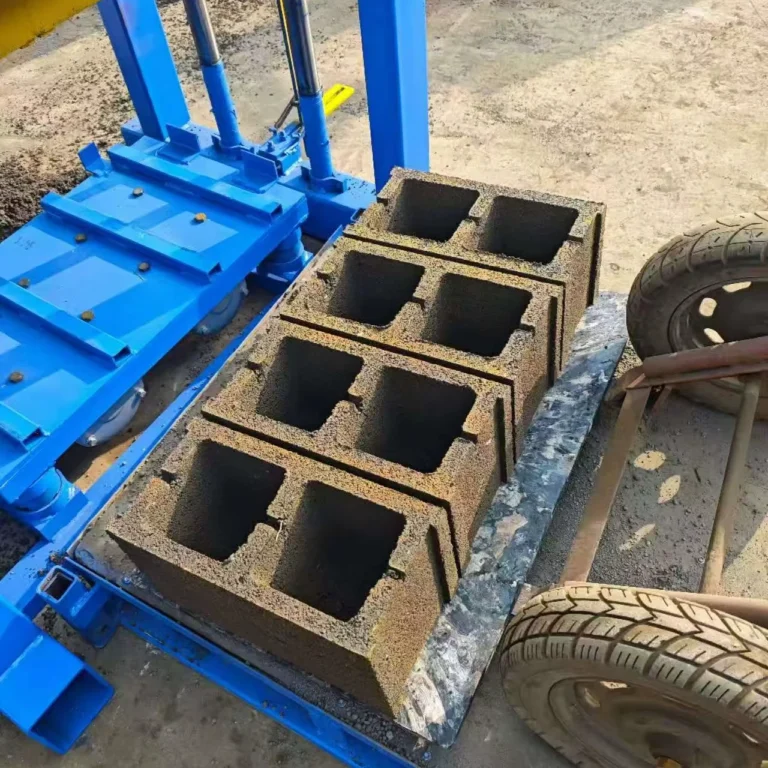
Entry-tier block press matched as one system — machine, mould, pallet and handling specified together against your actual block format and site utilities, not quoted as isolated catalogue items.
Technical Specifications
| Parameter |
Value |
| Model |
QTJ4-40 |
| Product Type |
Manual Movable Block Making Machine |
| Vibration Form |
Platform Vibration |
| Vibration Frequency |
2800 r/min |
| Pallet Size |
850×450 mm |
| Overall Dimensions (L×W×H) |
1350×1460×1800 mm |
| Net Weight |
1 T |
| Factory Area |
200 m² |
| Worker Requirement |
1–3 people |
| Output Capacity (Hollow Block 400×200×200mm) |
360 pcs/h, 2880 pcs/day (based on 4 pcs per mould) |
| Output Capacity (Hollow Block 400×150×200mm) |
500 pcs/h, 4000 pcs/day (based on 5 pcs per mould) |
| Output Capacity (Interlocking Brick 225×112.5×60mm) |
900 pcs/h, 7200 pcs/day (based on 9 pcs per mould) |
| Raw Materials |
Concrete, cement, fly ash, crushed stone, sand, dust, gravel, slag |
| Recommended Mix Ratio |
Cement 8%–10%, sand 30%–40%, stone 50%–60% (approx. 1:4:5) |
| Mould Change System |
Manual (top die push and pull) |
| Scraper |
Automatic scraper |
| Power Source |
Engine and motor (voltage and frequency to be confirmed per site) |
| Automation Level |
Manual / Semi-automatic |
Application Suitability
| Application |
Material or Output |
| Hollow block production for residential wall construction |
Crushed stone, sand, cement at 1:4:5 ratio |
| Interlocking brick manufacturing for paving and landscaping |
Fine aggregate and cement blends for 225×112.5×60 mm format |
| On-site block making for building contractors |
Local aggregate with cement, fly ash or slag |
| Small-scale paver and curbstone production |
Dust, gravel and cement mixes for colored or standard pavers |
| First-time block plant startups |
Low-capital entry with 200 m² footprint and minimal crew |
What "2880 Blocks per Day" Actually Means on Site
Capacity numbers mean nothing until you know which block format they assume.
Catalogue sheets for small block machines often quote a single daily figure derived from the smallest mould available, then ship to a buyer who only produces large hollow blocks. The QTJ4-40 manual block machine manufacturer output data here is tied to specific formats: 2880 pieces per day for 400×200×200 mm hollow blocks at four per mould, rising to 7200 pieces per day only when running 225×112.5×60 mm interlocking bricks at nine per mould. If your market buys hollow blocks, the smaller interlocking figure is irrelevant to your planning [NEED_CITE: block format and cycle time relationship in manual block production]. Quoting one number without the mould context is how plants end up producing a fraction of what was promised.

Where This Machine Sits in the Range
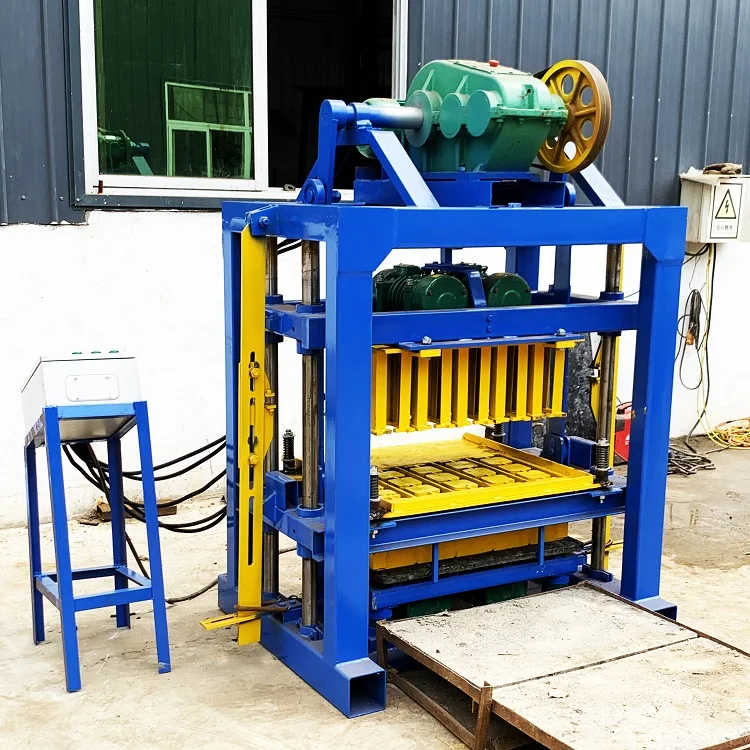
The QTJ4-40 occupies the entry tier of the stationary block machine lineup. It is built for entrepreneurs, on-site contractors and small workshops that need a low-capital press with a compact footprint. Platform vibration at 2800 r/min is matched to the small pallet and mould sizes typical at this tier, giving consistent density without the energy draw of larger hydraulic systems. If your daily target stays within the thousands rather than tens of thousands, this tier avoids paying for capacity you will not fill.
Movable Design and What It Changes on Site
Being a movable unit means the QTJ4-40 lays blocks on the ground or curing floor without requiring a fixed pallet return conveyor. The operator pushes the machine forward after each cycle, leaving the freshly pressed block on its pallet in place. This eliminates the need for a full pallet circulation system, keeping both the purchase cost and the site footprint low. The trade-off is that pallet handling and stacking remain manual or forklift-dependent, which suits open-yard layouts where a fixed curing rack system would be impractical [NEED_CITE: movable versus stationary block machine site layout requirements].
Vibration Force, Pallet Size and Block Density
Platform vibration at 2800 r/min transmits force directly through the pallet into the mould cavity, compacting the mix from below. On a machine of this size the 850×450 mm pallet limits the mould area, which concentrates vibration energy into a smaller volume and helps achieve uniform density in small-format blocks. The recommended mix of cement 8%–10%, sand 30%–40% and stone 50%–60% provides enough fines for the vibration to consolidate without segregation. Deviating from this range with highly clay-rich local soils will reduce compaction effectiveness, because clay absorbs vibration energy differently than crushed aggregate. Mould change uses a manual top die push-pull mechanism with an automatic scraper to clear excess material, keeping format switches feasible within a single shift for a trained crew.
The Cost of Skipping the Utility Check
Voltage and frequency are often left until after the machine arrives. The QTJ4-40 ships with both engine and motor options, and if the motor specification does not match the buyer’s local supply, the machine sits idle while a replacement is sourced. This delay compounds when the PLC or control display language has also not been confirmed, leaving the operator with an interface they cannot read [NEED_CITE: voltage and frequency mismatch delays in exported machinery commissioning]. Confirming electrical configuration during the quotation stage costs nothing; correcting it on site costs weeks.
Why Buyers Source This Model Here
Block machinery is the single focus, so the QTJ4-40 arrives as a matched system — machine, mould and pallet specified together rather than assembled from unrelated suppliers. Mould design is based on the formats the buyer’s market actually sells, with custom drawings available when standard options do not cover local requirements. Configuration is set against the buyer’s actual mix design and local aggregate, not a catalogue default. Automation level is selectable, so a plant can start with manual operation and add pallet feeding or stacking later. Installation and commissioning support includes operator training on the specific mould formats shipped with the unit [NEED_CITE: matched block machine system specification versus component assembly].
Documentation & Verification
- Machine specification sheet listing output per block format and assumed mould configuration
- Mould drawing and format list showing dimensions, cavity count and change procedure
- Pallet specification confirming 850×450 mm size and material grade
- Voltage and control language confirmation recorded before production release
- Factory test record run on the buyer’s target block format before dispatch
Installation, Commissioning & Support
- 200 m² site area required with level concrete ground for stable platform vibration
- Electrical supply to match confirmed motor voltage and frequency before machine arrival
- Machine arrives as a single unit within 1350×1460×1800 mm, requiring forklift for positioning
- First-cycle calibration performed on buyer’s local aggregate and confirmed mix ratio
- Mould change training delivered on-site covering the manual push-pull and scraper sequence
- Wear parts list provided with hydraulic and mould component identification for reordering
What to Share Before Quoting
Send your target block format with dimensions, the daily volume your market requires and a sample or description of your local aggregate. Include your site voltage and frequency, and confirm whether the machine will run in an open yard or enclosed workshop. If you already have pallets or forklifts on site, share those dimensions so the pallet specification can be matched [NEED_CITE: pre-quotation information requirements for block machine configuration].
Frequently Asked Questions
Q: How is daily output verified and what block format does each figure assume?
A: Every output figure is tied to a specific mould and block size. For example, 2880 pieces per day is based on the 400×200×200 mm hollow block mould producing four blocks per cycle, while 7200 pieces per day assumes the 225×112.5×60 mm interlocking brick mould at nine per cycle. The capacity calculation sheet states the assumed format for each number.
Q: What voltage and frequency options are available for the motor?
A: The motor configuration is set to match the buyer’s site supply. Voltage and frequency must be confirmed during the quotation stage so the correct motor is installed before dispatch. Both engine-driven and electric motor options are available depending on site utility availability.
Q: How long does a mould change take and what tools are required?
A: The manual top die push-pull system allows format changes within a shift using standard hand tools. The automatic scraper clears residual material during the swap. Exact change time depends on the operator’s familiarity with the system, and training is provided during commissioning.
Q: What raw material mix ratio is recommended and can it be adjusted?
A: The baseline recommendation is cement 8%–10%, sand 30%–40% and stone 50%–60%. This ratio can be adjusted to suit locally available aggregates, but highly clay-rich soils may require mix modification to maintain block density. A soil sample or aggregate description helps determine the right configuration before the machine is built.
Q: What installation space and ground preparation does the QTJ4-40 require?
A: A 200 m² area with level concrete ground is recommended. The compact dimensions of 1350×1460×1800 mm allow placement in small workshops or open yards. Ground must be stable enough to support platform vibration without resonance loss, and space must accommodate pallet storage and curing layout around the machine.

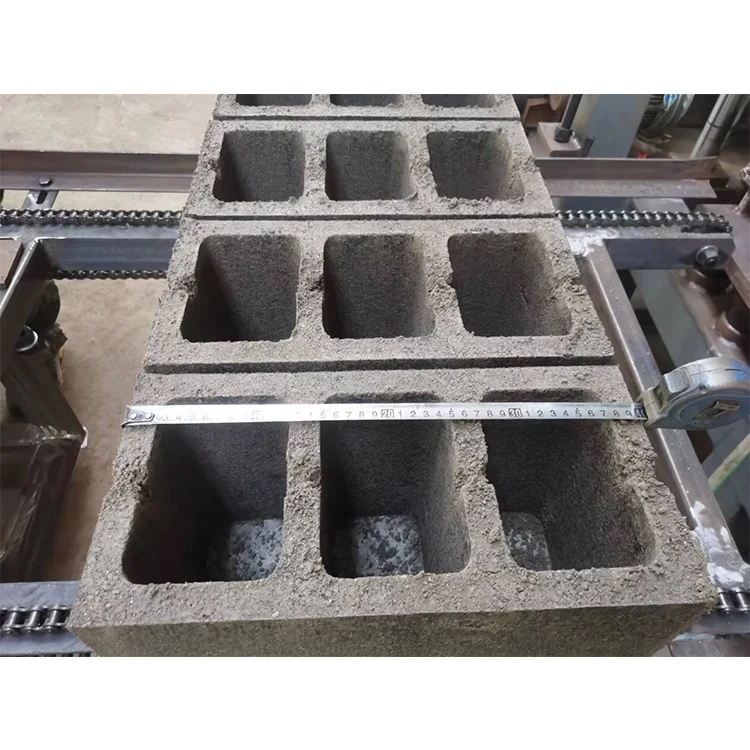 Stationary block machine