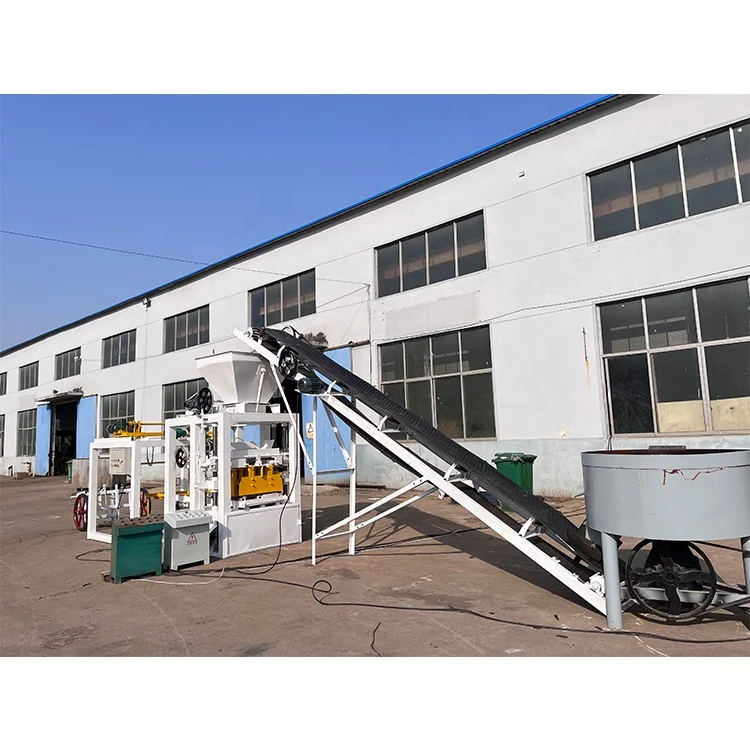
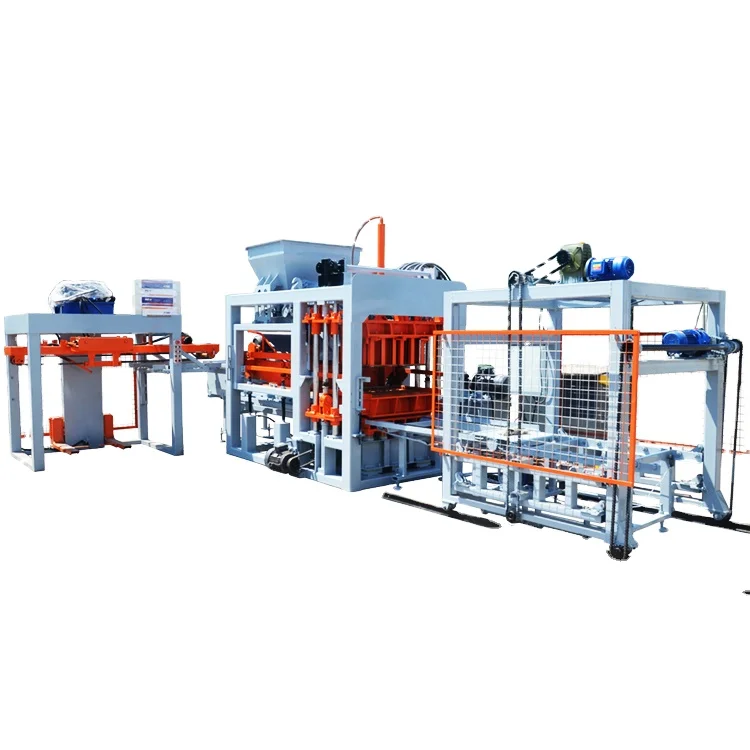
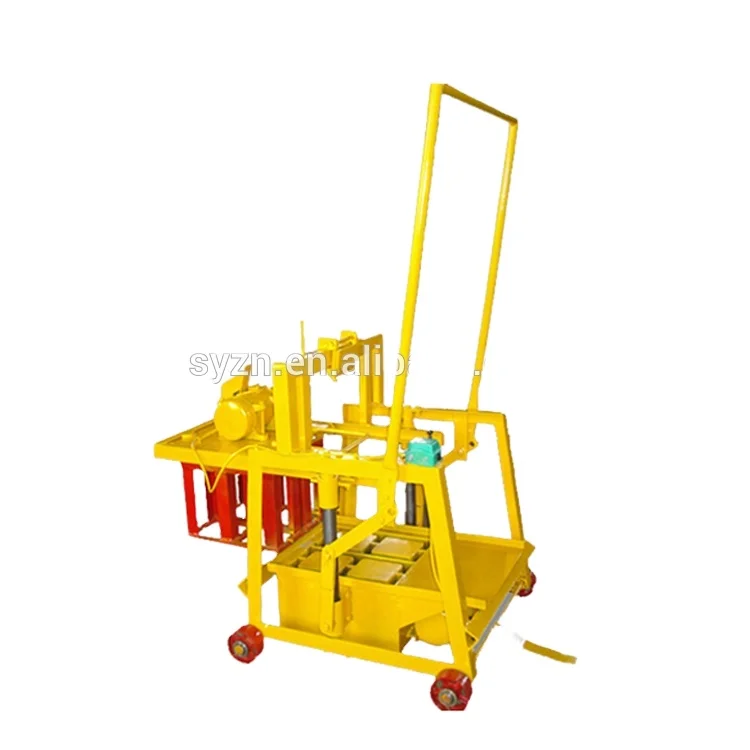
Mid-to-high tier placement — the QT8-15 bridges workshop-class semi-automatic setups and fully automatic production lines, letting buyers map this model against their target output before locking in a configuration.
Technical Specifications
| Parameter |
Value |
| Model |
QT8-15 |
| Product Type |
Hydraulic Concrete Block Making Machine |
| Overall Dimensions (L×W×H) |
8300×1860×3000 mm |
| Rated Pressure |
21 MPa |
| Main Vibration Form |
Platform Vibration |
| Vibration Frequency |
2800–4500 r/min |
| Vibration Force |
45 kN |
| Pallet Size |
950×900 mm |
| Molding Cycle |
15–20 s |
| Overall Power |
55.5 kW |
| Total Mass |
8 T |
| Demolding Method |
Hydraulic |
| Factory Area |
300 m² |
| Applied Products |
Concrete blocks, hollow/solid blocks, pavers, interlocking blocks, curbstone, colored pavers |
| Raw Material |
Crushed stone, sand, cement, dust, fly ash, gravel, slag |
| Output Capacity |
Capacity table available per block format (basis not stated in source — confirm block format, material, thickness) |
| Voltage & Frequency |
Configurable (to be confirmed before production) |
| Control System |
PLC or MCC control available (brand and language to be confirmed) |
| Automation Level |
Selectable from semi-automatic to fully automatic |
| Stacking Method |
Manual pallet handling through to automatic stacking (to be confirmed) |
| Warranty |
1 year (excluding spare parts) |
| Loading |
1×40HQ container (basic equipment) |
Application Suitability
| Application |
Material or Output |
| Hollow block production |
Crushed stone, sand, cement, fly ash |
| Solid block production |
Gravel, sand, cement, slag |
| Paving block and colored paver production |
Fine aggregate, cement, pigment |
| Interlocking brick production |
Sand, crushed stone, cement |
| Curbstone and kerbstone production |
Coarse aggregate, cement |
| On-site project block production |
Locally sourced aggregate and cement |
What "15–20 Second Cycle" Leaves Out for the QT8-15
A cycle time without a named block format tells you nothing about daily output.
Buyers often see a molding cycle of 15–20 seconds and assume a fixed hourly figure, but that number shifts dramatically depending on whether you are pressing a 400×200×200 mm hollow block or a 200×100×60 mm paving brick. I once watched a project in the Middle East plan an entire housing timeline around a quoted cycle, only to discover the figure assumed a format they never intended to produce. [NEED_CITE: cycle time variation across block formats in hydraulic block machines] When the actual format runs slower, the daily shortfall compounds across the project schedule, and no amount of operator effort closes the gap.
Where the QT8-15 Sits Across Output Tiers
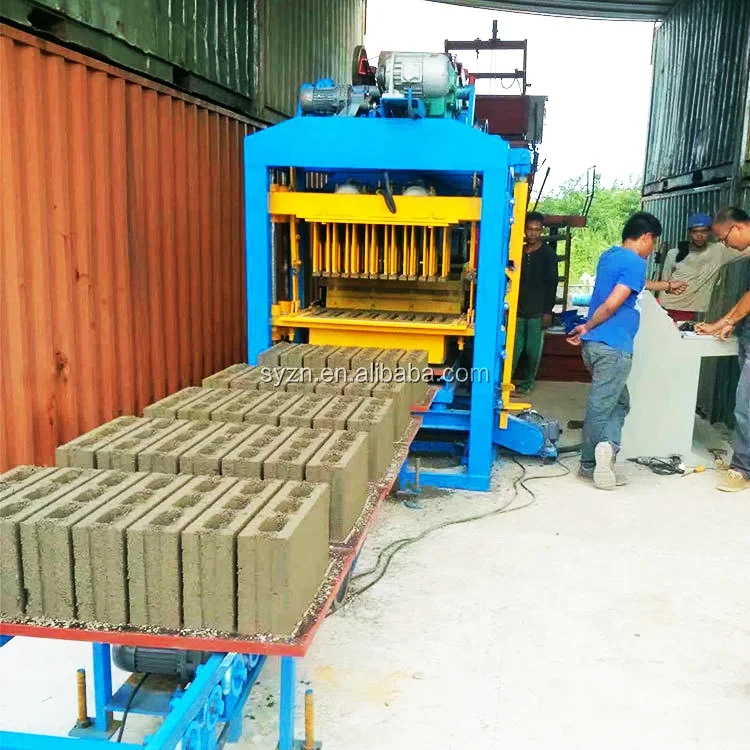
The QT8-15 block machine manufacturer range positions this model between small workshop machines and high-capacity automatic lines. Its 950×900 mm pallet and 8-tonne mass place it firmly in the stationary plant category, requiring a prepared foundation within roughly 300 m². Buyers evaluating their first dedicated block plant often land here because the tier offers room to grow without the investment of a full automatic cubing line from day one.
Matching the Press to the Line Around It
A block press does not run alone. Raw material feeding, mixing, pallet circulation, and stacking must all match the press cycle so the QT8-15 is never left waiting for the next pallet or batch. If the mixer delivers slower than the press consumes, the 15–20 second cycle becomes academic. [NEED_CITE: block production line synchronization and bottleneck analysis] This is why the configuration conversation starts with the line layout, not the press price tag.
Reading the Specs That Actually Shape Production
The 21 MPa rated pressure and 45 kN vibration force work together to compact the mix into a dense, consistent block. Higher vibration frequency — here 2800–4500 r/min — improves surface finish on pavers, while the hydraulic pressure locks the shape during demolding. The 55.5 kW overall power draw tells you the electrical supply must include a dedicated circuit with enough headroom for the vibration motor startup surge. Pallet size at 950×900 mm dictates both the curing rack dimensions and the forklift capacity needed to move stacked pallets around the yard.

The Hidden Cost of Skipping Configuration Detail
When voltage, frequency, and PLC display language are not confirmed before the machine enters production, commissioning stalls on arrival. I have seen a QT8-15 class machine sit idle for weeks because the control panel arrived in a language the operators could not read, while the local electrician rewired the supply to match an unexpected voltage. [NEED_CITE: commissioning delays caused by unconfirmed electrical specifications] That downtime erases any lead time advantage the buyer thought they had gained.
Why Source the QT8-15 Here
Block machinery is the single focus of this operation, so the press, mould, pallet, and handling equipment are specified as one matched system rather than assembled from separate suppliers. Configuration is set against the buyer’s actual mix design and local aggregate, not a catalogue default. Mould design covers the formats the buyer’s market actually sells, including custom drawings when a standard format does not fit. Automation level is selectable, meaning a buyer can commission the QT8-15 as a semi-automatic unit and add automatic stacking or cubing later without replacing the press. Installation support includes operator training so the crew understands mould change procedure and daily maintenance from the first shift.
Documentation & Verification
- Line layout and capacity calculation stating the exact block format assumed for the QT8-15 output tier
- Machine specification sheet with voltage, frequency, and PLC display language confirmed before production begins
- Mould drawing and format list showing included and optional custom moulds for the QT8-15
- Pallet specification matched to the buyer’s curing area dimensions and forklift capacity
- Factory test record on the buyer’s specified block format before dispatch
Installation, Commissioning & Support
- Prepared foundation required within approximately 300 m² to support the 8-tonne QT8-15 mass and vibration load
- Dedicated electrical circuit sized for the 55.5 kW total draw, with voltage and frequency confirmed before wiring
- Equipment shipped in 1×40HQ container with dismantling plan documented for reassembly on site
- Commissioning includes first-run parameter setting for the buyer’s confirmed block format and mix design
- Operator training covers mould change procedure, hydraulic system checks, and daily lubrication points
- Wear parts and mould list provided with recommended reorder intervals based on the buyer’s aggregate abrasiveness
Before You Request a Quote
To match the right configuration, share the block formats you intend to produce, your target daily output per format, and the local aggregate you plan to use. Include your site voltage and frequency, the control language your operators need, and whether you already have pallets, a mixer, or stacking equipment on site. This lets the QT8-15 block machine manufacturer proposal reflect your actual conditions rather than a generic baseline.
Frequently Asked Questions
Q: Where does the QT8-15 sit in the full machine range?
A: The QT8-15 occupies the mid-to-high output tier between semi-automatic workshop machines and fully automatic high-capacity lines. It is a stationary plant-class press requiring a prepared foundation, suited for buyers who have outgrown mobile or egg-laying machines and need a dedicated production setup with room to scale automation over time.
Q: How do I verify real daily output for my block format?
A: Ask for a line layout and capacity calculation that names the specific block format, mix design, and pallet cycle used to derive the output figure. A molding cycle quoted without a named format does not translate directly into daily production numbers, because each format has a different number of cavities per pallet.
Q: What plant footprint and investment level should I expect?
A: The QT8-15 requires roughly 300 m² of factory area including press, mixer, and pallet circulation space, plus additional yard area for curing racks. Investment level depends on automation selection — a semi-automatic configuration with manual pallet handling sits at the lower end, while full automatic stacking and cubing adds to the total.
Q: Can I start semi-automatic and add automation later?
A: Yes. The QT8-15 is configurable from semi-automatic with manual pallet handling up to fully automatic stacking and cubing. Buyers often commission the press in a semi-automatic layout and add automatic pallet feeding or stacking modules once production volume justifies the upgrade.
Q: Which other models should I compare before deciding on this tier?
A: Buyers considering the QT8-15 typically compare it against smaller semi-automatic models for lower daily targets and larger automatic-tier machines for higher volume. The comparison should focus on your specific block format output, pallet size requirements, and the automation path you plan to follow over the next several years.

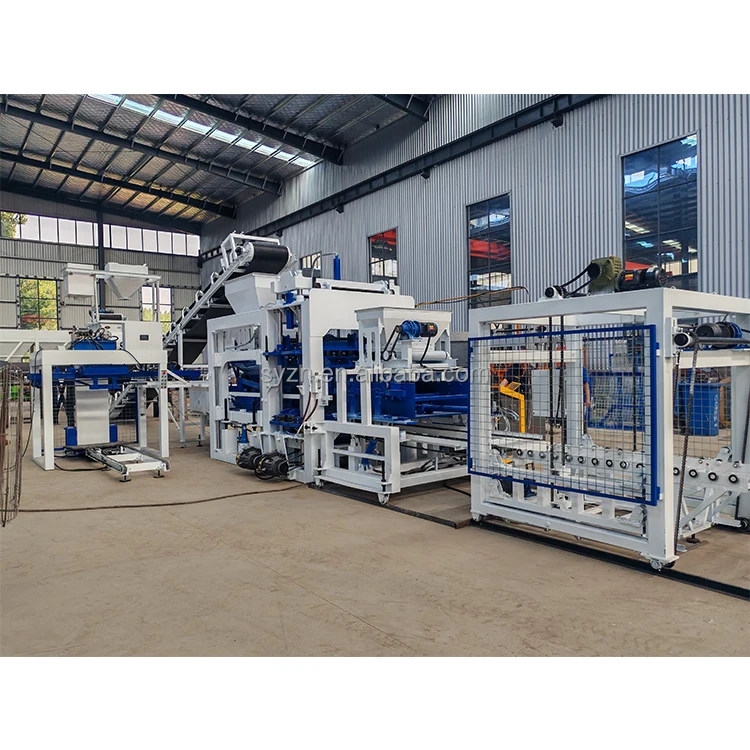
 High quality block machine