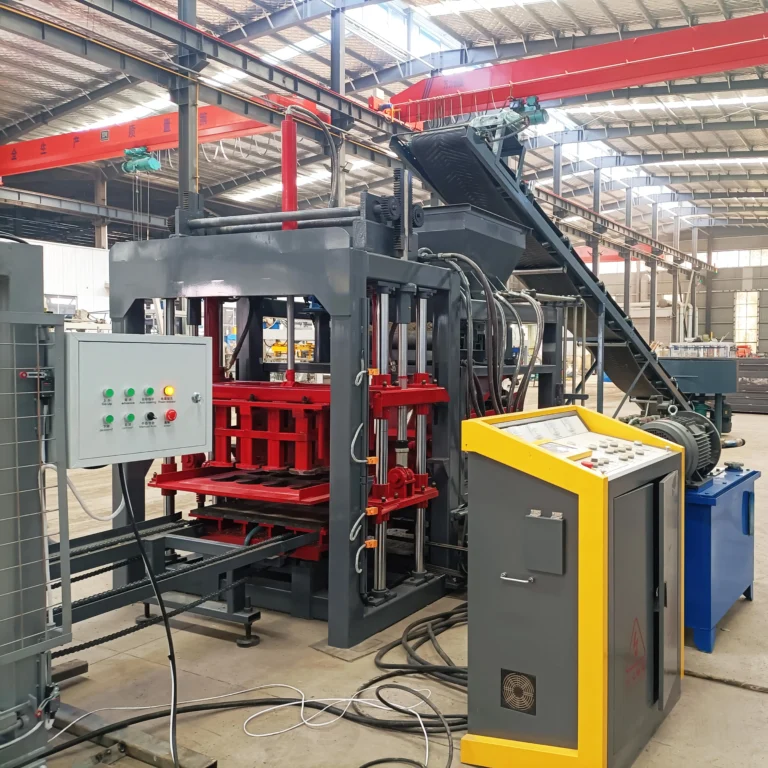
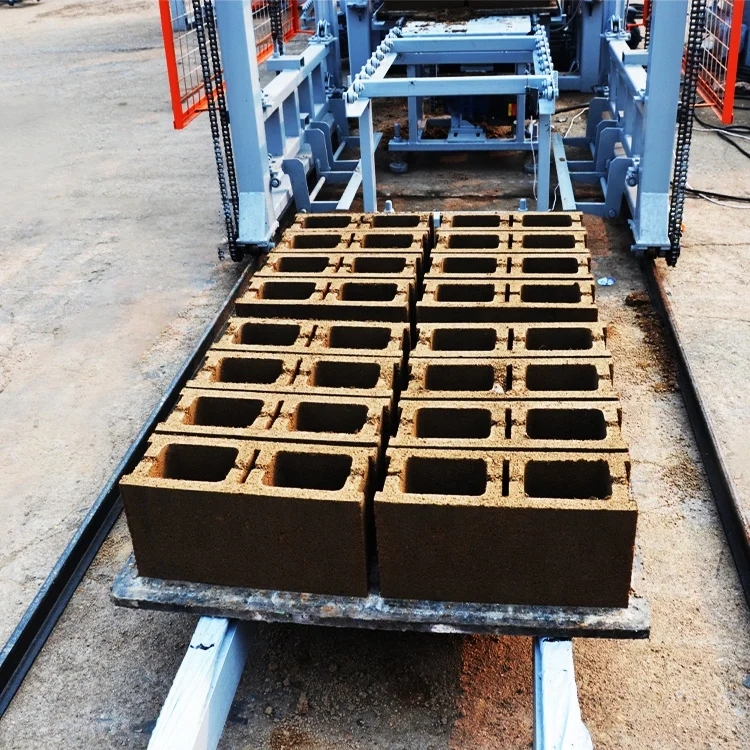
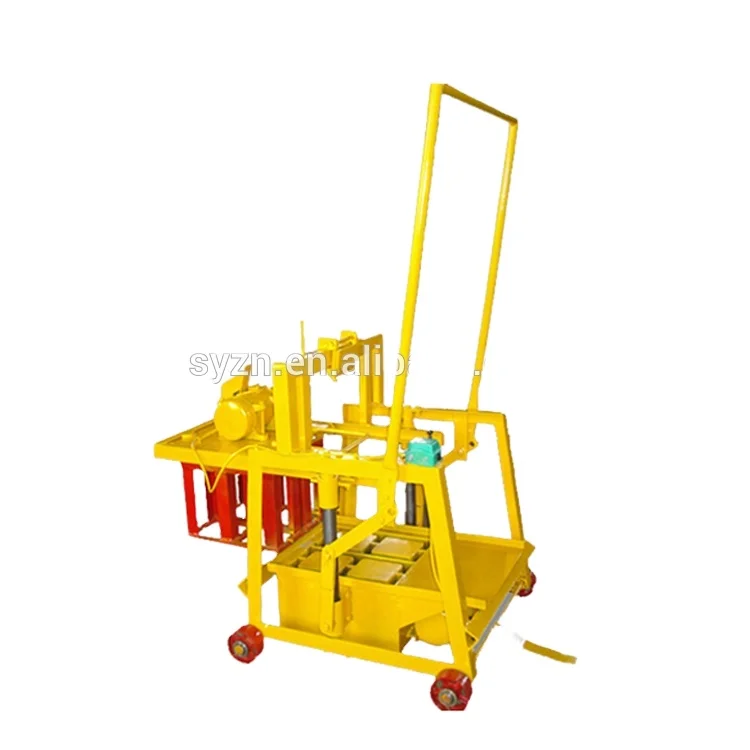
Matched System Focus — The QMJ2-45 mobile egg-laying block machine is configured as a complete production unit where vibration force, mould design, and cycle timing are specified together rather than sourced separately, reducing integration issues common with entry-tier mobile presses.
Technical Specifications
| Parameter |
Value |
| Model |
QMJ2-45 |
| Product Type |
Mobile Egg-Laying Hollow Block Making Machine |
| Machine Power |
1.5 kW |
| Exciting Power |
2 units per mould |
| Molding Cycle |
45 s |
| Output Capacity |
1200–2400 pcs / 8 hours (based on 400×200×200mm & 400×150×200mm hollow block formats) |
| Vibration System |
Bed mould vertical vibration + upper mould compression vibration |
| Automation Level |
Semi-automatic (top die push-pull, automatic scraper) |
| Raw Materials |
Concrete, sand, cement, fly ash, lime, gypsum |
| Machine Weight |
400 kg |
| Overall Dimensions (L×W×H) |
1300 × 1300 × 1150 mm |
| Voltage |
Configurable to buyer’s local voltage and frequency (basis to be confirmed) |
| Pallet Size |
Not stated in source — confirm pallet size and material |
| PLC / Control System |
Not stated in source — confirm |
| Certification |
Not stated in source — confirm |
Application Suitability
| Application |
Material or Output |
| Small-scale hollow block production for start-up block yards |
Sand, cement, fly ash mixes with locally available aggregates |
| On-site construction projects requiring mobile egg-laying operation |
Concrete and lime-gypsum blends without fixed curing plant |
| Entry-tier evaluation before committing to stationary lines |
400×200×200 mm and 400×150×200 mm hollow block formats |
What "1200 Pieces per Day" Actually Means on the QMJ2-45 Mobile Block Making Machine
Output figures only matter when the block format behind them is named.
I have watched buyers compare two machines on a single daily output number, then discover at commissioning that the higher figure assumed a smaller, lighter block their market does not buy. The QMJ2-45 mobile block making machine manufacturer specification here lists 1200 pcs/day for 400×200×200 mm hollow blocks and 1760 pcs/day for 400×150×200 mm hollow blocks — two different formats, two different daily totals [NEED_CITE: block format assumptions in capacity quotations]. When a supplier quotes only one number without naming the format, the real daily output on your actual product can fall well short of expectation. That mismatch is the single most common reason first-time block producers feel misled after delivery.

Where the QMJ2-45 Sits in the Full Machine Range
The QMJ2-45 occupies the entry tier of the mobile and egg-laying segment, designed for producers who need block output without investing in a fixed batching plant, pallet return conveyor, or curing rack system. Buyers stepping into block production for the first time typically start here, then move to semi-automatic stationary models once daily volume demands exceed what a single-operator mobile press can sustain.
Footprint and Relocation on Active Project Sites
At 1300 × 1300 × 1150 mm and 400 kg, this machine can be repositioned across a construction site with standard site equipment, avoiding the fixed foundation and curing area that stationary lines require. Contracting crews producing hollow blocks directly on housing projects use this mobility to follow the build sequence rather than transporting finished blocks from a remote yard [NEED_CITE: mobile block production logistics on infrastructure sites].
Reading the Vibration and Cycle Specs
The 45-second molding cycle combines bed mould vertical vibration with upper mould compression vibration — a dual-action approach that compacts the concrete mix from both directions, improving density consistency across the block face. Machine power at 1.5 kW with two exciting units per mould keeps energy draw low enough for temporary site generators, which matters when a fixed three-phase supply is not yet available. The semi-automatic top die push-pull and automatic scraper remove the heaviest manual actions from the operator, keeping fatigue-related cycle delays out of an eight-hour shift.
The Hidden Cost of Skipping Voltage Confirmation
When voltage, frequency, and motor winding specification are not confirmed before production, the machine can arrive on site and refuse to start — or worse, run at reduced vibration force, producing blocks that crumble under handling [NEED_CITE: electrical mismatch failures in exported industrial machinery]. I spent half a month re-tuning vibration parameters for an overseas buyer whose local aggregate behaved nothing like the test sand we used at the factory. The fix was straightforward once we had the right information, but the delay cost the buyer two weeks of block output on a project with a fixed handover date.
Why Source This Tier from a Single-Focus Block Machinery Supplier
The QMJ2-45 is specified here as a matched unit — machine, mould, and vibration settings chosen together against the buyer’s stated block format and local aggregate, not assembled from unrelated component suppliers. Mould drawings are supplied so buyers can verify block dimensions before the machine is built, and the automation level can be upgraded later as volume grows without replacing the entire line. Factory test records are documented against the buyer’s target format, and packing photographs are shared before dispatch so the condition at loading is on record.
Documentation & Verification
- Line layout showing the QMJ2-45 footprint relative to curing area and material stockpile
- Capacity calculation sheet naming the exact 400×200×200 mm or 400×150×200 mm format assumed
- Mould drawing and format list confirming block dimensions included in the quotation
- Voltage, frequency, and motor winding confirmation documented before production begins
- Factory test record and packing photographs provided before container loading
Installation, Commissioning & Support
- Requires a level, compacted ground surface — no fixed foundation needed for the 400 kg machine weight
- Confirm local voltage and frequency before motor winding to avoid on-site electrical mismatch
- Mould change procedure and scraper adjustment covered during operator training session
- Vibration parameter tuning performed against the buyer’s actual local aggregate at commissioning
- Wear parts list supplied with recommended replacement intervals for exciting units and scraper blades
What to Include in Your Inquiry
Tell us the hollow block format your market buys, the local aggregate you plan to use, and your site’s available voltage and frequency. We will return a capacity calculation based on your specific format rather than a catalogue default.
Frequently Asked Questions
Q: How is daily output calculated for the QMJ2-45, and which format does each figure assume?
A: The quoted 1200 pcs/day assumes 400×200×200 mm hollow blocks, while 1760 pcs/day assumes 400×150×200 mm blocks, both based on a 45-second molding cycle over an eight-hour shift. Always verify which format a supplier’s output number refers to before comparing machines.
Q: Where does the QMJ2-45 fit compared to semi-automatic and fully automatic block machines?
A: It sits at the entry tier of the mobile segment, requiring no fixed plant or pallet return system. Buyers typically start here for first production runs, then step up to stationary semi-automatic or fully automatic lines as daily volume and format variety increase.
Q: What voltage options are available and how is this confirmed?
A: Voltage and frequency are configured to match the buyer’s local supply. Confirmation must be documented before production begins, because an incorrect motor winding will either prevent start-up or reduce vibration force below the level needed for adequate block density.
Q: What site preparation does the QMJ2-45 need versus a stationary plant?
A: The machine requires only a level, compacted ground area — no fixed foundation, pallet return conveyor, or dedicated curing rack structure. This makes it suitable for active construction sites where the production location shifts as the build progresses.
Q: Can I start with the QMJ2-45 and upgrade later within the same range?
A: Yes. The range is structured so buyers can begin with the mobile entry tier and move to semi-automatic stationary or fully automatic lines later, retaining familiarity with the supplier’s mould and vibration system across tiers.

 High quality block machine