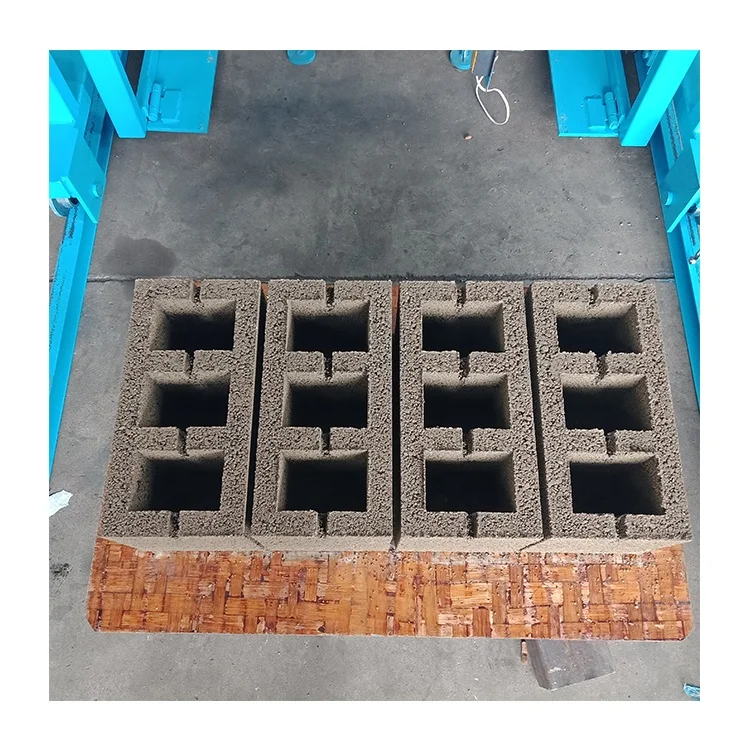
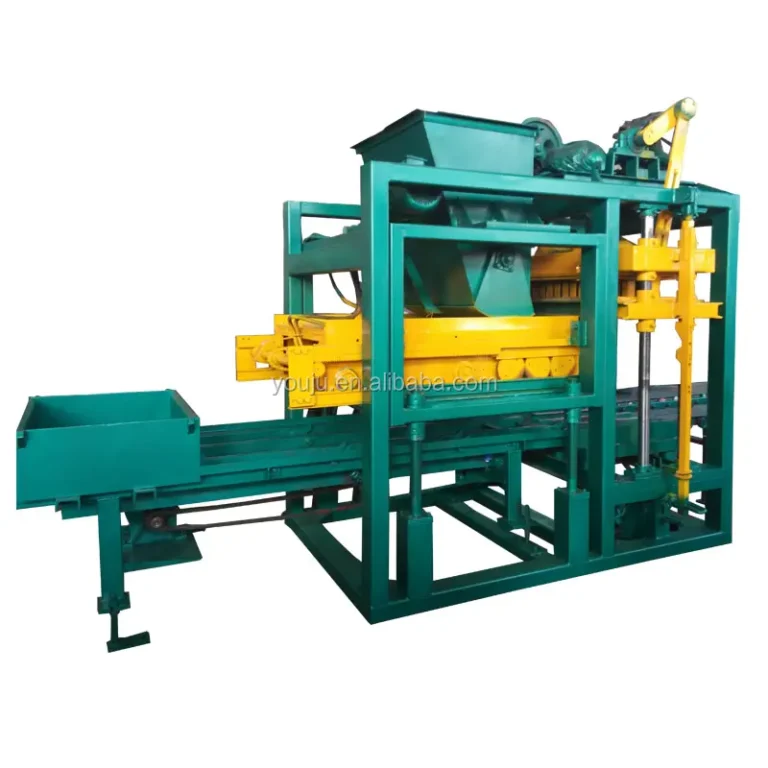
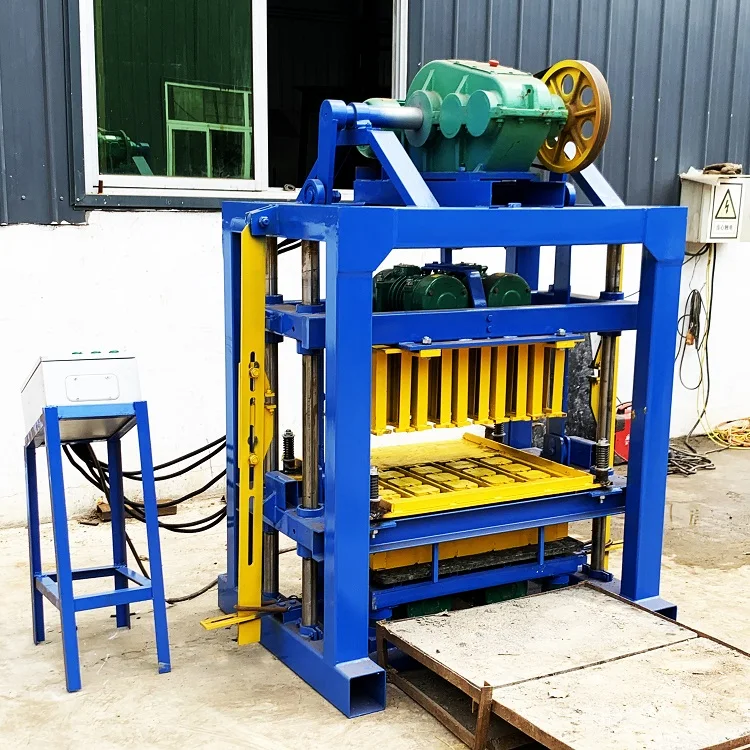
Matched System Configuration — the QT7-15 stationary block machine is specified alongside its pallet, mould and handling components as a single validated line rather than sourced from disconnected suppliers.
Technical Specifications
| Parameter |
Value |
| Model |
QT7-15 |
| Product Type |
Stationary Concrete Block Making Machine |
| Pallet Size |
1150×700 mm |
| Molding Cycle |
15–20 s |
| Overall Power |
45 kW |
| Vibration Force |
100 kN |
| Vibration Frequency |
0–60 Hz (adjustable) |
| Vibration Form |
Platform Vibration |
| Total Mass |
8 T |
| Demolding Method |
Hydraulic |
| Control System |
PLC with touch screen interface |
| Output (Hollow block 400×200×200 mm) |
1260–1680 pcs/h, 10080–13440 pcs/8hr (basis: stated block format) |
| Output (Hollow block 400×150×200 mm) |
1440–1920 pcs/h, 11520–15360 pcs/8hr (basis: stated block format) |
| Output (Rectangular paving brick 200×100×60 mm) |
3888–4860 pcs/h, 31104–38880 pcs/8hr (basis: 20–25 s cycle, 27 pcs/mould) |
| Mould Format |
Hollow block, rectangular paving brick; quick mould replacement supported |
| Automation Level |
Automatic (PLC controlled, pallet feed, hydraulic demolding) |
| Assembly State |
Stationary |
| Line Components Included |
Pallet feed machine, block making machine, storage hopper, conveyor, hydraulic unit, PLC control cabinet |
| Voltage & Frequency |
Configurable per destination market (basis to be confirmed) |
| CE Declaration |
Available where applicable |
Application Suitability
| Application |
Material or Output |
| Hollow block production for masonry walls |
Concrete mixed with crushed stone, sand and cement on 400×200×200 mm or 400×150×200 mm format |
| Rectangular paving brick for walkways and yards |
Concrete mix with fine aggregate and pigment on 200×100×60 mm format, 27 pcs per mould |
| On-site block production for housing projects |
Local aggregate and cement blends, matched to site-available raw materials |
| Format expansion for existing concrete product plants |
Quick mould replacement between hollow block and paving brick on the same pallet size |
Why Catalogue Capacity Figures Mislead Buyers of a QT7-15 Stationary Block Machine Manufacturer
A cycle time only matters when you know which block format fills that cycle.
A machine rated at a certain number of cycles per hour can produce drastically different daily volumes depending on whether the mould is a large hollow block or a smaller paving brick. I have seen buyers order a mid-tier press expecting a specific pallet count per shift, only to discover that the quoted number assumed a format their market does not even purchase. The QT7-15 stationary block machine manufacturer supplies capacity data tied to defined mould dimensions and cycle times — 1260–1680 pieces per hour for a 400×200×200 mm hollow block, a different range entirely for 200×100×60 mm paving bricks. [NEED_CITE: block format assumptions in capacity quotation standards]
Positioning the QT7-15 Within the Full Stationary Range
The QT7-15 occupies the mid-to-high output tier of the Shiyue stationary block machine range. Buyers evaluating their first plant typically compare this model against smaller semi-automatic presses that demand less floor space and a lower initial outlay, as well as higher-tier automatic lines designed for continuous three-shift operation. The deciding factor is often the daily pallet count a buyer’s curing yard can absorb.
Matching Automation Level to Your Workforce and Growth Path
This model ships with a PLC-controlled automatic cycle including pallet feeding and hydraulic demolding. For a buyer starting with limited operators, the automation removes manual pallet handling from the press cycle and keeps mould release consistent across shifts. The system is structured so that additional stations — automatic stacking, curing rack handling, cubing — can be integrated later as production volume grows and labour costs shift the investment calculation. [NEED_CITE: automation upgrade paths in block production lines]
Reading the Specs That Actually Shape Output
The 100 kN vibration force paired with a 0–60 Hz adjustable frequency means the press can be tuned to different mix designs. A dry mix with coarse aggregate needs higher amplitude at lower frequency to consolidate properly, while a wetter mix with fine sand requires the opposite setting. Platform vibration distributes energy across the full 1150×700 mm pallet surface, which matters when the mould produces 27 paving bricks at once — uneven vibration would leave corner bricks under-compacted. The hydraulic demolding system provides controlled release pressure, reducing edge damage that leads to scrap on hollow blocks with thin webs. Pallet size directly determines what curing racks and forklifts you can use; a 1150×700 mm pallet must match the rack spacing already in your yard or planned for the new site.

The Hidden Cost of Skipping Configuration Detail
When vibration force and hydraulic pressure are set to a catalogue default rather than matched to the buyer’s actual aggregate and cement ratio, blocks leave the press looking acceptable but fail compression tests after curing. I worked on a line where the mix contained high-clay local sand, and the standard vibration setting produced blocks that crumbled at the edges during pallet transfer. The entire output had to be re-pressed after the frequency and pressure were adjusted — weeks of wasted material and labour that a proper pre-order configuration would have avoided. [NEED_CITE: impact of local aggregate variation on block compressive strength]
Why Buyers Source This Model Through Shiyue
Block machinery is the single focus of the company, so the QT7-15 is not paired with generic pallets and third-party conveyors assembled after the fact. Machine, mould, pallet and handling are specified as one matched system, which eliminates the interface mismatches that cause downtime during commissioning. Configuration is set against the buyer’s actual mix design and target block format, not a catalogue default. Mould design covers the formats the buyer’s market sells, with custom drawings available for non-standard shapes. The automation level is selectable, allowing a buyer to start with the base automatic cycle and add stacking or cubing stations later. Installation and commissioning include operator training so the crew running the line on day one understands mould change procedures and PLC fault diagnostics.
Documentation & Verification
- Line layout and capacity calculation stating each block format assumed for QT7-15 output figures
- Machine specification sheet confirming pallet size, vibration force and hydraulic pressure settings
- Mould drawing and format list covering hollow block and paving brick dimensions
- Voltage, frequency and PLC display language confirmation document before production starts
- Factory test record on buyer’s specified block format before dispatch
- Wear parts and mould maintenance list with part numbers for reorder
Installation, Commissioning & Support
- Foundation must support the 8 T total mass of the QT7-15 with level tolerance across the platform vibration area
- Dedicated power circuit sized for the 45 kW overall power draw with voltage and frequency confirmed before wiring
- Machine ships partially dismantled for container loading; reassembly and alignment completed on-site during commissioning
- PLC touch screen configured to operator language before first production run
- Mould change procedure trained with the crew using the buyer’s actual hollow block and paving brick moulds
- Hydraulic wear parts list provided with reorder intervals based on the buyer’s shift schedule and aggregate abrasiveness
What to Include in Your Enquiry
To size a QT7-15 line correctly, share the block formats your market buys most, the daily output you need per format and the aggregate sources available near your site. State your local voltage and frequency, the PLC display language your operators need and the pallet size your existing curing racks accept. If you are replacing an older press, note the current line components you plan to keep so the new configuration accounts for them.
Frequently Asked Questions
Q: How is the QT7-15 capacity verified, and which block format does each figure assume?
A: Every output number in the specification sheet is tied to a defined mould dimension and cycle time. For example, 1260–1680 pieces per hour applies to a 400×200×200 mm hollow block, while a different range applies to 200×100×60 mm paving bricks at 20–25 seconds per cycle. A capacity calculation document accompanies each quotation showing the exact format assumed.
Q: Where does the QT7-15 sit in the full stationary range — and when should I step up or down?
A: The QT7-15 is mid-to-high tier, suited for plants that have outgrown semi-automatic presses but do not yet need a high-capacity three-shift line. If your curing yard cannot absorb the daily pallet count this model produces, stepping down reduces waste. If demand requires continuous operation, stepping up to a higher tier with faster cycle automation is the logical move.
Q: What voltage, frequency and PLC language options are available for my market?
A: The QT7-15 electrical system is configurable per destination. Voltage, frequency and PLC display language must be confirmed in writing before production begins. This avoids commissioning delays caused by mismatched power supplies or control panels your operators cannot read.
Q: How are the press, pallet, mould and handling specified as one matched system?
A: Pallet size, mould cavity layout, vibration force and conveyor speed are all set against each other so the press cycle is never waiting on upstream or downstream stations. The 1150×700 mm pallet, for instance, determines both the mould format options and the curing rack spacing, which are confirmed together in the line layout.
Q: What is the plant footprint and installation requirement for a complete QT7-15 line?
A: The line includes a pallet feed machine, storage hopper, conveyor, hydraulic unit and PLC cabinet alongside the press itself. A level concrete foundation supporting 8 T is required, with a dedicated circuit for the 45 kW power draw. A detailed line layout drawing is provided during the proposal stage so floor space can be confirmed before order placement.

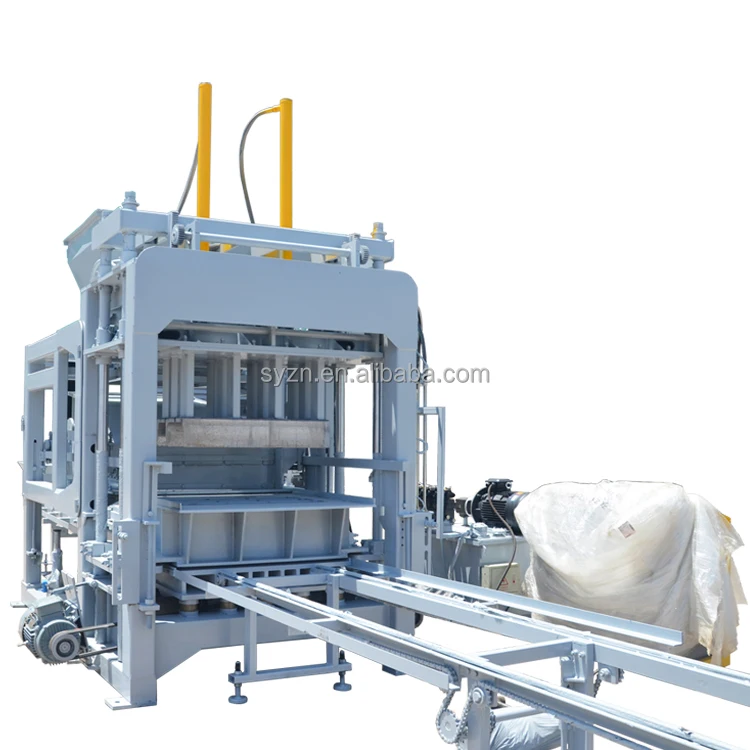
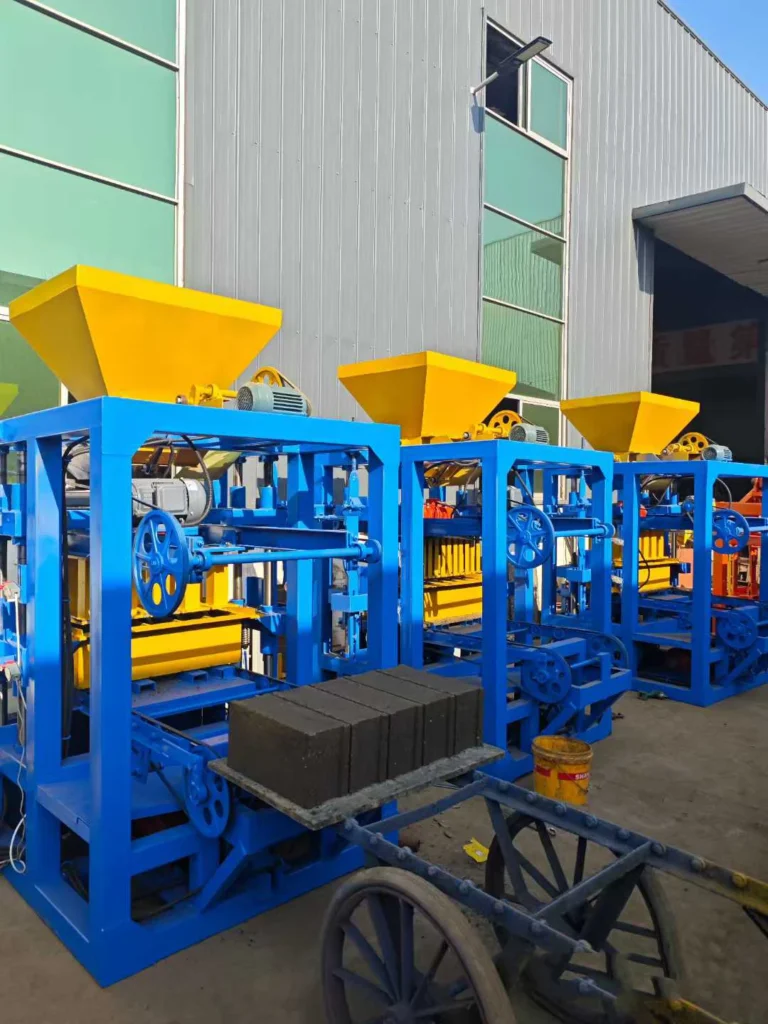 Stationary block machine