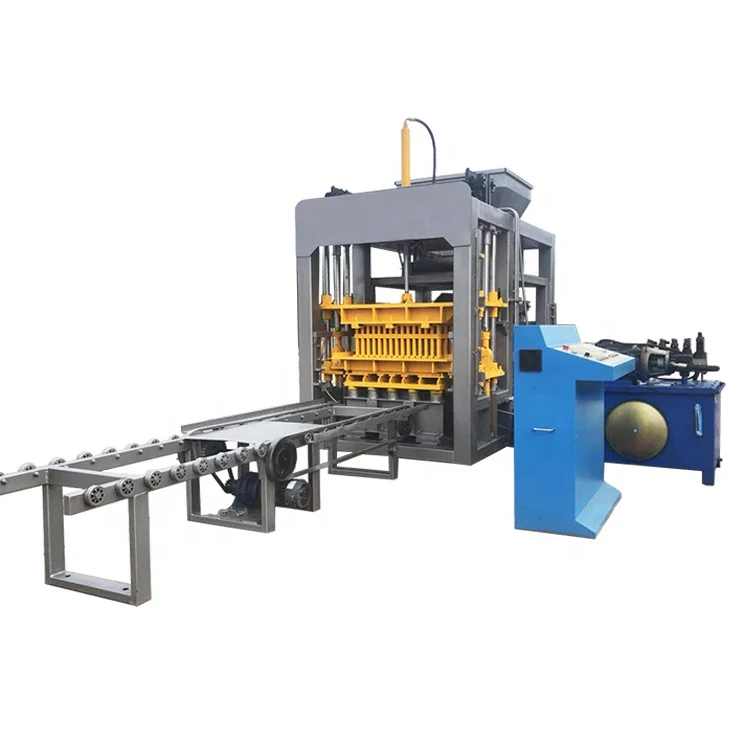
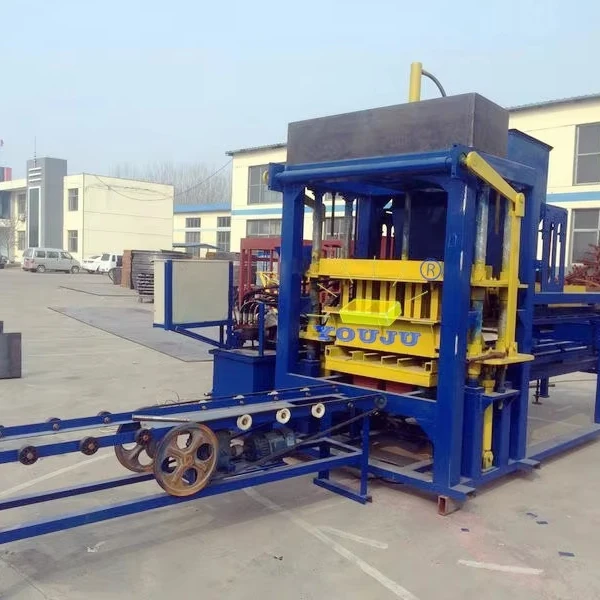
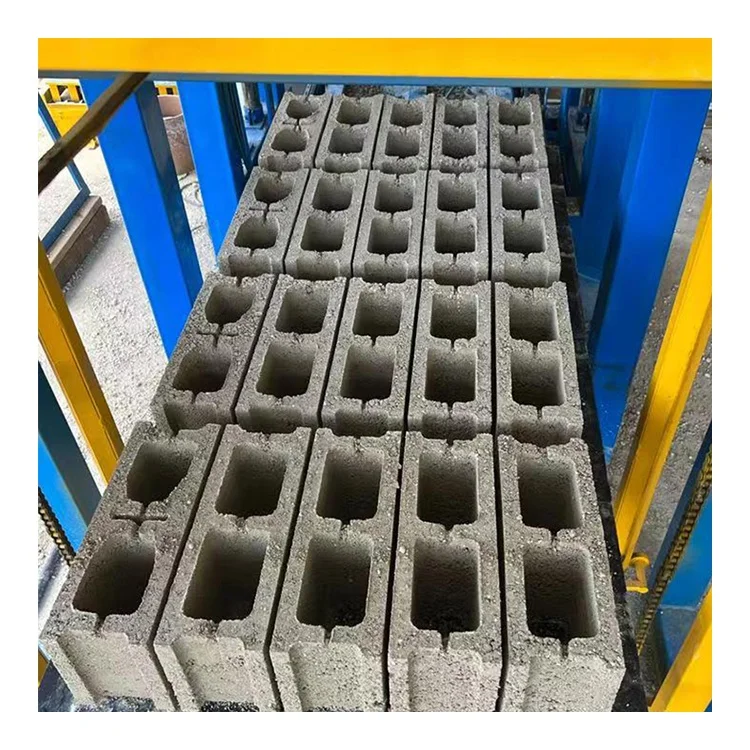
Configured as a matched system — machine, mould and pallet are sized together against your target block format so capacity figures reflect actual production, not catalogue assumptions.
Technical Specifications
| Parameter |
Value |
| Model |
QTJ4-40 |
| Product Type |
Manual Movable Block Making Machine |
| Overall Dimensions (L×W×H) |
1350 × 1460 × 1800 mm |
| Net Weight |
1,000 kg |
| Pallet Size |
850 × 450 mm |
| Vibration Form |
Platform Vibration |
| Vibration Frequency |
2,800 r/min |
| Capacity (400×200×200 mm hollow, 4 pcs/mould) |
360 pcs/h, 2,880 pcs/day |
| Capacity (400×150×200 mm hollow, 5 pcs/mould) |
500 pcs/h, 4,000 pcs/day |
| Capacity (225×112.5×60 mm interlocking, 9 pcs/mould) |
900 pcs/h, 7,200 pcs/day |
| Raw Materials |
Concrete, cement, fly ash, crushed stone, sand, gravel, slag |
| Raw Material Ratio (approx.) |
Cement 8–10%, sand 30–40%, stone 50–60% |
| Required Factory Area |
200 m² |
| Required Workers |
1–3 people |
| Automation Level |
Manual top die push-pull with automatic scraper |
| Standards |
CE (scope to be confirmed per order) |
Application Suitability
| Application |
Material or Output |
| Small workshop hollow block production |
Crushed stone, sand, cement (8–10% binder) |
| On-site housing project blocks |
Locally sourced aggregate, fly ash blends |
| Interlocking paver for landscaping |
Colored concrete mixes, fine sand |
| Curbstone and solid block runs |
Coarse gravel, high-cement ratios |
| First-time entrepreneur block yard |
Standard concrete mix within 200 m² curing area |
Why the Voltage Question Must Come Before the Order
Confirming local voltage and frequency before production prevents the most expensive delay on any block yard site.
I spent years sourcing machinery across Southeast Asia before moving to the selling side. One job stands out: a contractor ordered a manual movable block machine, and we shipped it with a 380 V motor by default. The site ran on three-phase 220 V. On commissioning day the entire crew stood around a silent machine while we scrambled for a variable-frequency drive. Three weeks of lost production followed [NEED_CITE: voltage and frequency standards by export market]. Every manual block making machine for sale on this range now ships only after voltage, frequency and motor rating are locked in writing — because no amount of on-site wiring fixes a mismatch you never asked about.

Where the QTJ4-40 Sits in the Full Range
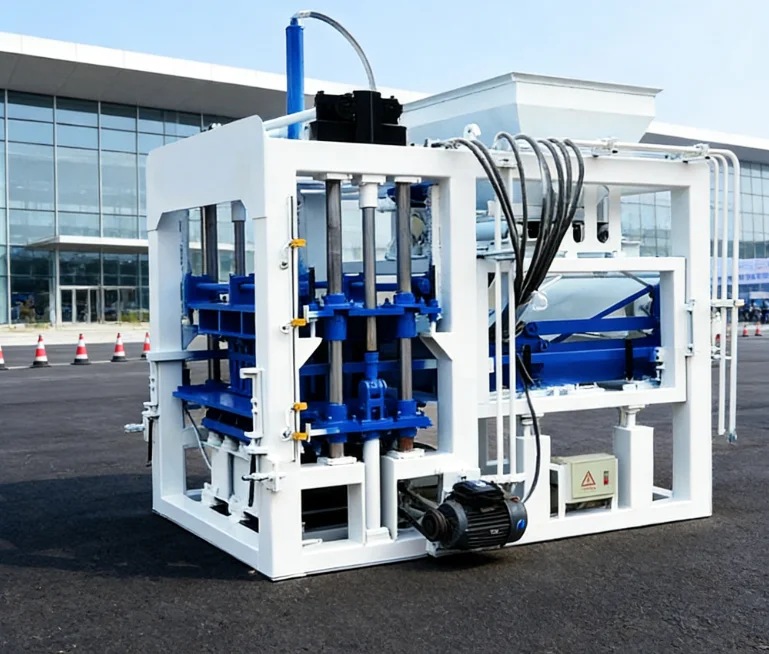
The QTJ4-40 occupies the entry tier of the stationary block machine lineup. It is designed for buyers who need output flexibility without the capital commitment of a fully automatic line. Because the unit is movable and stands alone, it can be relocated across a site or between project locations as work phases change.
This manual block making machine for sale serves as either a standalone first investment or a supplementary unit added to an existing plant. A contractor running hollow blocks on a main line can use it to produce interlocking pavers or curbstones on the side without interrupting primary output. The low worker requirement — one to three operators — keeps labour cost manageable for a new yard.
How Format-Linked Capacity Keeps Expectations Honest
Capacity quoted without a block format is meaningless. A machine might cycle at the same rate regardless of the mould, but the number of pieces per cycle changes with every format. The QTJ4-40 produces four hollow blocks per mould cycle yet nine interlocking blocks per cycle, which is why daily output ranges from 2,880 pieces for the largest hollow format to 7,200 pieces for the small interlocking paver [NEED_CITE: block format capacity calculation methods in small-scale production].
Every capacity figure published here names the block dimensions, the number of cavities per mould and an eight-hour shift. This approach lets you compare the QTJ4-40 against any competing manual block making machine for sale using the same basis, instead of matching vague "up to" claims that dissolve once the first mould is mounted.
Platform Vibration, Pallet Size and What They Mean on the Ground
Platform vibration at 2,800 r/min transfers energy directly through the 850 × 450 mm pallet into the mix. The vibration frequency and pallet area together determine how evenly the concrete compacts across all cavities. A pallet that is too large for the vibration table leaves outer blocks under-pressed; a pallet that is too small wastes potential output per cycle.
The 850 × 450 mm pallet size also dictates your curing-area logistics. Before ordering, check whether your existing racks, trolleys and forklift tines match this dimension. Re-palletising after the fact costs more in time and breakage than any machine saving. The manual top die push-pull mechanism with an automatic scraper reduces operator effort per cycle while keeping the machine free of hydraulic complexity — which means fewer failure points in dusty, high-temperature environments.
The Hidden Cost of Skipping Pallet and Voltage Confirmation
When pallet size is chosen without regard to the curing racks already on site, blocks end up stacked by hand in rows that block forklift access. Daily output sits on the ground waiting to be moved, curing time stretches unpredictably and breakage climbs [NEED_CITE: pallet handling impact on block breakage rates in small yards]. Voltage mismatch is quieter at first — the machine simply will not start — but the delay compounds: idle crews, missed delivery dates and penalty clauses on project contracts. Neither problem shows up in a brochure.
Why Source This Range Here
Block machinery is the single focus of this operation, so the QTJ4-40 is not assembled from separate suppliers’ components. Machine, mould, pallet and handling accessories are specified as one matched set. Configuration starts from the buyer’s actual mix design and local aggregate rather than a catalogue default, which keeps block strength consistent from the first shift.
Mould design covers the formats your market sells, and custom mould drawings are available for non-standard formats. The automation path is open — buyers can start with the manual QTJ4-40 and add semi-automatic or automatic equipment later without replacing the pallet format. Installation support includes operator training so crews understand mould change procedure, vibration adjustment and daily maintenance from day one [NEED_CITE: operator training standards for manual block machine commissioning].
Documentation & Verification
- Line layout stating the block format assumed for each capacity figure
- Machine specification sheet with confirmed voltage and motor rating
- Mould drawing and format list before production begins
- Pallet dimension drawing checked against your curing rack layout
- Factory test record on your chosen block format before dispatch
- Operation and maintenance manual in the operator’s language
Installation, Commissioning & Support
- 200 m² minimum working and curing area required for continuous operation
- Voltage and frequency confirmed in writing before motor winding begins
- Standalone unit arrives assembled; only pallet guides and scraper need fitting
- First-cycle test run with your raw material mix to verify block density
- Operator training covers mould change, scraper adjustment and daily greasing points
- Wear parts list and recommended spare mould inventory provided at handover
What to Include in Your Inquiry
Help us size the right configuration by sharing the block formats you plan to produce, the daily output target per format, and the raw materials available locally including aggregate type and cement grade. Your site voltage and frequency, available curing area dimensions and any existing pallet racking or forklift specifications will let us confirm pallet compatibility before the quotation stage.
Frequently Asked Questions
Q: How is daily capacity calculated and which block format does each figure assume?
A: Each capacity figure is based on an eight-hour shift using a specific mould. For example, 2,880 pieces per day assumes the 400×200×200 mm hollow block with four cavities per mould. Switching to a smaller format with more cavities per cycle increases daily count accordingly.
Q: Can the QTJ4-40 share pallets with our existing curing racks and forklift?
A: The standard pallet measures 850 × 450 mm. Share your current rack dimensions and forklift tine spacing so we can confirm compatibility or adjust pallet size before production. Mismatched pallets cause stacking delays and block damage.
Q: What voltage and motor options are available for our market?
A: Voltage and frequency are confirmed per order. Provide your site supply specification — for example three-phase 220 V / 60 Hz or 380 V / 50 Hz — and the motor is wound accordingly before the machine leaves the factory.
Q: When should we consider moving from the QTJ4-40 to a semi-automatic line?
A: When daily output demand exceeds what one to three workers can sustain on an eight-hour manual shift, or when pallet handling labour begins to outweigh production labour. The pallet format can carry over so your curing investment is preserved.

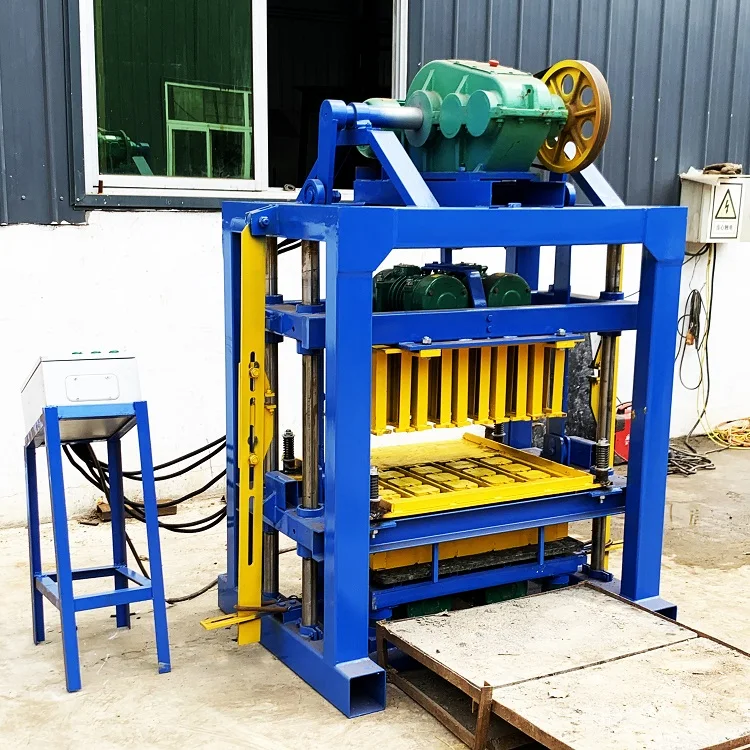
 Stationary block machine