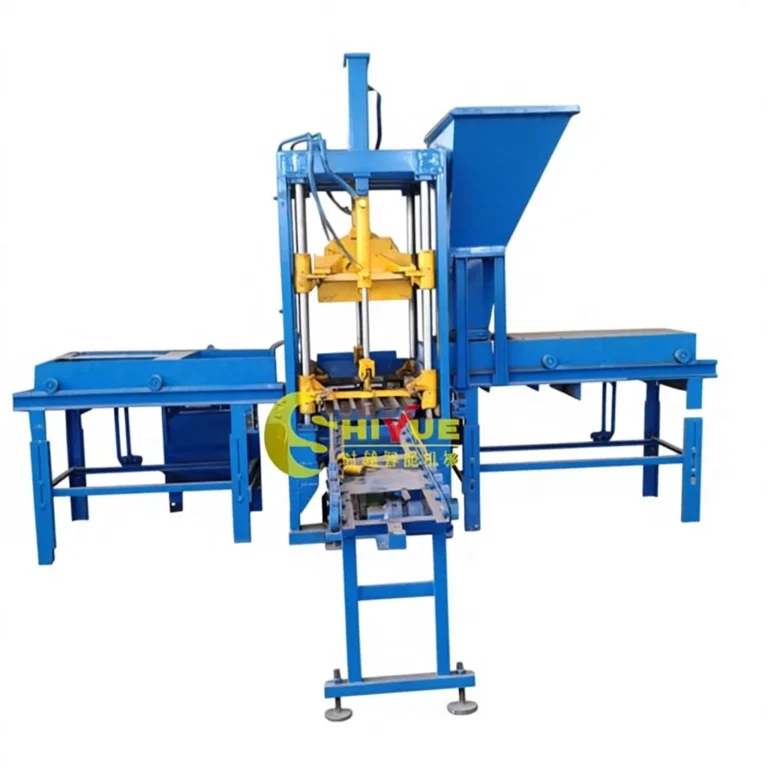
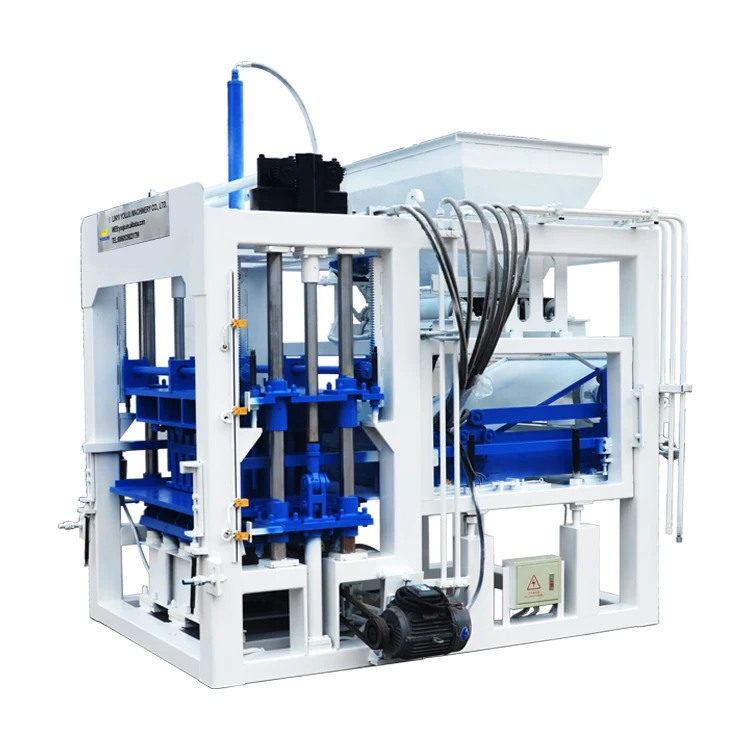
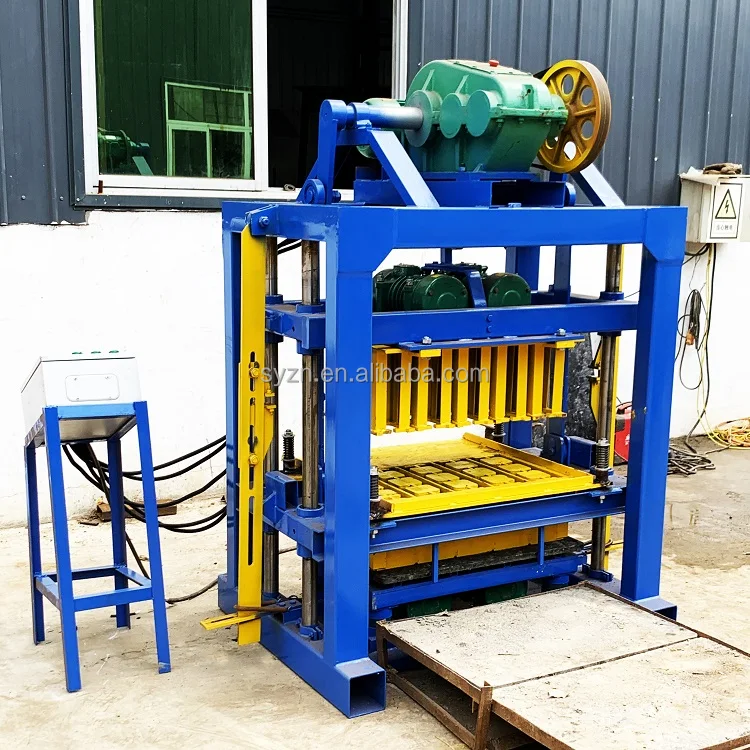
Matched system specification — The QTJ4-24 block machine, mould, pallet and handling are specified as one integrated unit rather than assembled from separate suppliers, so capacity figures reflect your actual block format.
Technical Specifications
| Parameter |
Value |
| Model |
QTJ4-24 |
| Product Type |
Semi-Automatic Concrete Block Making Machine |
| Overall Dimensions (L×W×H) |
3600×1700×2560 mm |
| Pallet Size |
850×450 mm |
| Molding Cycle |
24–26 s |
| Overall Power |
11.95 kW |
| Vibration Force |
45 kN |
| Total Mass |
2 T |
| Molding Method |
Mechanical |
| Vibration Configuration |
2×3 kW lower vibrators + 2×1.5 kW upper vibrators |
| Material Distribution |
Full-automatic spiral |
| Mold Lifting Reducer |
350-type |
| Raw Materials |
Cement, sand, stone |
| Voltage & Frequency |
Configurable to site requirement (basis to be confirmed) |
| Control System |
Configurable (basis to be confirmed) |
| Automation Level |
Semi-automatic |
| Mould Formats |
Hollow block, solid block, interlocking brick, paving brick |
| Stacking Method |
Manual (basis to be confirmed) |
| Warranty |
1 year (excluding spare parts) |
Application Suitability
| Application |
Material or Output |
| Small to medium block production plants |
Hollow and solid blocks from cement, sand, and crushed stone |
| On-site production for construction contractors |
Interlocking bricks and paving bricks using local aggregate |
| First block plant for entrepreneurs |
Entry-level semi-automatic output across multiple formats |
Why "Cycle Time" Means Nothing Without the Block Format
A 24–26 second cycle on a 400×200×200 mm hollow block yields a different daily output than the same cycle on a paving brick.
Buyers often receive a single throughput number that assumes a specific block format they never intend to produce. When the QTJ4-24 block machine manufacturer quotes a cycle time, that figure only translates to real output when paired with the pallet size, block dimensions, and number of cavities per mould. Without this alignment, a plant operator may find actual daily production falling noticeably short of projections [NEED_CITE: capacity calculation standards for concrete block machinery].

Placing the QTJ4-24 Within the Stationary Range
The QTJ4-24 occupies the entry-to-mid tier of our stationary block machine lineup, where mechanical vibration molding keeps power consumption at 11.95 kW — accessible for smaller operations that lack high-capacity electrical infrastructure. Buyers stepping up from fully manual egg-laying machines find this model introduces consistent cycle repeatability without the investment jump that hydraulic systems require. The semi-automatic designation means the press cycle runs automatically while pallet handling and stacking remain manual tasks.
Where the Range Steps Up to Hydraulic
For buyers evaluating whether to remain at this mechanical tier or move to a hydraulic press, the decision typically hinges on block density requirements and format variety. Hydraulic models deliver greater compaction force suited to high-strength pavers and kerbstones, while the 45 kN vibration force on the QTJ4-24 addresses standard hollow and solid blocks for wall construction. The 850×450 mm pallet defines the maximum mould envelope, which accommodates most common building block formats sold in emerging markets [NEED_CITE: vibration force and block density correlation].
Reading the Specs That Actually Shape Your Output
The dual vibration arrangement — two 3 kW lower vibrators paired with two 1.5 kW upper vibrators — addresses a common density inconsistency where blocks emerge harder at the base and crumbly at the top. By directing force from both directions, the QTJ4-24 produces uniform compaction through the full block height. The full-automatic spiral material distribution ensures each mould cavity receives a consistent charge before pressing, reducing weight variation between consecutive blocks. The 350-type mold lifting reducer governs the speed and stability of mould release, which directly affects surface finish quality and the frequency of cracked edges during demolding.
The Hidden Cost of Unmatched Pallets and Voltage
When a pallet size is chosen without checking the curing racks and forklifts already on site, the buyer either replaces the entire curing infrastructure or accepts an awkward handling workflow that slows downstream movement. Similarly, arriving at commissioning to discover the control panel displays in a language the operators cannot read, or that the local grid frequency does not match the motor specification, introduces weeks of delay [NEED_CITE: voltage and frequency standards by export market]. These oversights do not appear in any machine quotation but surface entirely on the buyer’s balance sheet.
Why Procure This Machine Here
Block machinery is our single focus, which means the QTJ4-24 is not a catalogue item pulled from a generalist portfolio but a press whose mould, pallet, and handling are configured together. We set the machine against your actual mix design and local aggregate rather than a default recipe, so the 45 kN vibration force produces the density your market requires. Mould design extends to custom formats drawn from your specifications, ensuring the block you sell is the block the machine makes. Automation level remains selectable — a buyer can begin with the semi-automatic configuration and integrate automatic stacking later without replacing the press. Installation includes operator training at your site, and the wear parts list is finalized before shipment so no critical seal or spring is missing when the first replacement falls due.
Documentation & Verification
- Line layout and capacity calculation stating the block format assumed for the 24–26 s cycle
- Machine specification sheet with mould drawing and complete format list
- Pallet specification matched to your curing area dimensions and forklift capacity
- Voltage, frequency, and PLC or relay control language confirmation before production begins
- Factory test record demonstrating cycle repeatability on your target block format
- Operation and maintenance manual with wear parts and mould replacement intervals
Installation, Commissioning & Support
- Foundation pad sized to the 3600×1700 mm footprint with anchor bolt template provided before arrival
- Dedicated power circuit rated for 11.95 kW total draw at your confirmed voltage and frequency
- Machine shipped partially assembled with vibration units and reducer pre-mounted to reduce on-site build time
- First-run parameter setting for molding cycle and vibration duration against your specific mix
- Operator training covering mould change procedure, spiral feeder adjustment, and daily greasing points
- Spare wear parts kit — including vibration motor mounts and reducer seals — shipped with the machine to prevent local sourcing delays
Before You Request a Quote
To size the QTJ4-24 accurately within our stationary range, we need your target block format with dimensions, the daily output you are planning for that specific format, and the raw materials available locally including aggregate type and cement grade. Confirm your site voltage, frequency, and preferred control language so these are locked before production starts. If you have existing curing racks or forklifts, share their dimensions so the 850×450 mm pallet can be validated against your current handling setup.
Frequently Asked Questions
Q: How is daily output of the QTJ4-24 calculated, and which block format is assumed?
A: Output is derived from the 24–26 s molding cycle multiplied by the number of cavities per mould for a given block format. A hollow block mould and a paving brick mould produce different pieces per cycle on the same 850×450 mm pallet. We provide a capacity table listing each format you intend to run, so the daily figure reflects your actual product mix, not a generic maximum.
Q: Where does the QTJ4-24 sit in your full machine range — when should I step up to hydraulic?
A: The QTJ4-24 is positioned in the entry-to-mid mechanical tier, suited for standard hollow and solid blocks. Step up to a hydraulic model when your market demands high-density pavers, kerbstones, or blocks requiring greater compaction than 45 kN vibration can deliver, or when daily volume targets exceed what this cycle time supports.
Q: What pallet size does this machine use, and can it match my existing curing setup?
A: The QTJ4-24 uses an 850×450 mm pallet. Before production, we cross-check this dimension against your curing rack spacing and forklift tine width to ensure pallets move from press to curing area without infrastructure modification or double-handling.
Q: What voltage and frequency options are available for my market?
A: Voltage and frequency are configured to your site specification and confirmed in writing before manufacturing begins. This covers common ranges across Latin American, African, and Southeast Asian grids, along with control panel language selection for your operators.
Q: What mould formats are available, and how long does a mould change take?
A: Standard moulds cover hollow block, solid block, interlocking brick, and paving brick formats within the 850×450 mm pallet envelope. Custom moulds can be designed from your drawings. Mould change time depends on the format and whether quick-release hardware is specified — we state the expected changeover duration for your chosen formats during the proposal stage.

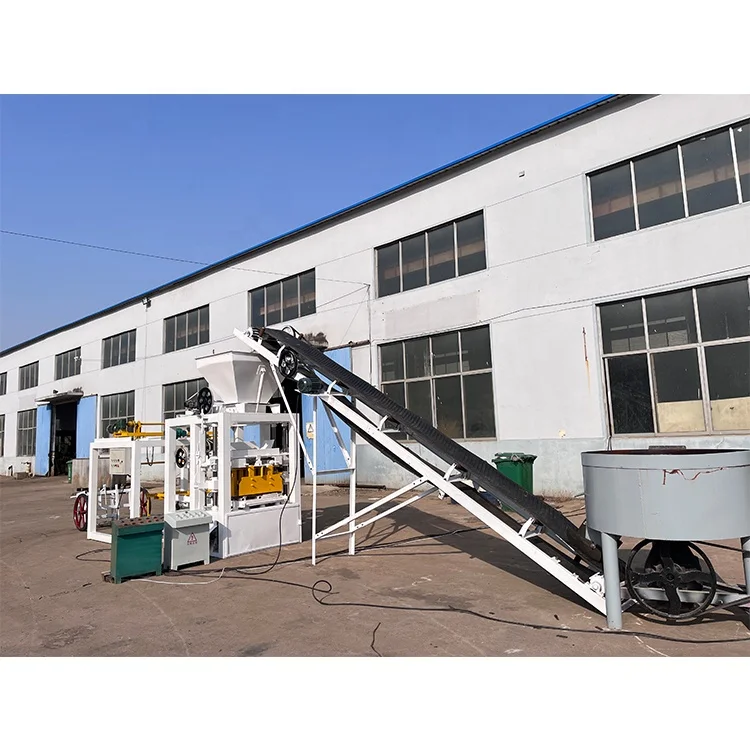
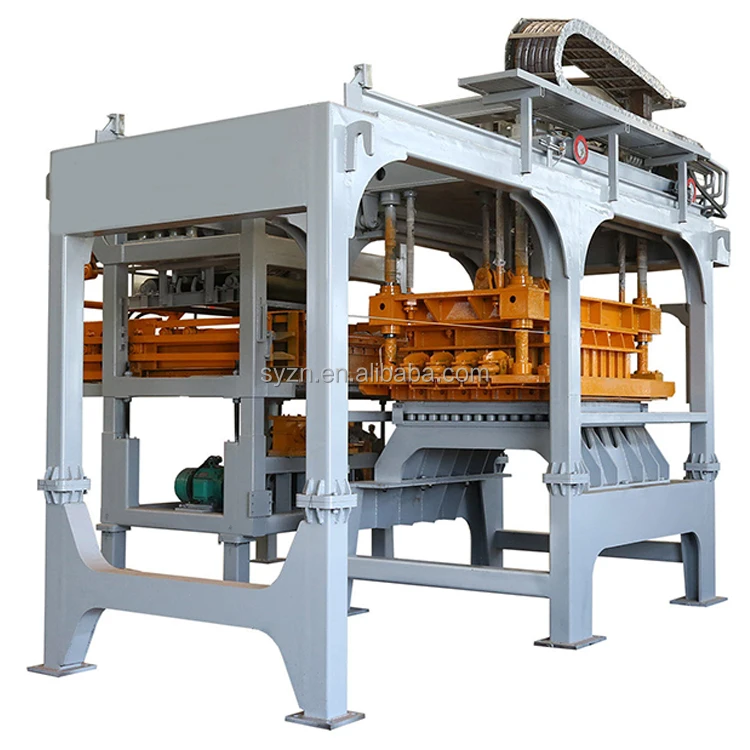 Stationary block machine