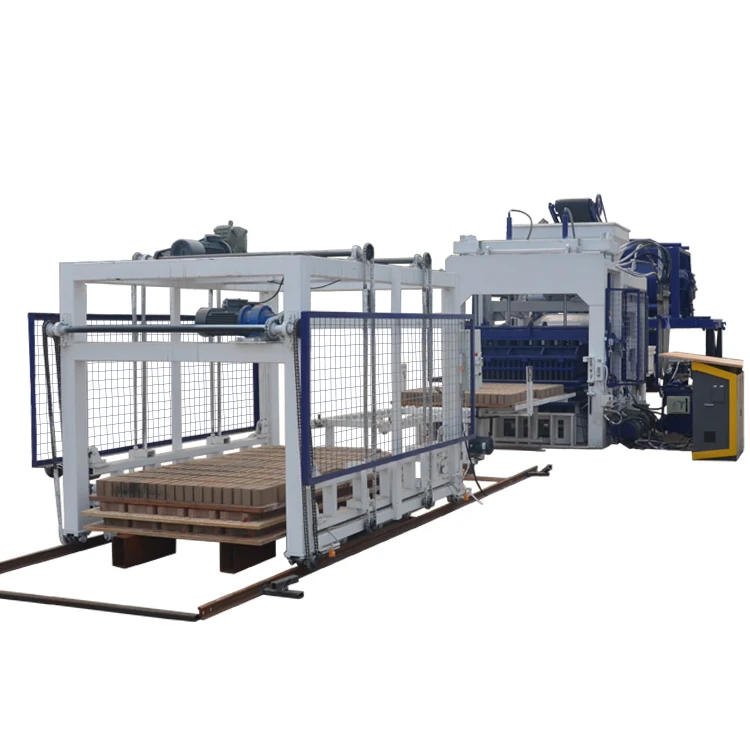
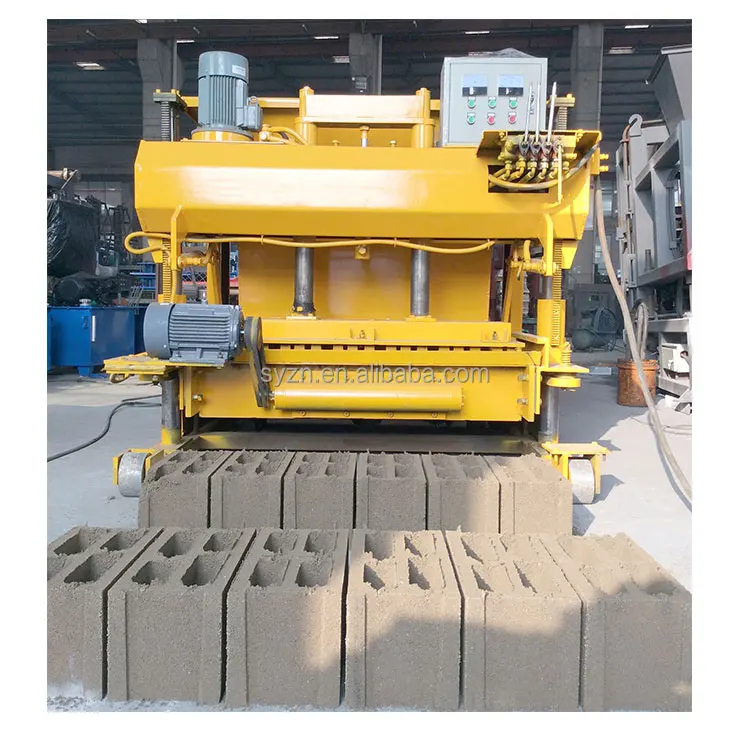
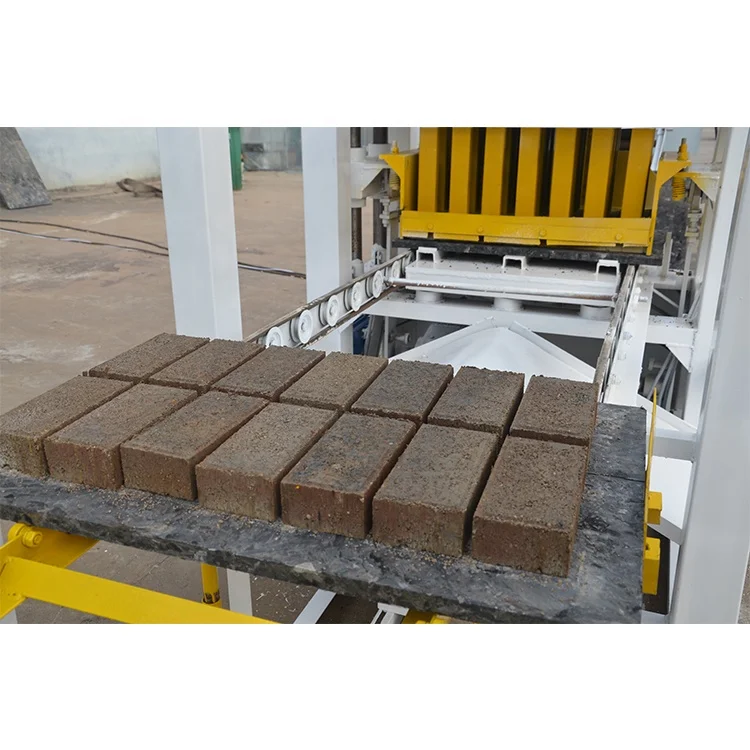
Matched System Sizing — The QT6-15 is specified as a complete matched set of press, pallet, and handling stations rather than an isolated machine, ensuring cycle times align across the line before it ships.
Technical Specifications
| Parameter |
Value |
| Model |
QT6-15 |
| Product Type |
Hydraulic Hollow Block Making Machine |
| Overall Dimensions (L×W×H) |
8200×1700×2950 mm |
| Vibration Force |
45 kN |
| Vibration Frequency |
0-60 Hz |
| Vibration Form |
Platform Vibration |
| Moulding Mode |
Load automatically, vibration moulding |
| Pallet Size |
880×850 mm |
| Molding Cycle |
15-20 s |
| Overall Power |
37 kW |
| Total Mass |
7 T |
| Demolding Method |
Hydraulic |
| Control System |
PLC (Programmable Controller) with touch screen |
| Hydraulic System |
Independent integrated type hydraulic station |
| Output Capacity (Hollow block 400×200×200 mm) |
1080-1440 pcs/hour, 8640-11520 pcs/8hr |
| Output Capacity (Hollow block 400×150×200 mm) |
1440-1920 pcs/hour, 11520-15360 pcs/8hr |
| Output Capacity (Solid brick 240×115×53 mm) |
5760-7680 pcs/hour, 46080-61440 pcs/8hr |
| Output Capacity (Rectangular brick 200×100×60 mm) |
2160-2880 pcs/hour, 17280-23040 pcs/8hr (basis: cycle time 20-25s) |
| Block Compressive Strength |
More than 15 MPa |
| Required Factory Area |
1200 m² |
Application Suitability
| Application |
Material or Output |
| Hollow Block Production for Building Walls |
Crushed stone, sand, cement, and waste ash or slag |
| Solid Brick Manufacturing for Load-bearing Structures |
Various aggregates blended with cement |
| Rectangular Paving Brick for Walkways and Yards |
Fine aggregates and cement, 200×100×60 mm format |
| Interlocking Paving Brick for Driveways |
Crushed aggregate and cement, 225×112.5×60 mm zigzag format |
| On-site Production for Housing Projects |
Locally sourced aggregate reducing cement dosage |
What "Pieces per Hour" Hides From the Buyer
The stated capacity of the QT6-15 hollow block machine manufacturer is valid only when tied to a specific block format and cycle time.
Many buyers sign a contract based on a generic cycles-per-hour figure, only to find their real daily output falls far short once the machine runs their specific hollow block size. [NEED_CITE: common causes of output shortfall in block production] When the vibration force and hydraulic pressure are not adjusted to the buyer’s actual mix design and local aggregate, block strength becomes inconsistent across the curing rack. This forces the plant to discard batches or downgrade product grade, eroding the margin the investment was supposed to deliver.

Where the QT6-15 Sits in the Full Machine Range
The QT6-15 occupies the mid-tier automatic segment of the Shiyue block machine lineup. It bridges the gap between entry-level semi-automatic machines that require manual pallet handling and the high-capacity fully automatic lines designed for large-scale plants. For a buyer surveying options for a first block plant, this model offers automatic loading and PLC control without the footprint and investment of a top-tier line. The 1200 m² factory area requirement gives a clear baseline for site planning before you narrow down the exact automation level.
Comparing Tiers Before You Commit
Buyers evaluating a replacement for a smaller semi-automatic or mobile machine will find the QT6-15 delivers a step up in output consistency and format range. The platform vibration system, paired with hydraulic demolding, produces blocks with compressive strength exceeding 15 MPa across formats. [NEED_CITE: factors influencing block compressive strength in hydraulic machines] Building material distributors comparing this model against higher tiers can assess whether the buyer’s market volume justifies the larger pallet size and power draw of a high-capacity line, or whether the QT6-15 matches the demand curve more closely.
How the Core Parameters Shape Daily Production
The 45 kN vibration force and 0-60 Hz adjustable frequency work together with the hydraulic demolding system to compact the mix evenly before release. If the vibration is too weak for a dense aggregate, the block leaves the mould with voids; if too aggressive for a lightweight mix, the surface cracks. The 880×850 mm pallet size is not arbitrary — it dictates how many blocks cure per rack and must match the forklift and curing area the buyer already has or plans to build. The PLC touch screen control allows operators to store recipes for different block formats, keeping cycle times between 15 and 20 seconds for hollow blocks and 20 to 25 seconds for paving bricks. This recipe-based approach is what lets a single QT6-15 hollow block machine manufacturer run multiple formats in one shift without lengthy manual adjustments.
The Cost of Skipping Pallet and Handling Alignment
When the pallet size is chosen without regard to the curing area and existing forklift, the plant ends up moving pallets by hand or buying a new forklift after the machine arrives. [NEED_CITE: hidden costs of mismatched pallet handling in block plants] If the stacking and curing rack handling are not included in the quotation, the buyer discovers that output is stacked manually at the end of the line, negating the automation paid for at the press. Voltage, frequency, and PLC display language left unconfirmed can delay commissioning for weeks, leaving the machine idle while the electrical contractor sources a transformer or the operator struggles with an unfamiliar interface.
Why Source the Line as One Matched System
Block machinery is the single focus here, so the machine, mould, pallet, and handling equipment are specified together rather than assembled from separate suppliers. The configuration is set against the buyer’s actual mix design and local aggregate, not pulled from a catalogue default. Mould design covers the formats the buyer’s market actually sells, including custom drawings when a standard mould does not fit. The automation level is selectable, meaning a buyer can start with the QT6-15 at a semi-automatic configuration and add automatic stacking and cubing later. Installation and commissioning support includes operator training so the plant reaches stable production without extended trial-and-error.
Documentation & Verification
- Line layout and capacity calculation stating the block format assumed for each output figure
- Machine specification sheet with pallet size, vibration force, and hydraulic pressure confirmed
- Voltage, frequency, and PLC display language written confirmation before production begins
- Mould drawing and format list covering the specific blocks the buyer’s market sells
- Factory test record on the buyer’s target block format before dispatch
- CE declaration where applicable, with supporting documentation
Installation, Commissioning & Support
- Foundation must support the 7 T total mass and 8200 mm length across the 1200 m² factory area
- 37 kW overall power requires a dedicated circuit matching confirmed voltage and frequency
- Machine arrives fully assembled with hydraulic station, reducing on-site mechanical work
- PLC touch screen parameters are set during commissioning against the buyer’s local aggregate
- Operator training covers recipe storage for each block format and fault diagnosis use
- Wear parts and mould list provided for planning the first replacement order
What to Include in Your Inquiry
Provide the specific block formats your market sells, the target daily output per format, and the raw materials available locally including aggregate type and cement grade. Include your site dimensions, existing forklift capacity, and curing area layout so the pallet and handling configuration can be matched. State the local voltage, frequency, and preferred PLC display language to avoid delays after the machine arrives.
Frequently Asked Questions
Q: How do I verify the real daily output for my block format?
A: Request a line layout and capacity calculation document that states the exact block format assumed for each output figure. The QT6-15 hollow block machine manufacturer provides this per format — for example, 8640-11520 hollow blocks per 8-hour shift is based on the 400×200×200 mm size at a 15-20 second cycle, not a generic rate.
Q: Where does this model fit compared to semi-automatic and high-capacity lines?
A: The QT6-15 sits in the mid-tier automatic range, offering PLC control and automatic loading without the larger footprint of a high-capacity line. Buyers starting a first plant or upgrading from a mobile machine find it balances investment level and output, with room to add stacking automation later.
Q: How are voltage, frequency, and PLC language confirmed?
A: These are confirmed in writing before production begins. The buyer provides the local supply specifications and preferred interface language, and the confirmation is documented alongside the machine specification sheet so the electrical contractor can prepare the site while the machine is being built.
Q: Can I start semi-automatic and upgrade later?
A: Yes. The automation level is selectable, so the QT6-15 can ship with manual pallet handling at the outfeed and add automatic stacking and cubing stations later. The PLC control system supports this upgrade path without replacing the main press or hydraulic station.
Q: What factory area and site preparation does the machine require?
A: The required factory area is 1200 m² to accommodate the press, pallet circulation, and curing rack space. The 880×850 mm pallet size must align with your existing forklift capacity and curing rack dimensions, which is confirmed during the line layout stage before the order is finalized.

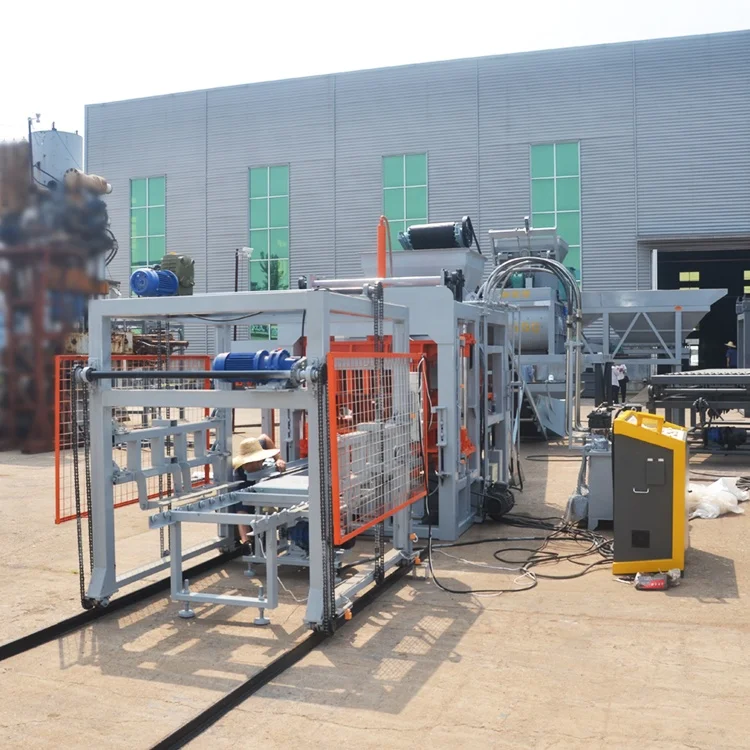
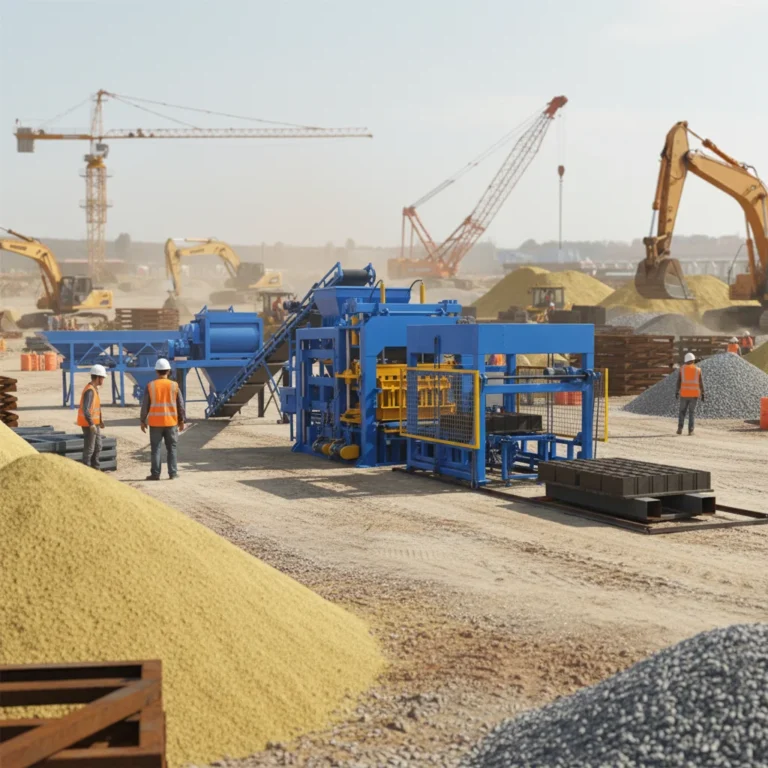 High quality block machine