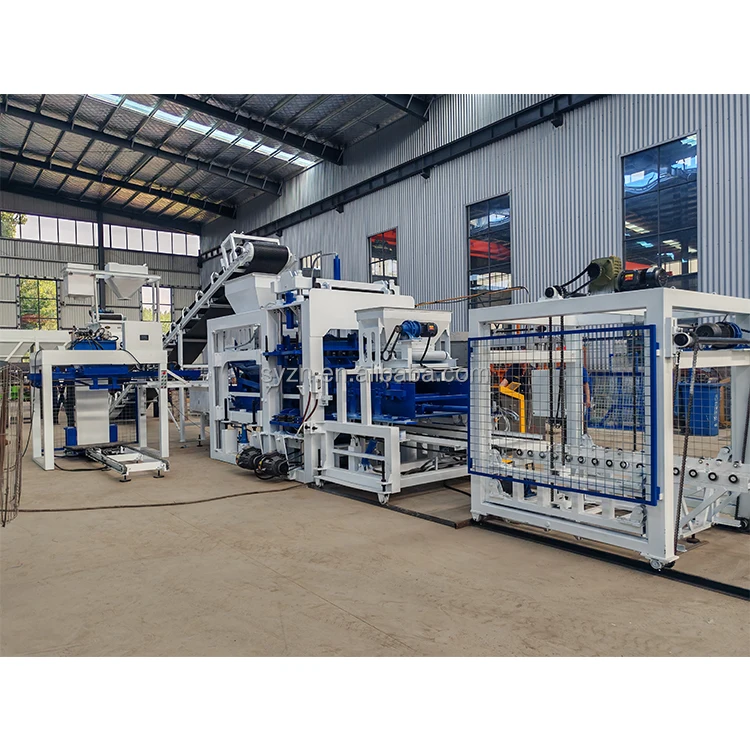
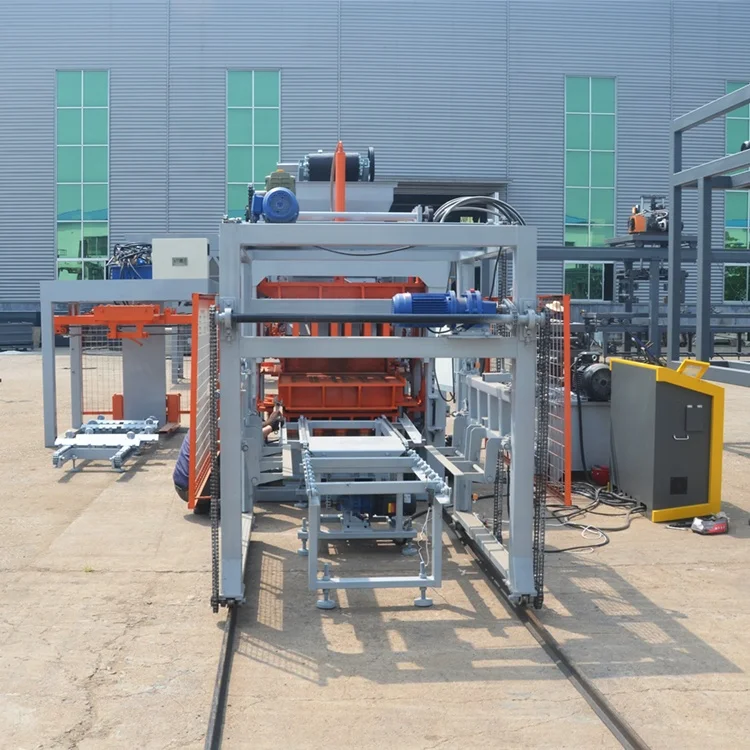
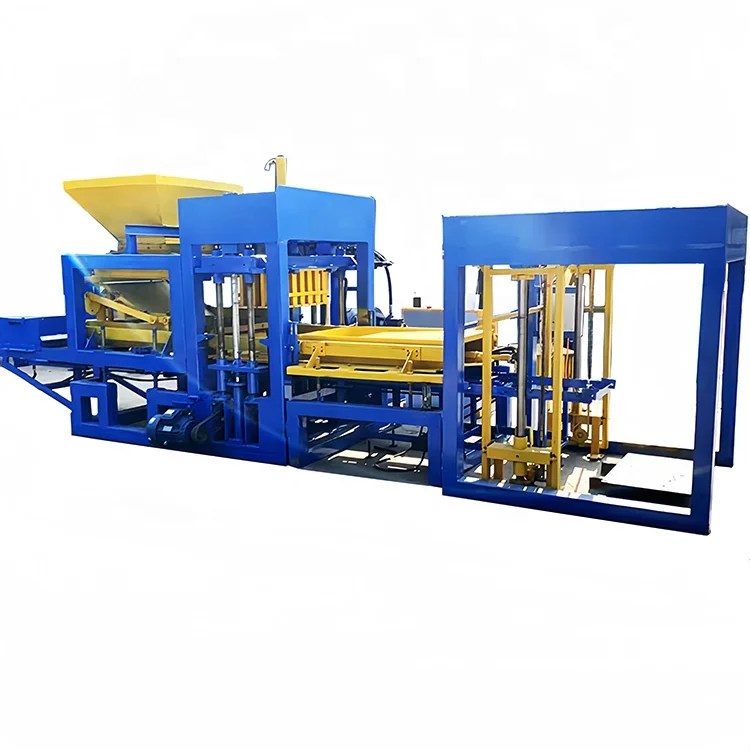
Single Focus Machinery — Every QT6-15 configuration we ship includes matched mould, pallet and handling specifications rather than assembled components from separate suppliers.
Technical Specifications
| Parameter |
Value |
| Model |
QT6-15 |
| Product Type |
Hydraulic Concrete Block Making Machine |
| Overall Dimensions (L×W×H) |
8200×1700×2950 mm |
| Total Mass |
7 T |
| Rated Power |
37 kW |
| Vibration Form |
Platform vibration |
| Vibration Frequency |
0–60 Hz |
| Vibration Force |
45 kN |
| Moulding Mode |
Automatic loading with vibration moulding |
| Demolding Method |
Hydraulic |
| Pallet Size |
880×850 mm |
| Molding Cycle |
15–20 s (basis not stated in source — confirm block format / material / thickness) |
| Control System |
PLC with touch screen interface |
| Fault Diagnosis |
Built-in PLC fault diagnosis with safe logic interlock circuit |
| Hydraulic System |
Independent integrated hydraulic station |
| Factory Area Requirement |
1200 m² |
| Automation Level |
High (automatic loading, PLC-controlled, touch screen HMI) |
Application Suitability
| Application |
Material or Output |
| Hollow block production for walls and partitions |
Waste ash, slag, and local aggregates with adjustable cement dosage |
| Solid brick manufacturing for structural masonry |
Crushed stone, river sand, and cement blends |
| Rectangular paving block for roads and walkways |
High-strength aggregate mixes requiring 200×100×60 mm format |
| Zigzag interlocking paver for yards and driveways |
Interlocking 225×112.5×60 mm format with platform vibration compaction |
| Block plants using industrial by-products |
Fly ash, slag, and waste materials with variable cement ratios |
What "1080 Pieces per Hour" Actually Means for Your Plant
Capacity figures only matter when tied to a specific block format and cycle time assumption.
I have watched buyers sign contracts based on headline output numbers, then discover on commissioning day that the quoted throughput assumed a format their market does not buy. The QT6-15 concrete block machine manufacturer literature often cites peak cycle speeds, but real daily production depends on which block you are actually pressing. When the local aggregate differs from what was used during factory testing, cycle times stretch and vibration force must be recalibrated. This mismatch accounts for a significant share of underperforming block plants in emerging markets [NEED_CITE: common causes of block plant output shortfall].

Positioning the QT6-15 Within the Machine Range
The QT6-15 sits at the mid-tier of the full block machine lineup, above small workshop semi-automatic units and below high-capacity fully automatic lines. Buyers stepping up from manual pallet handling find the automatic loading and PLC-controlled process removes the most labor-intensive stages of production. At the same time, the 1200 m² factory footprint keeps the investment within reach for entrepreneurs establishing a first block plant.
Where This Tier Fits Your Daily Target
A plant owner producing for a regional construction market typically needs consistent output across multiple block formats throughout the week. The QT6-15 concrete block machine manufacturer range covers hollow blocks, solid bricks, and pavers with mould changes between runs. The question is whether your daily target justifies stepping up to a larger press with bigger pallets, or whether this tier leaves room to grow without over-investing in capacity you cannot yet fill [NEED_CITE: block plant capacity planning by market size].
Matching Vibration Force and Hydraulic Pressure to Your Mix
Platform vibration at 45 kN combined with hydraulic demolding determines the compressive strength your blocks will achieve. The adjustable 0–60 Hz frequency range allows operators to tune the vibration profile when switching between lightweight hollow blocks and dense paving formats. The independent hydraulic station sits isolated from the main frame vibration and dust, which extends component service life considerably in abrasive environments. If your local sand carries high clay content, the standard cycle time will need adjustment and the vibration force may require upward recalibration to maintain block density above 15 MPa.
The Cost of Skipping Pallet Compatibility Checks
The 880×850 mm pallet size drives decisions you will face long after the machine arrives. If your existing curing racks and forklift were specified for a different pallet dimension, you will either rebuild the curing area or handle output manually. I have seen plants where the buyer ordered the press alone and sourced pallets locally, only to discover the timber thickness did not match the automatic feeding system, causing jams that cancelled out the automation advantage [NEED_CITE: pallet handling mismatches in block production].
Why Buyers Source This Range Here
Block machinery remains the single focus, meaning the QT6-15 ships as a matched system rather than a press paired with third-party handling equipment. Configuration is set against your actual mix design and local aggregate sample, not pulled from a catalogue default. Mould design covers the formats your market sells, including custom drawings when standard options do not fit. The automation level allows a buyer to start with the core press and add automatic stacking or cubing as volume grows. Installation support includes operator training so your crew can manage mould changes and PLC fault diagnosis independently.
Documentation & Verification
- Line layout showing capacity calculation per block format before order confirmation
- Machine specification sheet covering vibration force, hydraulic pressure, and cycle time by format
- Mould drawing and format list matching your target product range
- Voltage, frequency, and PLC display language confirmation document before production starts
- Factory test record covering each block format on your specified pallet size
Installation, Commissioning & Support
- 1200 m² factory area with level concrete floor required for the 8200×1700 mm machine footprint
- 37 kW rated power demands a dedicated three-phase circuit with confirmed voltage and frequency
- Independent hydraulic station arrives pre-filled and requires only line connection on site
- PLC touch screen configured to your operator language before dispatch to avoid commissioning delays
- Mould change training covers hydraulic release and re-alignment for each block format in your range
- Wear parts list with hydraulic seals and vibration motor bearings identified for first reorder
What We Need to Configure Your Machine
Send your target block formats with daily volume expectations, a sample or analysis of your local aggregate, and the voltage and frequency standard at your site. If you already have curing racks and forklifts in place, share the pallet dimensions they accommodate so the 880×850 mm specification can be confirmed or adjusted before the QT6-15 concrete block machine manufacturer begins production.
Frequently Asked Questions
Q: How do I verify the QT6-15 output capacity for my specific block format rather than relying on a single headline number?
A: Request a capacity calculation that states which block format, mould cavity count, and cycle time each output figure assumes. For example, hollow block 400×200×200 mm yields 8640–11520 pieces per eight-hour shift based on 6 pieces per mould and a 15–20 second cycle. Your actual output depends on whether your local aggregate allows that cycle time to be sustained.
Q: Where does the QT6-15 sit in the range compared to smaller semi-automatic and larger fully automatic models?
A: This model occupies the mid-tier, offering automatic loading and PLC control while requiring a 1200 m² footprint. Smaller semi-automatic units suit lower daily targets with manual pallet handling. Larger high-capacity lines add automatic stacking and cubing but demand greater floor space and investment. Your daily volume target and available factory area determine which tier fits.
Q: What plant footprint does the QT6-15 require, and how does that compare across the machine range?
A: The QT6-15 needs approximately 1200 m² including space for raw material storage, the press, pallet circulation, and initial curing. Smaller semi-automatic models operate in considerably less area, while high-capacity automatic lines with integrated stacking and cubing systems require larger facilities. Confirm your available space before selecting the machine tier.
Q: Can I start with the QT6-15 at a basic automation level and upgrade pallet handling and stacking later?
A: Yes. The automation level is selectable, so you can begin with manual pallet handling at the curing end and add automatic stacking or cubing as your production volume grows. The PLC system and pallet feeding mechanism are designed to accept these additions without replacing the core press or hydraulic station.

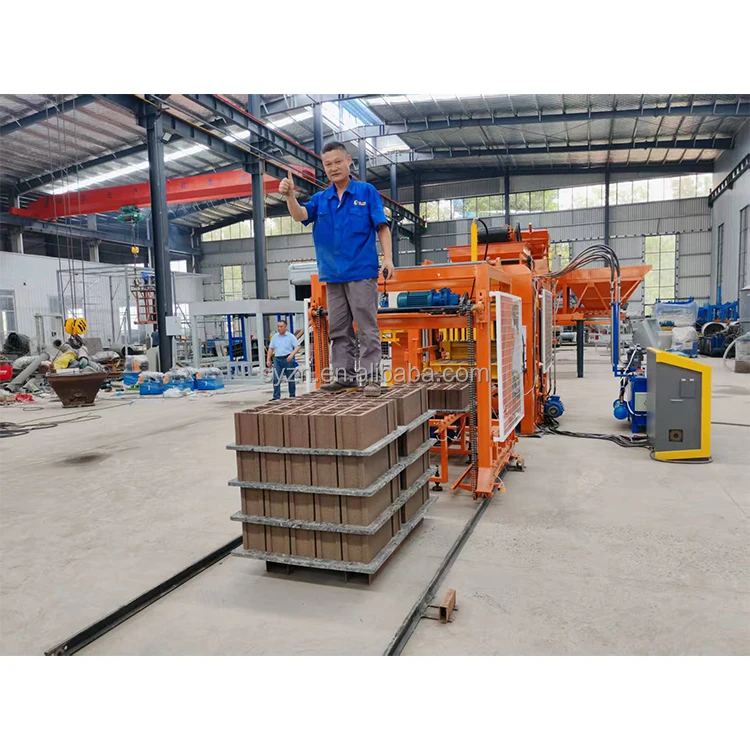
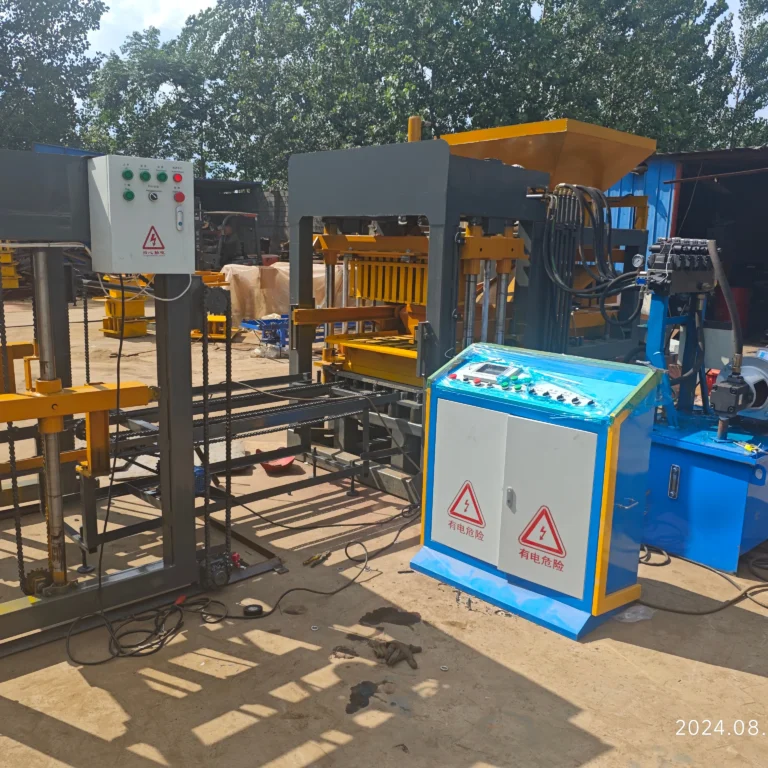 High quality block machine