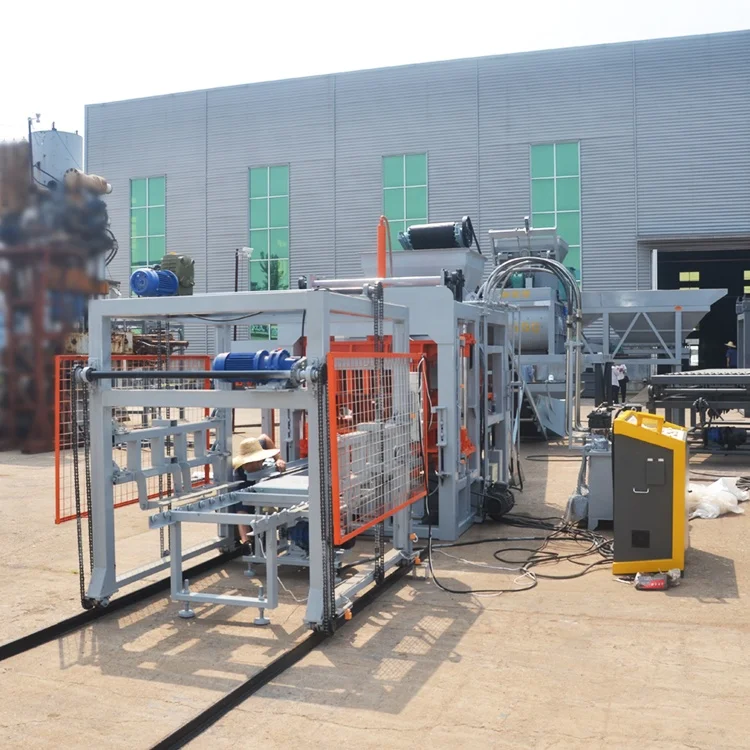
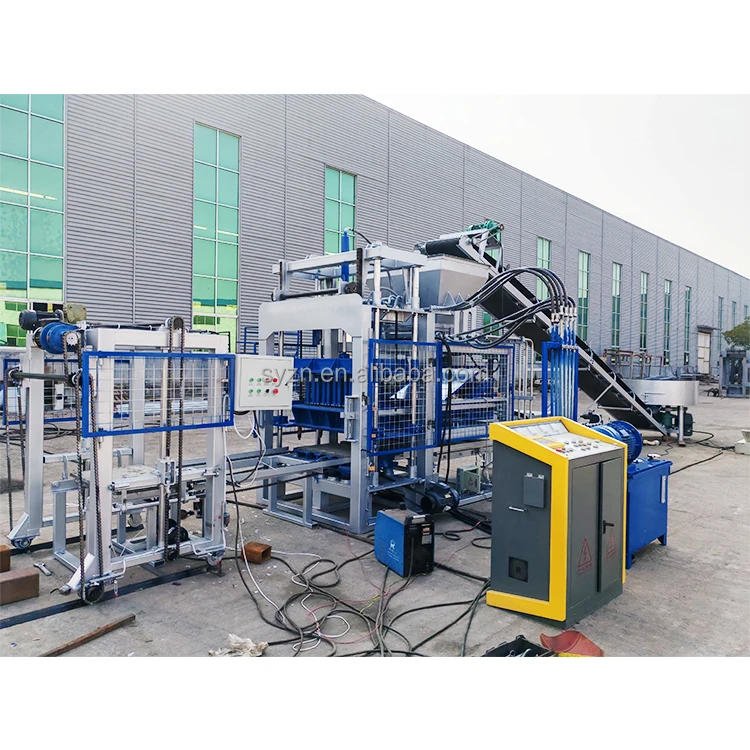
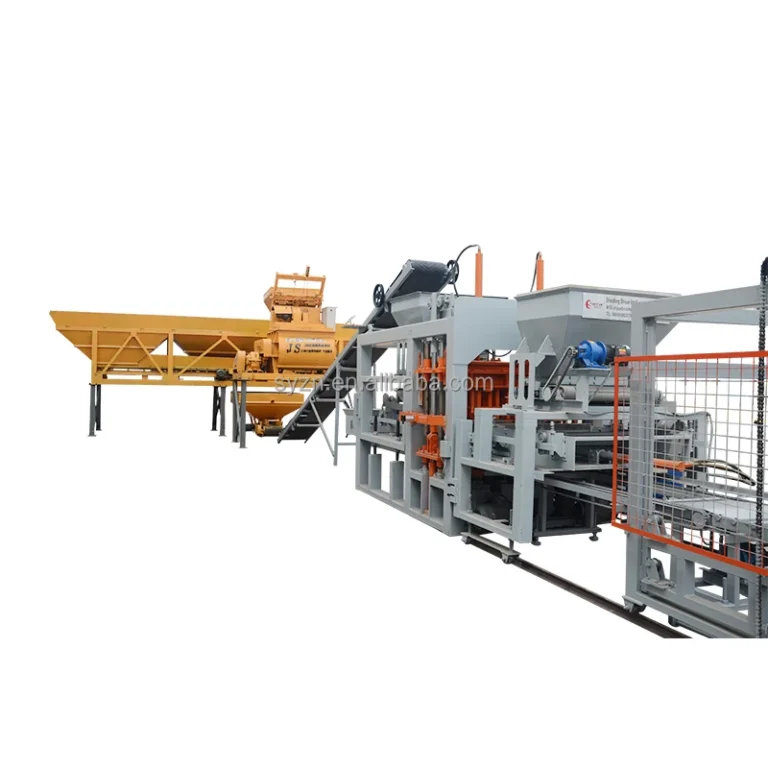
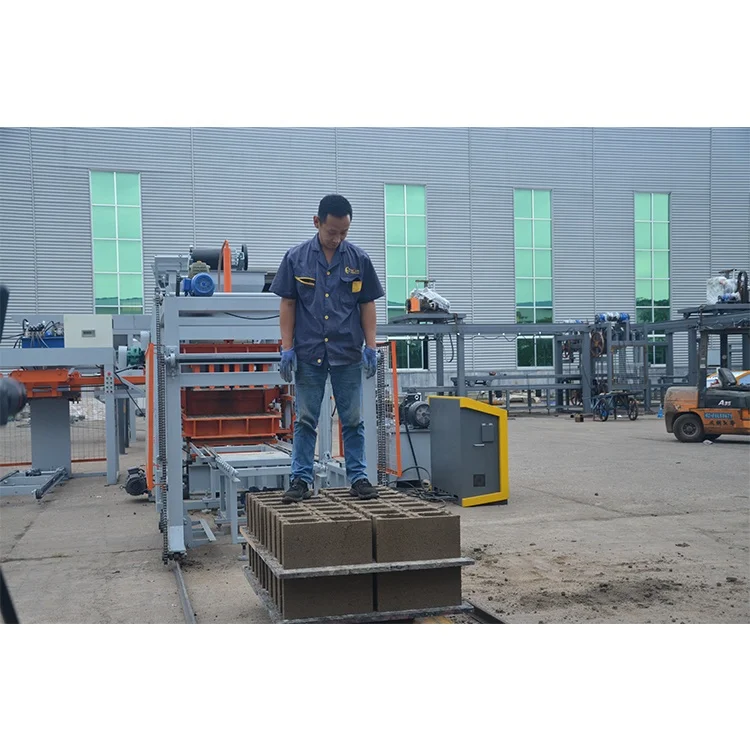
Single-Focus Machinery Engineering — Every component of the QT6-15 block making line, from the hydraulic station to the pallet feeder, is specified as a matched system rather than sourced from disconnected vendors.
Technical Specifications
| Parameter |
Value |
| Model |
QT6-15 |
| Product Type |
Automatic Concrete Block Making Machine |
| Overall Dimensions (L×W×H) |
7400×1900×2660 mm |
| Molding Cycle |
15–25 s |
| Vibration Frequency |
4600 r/min |
| Vibration Force |
40–50 kN |
| Rated Power |
31.25 kW |
| Mixer Model |
JQ350 |
| Pallet Size |
850×550×25 mm |
| Net Weight |
7 T |
| Control System |
PLC control system |
| Output (Hollow block 400×200×200 mm) |
1200–1680 pcs/hr; 9600–13440 pcs/8hr |
| Output (Hollow block 400×150×200 mm) |
1800–2400 pcs/hr; 14400–19200 pcs/8hr |
| Output (Solid brick 240×115×53 mm) |
3240 pcs/hr; 16200–19440 pcs/8hr |
| Included Equipment |
Block making machine, hydraulic station, PLC control system, pallet feeder, brick conveyor, block sweeper |
Application Suitability
| Application |
Material or Output |
| Hollow Block Production |
Crushed stone, sand, cement, fly ash for structural building walls |
| Solid Brick Manufacturing |
Dense aggregate and cement mixes for load-bearing masonry |
| Interlocking Paver Production |
Fine sand and cement blends for pedestrian and vehicular paving |
| Kerbstone Manufacturing |
Heavy-duty concrete mixes for road edge and drainage channel forming |
What "1200 Pieces per Hour" Leaves Out on an Automatic Concrete Block Making Machine
Capacity is meaningless unless it states the exact block format, pallet size, and cycle time behind the figure.
When a buyer sees a high hourly output number on a brochure, they often plan their plant revenue around it. Then the machine arrives, and the daily production falls short because the quoted figure assumed a small format the market doesn’t actually buy [NEED_CITE: common block format discrepancies in machinery quotations]. With this automatic concrete block making machine manufacturer, the output of 1200–1680 pieces per hour is strictly based on the 400×200×200 mm hollow block format on the 850×550 mm pallet. If you switch to a different format, the cycle and the yield change accordingly.

Positioning Within the Complete Machine Range
The QT6-15 sits squarely in the mid-tier automatic segment. It bridges the gap between entry-level semi-automatic presses, where pallet handling relies heavily on manual labor, and the high-capacity fully automatic lines designed for massive industrial output. This positioning allows a buyer to invest in a reliable automatic concrete block making machine without over-committing to the footprint and capital required for a top-tier plant.
Scaling from Mid-Tier to High-Capacity Lines
For entrepreneurs setting up their first block plant, this model offers a realistic starting point. The automation level is selectable, meaning a buyer can begin with standard pallet feeding and upgrade to automatic stacking and cubing later as market demand grows [NEED_CITE: typical automation upgrade paths in block plants]. This flexibility ensures the initial investment remains manageable while keeping the door open for future expansion.
Matching Vibration Force to Local Aggregate
The technical core of the QT6-15 lies in its vibration system, delivering 40–50 kN of force at 4600 r/min. In block making, hydraulic pressure alone is insufficient; the vibration must be tuned to the specific density and friction of the local aggregate mix. If the vibration force is mismatched to the material, the resulting blocks will have inconsistent strength, leading to high rejection rates on site.
The Hidden Cost of Mismatched Pallet Handling
One of the most frequent failures I see on site isn’t the press itself, but the pallet logistics. A machine might run perfectly, but if the 850×550×25 mm pallets don’t match the curing racks or the forklifts already in the yard, production bottlenecks immediately. Pallet handling, stacking, and curing are often left out of the initial quotation, leaving the buyer to stack heavy wet blocks by hand [NEED_CITE: manual handling bottlenecks in block production]. This mismatch cancels out the efficiency gains of the automatic press.
Why Procurement Here Secures the Line
We focus exclusively on block machinery, which means the machine, mould, pallet, and handling equipment are specified as one matched system. The configuration is set against your actual mix design and target block format, not a catalogue default. We provide mould design for the formats your market actually sells, and the automation level can be adjusted so you can start semi-automatic and upgrade later. Installation includes operator training and long-term wear parts support.
Documentation & Verification
- Line layout and capacity calculation stating the block format assumed for each output figure
- Machine specification sheet with hydraulic pressure rating matched to your local aggregate
- Mould drawing and format list confirming all requested block types and changeover times
- Voltage, frequency, and PLC display language confirmation documented before production
- Factory test record and packing photographs for customs and logistics planning
Installation, Commissioning & Support
- Foundation planning based on the 7400×1900 mm footprint and dynamic vibration loads
- Electrical setup for the 31.25 kW rated power with dedicated circuit protection
- Assembly of the hydraulic station and PLC control system by trained technicians
- Parameter tuning of the 15–25 s molding cycle to match your specific raw material mix
- Operator training on mould change procedures and daily maintenance routines
- Provision of wear parts lists and hydraulic seal kits suited to your operating environment
Next Steps for Quotation
To provide an accurate configuration, we need to know your target block formats, required daily output, and the specific raw materials available in your region. Please also confirm the local voltage and frequency standards, as well as the language required for the PLC interface, to ensure a smooth commissioning process upon arrival.
Frequently Asked Questions
Q: How is capacity verified per block format, and what pallet size and cycle time does each figure assume?
A: Every capacity figure we quote is tied to a specific block dimension, such as the 400×200×200 mm hollow block yielding 1200–1680 pieces per hour. These calculations assume the standard 850×550×25 mm pallet and a molding cycle of 15–25 seconds. If you require a different format, we recalculate the output based on the new mould and cycle parameters.
Q: Where does the QT6-15 sit in the full machine range, and what is the upgrade path?
A: The QT6-15 is a mid-tier automatic machine, positioned above manual and semi-automatic models but below high-capacity industrial lines. It allows buyers to start with a solid automatic platform and later upgrade to fully automatic stacking and cubing systems as their production volume and budget allow.
Q: What voltage, frequency, and PLC language options are available for the buyer’s target market?
A: We configure the electrical system and PLC interface to match your local grid standards and operator language preferences before the machine leaves the factory. This prevents commissioning delays and ensures the control system is immediately usable upon arrival at your site.
Q: How are the machine, mould, pallet, and handling equipment specified as one matched system?
A: Rather than sourcing components separately, we specify the hydraulic pressure, vibration force, pallet size, and mould design together. This ensures the machine performs correctly with your specific mix design and that the pallets fit your existing curing racks and forklifts.

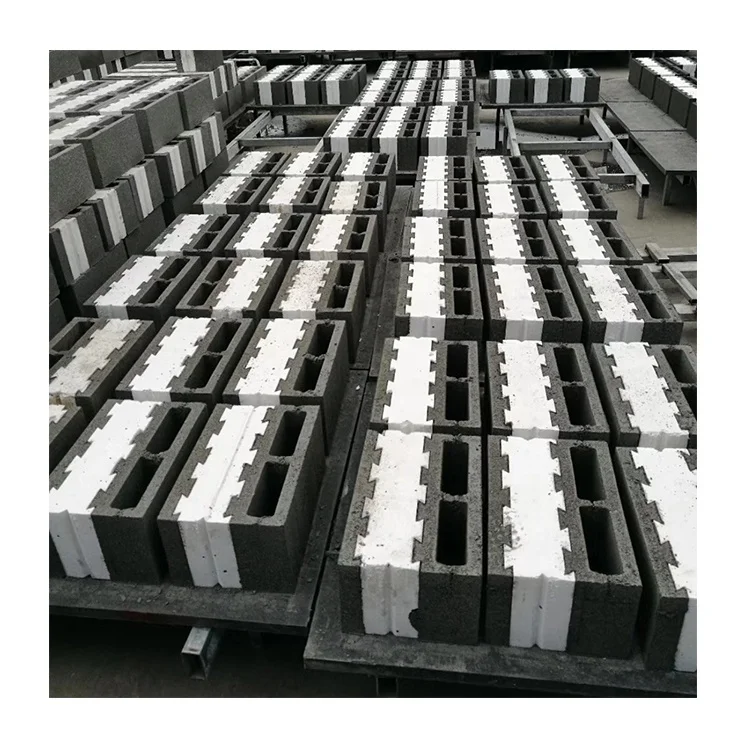
 High quality block machine