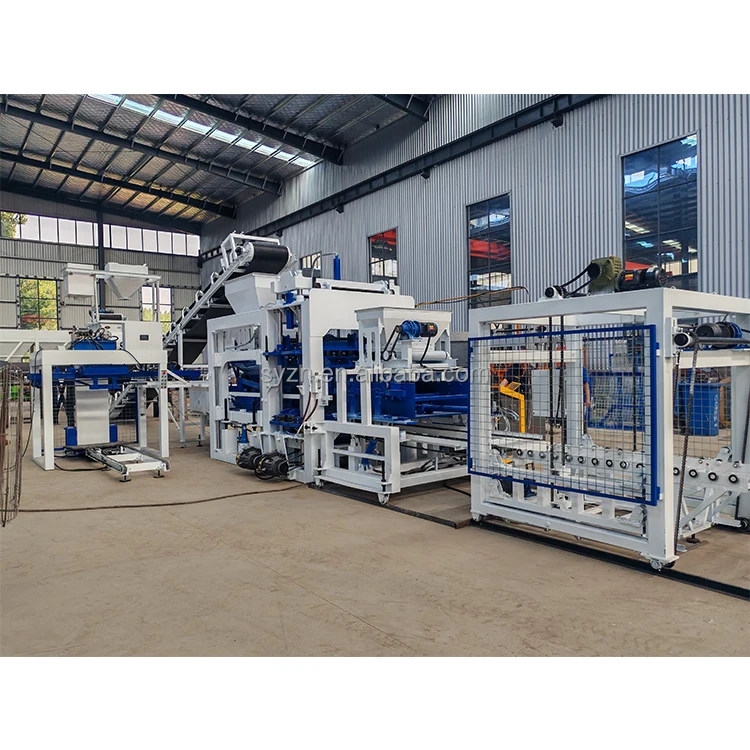
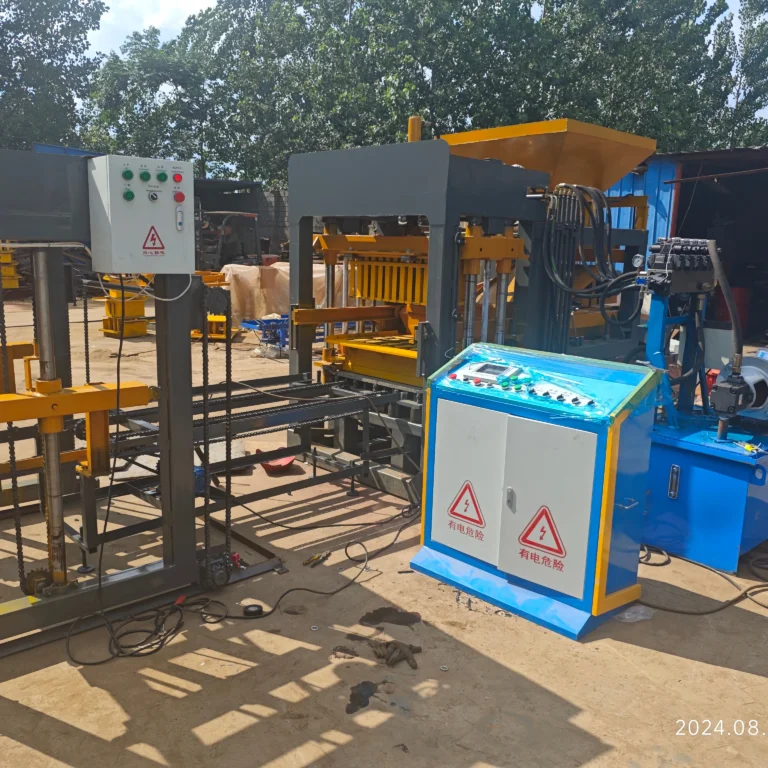
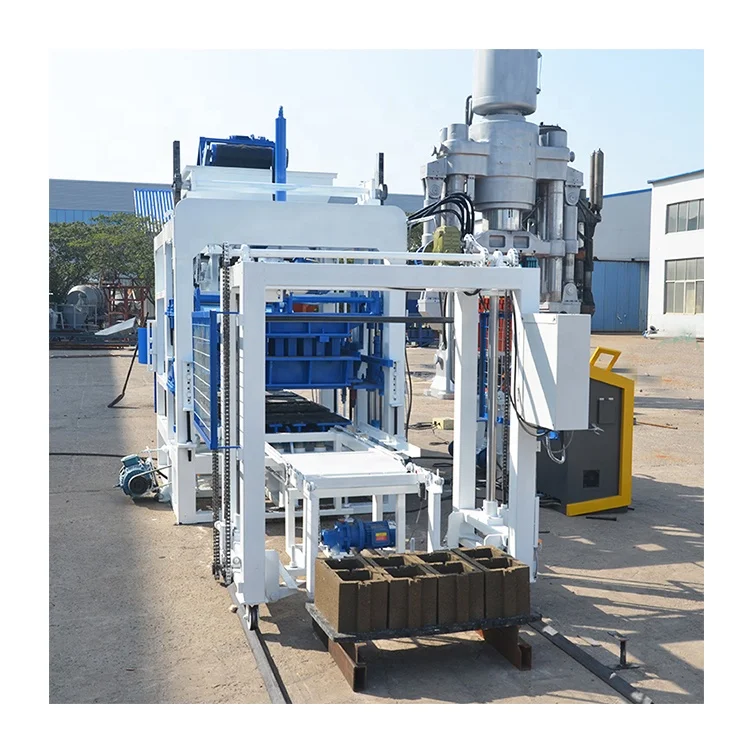
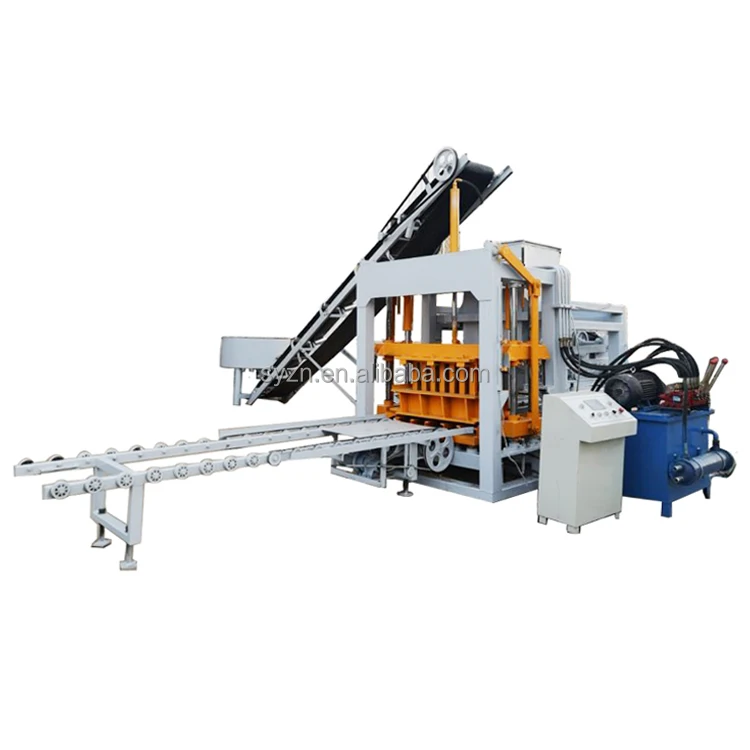
Matched System Design — the QT6-12 block making machine is specified as a complete unit with its pallet, mould and handling requirements aligned before production, not assembled from separate catalogue items.
Technical Specifications
| Parameter |
Value |
| Model |
QT6-12 |
| Product Type |
Automatic Hydraulic Block Making Machine |
| Overall Dimensions (L×W×H) |
7350×1780×2950 mm |
| Rated Pressure |
16 MPa |
| Main Vibration |
Platform vibration |
| Vibration Frequency |
4600 r/min |
| Pallet Size |
880×700 mm |
| Molding Cycle |
15–20 s |
| Overall Power |
30.5 kW |
| Voltage & Frequency |
Configurable to buyer’s site requirement (basis to be confirmed) |
| Control System |
PLC-based (brand and display language to be confirmed) |
| Output — Hollow Block 400×200×200 mm |
6 pcs/mould, 1080 pcs/h, 8640 pcs/day (basis: 16–20 s cycle) |
| Output — Porous Brick 240×115×90 mm |
14 pcs/mould, 2800 pcs/h, 22400 pcs/day (basis: 15–18 s cycle) |
| Output — Standard Brick 240×115×53 mm |
30 pcs/mould, 6800 pcs/h, 54400 pcs/day (basis: 14–17 s cycle) |
| Raw Materials |
Crushed stone, sand, cement, fly ash, cinder, slag, gangue, gravel, perlite, industrial waste |
| Automation Level |
Automatic |
| Warranty |
One year |
| Standards |
CE, SGS, ISO 9001 |
Application Suitability
| Application |
Material or Output |
| Hollow block production for building construction |
Crushed stone and cement mix, 400×200×200 mm format |
| Standard brick manufacturing |
Sand, fly ash and cement, 240×115×53 mm format |
| Porous brick for wall insulation |
Slag, gangue and cement blend, 240×115×90 mm format |
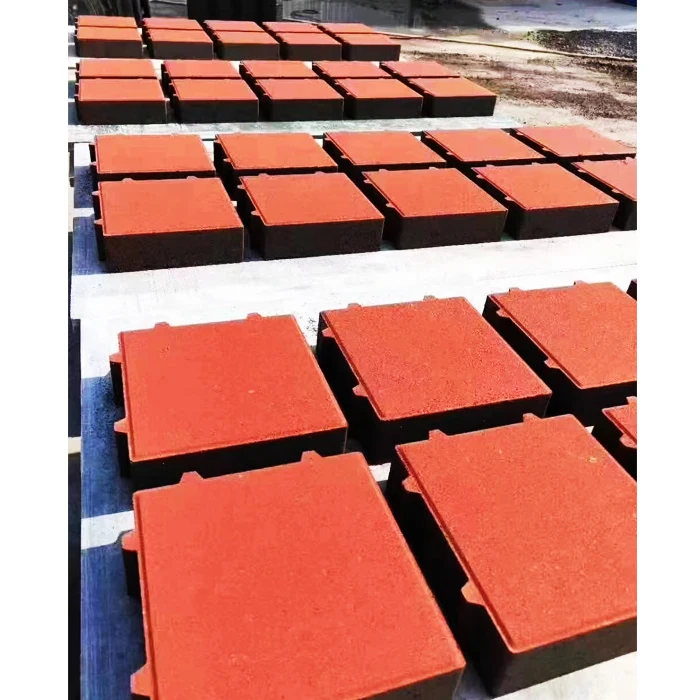
| Paving stones for roads and squares |
Aggregate-cement mix with optional face mix layer |
| Interlocking blocks for slope and retaining walls |
Cement-aggregate mix, custom mould geometry |
| Kerbstones and edgers for landscaping |
High-density concrete from gravel and cement |
| Grass blocks for permeable surfaces |
Porous aggregate blend, open-cell mould format |
What "1080 Pieces per Hour" Actually Means on the QT6-12 Block Making Machine
Every capacity figure we quote is tied to a named block format, mould cavity count and measured cycle time — never a single headline number.
Walk onto enough block plants and you will hear the same complaint: the machine was sold on a cycle-per-hour rating, but nobody asked which block that rating assumed. A hollow block with a 20-second cycle and six cavities per mould is a different daily output than a standard brick with a 15-second cycle and thirty cavities, even though both run on the same platform. The QT6-12 block making machine manufacturer range lists each format separately so a buyer comparing options can see where this mid-to-high output tier sits before narrowing down [NEED_CITE: block machine capacity calculation standards].

Where the QT6-12 Sits in the Output Tier Range
The QT6-12 occupies the automatic tier between smaller semi-automatic machines and higher-capacity fully automatic lines. Buyers setting up a first plant or replacing an ageing unit will typically land here when daily hollow block demand passes what a semi-automatic press can sustain across a single shift. The platform vibration system and 16 MPa hydraulic pressure place it above entry-level machines that rely on lighter vibration and lower pressure, meaning the block density and strength targets common in commercial construction projects are reachable from day one.
Choosing Between Semi-Automatic and Full Automatic Configurations
A block making machine manufacturer offering both tiers lets the buyer match automation to the labour available on site. The QT6-12 runs as an automatic press, but the surrounding line — pallet feeding, stacking, curing rack handling — can be specified at different automation levels. A buyer who already employs a team for manual pallet handling can start with a simpler configuration and add automatic stacking later, keeping the initial investment aligned with the plant’s cash flow [NEED_CITE: automation upgrade paths in concrete block production].
Reading the Numbers That Actually Matter on Site
The 4600 r/min vibration frequency and 16 MPa rated pressure work together to compact the concrete mix into the mould cavity. If the vibration is high but the hydraulic pressure is low, the block surface may look dense while the core remains under-compacted — a problem that only shows up when the block is tested for compressive strength weeks after curing. The 880×700 mm pallet size determines how many blocks ride on each board and must match the curing racks and forklift already in use at the buyer’s yard. The 30.5 kW overall power draw tells the electrical contractor whether the existing transformer can support the press alongside the mixer and conveyor motors running simultaneously.
The Cost of Skipping the Format Conversation Before Purchase
When a buyer orders a machine based on a single headline capacity without confirming the block format, the mould that arrives may produce a hollow block the local market does not buy. The QT6-12 mould platform accepts multiple formats, but a mould change still takes time on the floor — time during which the press is not producing saleable stock. Worse, if the vibration force and hydraulic pressure were set for a mix the buyer cannot source locally, every batch comes out with inconsistent strength until the mix is reformulated, costing both material waste and customer trust [NEED_CITE: block strength variability and mix design mismatch].
Why Buyers Source the QT6-12 Through This Range
Block machinery is the single focus here, so the QT6-12 press, mould, pallet and handling equipment are specified as one matched system rather than pulled from separate suppliers. Each configuration is set against the buyer’s actual mix design, local aggregate and target block format — not a catalogue default. Mould design covers the formats the buyer’s market sells, including custom drawings when a standard mould does not exist. Automation level is selectable so a plant can start at one configuration and move up later. Installation support includes operator training and a documented wear parts list so the first replacement cycle does not catch the buyer off guard.
Documentation & Verification
- Line layout and capacity calculation naming the block format behind every output figure
- Machine specification sheet with voltage, frequency and PLC language confirmed pre-production
- Mould drawing and format list with cycle time per block type for shift planning
- Hydraulic and electrical schematic matching the as-built configuration
- Factory test record and packing photographs shared before container loading
- Operation and maintenance manual with wear parts list and replacement intervals
Installation, Commissioning & Support
- Foundation pad sized to the 7350×1780 mm footprint with anchor bolt template provided
- Dedicated electrical circuit rated for 30.5 kW plus mixer and conveyor loads
- Machine shipped in modular sections for container loading and reassembly on site
- Voltage, frequency and PLC display language verified against buyer’s grid before energising
- First production run supervised with mould set to buyer’s confirmed mix design
- Wear parts list covering hydraulic seals, vibration springs and mould liner plates
Before You Request a Quote
A useful inquiry for the QT6-12 block making machine manufacturer should include the specific block formats your market demands, the daily output target per format, and the raw materials available locally. Confirm your site voltage and frequency, the PLC display language your operators read, and whether you already have curing racks and forklifts sized to a particular pallet dimension. If you are comparing output tiers across the range, state the shift pattern you intend to run so the capacity calculation reflects your actual operating hours.
Frequently Asked Questions
Q: How do I verify the QT6-12 daily output for my specific block format?
A: Every output figure published for the QT6-12 is tied to a named block format, mould cavity count and measured cycle range. Request the capacity calculation sheet that lists your target format — for example, 400×200×200 mm hollow blocks at six per mould on a 16–20 second cycle — and cross-check it against your shift length to confirm realistic daily production.
Q: Where does the QT6-12 sit compared to semi-automatic and higher-capacity lines?
A: The QT6-12 is positioned in the mid-to-high automatic tier. Below it, semi-automatic machines suit smaller plants with lower daily volumes. Above it, higher-capacity automatic lines serve large-scale operations. The QT6-12 covers commercial construction demand on a single platform while keeping the plant footprint manageable.
Q: What voltage and PLC language options are available for export markets?
A: Voltage and frequency are configured to the buyer’s site grid and confirmed before production begins. The PLC display language is agreed at the same stage so operators can read fault codes and cycle parameters in their working language, avoiding commissioning delays once the machine is powered on site.
Q: What supporting equipment does the QT6-12 require to run a complete line?
A: The press needs a raw material feeder and mixer upstream, pallet feeding at the press station, and stacking or curing rack handling downstream. The 880×700 mm pallet must match existing curing racks and forklift capacity. Each station’s cycle time must be coordinated so the press is not left waiting between mould cycles.
Q: Can I start at one automation level and upgrade the QT6-12 later?
A: Yes. The QT6-12 platform supports selectable automation for pallet handling, stacking and cubing. A buyer can commission the press with manual or semi-automatic pallet handling and add automatic stacking equipment later as production volume grows, without replacing the press itself.

 High quality block machine