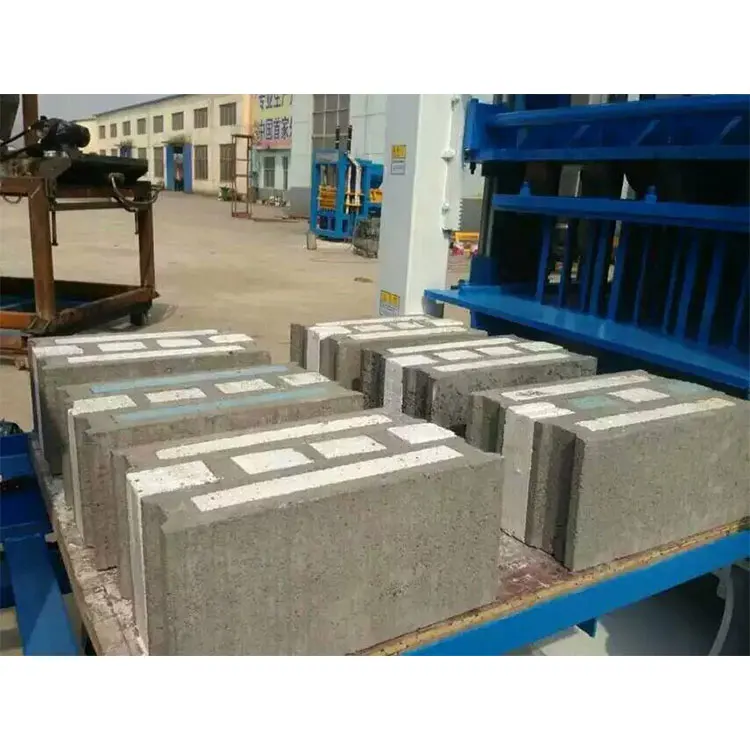
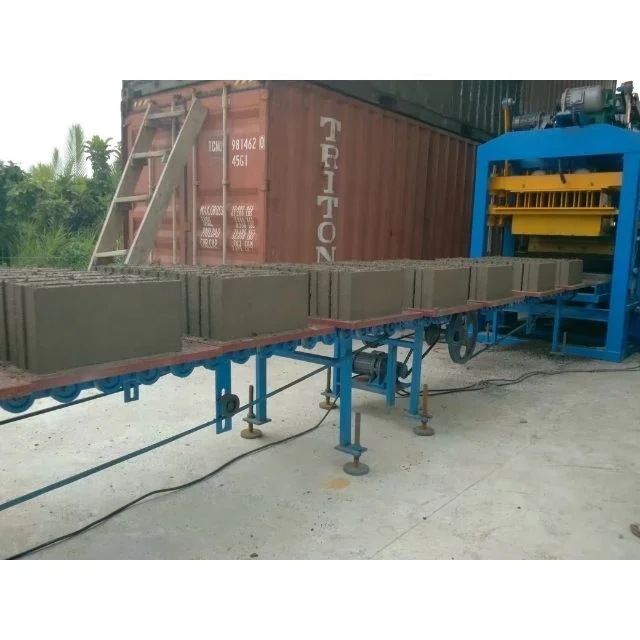
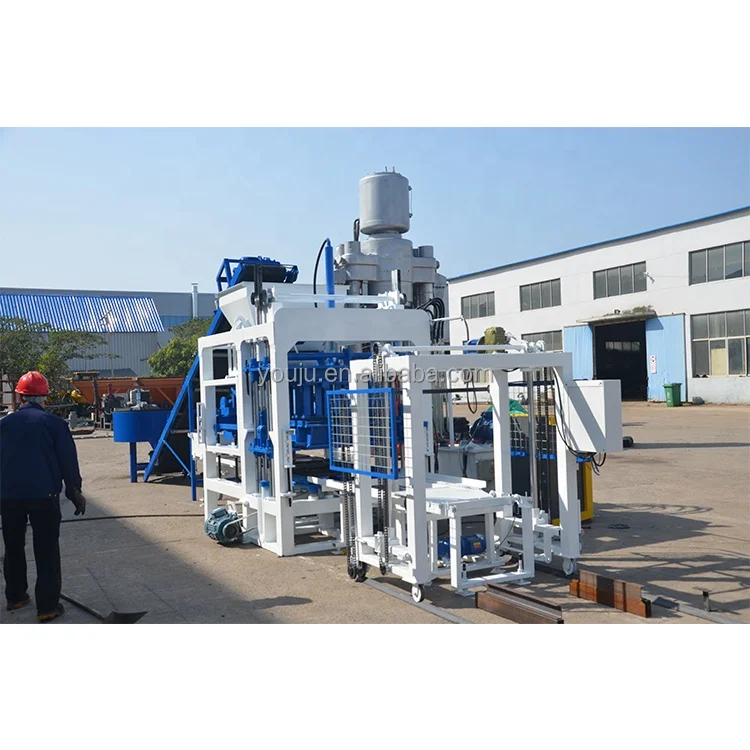
Mid-Range Automation Anchor — the QT5-15 sits at the pivot point where buyers move from manual pallet handling to PLC-controlled block production without committing to a full high-capacity line.
Technical Specifications
| Parameter |
Value |
| Model |
QT5-15 |
| Product Type |
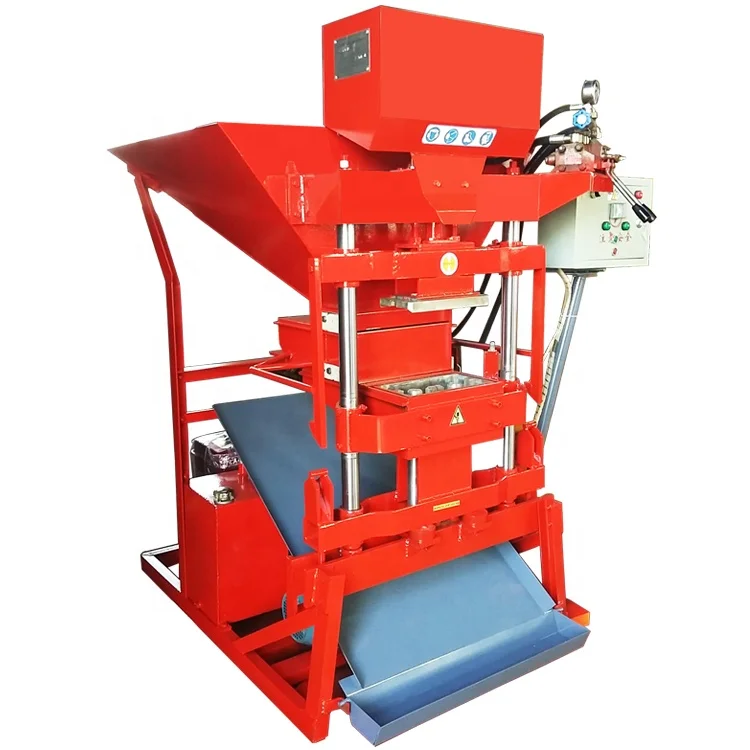
Hydraulic Concrete Automatic Block Making Machine |
| Overall Dimensions (L×W×H) |
7400×1950×2800 mm |
| Rated Pressure |
21 MPa |
| Main Vibration Form |
Platform Vibration |
| Vibration Frequency |
2800–4500 r/min |
| Vibration Force |
40 KN |
| Pallet Size |
1100×550 mm |
| Molding Cycle |
15–20 s |
| Total Mass |
6 T |
| Demolding Method |
Hydraulic |
| Recommended Factory Area |
600 m² |
| Control System |
PLC intelligent control with man-machine interface, logic control, production program, malfunction diagnosis and remote control function |
| Raw Materials |
Crushed stone, sand, cement, fly ash, gravel, slag and similar aggregates |
| Output — Hollow Block 400×200×200 mm |
7200–9600 pcs/day (5 pcs/mold, 15–20 s cycle) |
| Output — Porous Brick 240×115×90 mm |
23040–28800 pcs/day (16 pcs/mold, 16–20 s cycle) |
| Output — Standard Brick 240×115×53 mm |
61440–70892 pcs/day (32 pcs/mold, 13–15 s cycle) |
| Voltage & Frequency |
Basis to be confirmed with buyer site requirement |
| Rated Power |
Basis to be confirmed with manufacturer |
| Automation Level |
Automatic (PLC controlled, upstream/downstream scope to be confirmed) |
| Stacking Method |
Basis to be confirmed |
| PLC Display Language |
Basis to be confirmed |
Application Suitability
| Application |
Material or Output |
| Hollow block production for building walls |
Crushed stone, sand, cement, fly ash blends; 400×200×200 mm format |
| Solid block manufacturing for load-bearing structures |
Dense aggregate mixes with higher cement ratios |
| Paving block and colored paver runs |
Fine sand and pigment blends, interlocking or rectangular formats |
| Interlocking brick for landscape and retaining walls |
Gravel and slag blends with specific mould geometries |
| Kerbstone and curb production |
Heavy aggregate mixes requiring sustained hydraulic pressure |
| On-site production for housing projects |
Locally sourced sand and gravel, output matched to daily build schedule |
What "Cycles per Hour" Hides About Your Real Daily Output
A cycle time only matters when you know which block format it was measured on.
Every block machine brochure quotes a cycle number, but few state the mould and block size behind it. A 15-second cycle on a standard brick mould delivers a very different daily volume than the same cycle on a 400 mm hollow block mould. When I first started specifying machines, I watched buyers compare two presses on cycles-per-hour alone and pick the wrong one because the faster number was measured on a smaller format. The QT5-15 automatic block machine manufacturer documentation here lists output per format so the comparison stays honest [NEED_CITE: block format assumptions behind cycle time claims].
The risk is not just disappointment on day one. If your plant was sized around an inflated figure, your curing racks run short, your pallets rotate too slowly and the press sits idle waiting for the handling side to catch up.

Where the QT5-15 Fits Across the Full Machine Range
The QT5-15 occupies the middle tier of our automatic block machine line. Below it, semi-automatic machines trade lower investment for manual pallet feeding and hand stacking. Above it, high-capacity fully automatic lines add integrated batching, automatic cubing and continuous curing rack handling. This mid-range position suits buyers who need PLC-controlled consistency and format flexibility but are not yet ready to commit the floor space and capital of a continuous-operation plant.
Output Tiers and the Decision to Step Up or Hold
A buyer producing hollow blocks for a single housing development typically lands squarely on this tier. The 1100×550 mm pallet accommodates five hollow blocks per cycle while keeping curing rack dimensions manageable for a standard forklift. When daily demand grows past what two shifts on the QT5-15 can deliver, the step-up conversation shifts toward larger pallet machines with automatic stacking and cubing. The deciding factor is rarely the press itself — it is usually the handling and curing infrastructure that must scale alongside [NEED_CITE: block plant scaling considerations for handling and curing].
Reading the Specs That Actually Shape Your Line
The 21 MPa rated pressure and 40 KN vibration force work together to compact aggregate into a dense, consistent block. Vibration alone cannot achieve target strength if hydraulic pressure is too low, and pressure alone produces uneven compaction without sufficient vibration energy. The adjustable 2800–4500 r/min vibration frequency lets the operator tune energy input to the specific density of the local aggregate — lighter fly ash blends need a different frequency profile than heavy crushed stone.
The 1100×550 mm pallet size was chosen to balance cycle output with downstream practicality. Larger pallets push more volume per cycle but require wider curing racks and heavier-duty forklifts. This dimension fits standard pallet racking configurations common in mid-size block plants.
The PLC control with remote fault diagnosis means that when an alarm triggers at 2 AM, the operator can read the specific fault code rather than guessing whether the issue is hydraulic, electrical or sensor-related. That alone shortens most unplanned stoppages from hours to minutes.
The Cost of Skipping the Mix-to-Machine Match
I once specified a machine for a West African buyer who planned to use volcanic ash as a primary aggregate. The factory test ran on standard river sand and the results looked solid. We shipped without adjusting vibration frequency or hydraulic pressure for the lighter volcanic material. The blocks cracked during curing and the first production batch was unsellable. That experience reshaped how I approach every QT5-15 configuration: the machine, mould and mix must be validated together before dispatch, not assumed compatible from a catalogue default [NEED_CITE: aggregate variability effects on block compaction and strength].
When the vibration force is set for a dense aggregate but the buyer sources a lighter local sand, the blocks leave the press under-compacted. The inverse is equally costly — over-pressing a delicate mix causes surface spalling and edge damage that accumulates as waste across every shift.
Why Buyers Source the QT5-15 from This Range
Block machinery is our single focus, so the QT5-15 arrives with machine, mould, pallet and handling equipment specified as one matched system rather than assembled from separate suppliers with mismatched cycle times.
Each configuration is set against the buyer’s actual mix design and target block format, not a standard catalogue row. If your local aggregate is fly ash heavy, the vibration profile and pressure settings are adjusted before the machine leaves the factory.
Mould design covers the specific formats your market sells, including custom drawings when standard moulds do not match local building codes or aesthetic requirements.
The automation level is selectable — a buyer can commission the QT5-15 in semi-automatic mode with manual pallet handling, then add automatic stacking and cubing modules as production volume justifies the investment.
Documentation & Verification
- Line layout with capacity stated per hollow block, porous brick and standard brick format
- Mould drawing and format list confirming dimensions against your local building standards
- Factory test record run on the buyer-supplied aggregate sample before dispatch
- Voltage and PLC display language confirmation document signed before production starts
- Hydraulic and electrical schematic matching the as-built QT5-15 configuration
- Operation and maintenance manual with wear parts and mould replacement intervals
Installation, Commissioning & Support
- 600 m² factory area with level concrete slab rated for 6 T static and dynamic press loading
- Dedicated electrical circuit matching confirmed voltage and frequency before the QT5-15 arrives on site
- Machine shipped in dismantled modules for container loading, reassembled on prepared foundation
- PLC control language and man-machine interface verified during on-site commissioning with buyer operators
- Mould change training covers hydraulic demolding sequence and format-specific parameter recall
- Wear parts list provided at handover with reorder intervals based on the buyer’s aggregate abrasiveness
What to Send With Your First Inquiry
Tell us the block formats your market actually sells — hollow block, paver, interlocking brick or a mix — along with the daily volume you need for each. Share a sample or analysis of your local aggregate so we can match vibration frequency and pressure to your material. Confirm your site voltage, frequency and the language your operators will read on the PLC screen so commissioning is not delayed by a settings mismatch after arrival [NEED_CITE: export market voltage and frequency standards for industrial machinery].
Frequently Asked Questions
Q: How do I verify the QT5-15 daily output for the specific block format I plan to produce?
A: Request the capacity calculation document that states output per format — hollow block at 400×200×200 mm, porous brick at 240×115×90 mm and standard brick at 240×115×53 mm. Each figure carries its own mould cavity count and cycle time assumption. Compare these against your actual product mix rather than relying on a single cycles-per-hour claim that may assume a format you never intend to run.
Q: When should I step up from the QT5-15 to a higher-capacity automatic line?
A: The signal usually comes from the handling side rather than the press. If your curing racks are full before the shift ends, or your pallet return loop cannot keep the QT5-15 fed, those are bottlenecks that a larger press will only worsen. Step up when you need automatic stacking and cubing integrated with continuous curing rack circulation across multiple shifts.
Q: What electrical details must be confirmed before the QT5-15 goes into production?
A: Voltage, frequency and phase configuration at your site must be locked down before manufacturing starts. The PLC display language should also be confirmed so your operators can read fault codes and parameter screens without translation delays. These items are straightforward but frequently overlooked, causing commissioning hold-ups that push first production back by weeks.
Q: How much factory area does the QT5-15 require including curing and pallet handling?
A: The press itself operates within a 600 m² recommended factory area, but the total footprint grows with your chosen pallet handling and curing rack configuration. The 1100×550 mm pallet size was selected to fit standard racking systems. Plan your layout around pallet circulation speed — racks must accommodate at least one full day of output while blocks reach handling strength.
Q: Can I start with the QT5-15 in semi-automatic mode and add automation later?
A: Yes. The PLC control architecture supports adding automatic pallet feeding, stacking and cubing modules after initial commissioning. Many buyers start with manual pallet handling to reduce upfront investment, then upgrade individual stations as production volume and labour costs justify the addition. The upgrade path is planned during initial specification so mechanical and electrical interfaces are pre-provisioned.

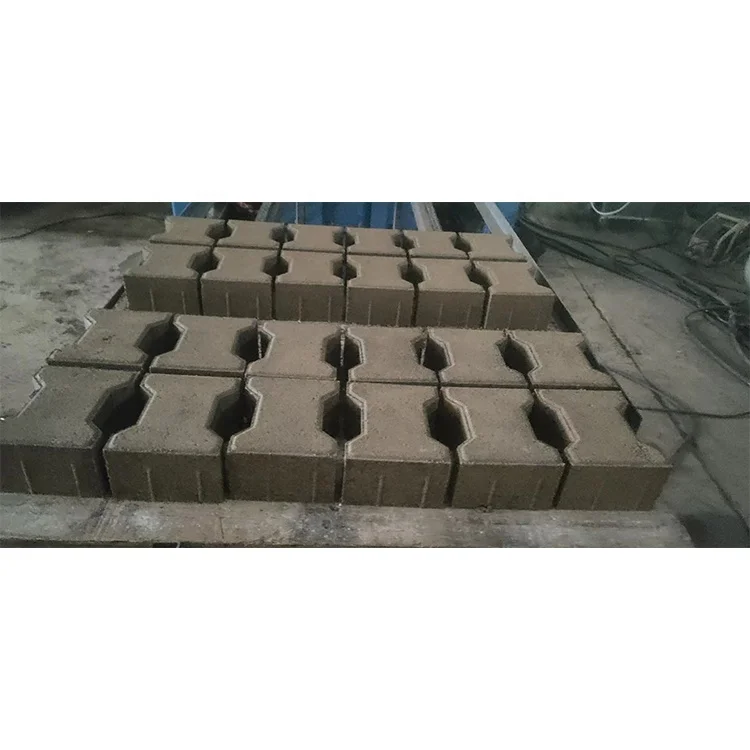
 Automatic block machine