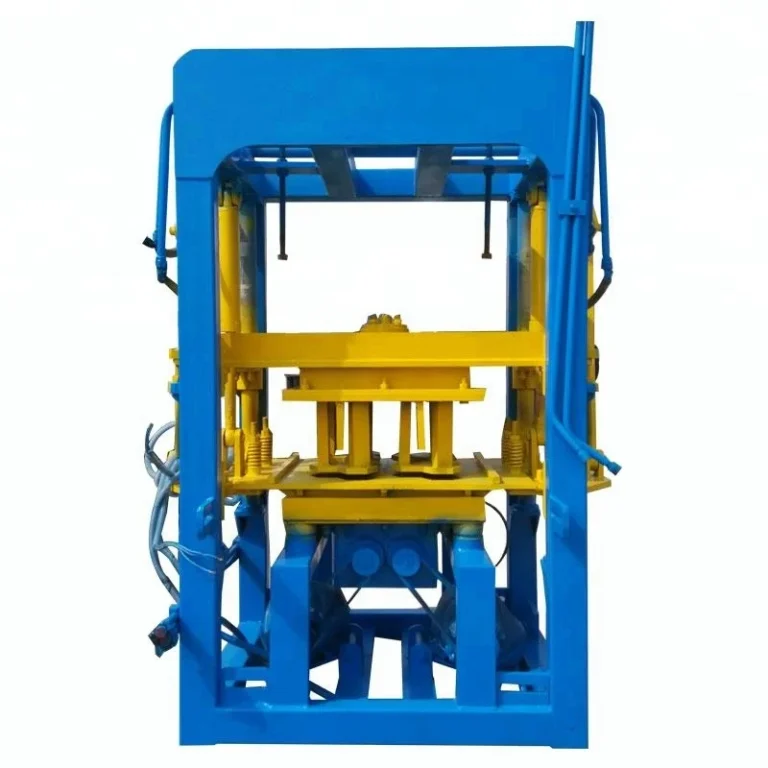
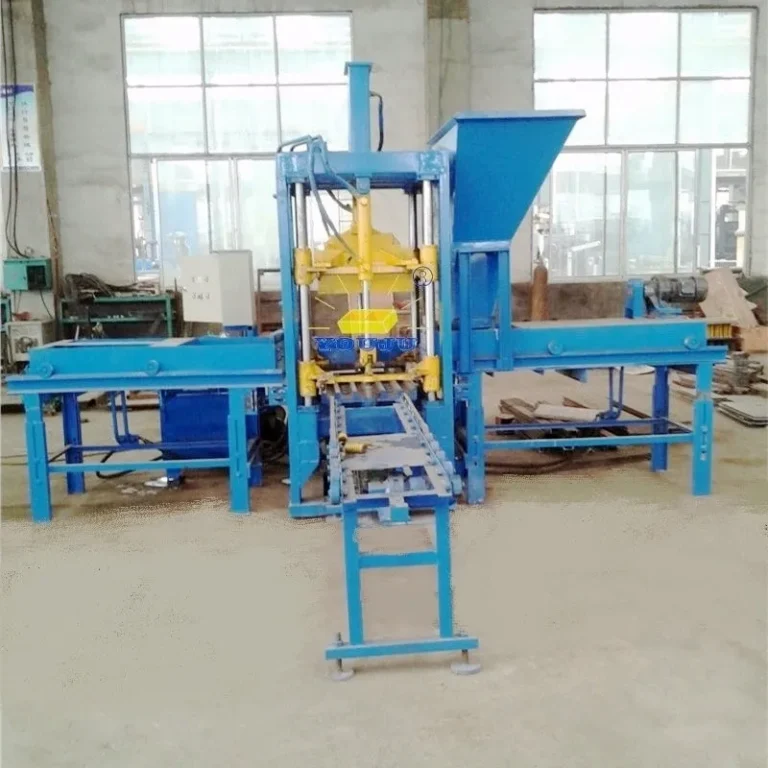
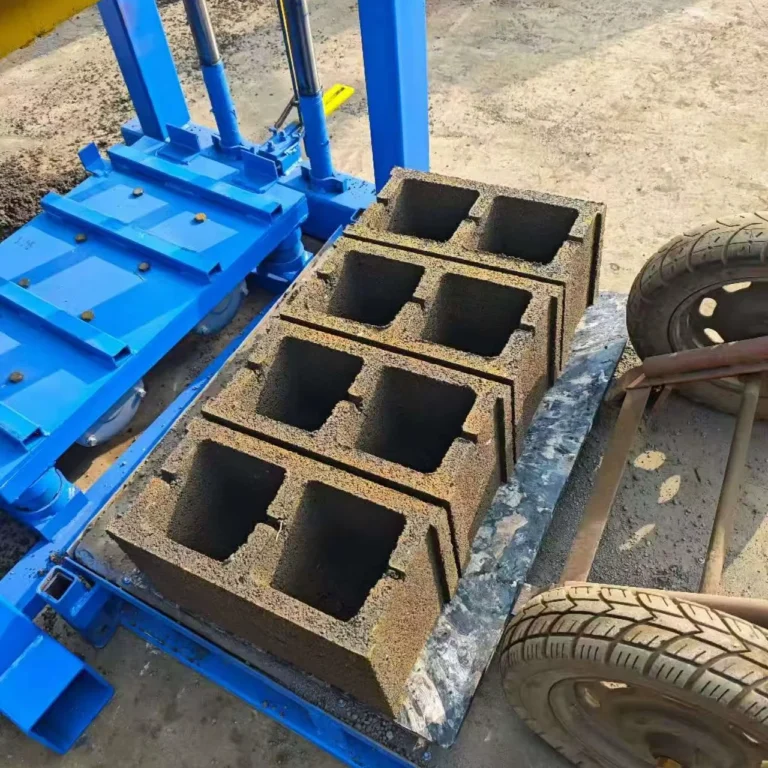
Single-Focus Block Machinery Configuration — the QT5-15 is positioned within a matched system where press, mould, pallet, and handling equipment are specified together rather than sourced separately, ensuring cycle times align across the entire line.
Technical Specifications
| Parameter |
Value |
| Model |
QT5-15 |
| Product Type |
Automatic Concrete Block Making Machine |
| Overall Dimensions (L×W×H) |
7400×1950×2800 mm |
| Rated Pressure |
21 MPa |
| Main Vibration Form |
Platform Vibration |
| Vibration Frequency |
2800–4500 r/min |
| Pallet Size |
1100×550 mm |
| Molding Cycle |
15–25 s |
| Overall Power |
26.5 kW |
| Demolding Method |
Hydraulic |
| Output Capacity (Hollow brick 400×200×200 mm) |
1800 pcs/h (basis: 5 pcs/mold, 16–20 s cycle) |
| Output Capacity (Hollow block 400×150×200 mm) |
1300 pcs/h (basis: 6 pcs/mold, 15–20 s cycle) |
| Output Capacity (S paver 225×112.5×60 mm) |
3700 pcs/h (basis: 16 pcs/mold, 15–17 s cycle) |
| Applied Products |
Hollow/solid blocks, pavers, interlocking blocks, curbstone, colored pavers |
| Raw Materials |
Crushed stone, sand, cement, dust, fly ash, gravel, slag |
| Automation Level |
Automatic |
| Voltage & Frequency |
Configurable to buyer’s site requirements (basis to be confirmed) |
| Control System |
PLC (brand and language to be confirmed) |
| Warranty |
One year |
Application Suitability
| Application |
Material or Output |
| Hollow block production for building walls |
Crushed stone, sand, cement, fly ash mixes on 400×200×200 mm and 400×150×200 mm formats |
| Paver production for walkways and yards |
Sand, cement, and fine aggregate on 225×112.5×60 mm S-paver format |
| Interlocking brick and curbstone runs |
Custom mould configurations on the 1100×550 mm pallet platform |
| On-site block production for housing projects |
Local aggregate and cement blends adapted to available raw materials |
| Format expansion for existing concrete product plants |
Additional mould sets added to the QT5-15 press to diversify output |
Why the Stated Capacity Rarely Matches the First Week on Site
Output numbers only mean something when tied to a specific block format, mould cavity count, and cycle time.
I have watched buyers receive a QT5-15 rated at a certain hourly figure, then spend the first production week wondering why daily totals fall well short. The gap usually traces back to one thing: the capacity was quoted for a format the buyer never intended to run. A press that produces 1800 hollow bricks per hour on a 400×200×200 mm mould at a 16–20 second cycle will deliver a very different number on a solid block or paver format. Without that context, the automatic block making machine manufacturer quote looks inflated the moment the line starts running [NEED_CITE: common causes of output shortfall in stationary block plants].

Where the QT5-15 Sits in the Stationary Range
The QT5-15 occupies the mid-tier of Shiyue’s stationary block machine lineup, sitting above semi-automatic entry-level plants that rely on manual pallet handling and below high-capacity lines with fully automatic stacking and cubing. Buyers evaluating their first automatic block making machine manufacturer option often land here because the 1100×550 mm pallet size covers most common block and paver formats without requiring a large curing area or heavy-duty forklift investment. The press is designed so that a buyer can begin with semi-automatic pallet feeding and add automation stations later as production volume justifies the capital.
Matching Upstream and Downstream to the Press Cycle
A press is only as productive as the slowest station around it. In my years running site commissions across the Middle East, the most common bottleneck was not the press itself but the mixer feeding it or the stacking crew falling behind. When the mixer delivers a batch every 45 seconds and the QT5-15 completes a cycle in 15–25 seconds, the press spends a significant portion of each hour waiting for material. The same applies downstream: if cured pallets are moved by hand and the curing rack is two workers short, pallets pile up at the press exit and the operator hits pause. Line layout and capacity calculation must state the assumed block format and account for every station in between [NEED_CITE: block production line balancing principles].
Reading the Specs That Actually Shape Daily Output
The 21 MPa rated pressure and platform vibration frequency range of 2800–4500 r/min work together to determine block density and surface finish. Lower frequencies with higher pressure suit large hollow blocks where the mix needs time to settle into deep cavities, while higher frequencies compress fine aggregate into dense pavers with sharp edges. The hydraulic demolding system releases the mould box vertically, which reduces corner damage on interlocking bricks and curbstone profiles where a mechanical stripper would scrape the fresh block.
The 1100×550 mm pallet dimension is not arbitrary — it was chosen to align with standard curing rack spacing and the fork tine width of common warehouse forklifts. A buyer who already operates a curing yard built around a different pallet size will face the choice of re-racking or accepting lower pallet utilization on every cycle. The 26.5 kW overall power draw means the machine can run on a dedicated circuit from a standard industrial transformer, though voltage and frequency must be confirmed against local supply before the control panel is wired.
The Cost of Skipping the Format Conversation Early
When a buyer orders a press without specifying the exact block formats their market demands, the factory ships with a default mould set that may not match local building codes or paving standards. Switching to the correct mould later means ordering new tooling, waiting for delivery, and losing production days on a machine that was supposed to be earning revenue. Worse, if the pallet size does not match the curing racks already on site, the buyer ends up stacking blocks by hand in the yard — exactly the labour cost the automatic line was meant to eliminate [NEED_CITE: hidden costs of mismatched pallet and curing infrastructure].
What Sets This Procurement Path Apart
Block machinery is the single focus here, which means the QT5-15 is never quoted as a standalone press with the rest of the line left to separate suppliers. The machine, mould, pallet, and handling equipment are specified as one matched system, so cycle times at the mixer, press, and stacker are calculated to keep the press running rather than idling. Configuration is set against the buyer’s actual mix design and local aggregate — not a catalogue default — which prevents the situation where a machine arrives tuned for a sand-graduation the buyer cannot source.
Mould design covers the formats the buyer’s market actually sells, including custom drawings for interlocking profiles or curbstone shapes not found in standard catalogues. The automation level is selectable: a buyer can commission the QT5-15 with manual pallet handling today and add automatic stacking and cubing modules as volume grows, protecting the initial investment while leaving a clear upgrade path. Installation and commissioning include operator training so the crew understands mould change procedure, vibration frequency adjustment, and daily maintenance checkpoints before the service engineer leaves site.
Documentation & Verification
- Line layout with capacity calculation stating the exact block format assumed for each output figure
- Machine specification sheet covering pressure, vibration range, pallet size, and power draw
- Mould drawing and format list included with the quotation, showing cavity count per format
- Voltage and PLC display language confirmation document signed before production begins
- Factory test record on the buyer’s chosen block format available before dispatch
Installation, Commissioning & Support
- Foundation plan sized to the 7400×1950 mm footprint with anchor bolt layout for the QT5-15 frame
- Dedicated power circuit matching confirmed voltage and frequency, rated for the 26.5 kW total draw
- Machine shipped in dismantled state with reassembly supervised on site by a service engineer
- First-run commissioning includes vibration frequency tuning across the 2800–4500 r/min range for each mould
- Operator training covers hydraulic demolding procedure, mould change steps, and daily greasing points
- Wear parts list provided with the QT5-15, covering mould liners and hydraulic seals for initial spares stocking
Before You Send the Inquiry
To size the QT5-15 correctly within the stationary range, share the target block formats your market sells, the daily volume you need per format, and the raw materials available locally — including aggregate gradation and cement type. Confirm your site voltage, frequency, and the language your operators need on the PLC display. If you already have curing racks, pallets, or a mixer in place, provide their specifications so the line can be balanced around existing equipment rather than duplicating it.
Frequently Asked Questions
Q: How does the QT5-15 compare to Shiyue’s semi-automatic and higher-tier automatic models?
A: The QT5-15 sits in the mid-tier of the stationary range. It delivers higher output than entry-level semi-automatic presses that depend on manual pallet handling, while remaining below the high-capacity fully automatic lines with integrated stacking and cubing. It suits buyers who need consistent automatic cycling but may not yet justify the footprint and investment of a top-tier plant.
Q: What block formats can the QT5-15 produce, and what is realistic daily output per format?
A: The press covers hollow blocks at 400×200×200 mm and 400×150×200 mm, S pavers at 225×112.5×60 mm, plus interlocking bricks and curbstones. Each capacity figure is tied to a specific mould cavity count and cycle time — daily output depends on shift length, mixer feed rate, and downstream handling speed.
Q: What plant footprint and investment level should I expect at this tier?
A: The QT5-15 press itself occupies a 7400×1950 mm footprint, but the full line including mixer, pallet feeder, and curing area requires substantially more space. Investment at this tier covers the automatic press and essential supporting stations, sitting between semi-automatic workshop setups and high-capacity fully automatic lines with cubing systems.
Q: Can I start with a semi-automatic configuration and add automation later?
A: Yes. The QT5-15 platform supports a selectable automation level, so a buyer can begin with manual pallet handling and add automatic pallet feeding, stacking, or cubing modules as production volume grows. The press and control architecture are designed to accept these upgrades without replacing the core machine.
Q: What supporting equipment is needed to match this press tier?
A: At minimum, you need a mixer with batch output timed to the 15–25 second molding cycle, a pallet feeding system matched to the 1100×550 mm pallet size, and a curing rack layout that absorbs the press output without creating a bottleneck. Stacking and cubing stations are configurable based on labour availability and target volume.

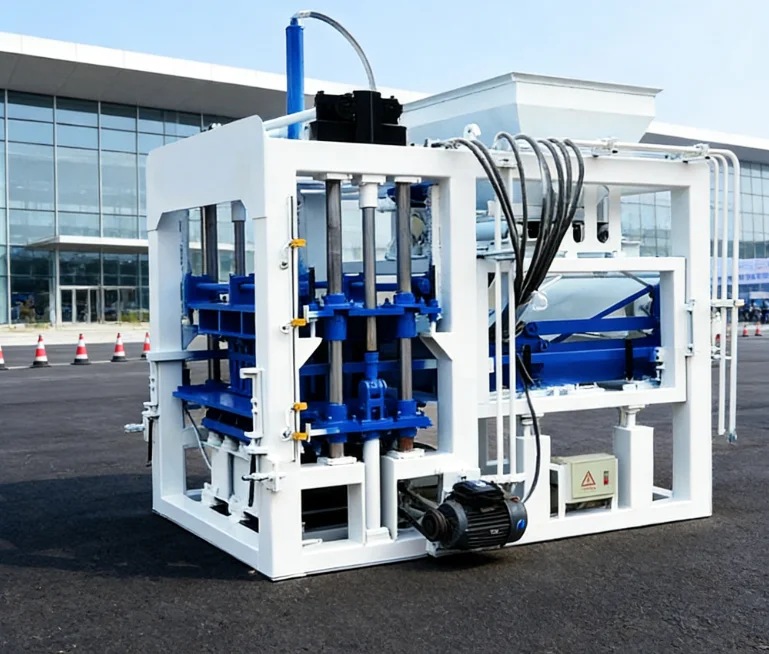
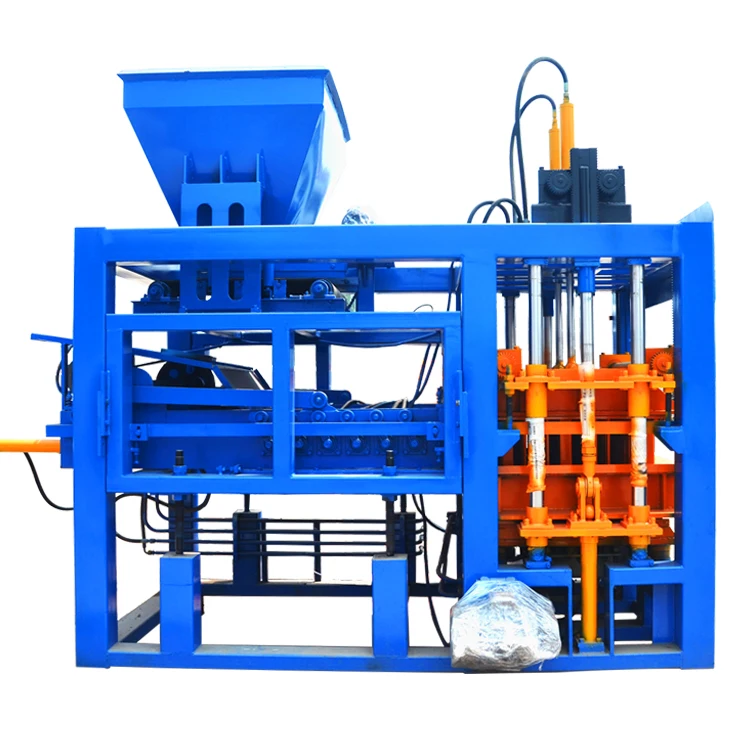 Stationary block machine