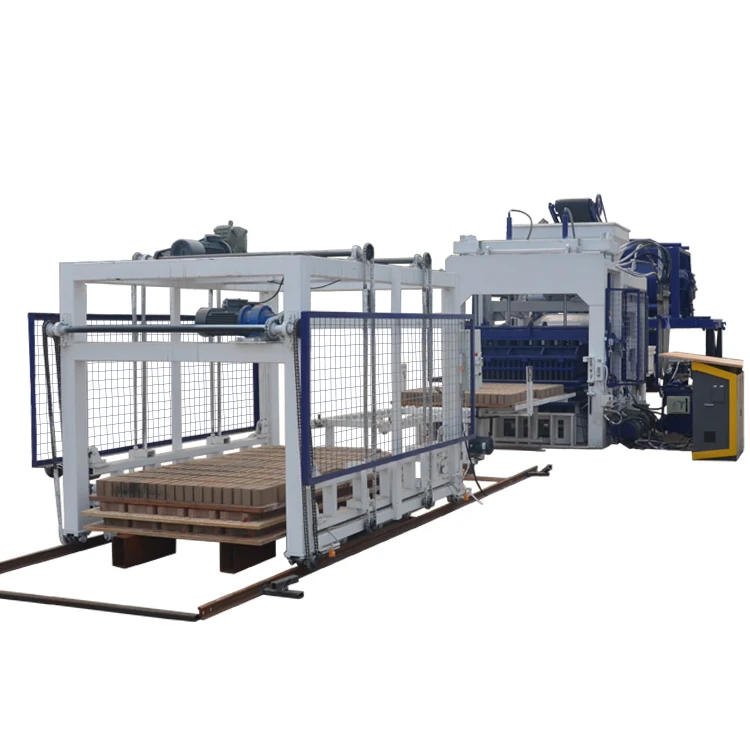
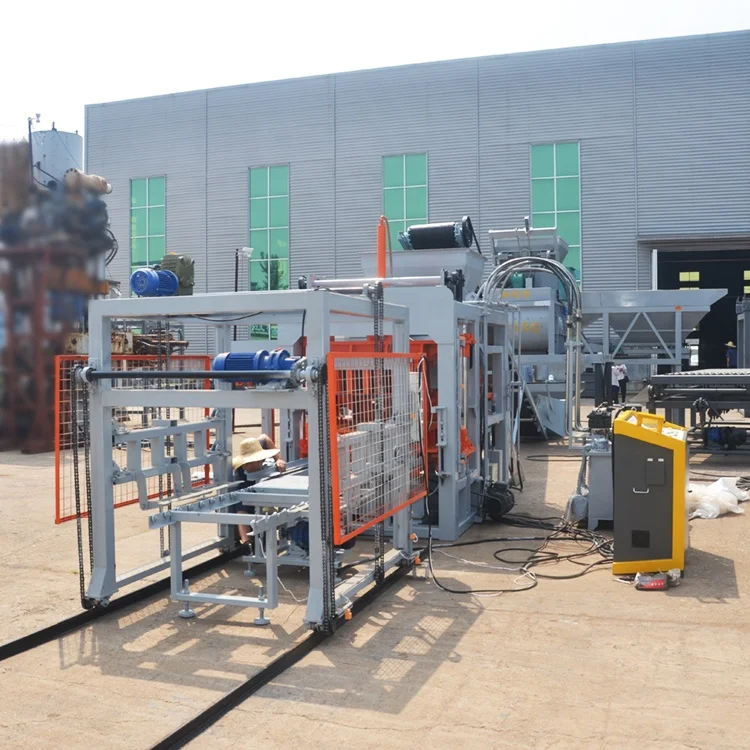
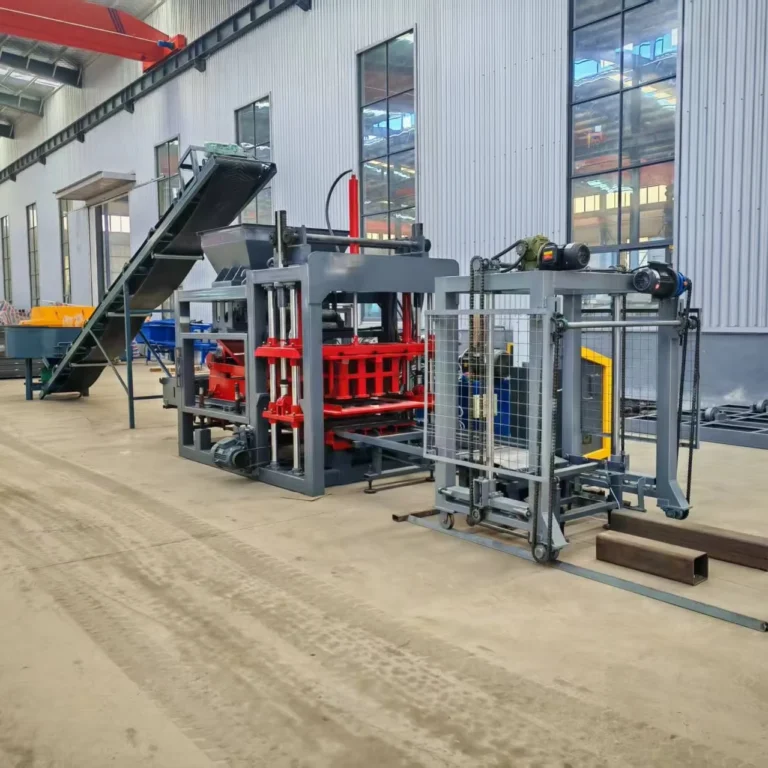
Matched system design — the QT5-15 block making machine, mould, pallet and handling equipment are specified as one integrated line rather than assembled from separate suppliers, ensuring cycle times align across every station.
Technical Specifications
| Parameter |
Value |
| Model |
QT5-15 |
| Product Type |
Automatic Cement Block Making Machine |
| Overall Dimensions |
7400×1950×2800 mm |
| Vibration Frequency |
0-60 Hz |
| Vibration Form |
Platform Vibration |
| Moulding Mode |
Automatic loading with vibration moulding |
| Pallet Size |
1100×550 mm |
| Molding Cycle |
15-20 s (basis not stated in source — confirm block format / material / thickness) |
| Overall Power |
32 kW |
| Vibration Force |
80 kN |
| Total Mass |
5000 kg |
| Demolding Method |
Hydraulic |
| Factory Area Required |
1000 m² |
| Control System |
PLC (Programmable Logic Controller) with touch screen interface |
| Hydraulic System |
Independent integrated hydraulic station |
| Output Capacity (Hollow Block) |
900-1200 pcs/h (based on 400×200×200 mm hollow block, 5 pcs/mould) |
| Output Capacity (Hollow Block) |
1080-1440 pcs/h (based on 400×150×200 mm hollow block, 6 pcs/mould) |
| Output Capacity (Solid Brick) |
5760-7680 pcs/h (based on 240×115×53 mm solid brick, 32 pcs/mould) |
| Output Capacity (Rectangular Paver) |
3600-4500 pcs/h (based on 200×100×60 mm rectangular paver, 25 pcs/mould, cycle 20-25 s) |
| Output Capacity (Zigzag Paver) |
2304-2880 pcs/h (based on 225×112.5×60 mm zigzag paver, 16 pcs/mould, cycle 20-25 s) |
| Block Compressive Strength |
More than 15 MPa |
| Raw Material Compatibility |
Fly ash (up to 70%), slag, gangue, sand, crushed stone, cement, water |
| Assembly State |
Line includes pallet feed machine, block making machine, storage hopper, conveyor, hydraulic unit, PLC control cabinet |
Application Suitability
| Application |
Material or Output |
| Hollow Block Production |
Crushed stone, sand, cement, water; fly ash or slag blends |
| Solid Brick Manufacturing |
Sand, crushed stone, cement; industrial residue mixes |
| Rectangular Paver Production |
High-density concrete mixes for 200×100×60 mm pavers |
| Zigzag Interlocking Paver |
Interlocking profile moulds, 225×112.5×60 mm format |
| Fly Ash Block Plants |
Blends containing up to 70% fly ash with cement binder |
| On-Site Construction Block Making |
Local aggregate and cement for project-specific hollow blocks |
What "900 to 1200 Pieces per Hour" Actually Means for the QT5-15 Automatic Block Machine Manufacturer
Every capacity figure must name the block format, mould cavity count and cycle time it assumes.
Buyers often receive a single headline number and assume it applies to whatever product they plan to run. When the machine arrives and the first production shift begins, the actual output can fall well short of the quoted figure simply because the buyer’s target block is larger, heavier or requires longer vibration. A QT5-15 automatic block machine manufacturer that quotes 1200 pieces per hour based on a 400×200×200 mm hollow block with five cavities per mould is telling you something very different from one that quotes the same number for a smaller solid brick. Without that context, daily planning becomes guesswork and project deadlines slip [NEED_CITE: capacity calculation standards for concrete block production equipment].

Where the QT5-15 Sits in the Full Machine Range
The QT5-15 occupies the mid-tier of the automatic block machine lineup. Below it, semi-automatic models require manual pallet handling and offer lower output, suiting first-time entrepreneurs with limited capital. Above it, high-capacity automatic lines add fully automatic stacking, cubing and curing rack handling for large-scale plants. The QT5-15 automatic block machine manufacturer positions this model for buyers who need PLC-controlled consistency and hydraulic demolding but are not yet ready for the footprint and investment of a top-tier line.
Understanding Output Tiers and Plant Footprint
A 1000 m² factory area is the baseline for a QT5-15 line including raw material feeding, the press itself, pallet circulation and curing space. Smaller semi-automatic machines can operate in a fraction of that area because pallets are moved by hand. Higher-capacity automatic lines demand significantly more room for stacking systems and curing rack conveyors. Choosing the right tier means matching your available land, budget and target daily volume before committing to a purchase order [NEED_CITE: block plant layout planning guidelines for automatic and semi-automatic lines].
Reading the Specification Sheet Beyond Headline Numbers
The 80 kN vibration force and 0-60 Hz adjustable frequency determine how densely the concrete mix is compacted into the mould. Insufficient vibration leaves porous, weak blocks; excessive vibration can segregate the mix and produce surface defects. The independent integrated hydraulic station sits apart from the main vibration source, which protects seals and valves from the constant shock loading that shortens component life. The 1100×550 mm pallet size must match the curing racks and forklifts already in your yard — specifying a pallet dimension that your existing equipment cannot handle creates a costly mismatch before the first block is produced.
The Hidden Cost of Specifying the Wrong Automation Tier
A buyer who chooses a semi-automatic model to save on initial investment often discovers that manual pallet handling becomes the bottleneck once demand grows. Blocks pile up faster than workers can move them, and the press sits idle waiting for empty pallets to return. Conversely, a buyer who jumps to a fully automatic cubing line without the volume to justify it carries depreciation and maintenance costs that the production schedule never recovers. The QT5-15 tier addresses this gap by offering PLC automation at the press while leaving pallet stacking as a manual or future-upgrade option [NEED_CITE: automation level selection for concrete block plants].
Why Source This Tier Through a Single-System Supplier
Block machinery is the sole focus here, meaning the QT5-15 press, mould, pallet and handling stations are specified together rather than sourced separately. The configuration is set against your actual mix design and local aggregate, not a catalogue default. Mould design covers the formats your market actually sells, including custom drawings when standard cavities do not match. The automation level is selectable — you can start with PLC-controlled pressing and add automatic stacking later. Installation includes operator training on the specific block formats you plan to run.
Documentation & Verification
- Line layout showing capacity per block format for the QT5-15
- Machine specification sheet with voltage and frequency confirmed before production
- Mould drawing and format list for every block type in your product range
- Factory test record documenting actual cycle times per format before dispatch
- Hydraulic and electrical schematic for local maintenance teams
- Operation and maintenance manual with wear parts list
Installation, Commissioning & Support
- Foundation plan matched to the 5000 kg mass and 7400×1950 mm footprint
- Dedicated power circuit sized for the 32 kW total load at confirmed voltage and frequency
- Machine arrives with hydraulic unit and PLC cabinet pre-assembled for faster connection
- PLC touch screen configured in your operator’s language before commissioning
- On-site mould change training covering quick-replacement procedure for each format
- Wear parts list provided with first-shipment spares for hydraulic and vibration components
Before You Request a Quotation
To size the QT5-15 correctly within the range, share the block formats you plan to produce with dimensions, your target daily output per format, and the local aggregate and cement type available. Confirm your site voltage, frequency and preferred PLC display language so the control cabinet is built to match. If you already have pallets, curing racks or forklifts on site, provide their dimensions so the pallet feed system is compatible from day one.
Frequently Asked Questions
Q: How do I verify the capacity figures and understand which block format each number assumes?
A: Every output figure we quote names the block dimensions, mould cavity count and cycle time it assumes. For example, 900-1200 pieces per hour applies to a 400×200×200 mm hollow block with five cavities per mould. Request the capacity calculation sheet with your specific format listed before placing an order.
Q: Where does the QT5-15 sit compared to semi-automatic and higher-capacity models?
A: It is the mid-tier automatic option. Below it, semi-automatic models need manual pallet handling and suit lower budgets. Above it, high-capacity lines add automatic stacking and cubing for large plants. The QT5-15 gives PLC control and hydraulic demolding without the full-line footprint.
Q: What factory area does this machine require?
A: The baseline is approximately 1000 m² including raw material storage, the press, pallet circulation and curing space. Smaller semi-automatic models need less room; larger automatic lines need more. We provide a scaled line layout drawing during the proposal stage.
Q: Can I add automation or new block formats after the machine is installed?
A: Yes. The QT5-15 supports additional mould formats through quick-replacement mould frames, and automation stations such as automatic stackers can be added to the line later. The PLC system accommodates new programme recipes for each additional format.
Q: What voltage and control language options are available?
A: Voltage and frequency are configured to your site supply before production begins, and the PLC touch screen is set to your operator’s preferred language. Confirm these details during the quotation stage to avoid commissioning delays on arrival.

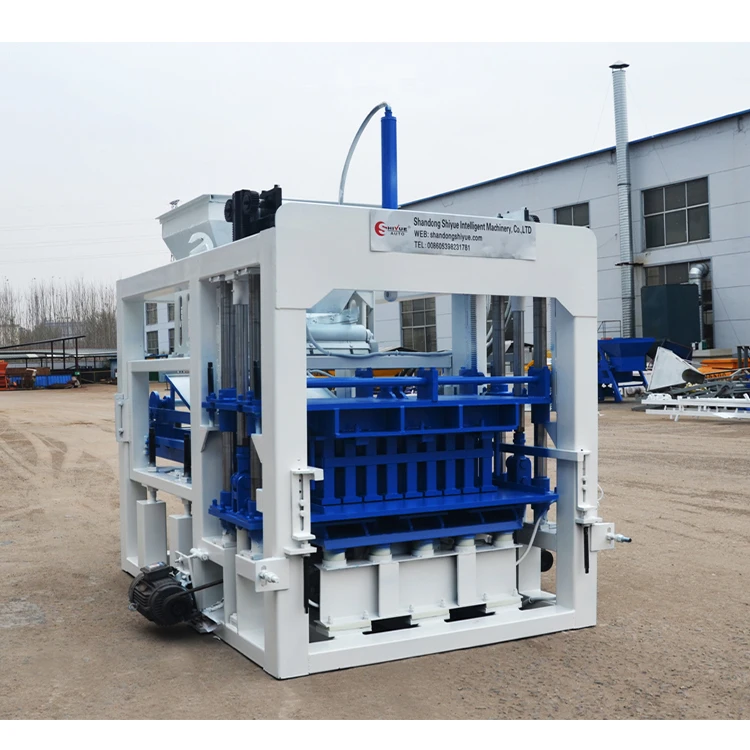
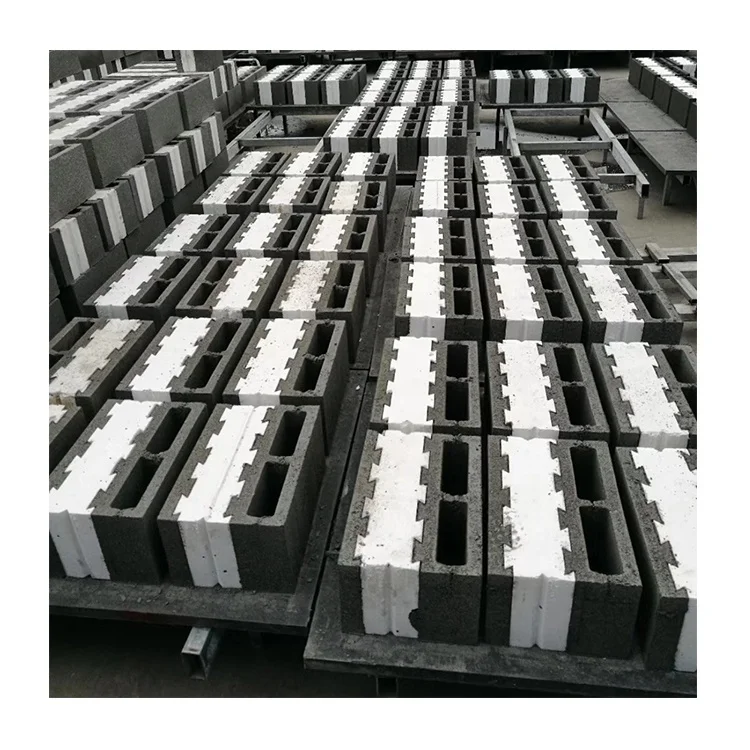 High quality block machine