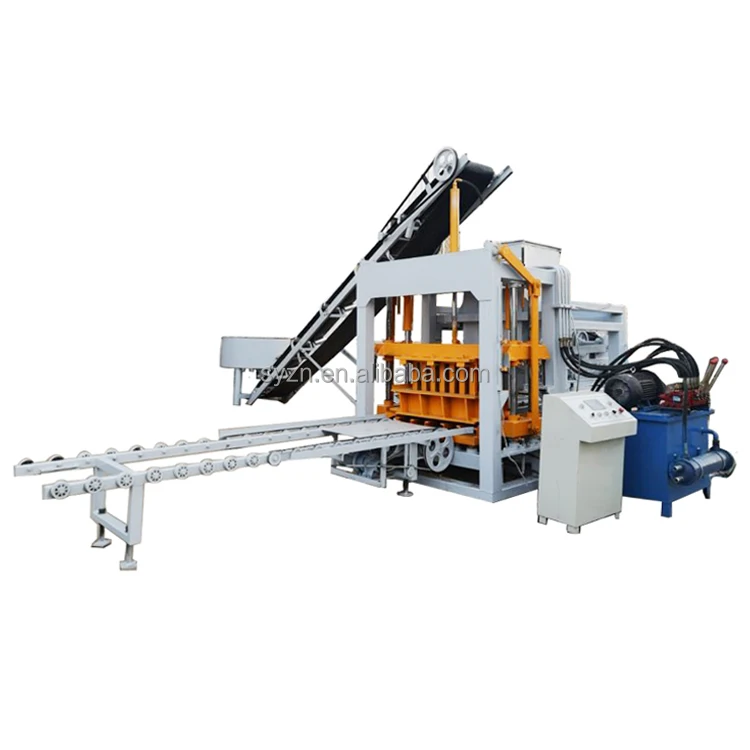
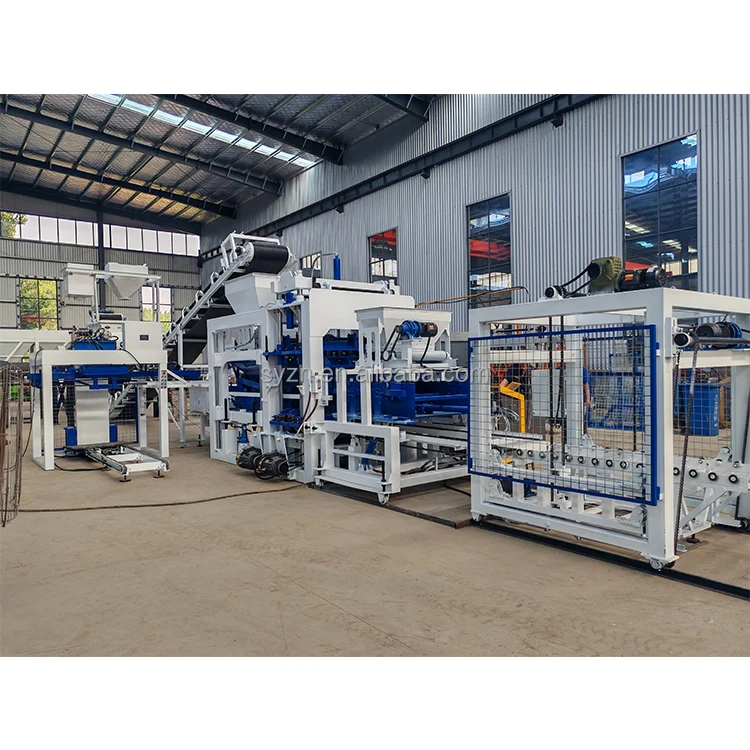
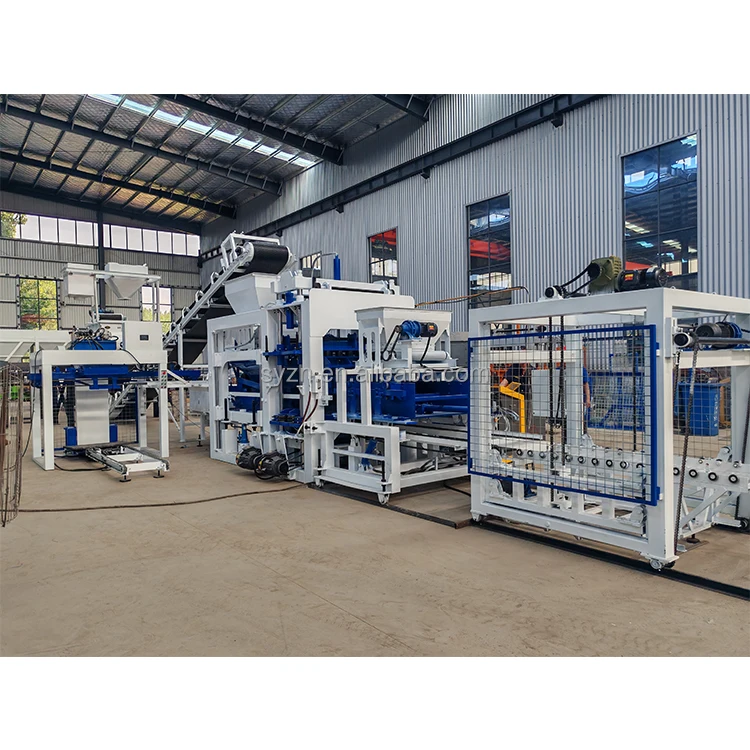
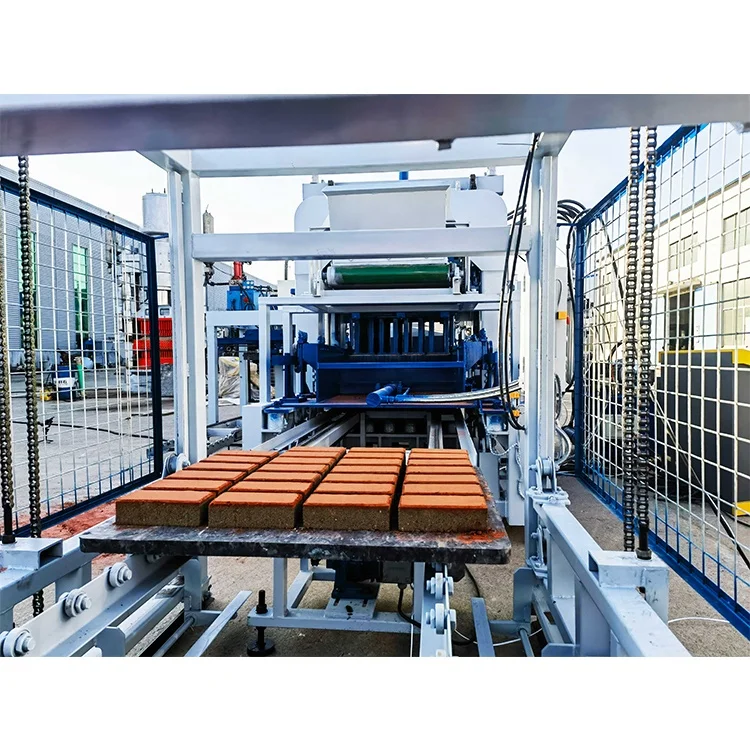
Matched System Specification — every QT6-15 hollow block making machine for sale ships with pallet, mould and handling gear sized as one coordinated line, not a collection of standalone parts.
Technical Specifications
| Parameter |
Value |
| Product Type |
Hydraulic Hollow Block Making Machine |
| Model |
QT6-15 |
| Overall Dimensions (L×W×H) |
8200 × 1700 × 2950 mm |
| Total Mass |
7 T |
| Overall Power |
37 kW |
| Vibration Form |
Platform Vibration |
| Vibration Frequency |
0–60 Hz (adjustable) |
| Vibration Force |
45 kN |
| Moulding Mode |
Load automatically, vibration moulding |
| Demolding Method |
Hydraulic |
| Pallet Size |
880 × 850 mm |
| Molding Cycle |
15–20 s (hollow/solid), 20–25 s (pavers) |
| Control System |
PLC with touch screen and fault diagnosis |
| Output – Hollow Block 400×200×200 mm |
8,640–11,520 pcs / 8 hr (basis: 15–20 s cycle) |
| Output – Hollow Block 400×150×200 mm |
11,520–15,360 pcs / 8 hr (basis: 15–20 s cycle) |
| Output – Solid Brick 240×115×53 mm |
46,080–61,440 pcs / 8 hr (basis: 15–20 s cycle) |
| Output – Rectangular Paver 200×100×60 mm |
17,280–23,040 pcs / 8 hr (basis: 20–25 s cycle) |
| Output – Zigzag Paver 225×112.5×60 mm |
17,280–23,040 pcs / 8 hr (basis: 20–25 s cycle) |
| Block Compressive Strength |
> 15 MPa (with matched mix design) |
| Hydraulic System |
Independent integrated station |
| Factory Area Required |
1200 m² |
| Automation Level |
High (PLC-controlled, intelligent electronic control) |
| Raw Material Adaptability |
Waste ash, slag, cement-based mixes |
| Voltage & Frequency |
Configurable to buyer’s local supply (to be confirmed) |
| PLC Display Language |
Configurable (to be confirmed) |
| Warranty |
1 year, whole machine (excluding spare parts) |
Application Suitability
| Application |
Material or Output |
| Hollow block production plants |
Crushed stone, sand, cement mixes forming 400×200×200 mm and 400×150×200 mm blocks |
| Solid brick manufacturing |
Fly ash, slag, cement blends producing standard 240×115×53 mm bricks |
| Paving block supply for municipal projects |
Aggregate and cement mixes forming rectangular 200×100×60 mm and interlocking zigzag 225×112.5×60 mm pavers |
| On-site production by construction contractors |
Local aggregate and cement for hollow blocks used directly in housing or commercial builds |
| Format expansion for existing concrete product makers |
Same machine platform, mould swap to add paver or solid brick lines alongside hollow blocks |
What "8,640 Blocks per Day" Actually Assumes on a QT6-15 Block Machine Manufacturer Line
Every capacity figure above is tied to a specific block format and cycle time — remove either and the number is meaningless.
I have watched buyers sign off on a QT6-15 hollow block making machine for sale expecting a single headline output number to cover every product they planned to sell. The reality is that a 400×200×200 mm hollow block running at a 15-second cycle delivers very different daily volume than a 200×100×60 mm rectangular paver at 25 seconds. When the quotation only mentions the highest figure, the buyer’s paver line ends up producing noticeably less than projected, and the shortfall only surfaces after the machine is bolted to the floor [NEED_CITE: block output calculation methods by format and cycle].
Where the QT6-15 Sits in the Full Shiyue Machine Range
The QT6-15 block machine manufacturer lineup position is mid-to-high tier. It bridges the gap between entry-level semi-automatic presses that need manual pallet handling and high-capacity fully automatic lines with integrated cubing. Buyers stepping up from a smaller workshop press or setting up a first dedicated block plant find this model covers the volume most regional markets demand without over-investing in capacity they cannot yet fill.
Automation Tiers Available Across the Range
Automation on the QT6-15 is selectable, not fixed. A buyer can start with semi-automatic pallet feeding and manual stacking, then add automatic pallet circulation and stacking later as production volume justifies the investment. The PLC platform is the same across tiers, so the control foundation does not need replacement when the line grows [NEED_CITE: PLC upgrade paths in block production lines]. This matters because ripping out a control system mid-life is both costly and disruptive to ongoing orders.
How Vibration Force and Hydraulic Pressure Shape Every Block
Platform vibration at 45 kN and 0–60 Hz adjustable frequency works together with the independent hydraulic station to compact the mix from both directions. The vibration liquefies the cement-aggregate blend so it flows into every mould cavity corner, while hydraulic pressure locks the density before demolding. If either parameter is mismatched to the buyer’s aggregate grading — for instance, weathered sand with high fines content — the resulting block may show lower compressive strength or surface cracking. The 880 × 850 mm pallet must also match the curing racks and forklift tine spacing already on site, otherwise freshly pressed blocks sit on the wrong support and edges chip during transport. The independent hydraulic station sits apart from the main frame, keeping seals and valves away from vibration-induced wear and cement dust ingress that shorten component life.

The Cost of Skipping Configuration Verification
When a buyer confirms model and price but leaves pallet size, voltage and PLC language to be sorted "later," the machine arrives and sits idle while transformers are sourced or control labels are re-translated. In one Southeast Asian project I supported, the local aggregate was weathered sand with particle size and moisture content far outside the standard mix assumption. The machine ran, but daily output dropped sharply because each cycle needed extended vibration to achieve acceptable density. That kind of mismatch is invisible in a catalogue quotation and only appears when the first production run is measured [NEED_CITE: aggregate variability impact on block machine cycle time].
Why Source the QT6-15 from Shiyue
Block machinery is our single focus, so the QT6-15 is specified as a matched system — press, mould, pallet and handling — rather than assembled from separate suppliers with mismatched cycle times. Configuration is set against the buyer’s actual mix design and local aggregate, not a catalogue default. Mould design covers the formats the buyer’s market actually sells, including custom drawings when standard sizes do not fit. Automation level is selectable at order, allowing a semi-automatic start with a defined upgrade path. Installation support includes on-site commissioning and operator training so the first production shift runs with confidence.
Documentation & Verification
- Line layout drawing with capacity calculated per block format and stated cycle time
- Machine specification sheet confirming voltage, frequency and PLC display language before production
- Mould drawing and format list showing cavity count and cycle assumption for each block type
- Pallet specification matched to buyer’s curing rack dimensions and forklift capacity
- Factory test record run on buyer’s agreed block format before container loading
- Hydraulic and electrical schematic for local maintenance team reference
Installation, Commissioning & Support
- 1200 m² factory area required; foundation must carry 7 T static load plus dynamic vibration forces
- 37 kW total power draw requires dedicated circuit with confirmed voltage and frequency before wiring
- Machine ships dismantled for container loading; reassembly and alignment completed on site
- First production run supervised to set vibration frequency, hydraulic pressure and cycle time per format
- Operator training covers PLC touch screen navigation, fault diagnosis prompts and safe logic interlock procedures
- Wear parts list and mould maintenance schedule provided at handover for ongoing production continuity
Preparing Your QT6-15 Inquiry
To move from catalogue review to a firm configuration, share your target block formats with dimensions, the daily output you need per format, and the local aggregate type you plan to use. Include your site voltage, frequency and preferred PLC display language so the control system is built correctly the first time. If you already have curing racks or forklifts on site, send their dimensions so the 880 × 850 mm pallet integrates without modification.
Frequently Asked Questions
Q: How do I confirm the QT6-15 capacity for the exact block format I produce?
A: Provide your block dimensions and target cycle time. We run a capacity calculation tied to that specific format, not a generic figure. The resulting daily output accounts for mould fill, vibration duration and demolding, so the number you plan against reflects your actual product, not a catalogue best-case scenario.
Q: Where does the QT6-15 fit if I am choosing between tiers in the Shiyue range?
A: The QT6-15 sits in the mid-to-high tier, suited to buyers who have outgrown semi-automatic presses but do not yet need a high-capacity fully automatic line. If your daily volume target exceeds the stated output per format, a higher tier may be more appropriate; if you are testing a new market, a lower tier reduces initial investment.
Q: What electrical and language options are available for my region?
A: Voltage, frequency and PLC display language are confirmed during the quotation stage, not assumed. We build the electrical panel and program the touch screen to match your local supply standard and operator language, preventing delays when the machine arrives and commissioning begins.
Q: Can I start semi-automatic and add automation to the QT6-15 later?
A: Yes. The PLC platform is the same across automation tiers, so the control foundation stays in place when you add automatic pallet feeding, stacking or cubing. The upgrade path is defined at order stage so mechanical and electrical interfaces are already prepared.
Q: How does the 880 × 850 mm pallet work with my existing curing area?
A: Before production, we confirm your curing rack slot width and forklift tine spacing against the pallet dimensions. If your existing equipment does not match, we adjust the pallet specification or recommend rack modifications so blocks move from press to curing without manual rehandling.

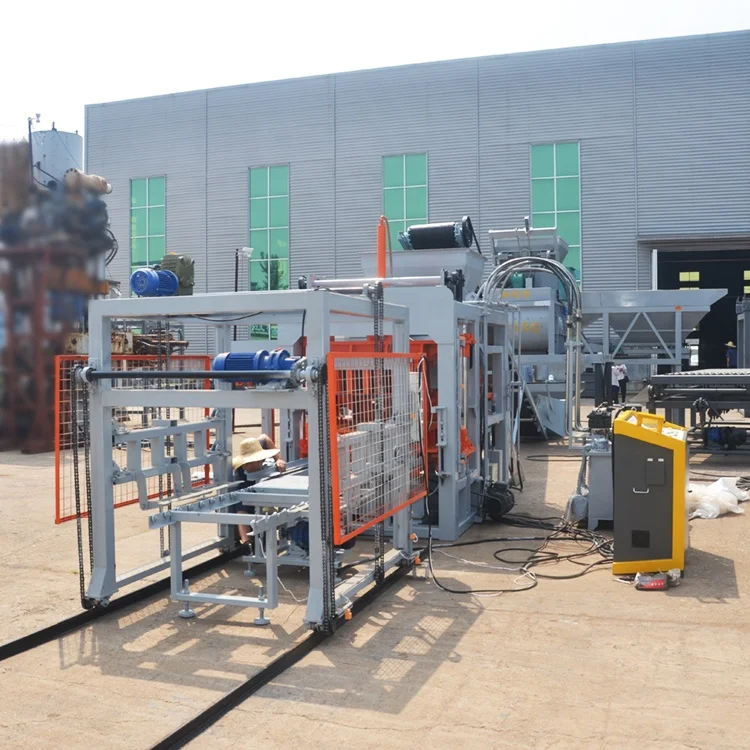
 High quality block machine