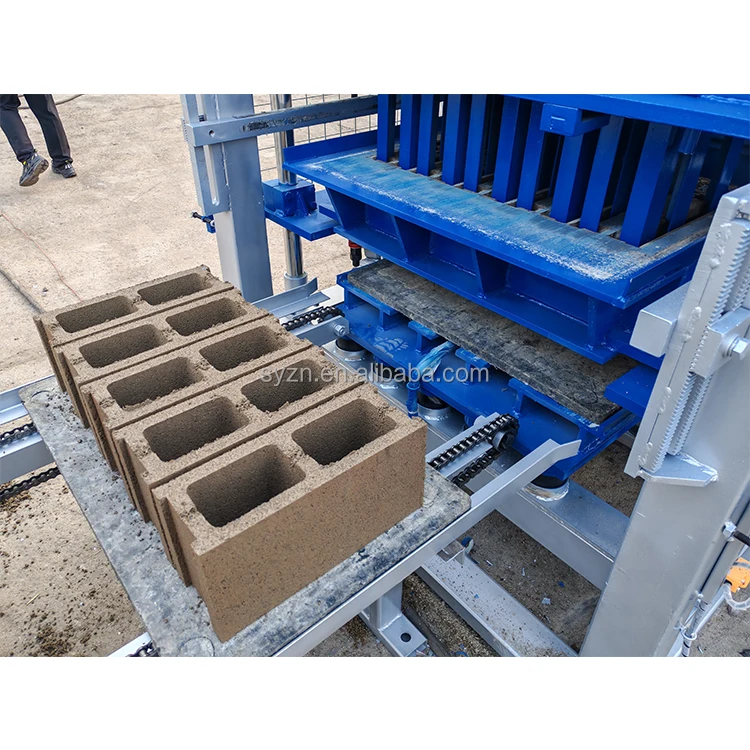
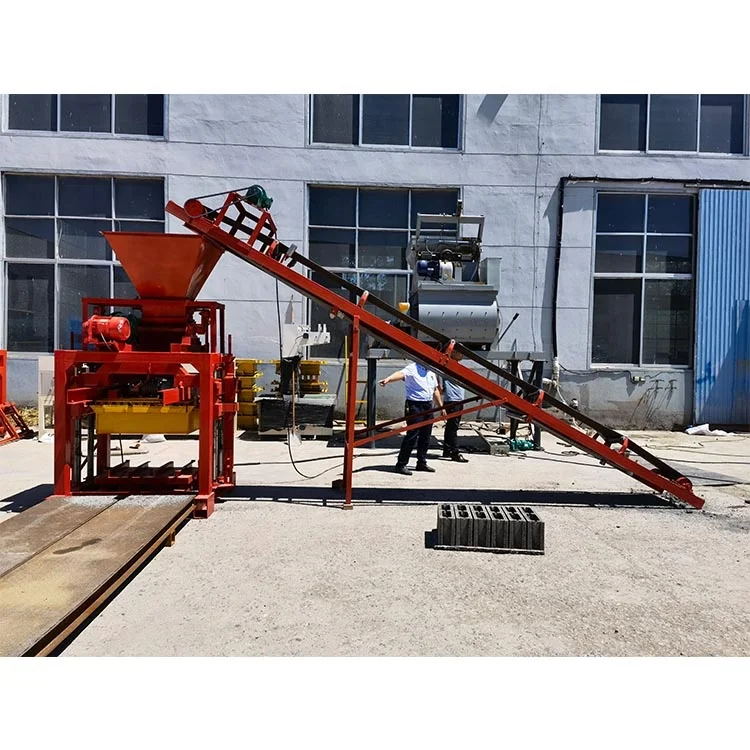
Matched System Specification — the QT4-18 block machine, mixer, pallet feeder, and hydraulic station are configured together against your local aggregate and target format, preventing the output gaps that occur when line components are sourced separately.
Technical Specifications
| Parameter |
Value |
| Model |
QT4-18 |
| Product Type |
Hydraulic Concrete Block Making Machine |
| Overall Dimensions (L×W×H) |
3900×1600×2300 mm |
| Net Weight |
3 T |
| Vibration Force (Exciting Power) |
40-50 KN |
| Total Power |
24 kW |
| Mixer Model |
JQ350 |
| Pallet Size |
850×550×25 mm |
| Molding Cycle |
15-25s (basis not stated in source) |
| Control System |
PLC control system |
| Hydraulic Station |
Included (high pressure) |
| Output Capacity (Hollow block 400×200×200mm) |
1200-1680 pcs/hr (9600-13440 pcs/8hr) |
| Output Capacity (Hollow block 400×150×200mm) |
1800-2400 pcs/hr (14400-19200 pcs/8hr) |
| Output Capacity (Solid brick 240×115×53mm) |
3240 pcs/hr (16200-19440 pcs/8hr) |
| Assembly State |
Block making machine, hydraulic station, PLC control, pallet feeder, brick conveyor, block sweeper |
| Included Accessories |
Manual hydraulic trolley, spare parts and tools |
| Voltage & Frequency |
To be confirmed before shipment |
| PLC Display Language |
To be confirmed before shipment |
| Automation Level |
Semi-automatic |
Application Suitability
| Application |
Material or Output |
| Hollow Block Production |
Crushed stones, sand, cement, fly ash (400×200×200mm and 400×150×200mm formats) |
| Solid Brick Manufacturing |
Sand, cement, dust, fly ash (240×115×53mm standard brick format) |
| Paver and Kerbstone Production |
High-density crushed stone and cement mixes for external load-bearing formats |
| On-Site Construction Projects |
Semi-automatic setup for contractors producing blocks directly at the project location |
| First Plant Setup |
Complete matched line for entrepreneurs entering the concrete product market |
What "1200 Pieces per Hour" Leaves Out About QT4-18 Capacity
A cycle time or hourly figure means nothing until the exact block format and local raw material mix are defined.
When a concrete block making machine for sale is quoted purely on a maximum cycle speed, buyers often find their actual daily volume falls far short of the contract. I have seen situations where high clay content in local sand slowed the molding cycle and reduced block strength, turning a high-capacity promise into a bottleneck. The QT4-18 block machine manufacturer specifications listed here break down output by three distinct formats, but even these depend on your specific aggregate profile. [NEED_CITE: impact of local aggregate clay content on concrete block molding cycle]

Placing the QT4-18 Within the Full Machine Range
The QT4-18 occupies the mid-tier of the SHIYUE block machine range, positioned for buyers moving away from manual egg-laying machines or small workshop presses into a fixed-plant setup. It is a hydraulic, PLC-controlled unit that handles hollow blocks, solid bricks, pavers, and curbstones through mould changes. Understanding where this model sits helps you decide if a semi-automatic line meets your current volume or if a higher-tier automatic system with integrated stacking is required for your plant footprint.
Matching the Line to Your Plant Footprint
A block machine does not operate in isolation; the QT4-18 requires a coordinated layout for the JQ350 mixer, pallet feeder, brick conveyor, and block sweeper to function without interruption. If the curing area is too small for the 850×550×25 mm pallets, or if the forklift cannot handle the loaded pallet weight, the press will sit idle waiting for space to clear. [NEED_CITE: concrete block plant layout and curing area requirements] Planning the line as a whole ensures the 15-25s molding cycle is not wasted on downstream handling delays.
How Hydraulic Pressure and Vibration Force Define Block Density
The 40-50 KN vibration force combined with the hydraulic station pressure determines the final density and compressive strength of the concrete product. For hollow blocks, this force must be sufficient to consolidate the mix around the mould core without causing segregation of the aggregate. The 24 kW total power drives both the hydraulic pumps and the vibration motors, ensuring consistent energy delivery across the 15-25s cycle. Pallet size directly impacts your curing logistics; the 850×550×25 mm dimension must align with your existing rack spacing and transport equipment to avoid costly facility modifications.
The Hidden Cost of Unconfirmed Voltage and PLC Language
Shipping a machine without confirming the destination voltage, frequency, and PLC display language leads to immediate commissioning delays upon arrival. A QT4-18 configured for 380V/50Hz will not operate on a 440V/60Hz grid without a transformer, and an operator unable to read the PLC interface cannot troubleshoot cycle faults. [NEED_CITE: industrial machinery voltage and frequency standards by export market] These oversights turn a planned installation into a multi-week standstill while replacement components are sourced internationally.
Why Source the QT4-18 Through This Range
- Single Focus on Block Machinery: The machine, mould, pallet, and handling equipment are specified as one matched system rather than assembled from separate suppliers, ensuring the QT4-18 hydraulic station and vibration force are tuned to the mould format you select.
- Configuration Against Actual Mix Design: We set the machine parameters based on your local aggregate and target block format, not a catalogue default, preventing the strength inconsistencies that arise from mismatched vibration and pressure settings.
- Mould Design for Your Market: We supply moulds for the specific formats your market sells, including custom drawings, so the QT4-18 produces the exact paver or hollow block dimensions your buyers require.
- Selectable Automation Path: You can start with the semi-automatic QT4-18 configuration using the manual hydraulic trolley and upgrade to higher automation levels later as your plant volume grows.
- Complete Documentation Package: Every shipment includes the line layout, capacity calculation per format, hydraulic schematic, and factory test record, giving you full technical transparency before the machine leaves the factory.
Documentation & Verification
- Line layout and capacity calculation stating the exact block format assumed for the QT4-18 output figures.
- Machine specification sheet confirming the 40-50 KN vibration force and 24 kW total power rating.
- Mould drawing and format list detailing the exact dimensions for hollow block, solid brick, and paver moulds.
- Hydraulic and electrical schematic for the QT4-18 station and PLC control system.
- Voltage, frequency, and control language confirmation document signed before production begins.
- Factory test record showing cycle times and block density achieved with your specified mix design.
Installation, Commissioning & Support
- Foundation requirements based on the QT4-18 overall dimensions of 3900×1600×2300 mm and 3 T net weight to ensure stable vibration isolation.
- Dedicated power circuit specification for the 24 kW total power draw, confirming voltage and frequency match the QT4-18 hydraulic station and PLC system.
- On-site assembly guidance for the block making machine, pallet feeder, brick conveyor, and block sweeper components.
- Initial commissioning and parameter setting for the PLC control system to optimize the 15-25s molding cycle for your specific raw material.
- Operator training covering mould change procedures, hydraulic station maintenance, and safety protocols for the semi-automatic pallet handling workflow.
- Wear parts list and supply plan for hydraulic seals, vibration motor components, and mould liners to minimize downtime during first replacements.
Sizing the QT4-18 to Your Project Requirements
To determine if the QT4-18 is the correct tier for your operation, please provide your target block format, required daily output, and the specific raw materials available locally. We also need your site voltage, frequency, and the dimensions of your existing curing area to confirm pallet compatibility. This information allows us to generate a capacity calculation and line layout that reflects your actual production conditions rather than a generic estimate.
Frequently Asked Questions
Q: How is the QT4-18 output capacity calculated, and which block format does each figure assume?
A: The output figures are calculated based on specific block formats: 1200-1680 pcs/hr for 400×200×200mm hollow blocks, 1800-2400 pcs/hr for 400×150×200mm hollow blocks, and 3240 pcs/hr for 240×115×53mm solid bricks. These figures assume an optimal mix and continuous operation; actual daily output depends on your local aggregate properties and plant logistics.
Q: Where does the QT4-18 sit in the full SHIYUE machine range, and when should a buyer step up?
A: The QT4-18 is a mid-tier, semi-automatic machine suited for small-to-medium plant volumes or contractors moving from manual production. Buyers requiring high-capacity continuous output with minimal labor should consider stepping up to a fully automatic line with integrated stacking and cubing systems.
Q: What voltage, frequency, and PLC language options are available for different destination markets?
A: The QT4-18 voltage and frequency are configurable to match your local grid, and the PLC display language is selected before production. These must be confirmed during the inquiry stage to ensure the machine is ready for immediate commissioning upon arrival at your facility.
Q: Can the QT4-18 be upgraded from semi-automatic to a higher automation level later?
A: Yes, the QT4-18 can be upgraded from its current semi-automatic configuration with manual pallet handling to higher automation levels. This typically involves adding automatic pallet feeding, stacking, and cubing systems to reduce labor and increase consistency as your production volume grows.
Q: What plant footprint and supporting equipment does a QT4-18 line require?
A: A QT4-18 line requires space for the machine (3900×1600×2300 mm), the JQ350 mixer, pallet feeder, conveyor, and a curing area sized for 850×550×25 mm pallets. The exact footprint depends on your chosen automation level and daily output target.

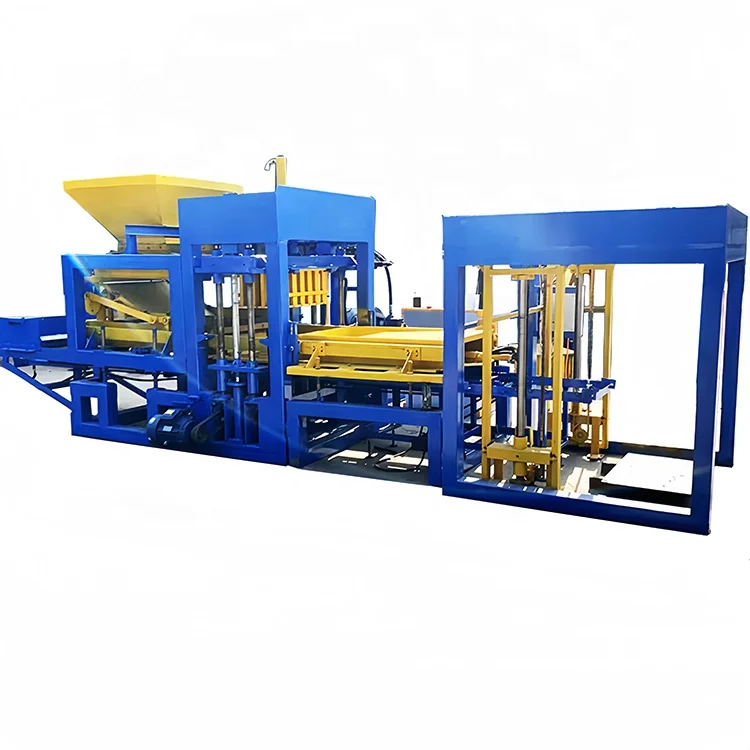
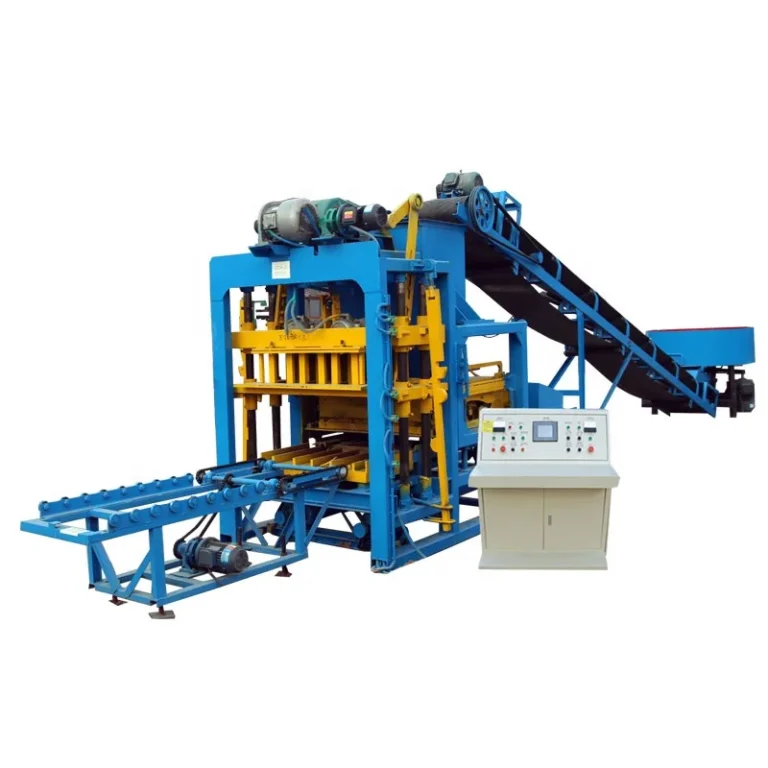 High quality block machine