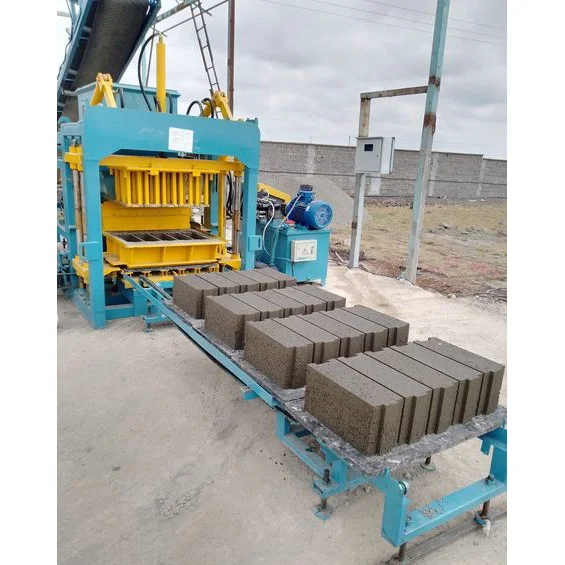
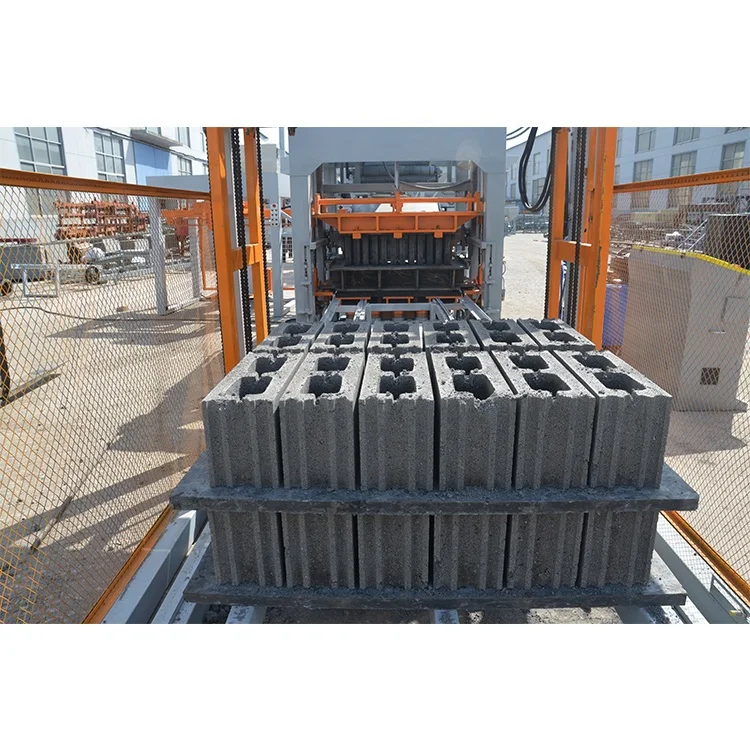
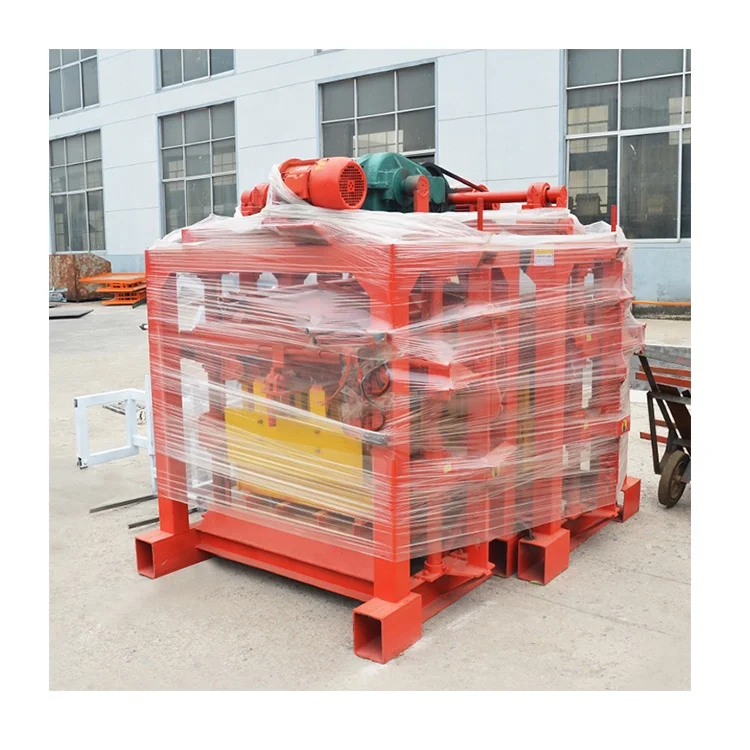
Matched System Sizing — every QTJ4-35 is configured against your local aggregate and target block format before production, so capacity figures reflect what your plant will actually produce.
Technical Specifications
| Parameter |
Value |
| Model |
QTJ4-35 |
| Product Type |
Semi-Automatic Hydraulic Block Making Machine |
| Overall Dimensions (L×W×H) |
1350×1460×1800 mm |
| Molding Cycle |
35 s |
| Vibration Frequency |
2800 r/min |
| Vibration Force |
30 kN |
| Total Power |
11.15 kW |
| Mixer Model |
JQ350 |
| Pallet Size |
850×450×20 mm |
| Total Weight |
1500 kg |
| Applied Products |
Concrete hollow blocks (8 inch, 6 inch), solid bricks, pavers |
| Raw Materials |
Crushed stones, sand, cement, dust, fly ash |
| Automation Level |
Semi-automatic |
| Hydraulic Station |
Equipped with high-pressure stable operation |
| Output Capacity (Hollow Block 400×200×200 mm) |
4 pcs/mould, 408 pcs/hr, 3264 pcs/8hr |
| Output Capacity (Hollow Block 400×150×200 mm) |
5 pcs/mould, 510 pcs/hr, 4080 pcs/8hr |
| Output Capacity (Solid Brick 240×115×53 mm) |
18 pcs/mould, 2100 pcs/hr, 17000 pcs/8hr |
| Voltage & Frequency |
Configurable to buyer’s local grid (basis to be confirmed) |
| Control System |
Options available — confirm PLC, relay, or manual (basis to be confirmed) |
| Mould Change Time |
Dependent on operator familiarity (basis to be confirmed) |
| Hydraulic Pressure |
Confirm required MPa for target block strength (basis to be confirmed) |
Application Suitability
| Application |
Material or Output |
| Small to medium-scale block plants |
Hollow blocks from crushed stone, sand, cement, and fly ash |
| On-site production for construction contractors |
Solid bricks and pavers using locally sourced aggregates |
| First block plant for entrepreneurs |
Entry-level investment with 850×450 mm pallet format |
| Building material distributors |
Format changeover between hollow blocks, solid bricks, and pavers |
Why "408 Blocks per Hour" May Not Match Your Reality
A cycle time only becomes meaningful once you know which block format it assumes and what aggregate you are feeding.
Many QTJ4-35 block making machine manufacturer quotations list a single cycle rate without specifying whether that rate holds for a 400×200×200 mm hollow block or a smaller solid brick. I once had a buyer in West Africa who assumed the rated output applied across all formats, only to discover his local laterite sand required extended vibration, cutting daily yield noticeably below the quoted figure. [NEED_CITE: vibration time adjustment for high-clay aggregates in block production] The QTJ4-35 reaches 408 pcs/hr only when pressing the 400×200×200 mm hollow block under standard aggregate conditions; switch to a denser mix or a different format and the cycle stretches accordingly.

Where the QTJ4-35 Sits in the Shiyue Lineup
The QTJ4-35 occupies the semi-automatic entry tier of Shiyue’s full block machine range, positioned between mobile egg-laying models and the higher-capacity fully automatic QT series. Buyers evaluating their first fixed-plant investment typically land here because it offers hydraulic pressing and interchangeable moulds without the footprint or capital outlay of a fully automatic stacking line. As production demand grows, the same pallet format and mould interface carry forward, making the step up to automatic pallet handling and cubing a configuration change rather than a complete plant replacement.
Semi-Automatic Means You Choose How Much Labour to Deploy
With the QTJ4-35, operators feed the mixer, transfer wet blocks on pallets to the curing area, and handle stacking manually — or you can add a pallet feeder and a simple stacking station later. This modularity matters for contractors who already employ a local workforce and want to keep fixed costs low during the first production year. [NEED_CITE: semi-automatic versus automatic block line labour configuration in developing markets] The machine does not force automation on you, but the hydraulic station and PLC-ready control panel leave room for an upgrade path when order volumes justify the investment.
How Vibration Force and Pallet Size Shape Daily Output
The 30 kN vibration force combined with the 2800 r/min frequency is calibrated for standard crushed-stone and sand mixes, compacting concrete into the mould cavity within the 35-second cycle. Pair this with the 850×450×20 mm pallet and you get four 400×200×200 mm hollow blocks per press — a format common across African and Southeast Asian markets. If your curing yard uses a different pallet dimension, the mismatch will either waste curing space or require pallet replacement before the QTJ4-35 block making machine manufacturer ships your unit. The 11.15 kW total power draw keeps the machine within the reach of a small workshop generator set, avoiding the need for a dedicated transformer. Hydraulic pressure works in tandem with vibration to achieve uniform block density; insufficient pressure on a stiff mix produces fragile corners, while excess pressure on a wet mix squeezes out cement paste.
The Cost of Skipping the Mix-Design Conversation
When a buyer orders without sharing their local aggregate sieve analysis and cement grade, the vibration time and pressure defaults may not suit the actual feed material. Blocks can emerge under-compacted or over-pressed, and no amount of machine adjustment on site recovers the lost strength. I have watched contractors discard entire curing racks because the machine arrived configured for river sand while their quarry supplied crusher dust with high fines content. [NEED_CITE: effect of aggregate fines on block compressive strength] That outcome is avoidable if the QTJ4-35 block making machine manufacturer receives a sample mix report before the mould and vibration parameters are locked.
Why Buyers Specify the Full Line Here
Shiyue treats block machinery as a single focus, so the QTJ4-35 is quoted alongside the pallet size, mixer model JQ350, and hydraulic station as one matched set rather than assembled from separate suppliers. Configuration is set against your target block format and local aggregate, not pulled from a catalogue default. Mould design covers the formats your market actually sells, with custom drawings available for non-standard bricks or interlocking pavers. The semi-automatic tier lets you start with lower investment and add automatic pallet feeding or stacking later. Installation includes on-site commissioning and operator training so the crew knows the mould change procedure before the first production run.
Documentation & Verification
- Line layout showing QTJ4-35 footprint alongside JQ350 mixer and pallet flow
- Capacity calculation stating the exact block format used for each hourly output figure
- Mould drawing and format list for every mould included in the shipment
- Hydraulic and electrical schematic with confirmed voltage and control language
- Factory test record run on your target block format before dispatch
- Operation and maintenance manual with wear parts and mould replacement intervals
Installation, Commissioning & Support
- Foundation pad leveled to accommodate the 1350×1460 mm machine footprint and 1500 kg static weight
- Dedicated power circuit matching confirmed voltage and frequency for the 11.15 kW total load
- Hydraulic station filled and pressure set to the agreed MPa during on-site commissioning
- Pallet dimension verified against your existing curing racks and forklift tines before machine start-up
- Operator training on mould change sequence and vibration time adjustment for local aggregate
- Wear parts list provided with recommended reorder quantities for vibration springs and hydraulic seals
What to Share Before Requesting a Quotation
To size the QTJ4-35 correctly, provide the block formats your market sells and the daily output you need per format. Include a sieve analysis or description of your local aggregate so vibration and pressure can be matched. State your site voltage, frequency, and preferred control language to prevent commissioning delays. If you already own pallets, curing racks, or a forklift, share their dimensions so the pallet size and line layout align with your existing infrastructure.
Frequently Asked Questions
Q: Where does the QTJ4-35 sit in Shiyue’s range compared to automatic and mobile models?
A: The QTJ4-35 is the semi-automatic entry tier, offering hydraulic pressing and mould interchangeability at a lower investment than the fully automatic QT series. Mobile egg-laying machines sit below it in output but require no fixed plant. Buyers choosing the QTJ4-35 typically plan a small fixed workshop and want a clear upgrade path to automatic pallet handling and stacking as demand grows.
Q: How do I verify real daily output for my specific block format?
A: Ask the QTJ4-35 block making machine manufacturer for a capacity calculation that names the block format, mix design, and vibration time behind each output figure. Cycle rates quoted without a format assumption are unreliable. Request a factory test record run on your target format before the machine ships so you can compare documented output against your production plan.
Q: What plant footprint and supporting equipment does the QTJ4-35 require?
A: The machine itself occupies roughly 1350×1460 mm and weighs 1500 kg. You will need the JQ350 mixer, 850×450×20 mm pallets sized to your curing yard, a trolley or conveyor for pallet transfer, and a covered curing area. Semi-automatic operation means pallet handling and stacking are manual unless you add optional feeding and stacking stations.
Q: Can I start semi-automatic and upgrade to higher automation later?
A: Yes. The QTJ4-35’s hydraulic station and control panel are designed to accept an automatic pallet feeder, stacker, or cubing system in a future phase. The pallet size and mould interface remain the same, so the upgrade is an equipment addition rather than a full line replacement. Discuss the upgrade timeline during initial specification to ensure the base machine is pre-wired accordingly.
Q: What voltage and control language options are available for my market?
A: Voltage and frequency are configurable to match your local grid, and the control display language is confirmed before production. These details must be finalized during the specification stage to avoid commissioning delays on arrival. Share your site electrical standards and preferred operator language when you submit your inquiry.

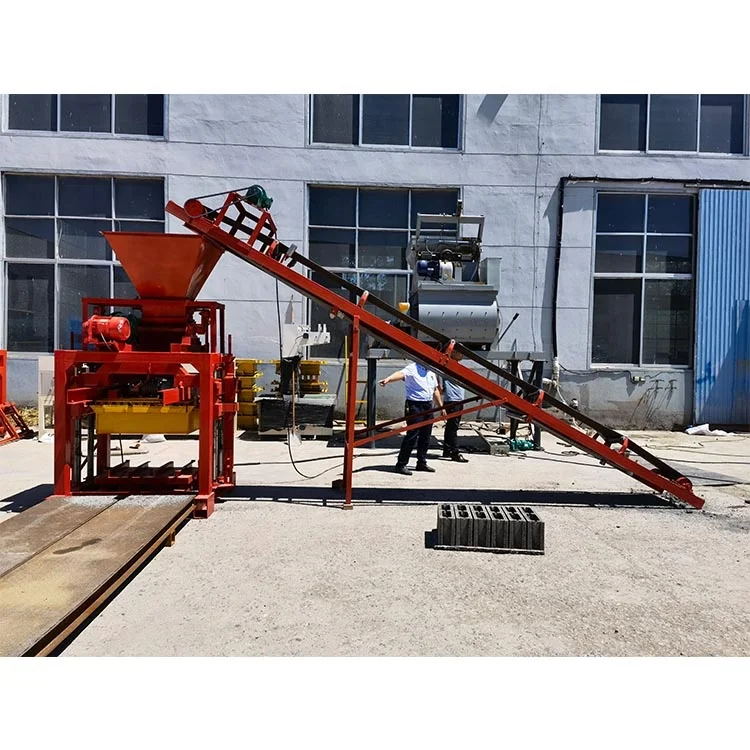
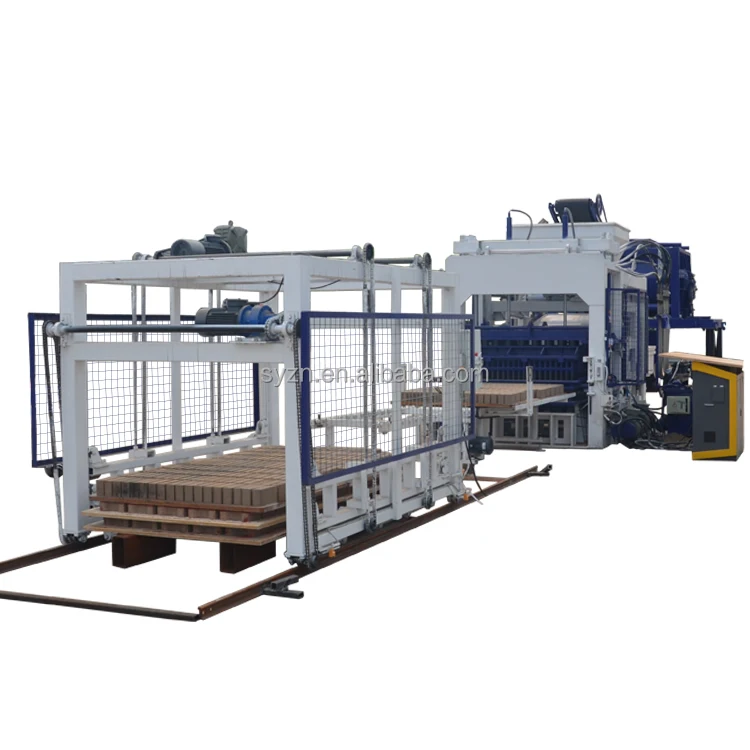 High quality block machine