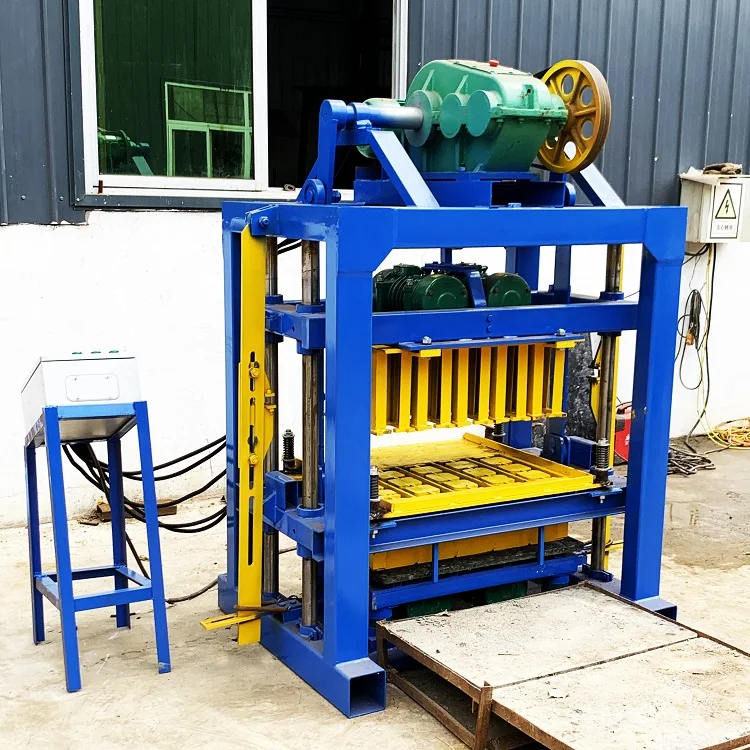
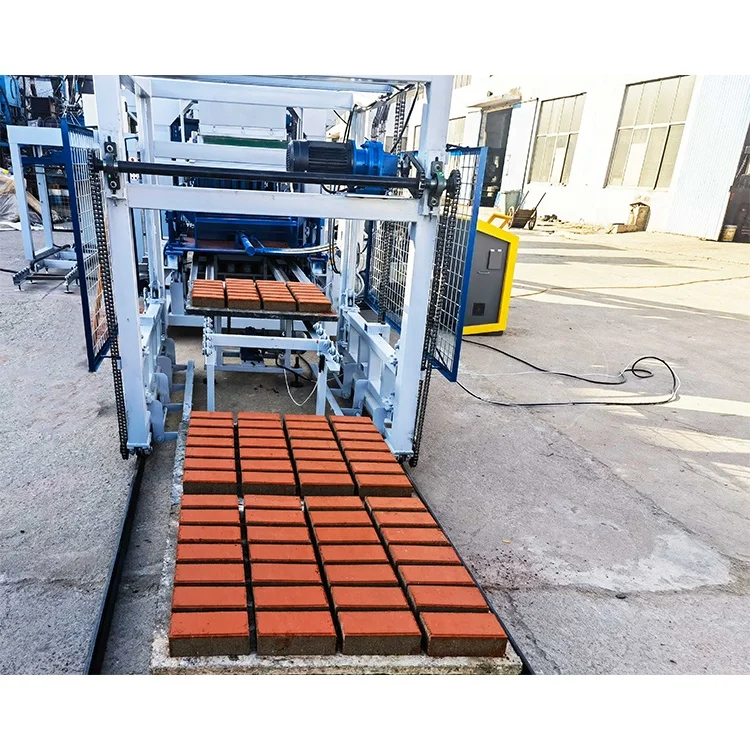
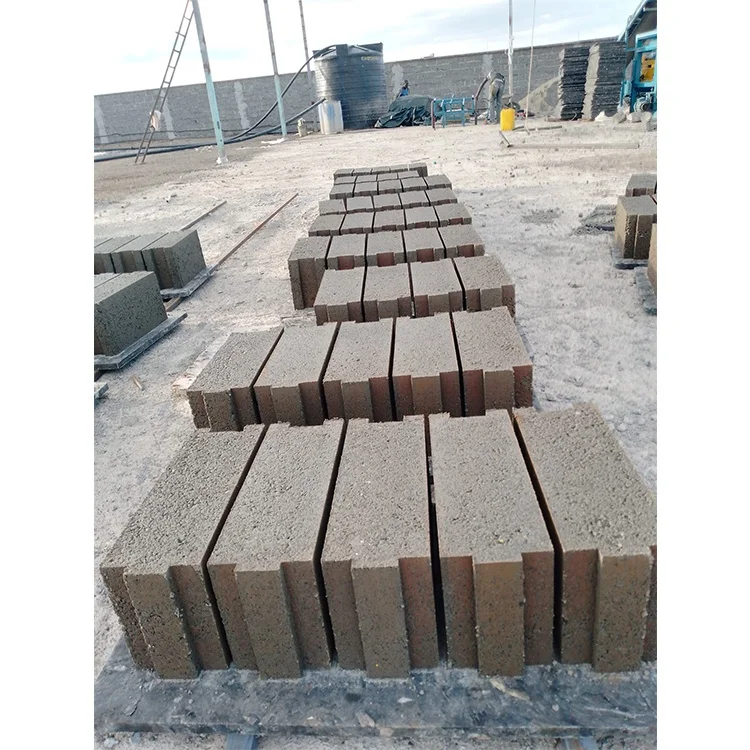
Single Focus Engineering — the QT10-15 block machine, mould, pallet and handling equipment are specified as one matched system rather than assembled from separate suppliers, ensuring capacity calculations reflect actual production conditions.
Technical Specifications
| Parameter |
Value |
| Model |
QT10-15 |
| Product Type |
Stationary Fully Automatic Hydraulic Concrete Block Making Machine |
| Control System |
PLC control cabinet |
| Hydraulic System |
Independent integrated hydraulic station |
| Vibration Mode |
Vertical station mode resonance with automatic FM-AM |
| Automation Level |
Fully automatic |
| Mould Change |
Quick replacement for multi-format production |
| Cycle Time (400×200×200mm hollow block) |
15-20s |
| Output (400×200×200mm hollow block, 10 pcs/mould) |
1,800-2,400 pcs/hour; 14,400-19,200 pcs per 8-hour shift |
| Cycle Time (240×115×53mm solid brick) |
15-20s |
| Output (240×115×53mm solid brick, 62 pcs/mould) |
8,928-11,160 pcs/hour; 71,424-89,280 pcs per 8-hour shift |
| Cycle Time (200×100×60mm paving block) |
20-25s |
| Output (200×100×60mm paving block, 27 pcs/mould) |
5,184-6,480 pcs/hour; 41,472-51,840 pcs per 8-hour shift |
| Cycle Time (225×112.5×60mm interlocking brick) |
20-25s |
| Output (225×112.5×60mm interlocking brick, 24 pcs/mould) |
4,032-5,040 pcs/hour; 32,256-40,320 pcs per 8-hour shift |
| Components |
Pallet feed machine, block making machine, storage hopper, conveyor, hydraulic unit |
| Voltage & Frequency |
basis to be confirmed (buyer’s local standard) |
| Pallet Size |
basis to be confirmed (against curing area and handling equipment) |
| Warranty |
1 year for whole machine (excluding spare parts) |
Application Suitability
| Application |
Material or Output |
| Hollow block production |
Crushed stone, cement, sand, fly ash for 400×200×200mm and 400×150×200mm formats |
| Solid brick production |
Dense aggregate mixes for 240×115×53mm standard bricks |
| Paving block production |
Fine aggregate and pigment blends for 200×100×60mm interlocking pavers |
| Interlocking brick production |
Modified concrete mixes for 225×112.5×60mm dry-stack formats |
| On-site contractor production |
Large-scale housing and infrastructure projects requiring high daily volume |
| Multi-format concrete plants |
Manufacturers expanding from a single block type to a diversified product range |
What "2,400 Pieces per Hour" Leaves Out When Sizing a QT10-15 automatic block machine manufacturer
Capacity numbers are meaningless without knowing the exact block format, mould cavity count, and shift length behind them.
In my years doing on-site commissioning across Southeast Asia, I have watched plant owners stare at a brochure headline and then wonder why their daily tally comes up short. The problem is never the machine itself — it is the gap between a generic cycle time and the reality of local aggregate, moisture content, and the specific format being run. A QT10-15 automatic block machine manufacturer should always tell you which block, which mould, and which shift assumption sits behind every output figure so you can plan raw material supply and curing space accordingly [NEED_CITE: block machine capacity calculation standards].

Mapping the QT10-15 Across the Shiyue Range
The QT10-15 occupies the high-capacity tier among Shiyue stationary models, sitting above smaller automatic presses that serve workshops with lower daily targets. Buyers comparing tiers need to look at pallet size, mould cavity count per format, and the handling equipment that keeps pace with the press. A machine that cycles faster than the pallet return loop or the stacking station simply waits, turning rated output into idle time.
Why the Full Line Matters More Than the Press Alone
Every station around the press — raw material feeding, mixing, pallet circulation, stacking, and curing rack handling — must be matched so the press is never left waiting. When a plant owner selects a high-output QT10-15 automatic block machine manufacturer configuration without sizing the mixer or pallet return conveyor to match, the bottleneck shifts downstream. We have seen lines where the press was capable of full throughput but the curing rack handling could not move cured pallets fast enough, cutting actual daily production noticeably [NEED_CITE: block production line synchronization principles].
Reading the Specs That Actually Shape Daily Output
Vertical station mode resonance with automatic FM-AM adjusts vibration frequency and amplitude to suit different mix designs. This matters because a dry mix for pavers needs a different vibration profile than a wetter mix for hollow blocks. The independent integrated hydraulic station is isolated from the main vibration source, which keeps pressure stable across cycles and extends seal life. Quick mould change means a plant can run hollow blocks in the morning and switch to interlocking bricks after a format change that takes a portion of a shift rather than a full day. Pallet size must be confirmed against the curing area dimensions and the forklift or stacker the buyer already has, otherwise pallets pile up on the floor waiting for manual handling.
The Hidden Cost of Skipping Configuration Checks
When voltage and frequency are not confirmed before production, the machine arrives and sits idle while transformers or motor replacements are sourced locally. PLC display language left unspecified means operators work from memory instead of reading fault codes, slowing every troubleshooting session. A pallet size chosen without checking the curing rack spacing forces the plant to re-stack blocks by hand, adding labour and breakage. These are not manufacturing defects — they are gaps in the pre-order specification process that a careful QT10-15 automatic block machine manufacturer should close before the machine enters production [NEED_CITE: industrial machinery commissioning delays due to specification gaps].
Why Source the QT10-15 Through Shiyue
Block machinery is our single focus, so the press, mould, pallet, and handling equipment are configured together rather than pulled from separate catalogues. Machine settings are matched to the buyer’s actual mix design and local aggregate, not left at a factory default that assumes clean river sand. Mould design covers the formats the buyer’s market actually sells, with custom drawings available when standard options do not fit. Automation level can be chosen to match current staffing, with an upgrade path from semi-automatic pallet handling to fully automatic stacking. Installation support includes operator training so the crew understands vibration parameter adjustments before the commissioning team leaves site.
Documentation & Verification
- Line layout drawing showing capacity calculation per block format for the QT10-15
- Machine specification sheet listing hydraulic pressure, vibration force, and pallet dimensions
- Mould drawing and format list covering every cavity count quoted in the proposal
- Voltage, frequency, and PLC display language written confirmation before production begins
- Factory test record documenting cycle times on agreed block formats before dispatch
Installation, Commissioning & Support
- Foundation plan specifying load-bearing requirements for the QT10-15 vibration table and hydraulic station
- Dedicated electrical circuit sized to the machine’s rated power with correct voltage and frequency
- Dismantling layout for container loading and reassembly sequence on site
- First-run commissioning with vibration parameter tuning to match local aggregate and mix moisture
- Operator training covering mould change procedure and PLC fault code interpretation
- Wear parts list with reorder intervals for hydraulic seals and vibration table components
What to Prepare Before Requesting a Quote
To size the QT10-15 and its supporting line correctly, share your target block formats with dimensions, expected daily output per format, and the raw materials available locally including aggregate type and moisture range. Confirm your site’s voltage, frequency, and preferred PLC display language. If you already have curing racks, forklifts, or a mixer in place, send their specifications so the pallet size and line speed can be matched to what is already on the floor.
Frequently Asked Questions
Q: How is the QT10-15’s capacity calculated, and which block format does each output figure assume?
A: Every output figure is tied to a specific block dimension, mould cavity count, and cycle time range. For example, 14,400-19,200 pieces per eight-hour shift assumes 400×200×200mm hollow blocks with a 10-cavity mould and 15-20 second cycles. Different formats yield different shift totals, so buyers should check the line that matches their actual product.
Q: Where does the QT10-15 sit in the full Shiyue machine range?
A: It sits in the high-capacity stationary tier, above smaller automatic and semi-automatic models. Buyers with lower daily targets or limited workshop space may start with a mid-tier press and upgrade later. The supporting line — mixer, pallet handling, stacking — must also scale to match whichever tier is selected.
Q: What voltage, frequency, and PLC language options are confirmed before production?
A: These are confirmed during the quotation stage and written into the specification sheet before manufacturing starts. Buyers must provide their local electrical standard and preferred operator language. Leaving these open risks commissioning delays once the machine arrives on site.
Q: Can a buyer start semi-automatic and upgrade the QT10-15 later?
A: Yes. The automation level is selectable, covering manual pallet handling through to fully automatic stacking and cubing. Starting semi-automatic reduces initial investment, and additional automation stations can be added as production volume grows and labour costs shift the economics.
Q: What plant footprint and supporting equipment does the QT10-15 require?
A: The footprint depends on pallet size, curing rack layout, and whether automatic stacking is included. Buyers should share their available floor space, ceiling height, and existing handling equipment. A line layout drawing is provided showing every station from raw material feed through to the curing area.

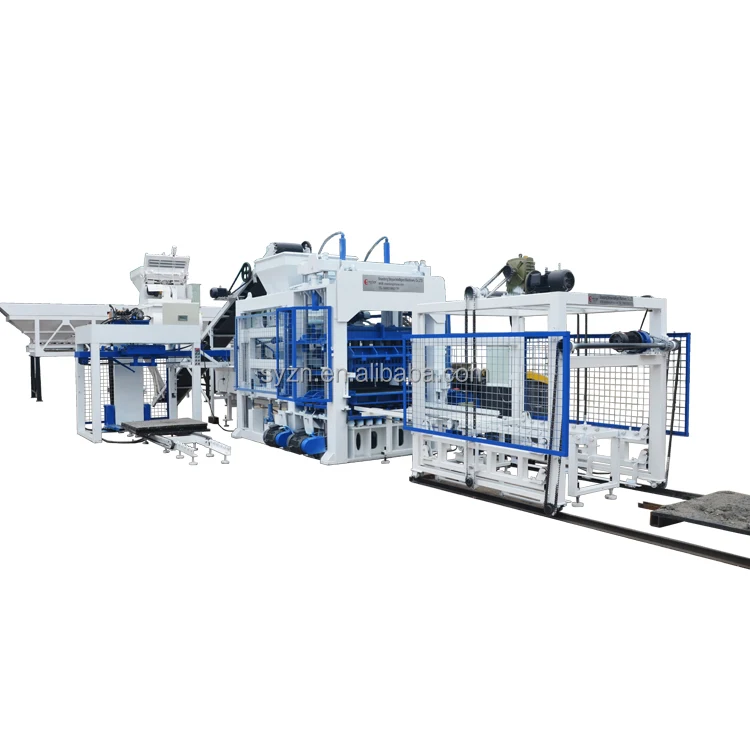
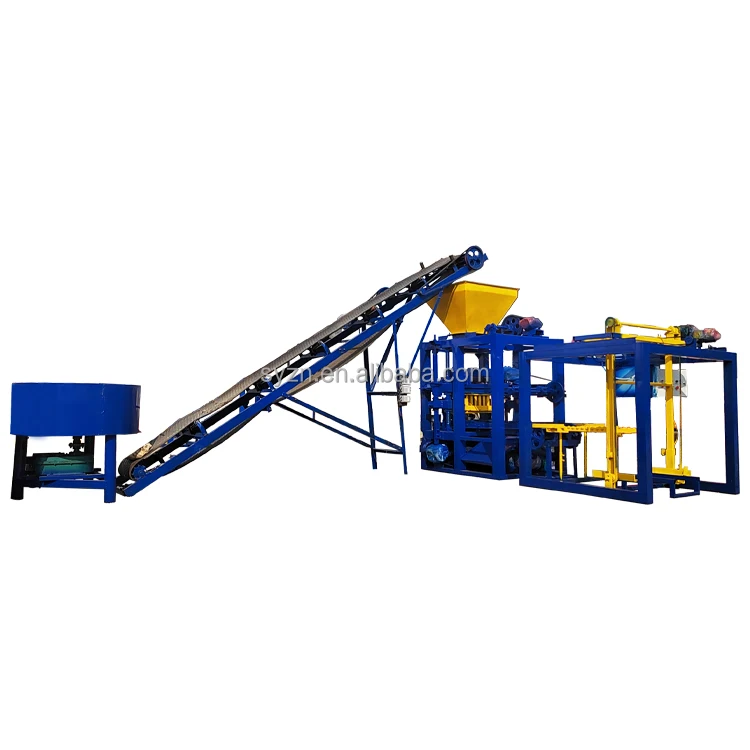 Stationary block machine