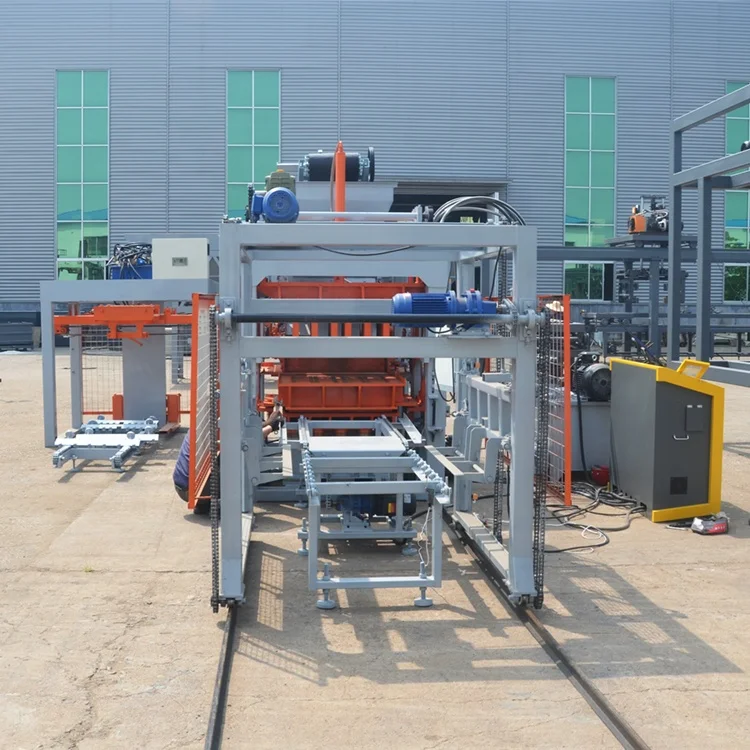
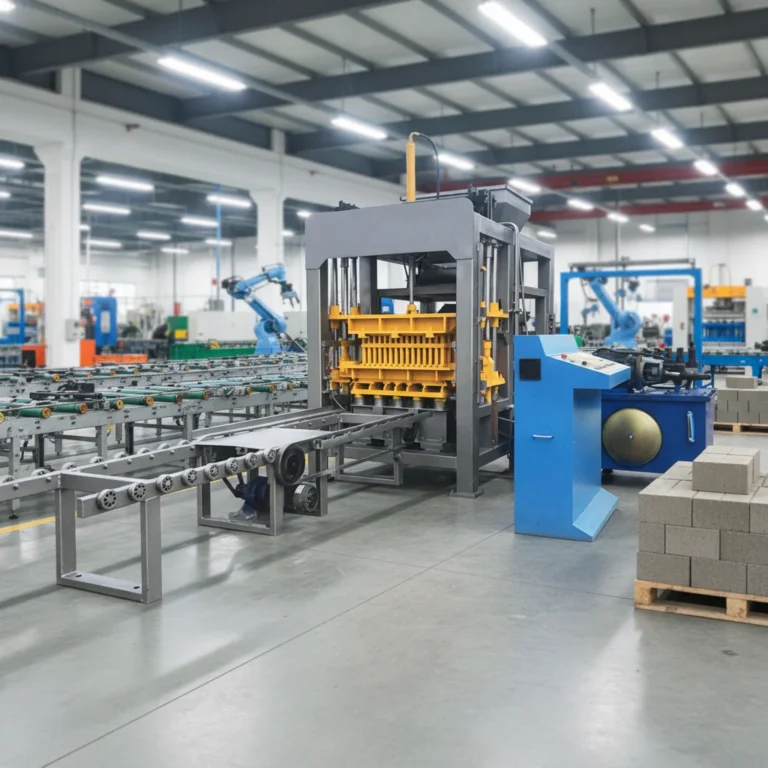
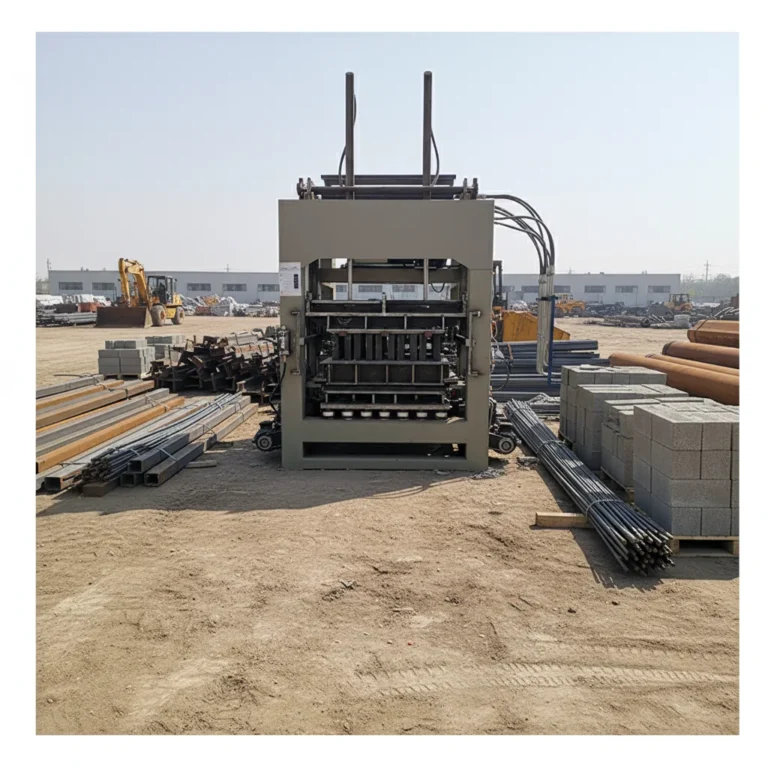
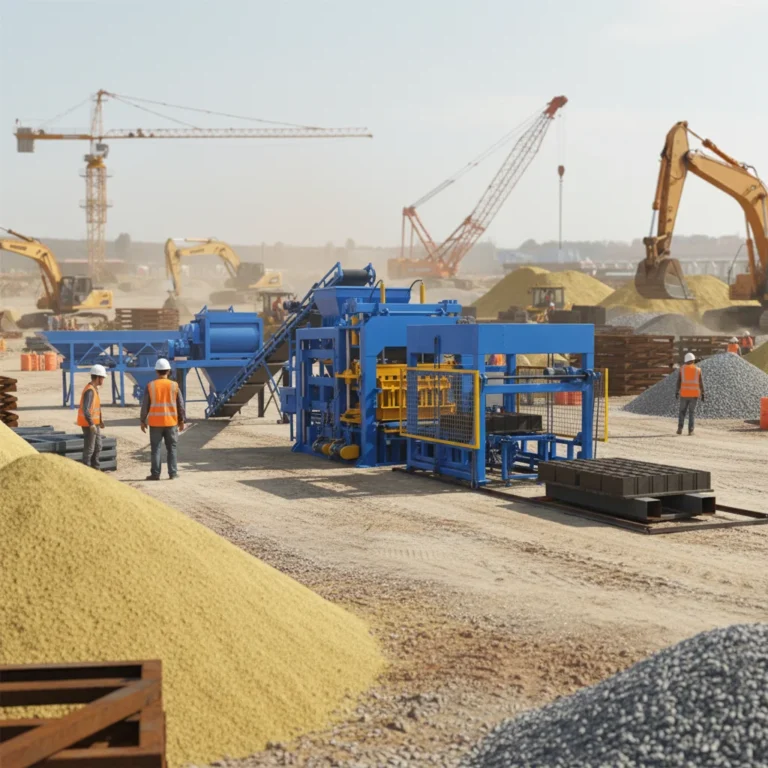
Matched System Specifying — The QT10-15 block making machine is configured as a complete matched system where the press, mould, pallet, and handling equipment are specified together against the buyer’s actual mix design and target block format, not assembled from separate catalog defaults.
Technical Specifications
| Parameter |
Value |
| Model |
QT10-15 |
| Product Type |
Automatic Hydraulic Block Making Machine |
| Control System |
PLC control cabinet |
| Hydraulic System |
Independent integrated hydraulic station |
| Vibration Mode |
Vertical station mode resonance, automatic FM-AM |
| Mould Change |
Simple replacement of mould for multi-format production |
| Cycle Time |
15-25s depending on block format |
| Automation Level |
Automatic |
| Output (400×200×200mm hollow block) |
1800-2400 pcs/hour, 14400-19200 pcs/8hr (basis: 10 pcs/mould, 15-20s cycle) |
| Output (400×150×200mm hollow block) |
2160-2880 pcs/hour, 17280-23040 pcs/8hr (basis: 12 pcs/mould, 15-20s cycle) |
| Output (240×115×53mm solid brick) |
8928-11160 pcs/hour, 71424-89280 pcs/8hr (basis: 62 pcs/mould, 15-20s cycle) |
| Output (200×100×60mm paving block) |
5184-6480 pcs/hour, 41472-51840 pcs/8hr (basis: 27 pcs/mould, 20-25s cycle) |
| Output (225×112.5×60mm interlocking brick) |
4032-5040 pcs/hour, 32256-40320 pcs/8hr (basis: 24 pcs/mould, 20-25s cycle) |
| Components |
Pallet feed machine, block making machine, storage hopper, conveyor, hydraulic unit, PLC control cabinet |
| Warranty |
1 year for the whole machine (excluding spare parts) |
| Rated Power (kW) |
(source value — verify against manufacturer catalog) |
| Voltage & Frequency |
(source value — verify against manufacturer catalog) |
| Overall Dimensions (L×W×H) |
(source value — verify against manufacturer catalog) |
| Net Weight |
(source value — verify against manufacturer catalog) |
| Pallet Size |
(source value — verify against manufacturer catalog) |
| Vibration Force (kN) |
(source value — verify against manufacturer catalog) |
| Hydraulic Pressure (MPa) |
(source value — verify against manufacturer catalog) |
Application Suitability
| Application |
Material or Output |
| Hollow block production |
Crushed stone, river sand, cement, fly ash aggregates |
| Solid brick production |
Standard brick format from local aggregate and cement blends |
| Paving block production |
High-density concrete mix for interlocking and rectangular pavers |
| Interlocking brick production |
Dry-press concrete mix for mortarless wall systems |
| Multicellular brick production |
Lightweight or standard aggregate for partition wall formats |
What "Cycles per Hour" Leaves Out About the QT10-15 Automatic Block Making Machine Manufacturer
Capacity means nothing unless the block format and mould cavity count are stated alongside it.
Every buyer I have worked with remembers the first time a machine arrived and the daily output fell short of what the quotation implied. The gap almost always traces back to a capacity figure quoted for one block format while the buyer planned production around a different one. When sourcing a QT10-15 automatic block making machine from a manufacturer, the honest approach is to tie every throughput number to a specific mould, cavity count, and cycle time — which is exactly how the figures above are presented [NEED_CITE: block machine capacity calculation standards by format].
I once watched a plant owner in Southeast Asia discover on commissioning day that his "10,000 blocks per day" quote assumed a small solid brick mould he never intended to run. His actual target — a 400×200×200 hollow block — yielded considerably less per cycle, and the line could not catch up within a single shift.

Where the QT10-15 Sits in the Complete Shiyue Machine Range
The QT10-15 occupies the high-capacity automatic tier, designed for plants that need consistent multi-format output across a full working shift. Below this tier, semi-automatic machines serve smaller workshops with lower capital outlay, while mobile and egg-laying units handle on-site production where a fixed plant footprint is not available. Understanding where your project falls on this range before narrowing specifications prevents both overspending on unused capacity and underestimating the output a growing market demands.
How Automation Level Shapes Your Plant Footprint
Choosing the QT10-15 automatic block making machine manufacturer configuration means planning for pallet feeding, block conveying, and stacking as part of the line — not as afterthoughts added later. The automatic tier integrates a pallet feed machine, storage hopper, and conveyor directly with the PLC control cabinet, which removes manual pallet handling from the operator’s workflow. For a first-time plant buyer, the key decision is whether to start at this automation level or begin with semi-automatic equipment and upgrade the handling stations later as volume grows [NEED_CITE: automation tier comparison for concrete block plants].
Reading the Specs That Actually Determine Daily Output
The vertical station mode resonance with automatic FM-AM vibration tuning adjusts frequency and amplitude to match the block format being pressed, which directly affects compaction density and surface finish. The independent integrated hydraulic station sits isolated from the main vibration and dust, meaning pressure consistency holds over a full shift rather than degrading as oil temperature climbs. A 15-25 second cycle range reflects the spread between a fast-cycling solid brick with 62 cavities and a denser paving block requiring longer vibration. The hydraulic pressure and vibration force together determine whether your local aggregate — whether volcanic ash, crushed limestone, or river gravel — reaches the compressive strength your market requires.
The Hidden Cost of Configuring for the Wrong Aggregate
I flew to a site once because block strength kept failing test. The machine was configured and factory-tested with standard river sand, but the buyer’s local material was volcanic ash with completely different particle shape and absorption. The vibration parameters were wrong from the first cycle. We spent weeks on-site adjusting pressure curves and mix ratios before the blocks passed [NEED_CITE: aggregate variation effects on block compressive strength]. That experience is why the first question in our process is always about the raw material source — a QT10-15 configured for one aggregate will not automatically produce acceptable blocks from another, and discovering this after shipment is the most expensive mistake a buyer can make.
Why Buyers Choose Shiyue for This Machine Class
Block machinery is our single focus, which means the QT10-15 press, its moulds, pallets, and handling equipment are specified as one matched system rather than sourced from separate vendors and forced together. Every configuration is set against the buyer’s actual mix design and local aggregate, not a catalogue default. Mould design covers the formats the buyer’s market actually sells, including custom drawings when standard formats do not match local demand. The automation level is selectable — a buyer can begin with semi-automatic operation and add stacking and cubing stations as production volume grows. Installation includes on-site commissioning and operator training so the line is running to specification before our team leaves.
Documentation & Verification
- Line layout with capacity calculation tied to each block format and mould cavity count
- Machine specification sheet confirming voltage, frequency, and PLC display language before production
- Mould drawing and format list covering every block type in your market
- Factory test record documenting cycle time and output per format before shipment
- Hydraulic and electrical schematic for on-site maintenance reference
- Packing photographs and customs documentation support for shipment tracking
Installation, Commissioning & Support
- Foundation plan provided based on QT10-15 overall dimensions and vibration load distribution
- Voltage, frequency, and dedicated circuit requirements confirmed before the PLC cabinet is wired
- Machine shipped in dismantled sections with reassembly supervised on site
- First-run commissioning includes cycle time verification against each ordered mould format
- Operator training covers PLC interface navigation, mould change procedure, and daily maintenance checkpoints
- Wear parts and hydraulic seal list supplied with recommended reorder intervals
What to Share When You Are Ready to Specify Your Line
To move from a general inquiry to a firm configuration proposal for the QT10-15 automatic block making machine manufacturer, we need to know your target block formats and the daily output required for each one. Share the local raw materials available — aggregate type, cement grade, and any industrial by-products you plan to use — along with your site voltage and frequency so the electrical system is built correctly from the start. If you already operate a curing yard or have forklifts with specific pallet dimensions, those details shape the pallet and handling specification so nothing arrives incompatible.
Frequently Asked Questions
Q: How is QT10-15 capacity verified per block format, and what mould cavity count does each figure assume?
A: Every capacity figure published for the QT10-15 is tied to a specific block size and mould cavity count — for example, 1800-2400 hollow blocks per hour assumes a 10-cavity 400×200×200mm mould with a 15-20 second cycle. The factory test record before shipment documents actual cycle time and output for every format on your order.
Q: Where does the QT10-15 sit in the Shiyue range compared to semi-automatic and smaller automatic tiers?
A: The QT10-15 sits at the high-capacity automatic tier, integrating pallet feeding, conveying, and PLC control as a complete line. Smaller automatic and semi-automatic tiers below it serve lower-volume plants with reduced investment. Buyers can start at a lower tier and upgrade handling stations later as market demand grows.
Q: What voltage, frequency, and PLC language options are confirmed before the machine enters production?
A: Voltage, frequency, and PLC display language are confirmed during the quotation stage and locked before production begins. This prevents commissioning delays caused by mismatched electrical standards or an interface the operator cannot read. The specification sheet documents these choices for your records.
Q: Which block formats can the QT10-15 produce, and how long does a mould change take on site?
A: The QT10-15 produces hollow blocks, solid bricks, paving blocks, interlocking bricks, and multicellular formats through simple mould replacement. Mould design covers standard and custom formats based on your market demand. On-site mould change time depends on the format and is demonstrated during operator training after installation.
Q: What plant footprint and supporting equipment does the QT10-15 automatic line require?
A: The automatic line includes the press, pallet feed machine, storage hopper, conveyor, hydraulic unit, and PLC cabinet. A complete plant also needs curing racks, pallet return handling, and a block cubing area. The line layout document provided with your proposal maps every station and its space requirement against your site dimensions.

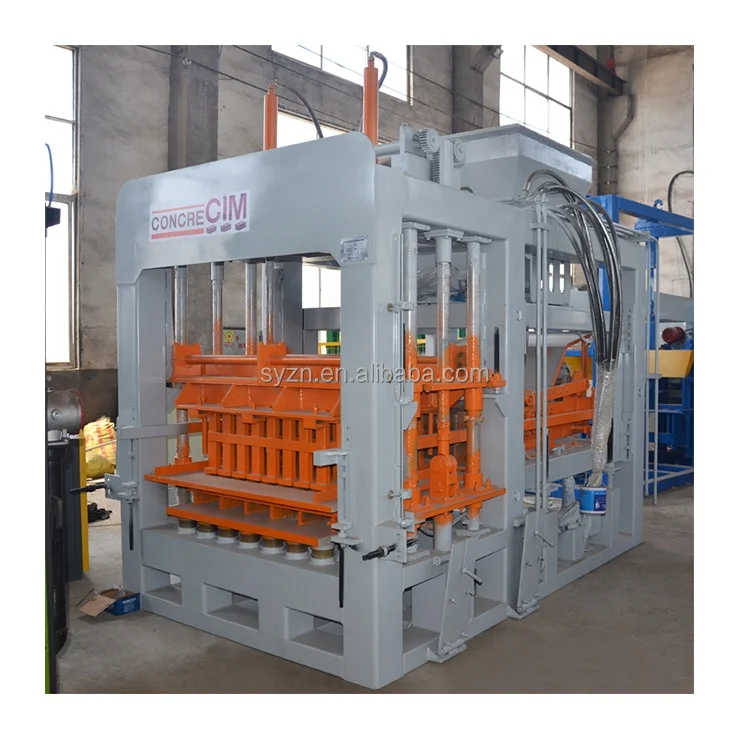
 High quality block machine