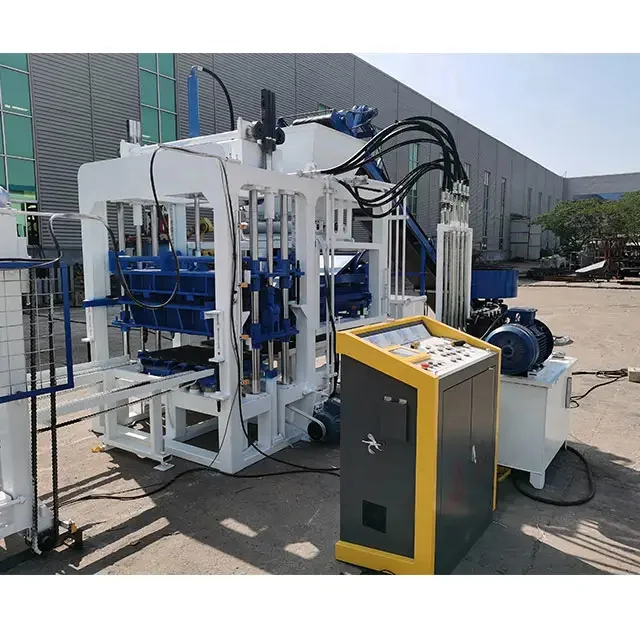
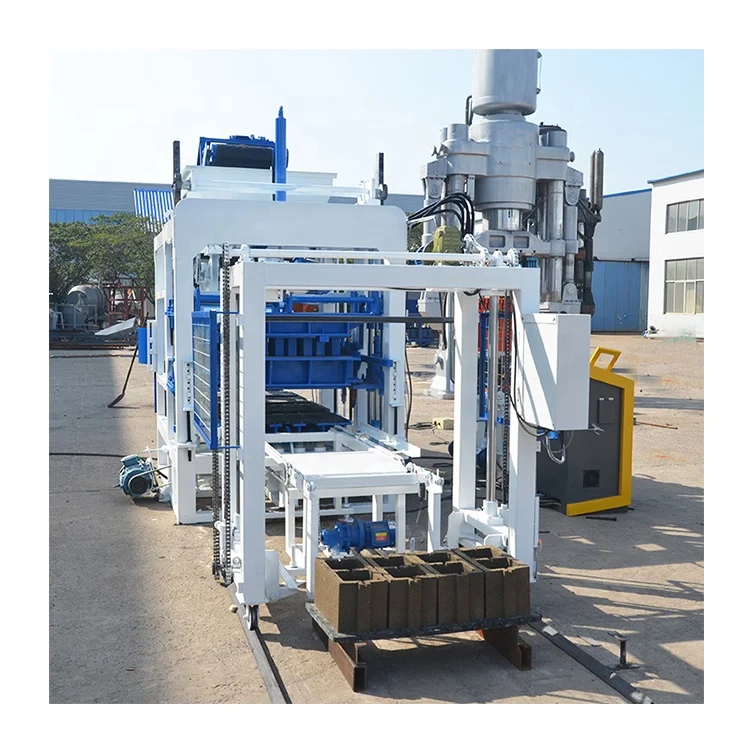
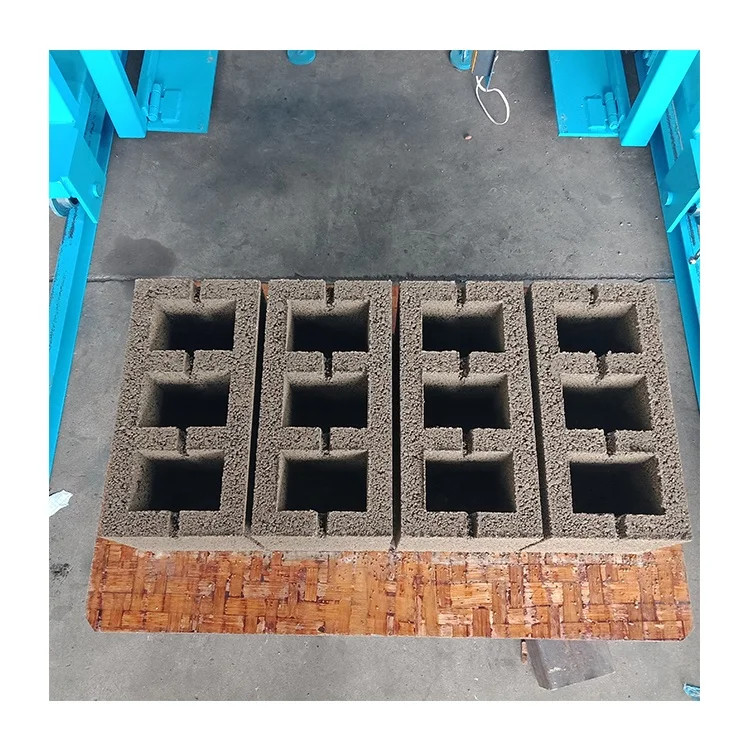
Configuration set against your actual mix design and local aggregate — the QT8-15 block machine is specified as one matched system with its moulds, pallets and hydraulic station aligned to the format your market actually buys.
Technical Specifications
| Parameter |
Value |
| Model |
QT8-15 |
| Product Type |
Fully Automatic Concrete Block Making Machine |
| Overall Dimensions (L×W×H) |
8300 x 1860 x 3000 mm |
| Rated Power |
37 kW |
| Vibration Form |
Platform Vibration |
| Vibration Frequency |
2800–4500 RPM |
| Pallet Size |
950 x 900 mm |
| Brick Height Range |
50–200 mm |
| Moulding Cycle |
15–25 s (standard); 20–25 s (with color feeding) |
| Control System |
PLC with touch screen HMI |
| Hydraulic System |
Independent integrated hydraulic station |
| Output Capacity |
1912 pcs/h based on 400×200×200 mm hollow block (8 pcs/mould) |
| Output Capacity |
2875 pcs/h based on 400×150×200 mm hollow block (12 pcs/mould) |
| Output Capacity |
9360 pcs/h based on 240×115×53 mm solid block (39 pcs/mould) |
| Output Capacity |
4625 pcs/h based on 200×100×60 mm paving block (28 pcs/mould) |
| Comprehensive Block Strength |
up to 15 MPa |
| Voltage & Frequency |
Configurable to buyer’s site requirement (basis to be confirmed before production) |
| Color Capability |
Optional color feeding machine for colored paving blocks |
Application Suitability
| Application |
Material or Output |
| Hollow block production for structural walls |
Fly ash, slag, river sand, gravel and cement blends |
| Solid brick manufacturing for load-bearing construction |
Crushed stone aggregate and cement at standard ratios |
| Porous block production for lightweight partition walls |
Lightweight aggregates with controlled moisture content |
| Interlocking paving block production |
Graded gravel and cement, with optional surface color layer |
| Kerbstone and slope-protecting block manufacturing |
Coarse aggregate mixes requiring high vibration density |
Why "Pieces per Hour" Tells Only Half the Story for the QT8-15 Block Machine
A single cycles-per-hour number hides the format assumption behind it — the real planning figure is daily output stated per block type.
I have watched buyers sign off on a headline capacity, only to discover on commissioning day that their primary product runs at a fraction of that number because the quoted figure assumed a small solid brick, not the 400 mm hollow block their market demands. The QT8-15 block machine full range documentation breaks output down per format so this gap never surfaces after the machine is shipped. [NEED_CITE: block format assumptions in capacity quotations across the industry]
Without that format-by-format breakdown, a plant owner planning daily truckloads can end up scheduling logistics against an output tier the machine was never set up to deliver. The discrepancy is not a machine fault — it is a quotation that left out the basis.

Where the QT8-15 Sits in the Full Machine Range
The Shiyue lineup spans mobile egg-laying units for on-site work, semi-automatic presses for smaller workshops, and fully automatic stations like the QT8-15 for fixed-plant volume. This model occupies the high-capacity tier, designed for buyers who need continuous daily output across multiple block formats without switching machines. Understanding that position helps a buyer decide whether the investment level and plant footprint match the demand their market can sustain.
Automation Tier and What It Removes from the Operator
A fully automatic configuration with PLC control and touch screen HMI takes pallet feeding, moulding cycle timing and stacking coordination out of the operator’s hands. The independent hydraulic station sits apart from the main vibration zone, reducing dust and shock exposure on seals and valves. For a plant owner comparing this tier against semi-automatic options, the distinction is not just labour count — it is batch-to-batch consistency in block density and dimensions across an eight-hour shift. [NEED_CITE: automation level impact on block consistency in fixed-plant operations]
Reading the Specs That Actually Shape Your Daily Output
The platform vibration system operates between 2800 and 4500 RPM, adjustable to match the aggregate gradation in your local mix — too low a frequency on coarse gravel leaves voids in the block core, while excessive frequency on fine sand can cause segregation before the hydraulic press completes compaction. The independent hydraulic station delivers pressing force that works in tandem with vibration; neither alone produces the target 15 MPa comprehensive strength. Pallet size at 950 × 900 mm must be checked against the curing racks and forklifts already on site, because a mismatch here means buying an entire new handling fleet. The 50–200 mm brick height range covers everything from thin paving units to tall hollow blocks, but each format change requires the mould swap window to be realistic — a mould change that consumes most of a shift erases the format flexibility the machine was bought to provide.
What Happens When Electrical Confirmation Gets Skipped
On a project I visited in South America, a block machine arrived on site to find the local supply was 440 V / 60 Hz while the machine had been built for 380 V / 50 Hz — the entire crew stood idle for weeks while the electrical system was rebuilt from scratch. Voltage, frequency and PLC display language are parameters that cost nothing to confirm up front and can stall a project for weeks if left to assumption. Every quotation I now prepare lists these three items on the confirmation sheet before production begins. [NEED_CITE: voltage and frequency mismatches in exported industrial machinery]
Why Source This Tier from Shiyue
Block machinery is our single focus, so the QT8-15 is never supplied as a standalone press — the pallet spec, mould format list, hydraulic rating and handling equipment are specified together against the buyer’s actual product mix. Configuration is set against the buyer’s local aggregate and target block format rather than a catalogue default, which is why our sales process starts with raw material samples and site conditions. Mould design covers the formats the buyer’s market sells, including custom drawings when a regional format falls outside the standard range. Automation level is selectable, allowing a buyer to begin semi-automatic and plan a later move to this fully automatic tier. Installation support includes on-site commissioning and operator training so the first production run happens with the supplier’s engineer present.
Documentation & Verification
- Line layout and capacity calculation stating the block format assumed for each output figure
- Machine specification sheet confirming voltage, frequency and PLC display language before production
- Mould drawing and format list covering every block type the quoted configuration will produce
- Factory test record documenting actual cycle times per format before dispatch
- Hydraulic and electrical schematic matched to the confirmed voltage and control language
- Packing photographs and customs documentation support for container loading
Installation, Commissioning & Support
- Foundation pad sized to the 8300 × 1860 mm footprint with vibration isolation provisions
- Dedicated electrical circuit rated for the 37 kW load at the confirmed site voltage and frequency
- Machine shipped in dismantled state with reassembly sequence documented in the installation manual
- First-run parameter setting on the PLC touch screen covering cycle time and vibration frequency per mould
- Operator training on mould change procedure, hydraulic checks and daily maintenance intervals
- Wear parts list and mould inventory supplied at delivery for first replacement planning
Starting Your QT8-15 Project Scope
To narrow the right configuration within the QT8-15 block machine full range, share your target block formats with dimensions, expected daily volume per format, and the raw materials available locally. We also need your site voltage, supply frequency and preferred PLC display language so these are locked in before the build begins. If you already operate curing racks or forklifts, send the pallet dimensions those systems accept so the 950 × 900 mm pallet spec is validated or adjusted early.
Frequently Asked Questions
Q: How does QT8-15 output differ between hollow blocks, solid blocks and paving blocks?
A: Output varies significantly by format. The machine produces 1912 pieces per hour based on 400×200×200 mm hollow blocks, but reaches 9360 pieces per hour based on 240×115×53 mm solid blocks because each mould holds more units per cycle. Planning must use the figure that matches your primary product, not the highest number on the sheet.
Q: Where does this model sit compared to semi-automatic and mobile options?
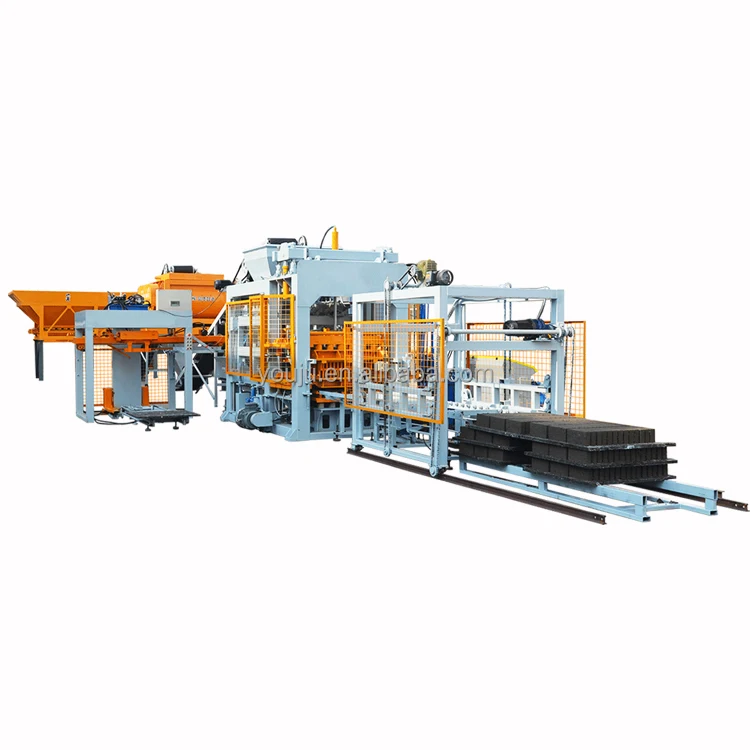
A: The QT8-15 occupies the high-capacity fully automatic tier, suited to fixed plants with continuous daily demand. Semi-automatic models serve smaller workshops with lower investment, while mobile egg-laying machines handle on-site production without a fixed plant footprint. The choice depends on your volume and whether a permanent installation fits the project.
Q: What plant footprint and supporting equipment does this tier need?
A: The press itself measures 8300 × 1860 × 3000 mm, but the full line includes a cement silo, mixer, batching machine, stacker and forklift circulation space. Buyers should plan the curing area around the 950 × 900 mm pallet size and confirm that existing forklifts can handle loaded pallets before the line is finalized.
Q: Can I start semi-automatic and move to this tier later?
A: The automation level is selectable across the Shiyue range, and the upgrade path from semi-automatic to fully automatic is part of the configuration discussion. Pallet handling, stacking and cubing stations can be added as demand grows, provided the initial line layout reserved space and connection points for that expansion.
Q: What electrical and control details are confirmed before the machine is built?
A: Voltage, frequency and PLC display language are written into the confirmation sheet before production starts. This prevents the situation where a machine arrives on site and cannot be powered or operated in the local language, which has delayed commissioning on projects where these parameters were assumed rather than verified.

 Semi automatic block