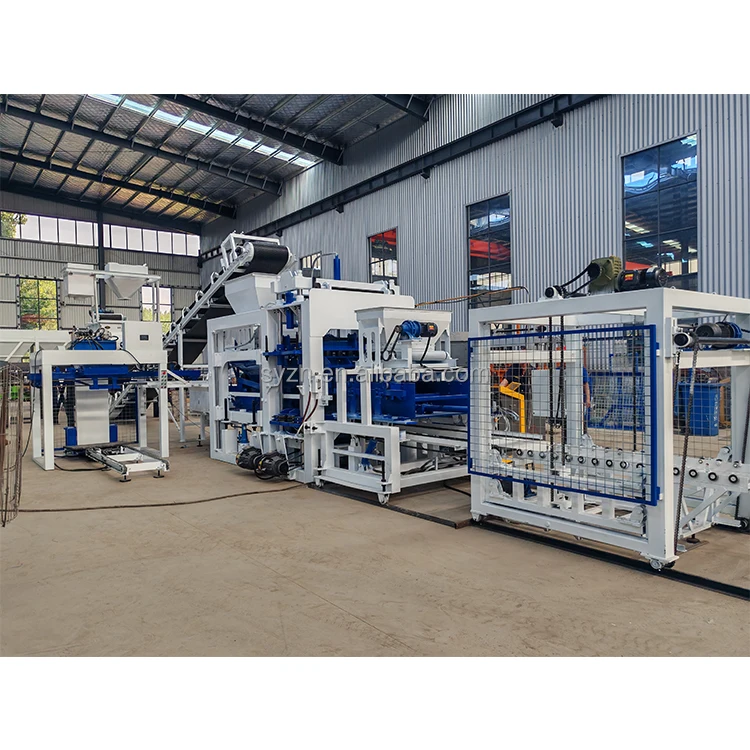
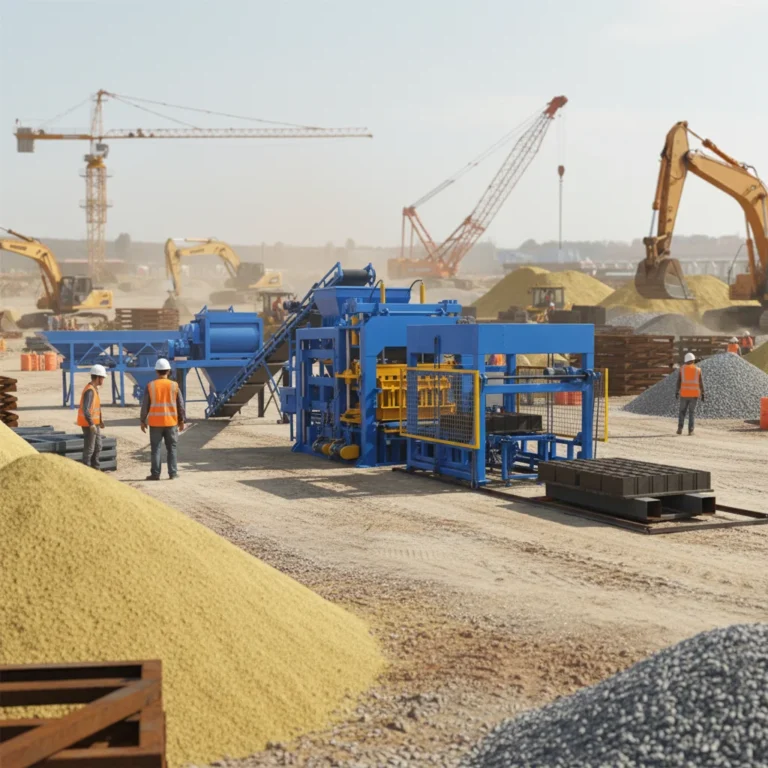
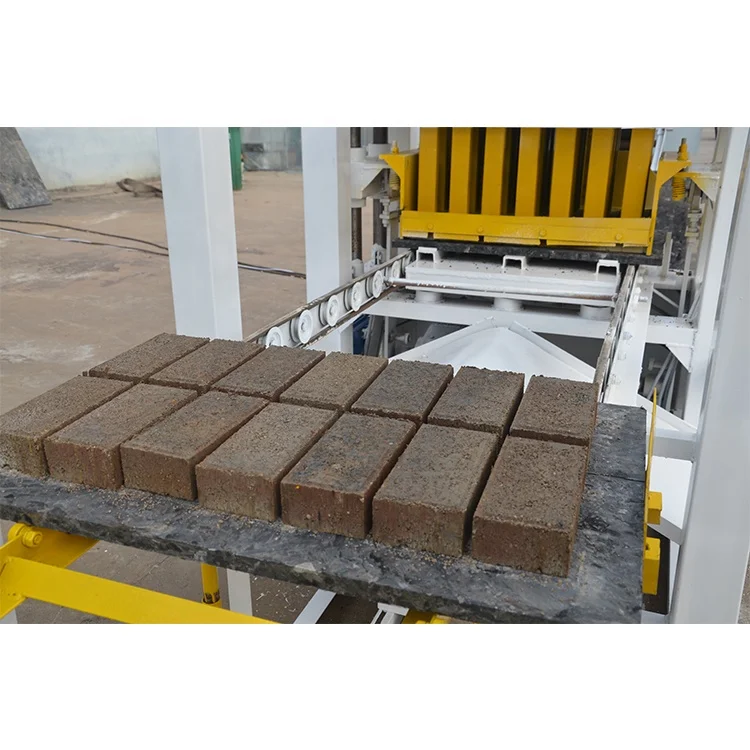
Matched system specification — every QT5-15 leaving our Linyi workshop ships with its hydraulic station, pallet feeder, and PLC cabinet configured as one verified set rather than assembled from mismatched sources.
Technical Specifications
| Parameter |
Value |
| Model |
QT5-15 |
| Product Type |
Fully Automatic Concrete Block Making Machine |
| Overall Dimensions (L×W×H) |
7100×1600×2610 mm |
| Total Weight |
5 T |
| Rated Power |
33.5 kW |
| Voltage & Frequency |
Configurable to buyer’s site requirement (basis to be confirmed) |
| Control System |
PLC control system |
| PLC Display Language |
Configurable (basis to be confirmed) |
| Vibration Force |
40 kN |
| Vibration Frequency |
0–60 Hz |
| Pallet Size |
1100×550 mm |
| Mould Format |
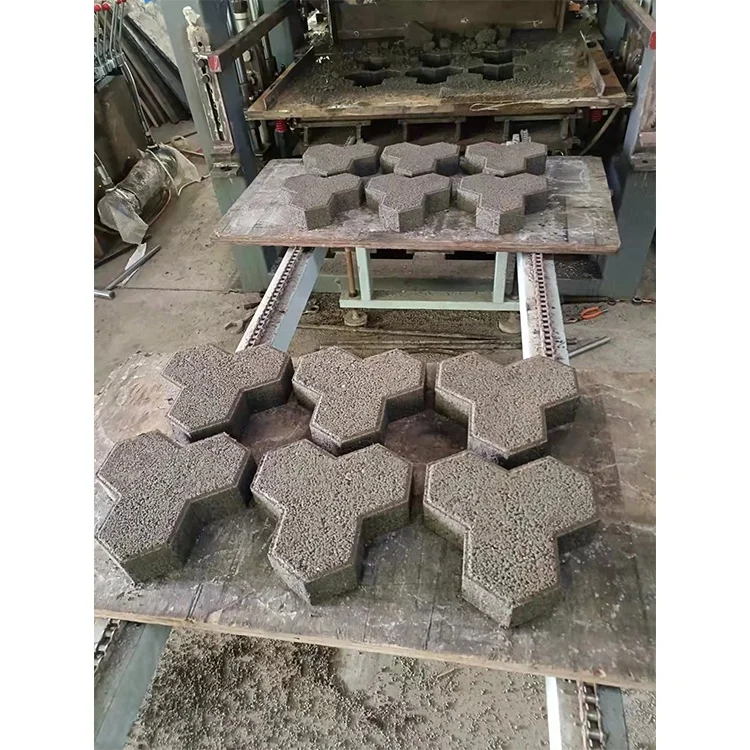
Paver, solid block, hollow block, curbstone (mould change required) |
| Cycle Time |
15 s |
| Mixer |
JS500 |
| Output Capacity |
450 pcs/h based on 400×200×200 mm hollow block, 5 pcs/mould |
| Output Capacity |
540 pcs/h based on 400×150×200 mm hollow block, 6 pcs/mould |
| Output Capacity |
720 pcs/h based on 400×100×200 mm solid brick, 8 pcs/mould |
| Daily Output (8 hr) |
3,600 pcs based on 400×200×200 mm hollow block |
| Daily Output (8 hr) |
4,320 pcs based on 400×150×200 mm hollow block |
| Daily Output (8 hr) |
5,760 pcs based on 400×100×200 mm solid brick |
| Raw Materials |
Crushed stone, sand, cement, dust, fly ash |
| Automation Level |
Fully automatic with pallet feeder, brick conveyor, block sweeper |
| Hydraulic Station |
Included, high-pressure system |
| Key Features |
Multi-format mould capability, adjustable vibration frequency, integrated pallet handling |
Application Suitability
| Application |
Material or Output |
| Hollow block production for wall construction |
Crushed stone, sand, cement, fly ash at 400×200×200 mm or 400×150×200 mm |
| Solid brick production for load-bearing structures |
Sand, cement, stone dust at 400×100×200 mm |
| Paver production for walkways and driveways |
Crushed stone, sand, cement with pigment additives |
| Curbstone production for road and kerb applications |
High-density concrete mix with coarse aggregate |
| On-site block production for housing projects |
Locally sourced aggregate matched to available cement grade |
What "450 Blocks per Hour" Actually Means for Your Plant
Capacity figures without a named block format are marketing, not engineering.
I have watched buyers sign purchase orders based on a single headline number, only to discover on commissioning day that the quoted throughput assumed a mould they never intended to run. When the real target is a 200 mm hollow block rather than a slim solid brick, the cavity count drops and the hourly output follows. The QT5-15 is rated at 450 pcs/h based on a 400×200×200 mm hollow block with five cavities per mould, and at 720 pcs/h based on a 400×100×200 mm solid brick with eight cavities. Stating the format beside every number is the only way a fully automatic block making machine manufacturer can give you a figure worth planning around [NEED_CITE: block format and cavity count relationship to hourly output].

Where the QT5-15 Sits in the Full Machine Range
Buyers surveying options for a first or replacement machine need to see the entire ladder before choosing a rung. The QT5-15 occupies the mid-tier automatic position, bridging the gap between semi-automatic workshop presses and high-capacity lines that demand a dedicated curing hall and forklift fleet. Its 7100 mm footprint and 33.5 kW power draw fit inside a standard industrial bay without a separate transformer room, yet the PLC-controlled cycle and integrated pallet feeder move it well past manual operation. For a buyer evaluating a fully automatic block making machine manufacturer, this tier is where automation begins to pay for itself through reduced labour and consistent cycle timing.
Scaling Up Without Replacing the Press
The value of positioning yourself correctly on the range becomes clear when demand grows. A buyer who starts with the QT5-15 running a single eight-hour shift can add a second shift, introduce a JS500 mixer upgrade, or extend the curing rack system without swapping the host machine. When volume eventually justifies a higher-tier automatic line, the mould inventory and pallet stock accumulated on the QT5-15 remain compatible with larger SHIYUE presses that share the same pallet dimension philosophy. This continuity matters because pallet size mismatches are among the most common hidden costs when a plant jumps between unrelated machine brands [NEED_CITE: pallet compatibility across block machine tiers].
Reading the Specs That Decide Daily Output
Vibration force and hydraulic pressure together determine whether a block leaves the mould at target density or crumbles before it reaches the curing rack. The QT5-15 delivers 40 kN of vibration force at an adjustable frequency up to 60 Hz, which lets the operator tune the shake profile to the local aggregate — coarse crushed stone needs a different frequency window than fine sand and fly ash. The 1100×550 mm pallet size is not arbitrary; it dictates how many blocks fit per layer on the curing rack and which forklift tine width can handle the stack. The JS500 mixer must discharge a full batch within the 15-second press cycle to avoid idle time, and the 33.5 kW total power rating tells the electrical contractor what dedicated circuit to pull before the machine arrives.
The Cost of Skipping the Configuration Conversation
A fully automatic block making machine manufacturer that ships a catalogue default instead of matching the machine to your site creates problems that surface weeks after arrival. Wrong voltage means the PLC refuses to boot and the project waits for a transformer. A pallet size that ignores your existing curing racks forces you to rebuild the entire drying area or handle blocks by hand. A mould set chosen without checking your local aggregate leads to blocks that pass the press but fail the compression test. Every one of these outcomes erases the time advantage of buying automatic in the first place [NEED_CITE: common commissioning delays from unconfirmed electrical specifications].
Why Buyers Source This Range from SHIYUE
Block machinery is our single focus, so the QT5-15 arrives with its mould, pallet, and handling equipment specified as one matched system. We configure the vibration profile and hydraulic pressure against your actual mix design and target block format, not a default table. Mould design covers the formats your market sells, including custom drawings when standard cavities do not fit. Automation level is selectable, so a buyer can begin with the integrated pallet feeder and brick conveyor, then add stacking and cubing modules later. Installation support includes operator training on the PLC interface in the display language you confirmed before production started.
Documentation & Verification
- Line layout showing QT5-15 footprint with pallet flow and curing rack positions
- Capacity calculation sheet naming the block format behind every output figure
- Mould drawing and format list covering hollow, solid, paver, and curbstone cavities
- Voltage and PLC display language confirmation signed before production release
- Factory test record on your specified mould format demonstrating cycle time and block density
- Hydraulic and electrical schematic for on-site troubleshooting and spare part ordering
Installation, Commissioning & Support
- Foundation slab must accommodate 7100×1600 mm footprint with level tolerance for the hydraulic press frame
- Dedicated electrical circuit sized for 33.5 kW total load at confirmed voltage and frequency
- Machine shipped with pallet feeder and conveyor as separate assemblies for container loading
- First-run parameter setting covers vibration frequency, hydraulic pressure, and cycle timer on your mould
- Operator training on PLC interface in the confirmed display language before handover
- Wear parts list and mould maintenance schedule provided at commissioning
What We Need to Size Your Line
Before we finalise a configuration, share your target block formats with dimensions, the daily volume you plan to sustain, and the aggregate sources available near your site. Confirm the local voltage and frequency so the electrical cabinet is wound correctly before the QT5-15 leaves Linyi. If you already operate curing racks or forklifts, send the pallet dimensions and tine spacing so the 1100×550 mm pallet specification is validated against your existing equipment.
Frequently Asked Questions
Q: How is the QT5-15 output capacity verified, and which block format is each figure based on?
A: Every output number we publish names the exact block size and mould cavity count. The 450 pcs/h figure assumes a 400×200×200 mm hollow block with five cavities, while 720 pcs/h assumes a 400×100×200 mm solid brick with eight cavities. We provide a signed capacity calculation sheet with your quotation so the format behind each number is documented before you commit.
Q: Where does the QT5-15 sit compared to semi-automatic and higher-tier automatic models?
A: It occupies the mid-tier automatic position. Below it, semi-automatic models require manual pallet handling and suit lower investment budgets. Above it, high-capacity lines add automatic stacking and cubing for plants running multiple shifts. The QT5-15 gives you PLC control and an integrated pallet feeder while keeping the footprint inside a standard industrial bay.
Q: Is there an upgrade path from the QT5-15 to full stacking and cubing?
A: Yes. The pallet size and mould interface are shared with larger SHIYUE presses, so accumulated mould and pallet inventory carries over. Stacking and cubing modules can be added to the existing line when volume justifies the investment, without replacing the host machine.
Q: What voltage and control system options are available for different export markets?
A: Voltage and frequency are configured to your site requirement and confirmed in writing before production. The PLC display language is also set to your preference. We require a signed confirmation sheet covering both items so the cabinet matches your local electrical standard on arrival.
Q: How is the machine configured to match local raw materials?
A: We review your aggregate type, cement grade, and target block strength before finalising the vibration frequency window and hydraulic pressure setting. The JS500 mixer batch size and discharge timing are matched to the 15-second press cycle so the line runs without idle gaps between batches.

![QT10-15 Cement Block Machine for Hollow Block | Manufacturer8 + 2 + 9 + 4 + 7 = 30 30 mod 6 = 0 → 句式:[品类词] for [应用或物料] – [站点修饰词] 目标站 shiyueblockmachine.com → 全品类目录类角色 → 池:Manufacturer / Factory Supply / Full Range 30 mod 3 = 0 → Manufacturer Cement Block Machine for Hollow Block – Manufacturer (50) → 刚好50字符 Cement Block Machine for Hollow Block – Manufacturer](https://shiyueblockmachine.com/wp-content/uploads/2026/04/Hb41b33f9751e441c8a35b36846992f0bP.webp) High quality block machine
High quality block machine