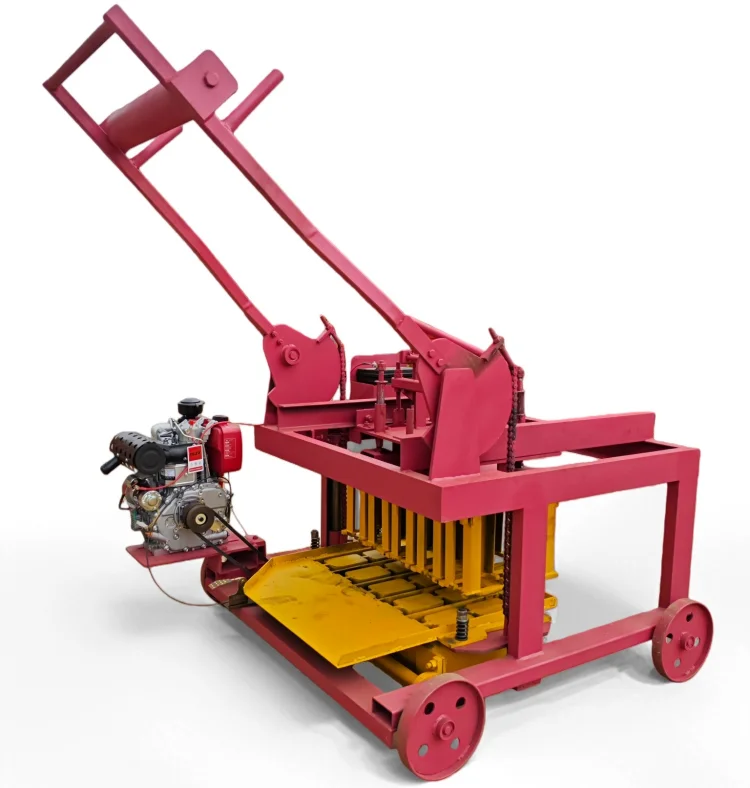
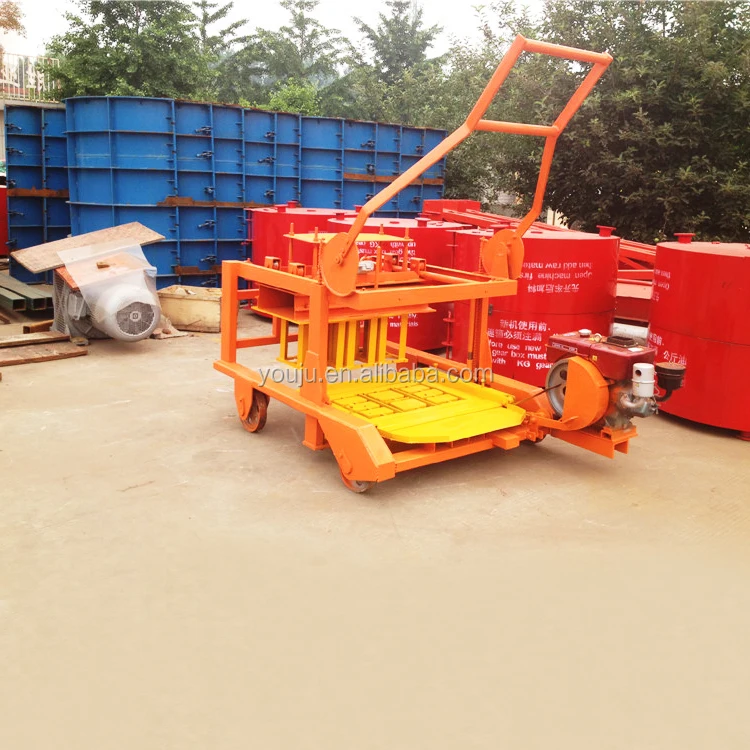
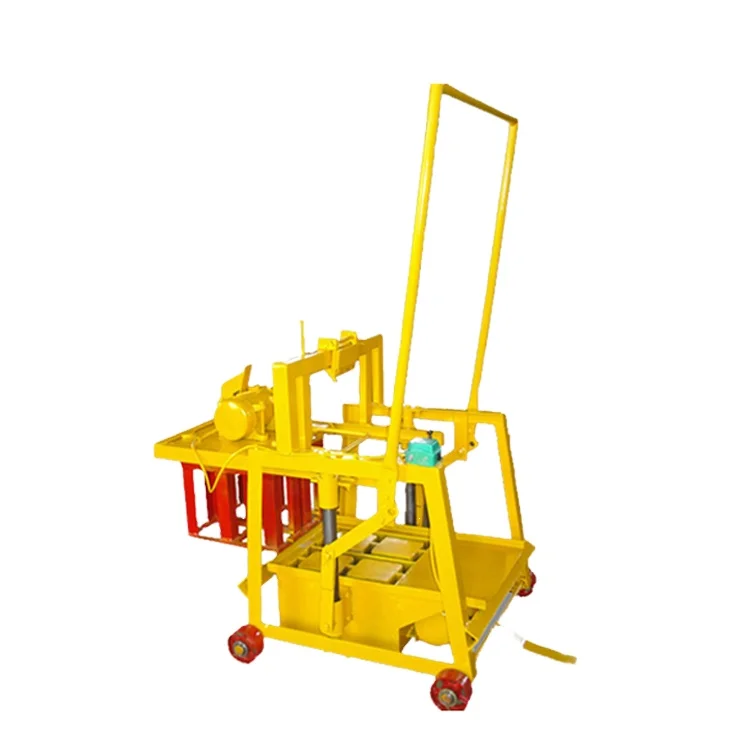
Compact Footprint, Matched System — Every mobile block machine we ship is configured against the buyer’s actual aggregate and target format, so output on-site matches what was calculated before dispatch.
Technical Specifications
| Parameter |
Value |
| Model |
QMY4-30 |
| Product Type |
Mobile Concrete Block Making Machine |
| Rated Power |
5 kW |
| Molding Cycle Time |
30 seconds |
| Overall Dimensions (L×W×H) |
1200 × 1200 × 1100 mm |
| Net Weight |
950 kg |
| Automation Level |
Manual / Mobile (egg-laying type) |
| Mould Format |
Changeable (hollow block and solid brick) |
| Raw Materials |
Cement, sand, crushed stones, slag |
| Output Capacity |
480 pcs/h (based on 400×200×200mm hollow block, 4 pcs/mould) |
| Output Capacity |
600 pcs/h (based on 400×150×200mm hollow block, 5 pcs/mould) |
| Output Capacity |
840 pcs/h (based on 400×100×200mm hollow block, 7 pcs/mould) |
| Daily Output (8h) |
3840 pcs (based on 400×200×200mm hollow block) |
| Daily Output (8h) |
4800 pcs (based on 400×150×200mm hollow block) |
| Daily Output (8h) |
6720 pcs (based on 400×100×200mm hollow block) |
| Vibration Force |
(basis to be confirmed) |
| Hydraulic Pressure |
(basis to be confirmed) |
| Voltage & Frequency |
Configurable for target market |
| Control System |
Manual control |
Application Suitability
| Application |
Material or Output |
| On-site hollow block production for building contractors |
Cement, sand, and crushed stone mixes laid directly on prepared ground |
| Small-scale solid brick manufacturing for local supply |
Cement and slag blends, changeable mould formats |
| Remote housing and development projects |
Local aggregate with portable operation, no fixed plant required |
| Entrepreneur first block plant setup |
Low-power (5 kW) operation suitable for basic utility connections |
What "Pieces per Hour" Actually Means on a Job Site
Capacity figures are meaningless without the block format attached to them.
I once watched a contractor pull a mobile block machine off a flatbed, fire it up, and stare at the output wondering why it looked nothing like the brochure. The seller had quoted a single hourly number based on the smallest block in the catalogue. The contractor was running 200mm hollow blocks — a completely different mould cavity count. When a mobile block machine manufacturer quotes output, the format behind that number is the first thing you need in writing. On this QMY4-30, every capacity figure is tied to a specific block size: 480 pieces per hour for 400×200×200mm hollow blocks, up to 840 pieces per hour for the 100mm partition block. That transparency lets you plan curing area and labour before the machine arrives, not after [NEED_CITE: capacity calculation standards for concrete block production equipment].

Placing the QMY4-30 in the Full Machine Range
The QMY4-30 sits at the entry tier of the complete mobile block machine lineup, designed for buyers who need production at the project location rather than inside a fixed plant. Unlike semi-automatic or fully automatic stationary lines, this egg-laying model moves forward after each cycle, depositing blocks directly onto the ground. That eliminates pallets entirely and cuts the capital required to start producing. For a contractor who needs hollow blocks at a remote housing site or an entrepreneur testing the local market before investing in a full plant, this tier keeps the initial footprint and utility demand low while still delivering consistent format output.
Where Mobile Production Fits — and Where It Stops
A mobile block machine manufacturer typically positions egg-laying equipment for situations where a fixed batching plant would be overkill. The QMY4-30 operates on a 5 kW power supply, meaning most job-site generators can handle the load without dedicated transformers. The trade-off is that output scales with operator pace and ground conditions — the machine needs a flat, cured concrete surface to travel across, and block quality depends on consistent mix feeding by hand. For buyers whose daily demand stays within the range this model covers, the simplicity is the advantage [NEED_CITE: on-site concrete block production requirements for construction projects]. When volume grows beyond what one mobile unit can deliver across an eight-hour shift, the natural next step is a semi-automatic stationary line with pallet circulation.
Reading the Specs That Matter on Site
The 30-second molding cycle is the heartbeat of this machine. Every half minute, the mould vibrates and releases a set of blocks, and the operator repositions the unit for the next cycle. At 1200 × 1200 mm in footprint, the QMY4-30 fits through standard site access and can be loaded onto a flatbed without special transport permits. The 950 kg net weight keeps it stable during vibration but still allows repositioning by a small crew or a site forklift. Mould changeovers between hollow block formats and solid brick are done by swapping the mould box — the vibration force and cycle timing remain constant, so the operator only adjusts the mix feed rate. The 5 kW rated power means the machine draws current within the range of common three-phase site supplies, but voltage and frequency must still be confirmed before the motor is wound at the factory.
The Cost of Skipping the Ground Prep Question
A mobile egg-laying machine deposits wet blocks directly onto whatever surface it travels across. If that ground is uneven, soft, or dusty, the bottom course of every block picks up contamination and the vibration force dissipates into the soil instead of compacting the mix. I have seen entire first-day production runs written off because the curing area was graded gravel instead of a trowelled concrete slab. The machine performs exactly as engineered — the site preparation is what fails the output [NEED_CITE: ground preparation standards for mobile egg-laying block machines]. Before ordering, confirm the curing area dimensions against the daily output you plan to run, and factor the slab cost into the total project budget.
Why Buyers Source This Tier Here
Block machinery is the single focus of this operation, which means the QMY4-30 is not pulled from a general construction equipment catalogue — it is specified alongside its moulds and supported by the same team that designs the larger stationary lines. Configuration starts with your local aggregate and target block format, not a default setting. Mould design covers the formats your market actually buys, and custom drawings are accepted when standard options do not match. The automation level is selectable across the full range, so a buyer who starts with this mobile unit can move to a semi-automatic line later without changing suppliers. Installation support includes operator training on mix consistency and cycle pacing, and wear parts remain available when the first mould replacement is due.
Documentation & Verification
- Line layout showing curing area sized to your chosen block format and daily output target
- Machine specification sheet confirming power rating, cycle time, and overall dimensions
- Mould drawing and format list covering every cavity option available for the QMY4-30
- Voltage and control language confirmation recorded before motor winding begins
- Factory test record on your specified raw material mix before the machine is crated
Installation, Commissioning & Support
- Curing slab must be flat reinforced concrete sized to hold one full shift of output at your selected block format
- Dedicated three-phase circuit matching confirmed voltage and frequency, rated above the 5 kW motor draw
- Machine ships as a single assembled unit; mould box is removed for transport and re-bolted on site
- First production run supervised to verify cycle timing and block density against your mix design
- Operator training covers mould change procedure, mix feed pacing, and daily vibration mount inspection
- Wear parts and replacement mould list supplied with part numbers matching the QMY4-30 configuration shipped
What to Include in Your Inquiry
Send the block format your market sells most — dimensions, wall thickness, and whether hollow or solid — along with the daily volume you need to hit. Confirm the voltage and frequency at your job site, the language you need on any control labels, and what local aggregate you plan to use in the mix. If the production area is already prepared, share the curing slab dimensions so the output plan can be matched to the space available.
Frequently Asked Questions
Q: How is capacity verified and what block format does each output figure assume?
A: Every output number published for the QMY4-30 is tied to a specific block size and mould cavity count. The 480 pieces per hour figure applies to 400×200×200mm hollow blocks at four cavities per cycle. Switching to a smaller partition block increases cavity count and raises the hourly figure accordingly. We provide a written capacity calculation for whichever format you plan to run.
Q: What voltage and frequency options are available for different export markets?
A: The motor and any control components are wound or selected to match your local supply. Standard options cover common three-phase configurations, but the exact voltage and frequency must be confirmed before production starts. This avoids commissioning delays and motor rewinding costs after the machine arrives at your site.
Q: How long does mould change take on this mobile unit?
A: The mould box is unbolted and lifted off the vibration table, then the replacement mould is positioned and secured. A trained operator completes the swap within a single shift break. Available formats include hollow blocks in multiple wall thicknesses and solid brick, with custom mould designs accepted to buyer drawings.
Q: What raw material mix does the QMY4-30 require?
A: The machine processes cement combined with sand, crushed stone, or slag. The specific ratio is set during configuration based on your local aggregate gradation and target block strength. We confirm the mix design before the factory test so that output quality on your site matches what was validated before shipment.
Q: What does on-site setup require for ground preparation and curing?
A: The egg-laying machine travels across a flat concrete slab and deposits blocks directly on the surface. The slab must be level, trowelled smooth, and large enough to hold a full shift of production plus curing time. Ground that is soft or uneven causes block base damage and reduces compaction effectiveness.

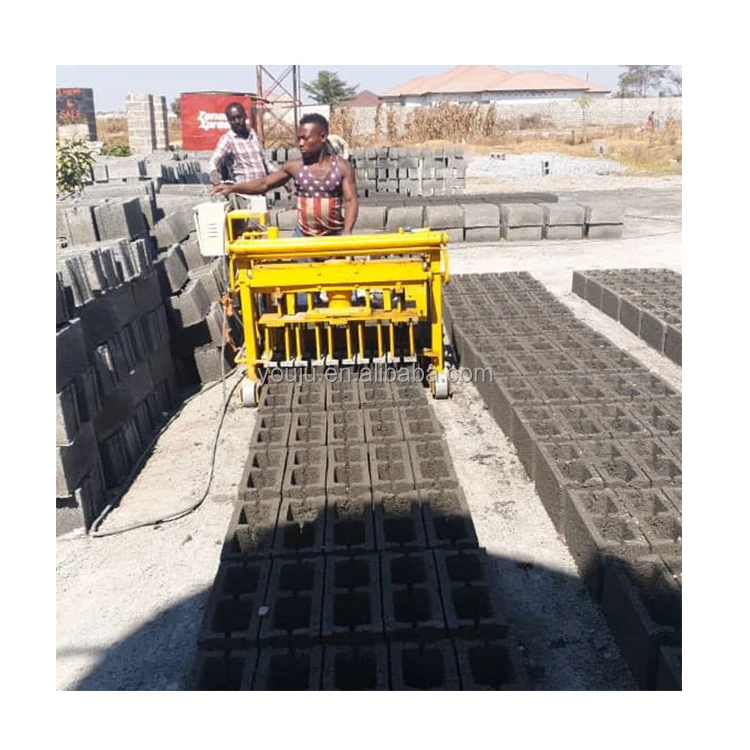
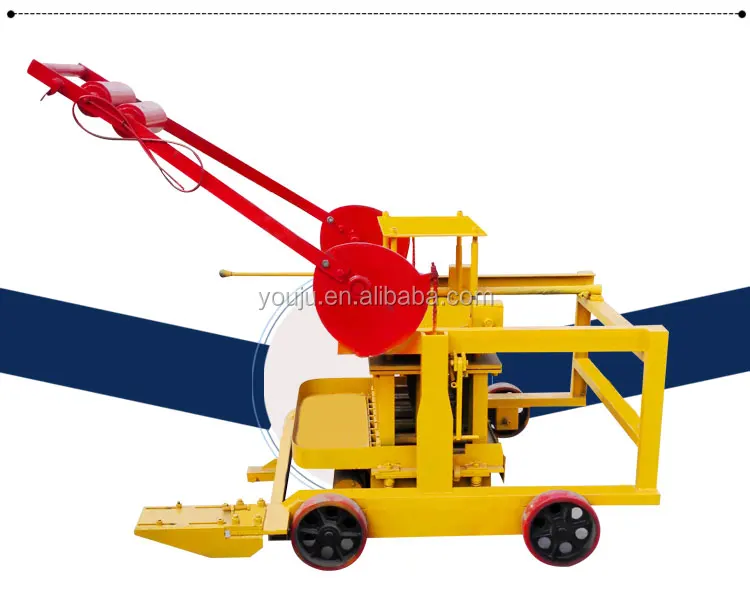 Mobile block machine