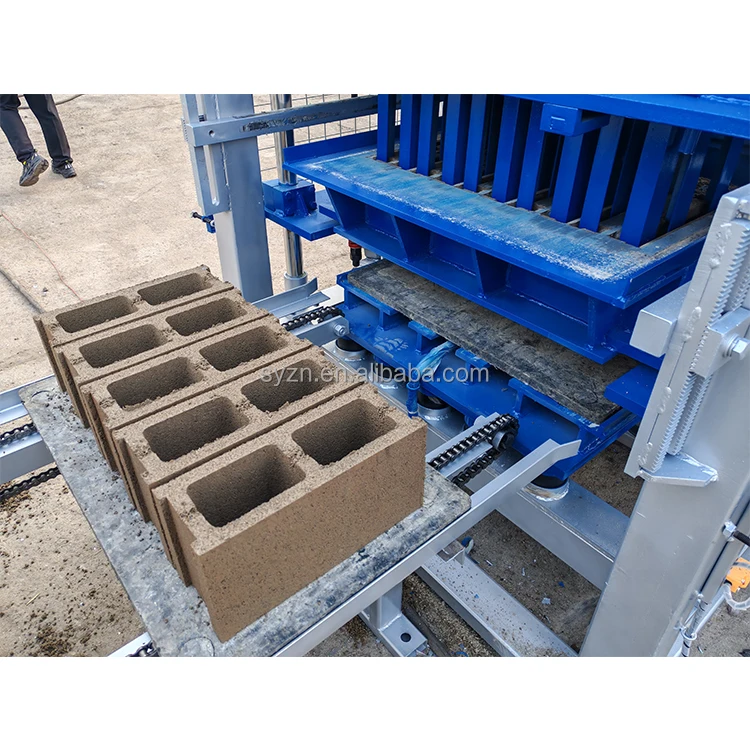
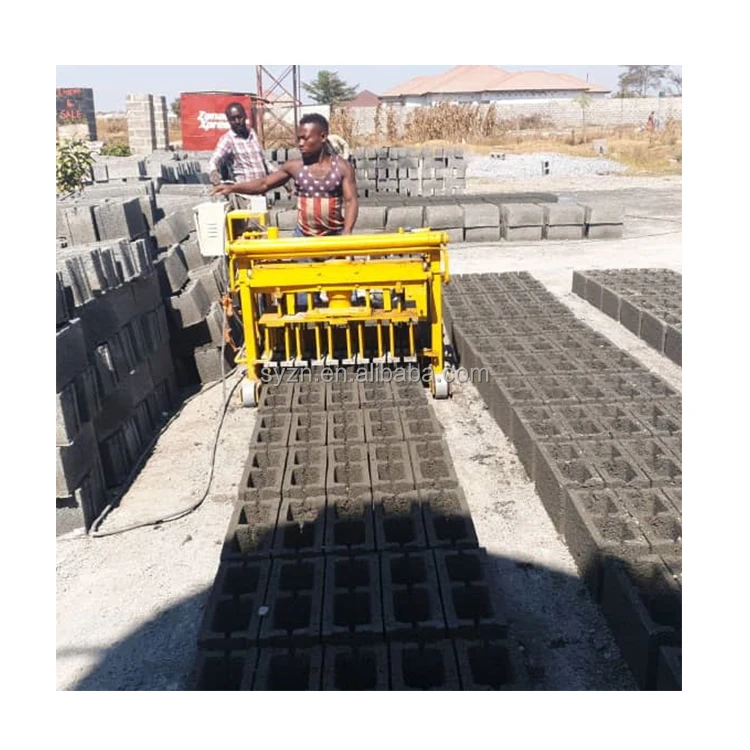
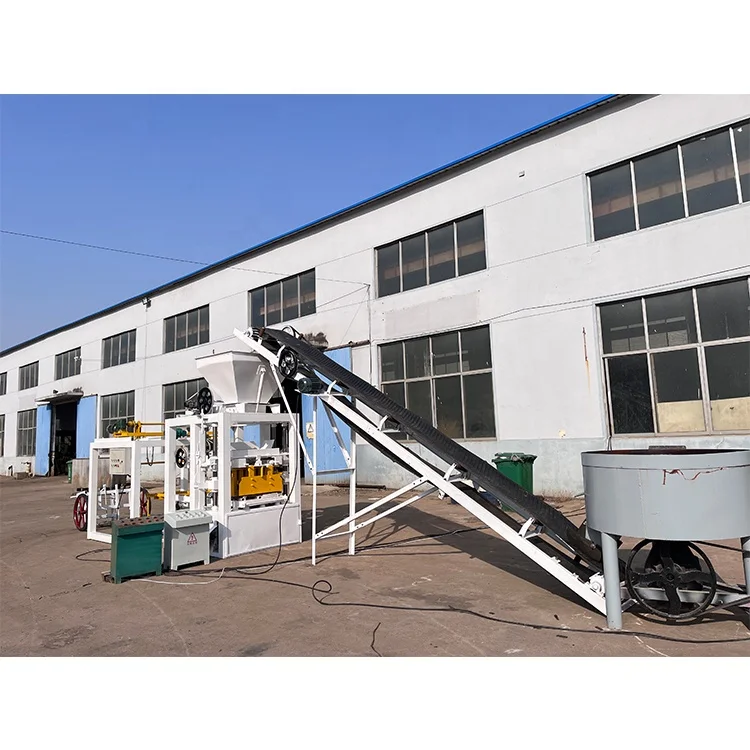
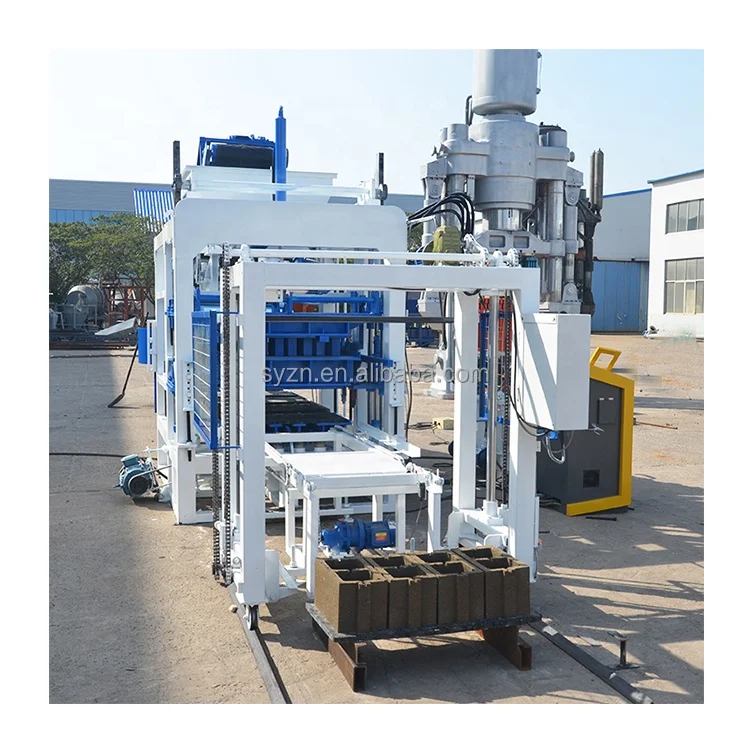
Single-Focus Engineering — the QT4-15A is specified as one matched platform where the press, mould, pallet and handling work together rather than arriving from separate sources.
Technical Specifications
| Parameter |
Value |
| Model |
QT4-15A |
| Product Type |
Automatic Concrete Block Making Machine |
| Overall Dimensions (L×W×H) |
7100×1600×2610 mm |
| Molding Cycle |
15-25 s (varies by block format) |
| Vibration Frequency |
4600 r/min |
| Exciting Force |
40-50 kN |
| Total Power |
18.45 kW |
| Mixer Model |
JQ350 |
| Pallet Size |
850×550×25 mm |
| Total Weight |
3 T |
| Control System |
PLC control system |
| Hydraulic Station |
Included, high pressure |
| Applied Products |
Hollow block, solid brick, paver, curbstone |
| Included Equipment |
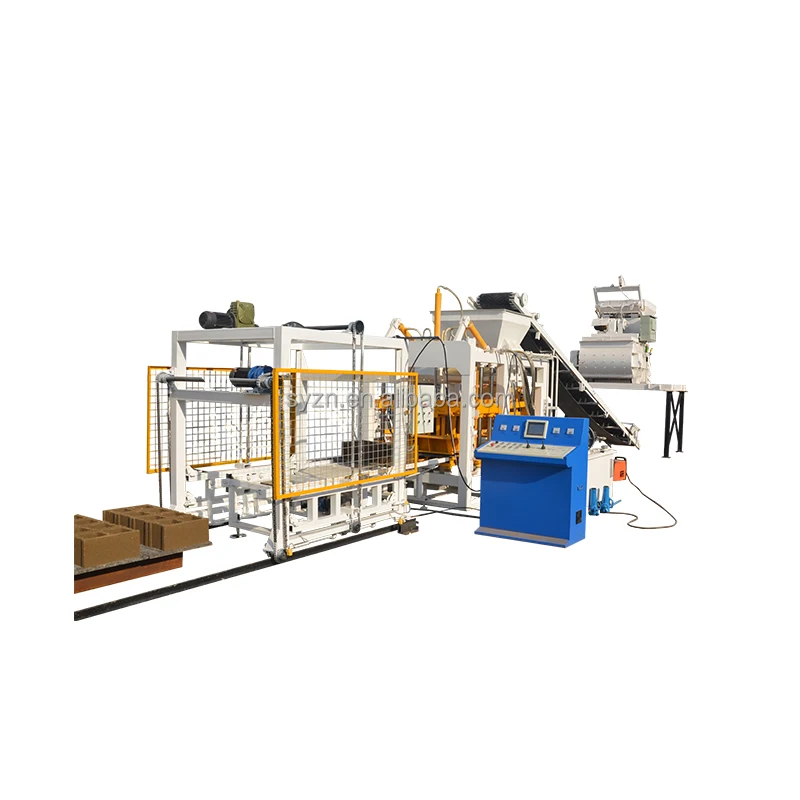
Block making machine, hydraulic station, PLC, pallet feeder, brick conveyor, block sweeper |
| Free Accessories |
Manual hydraulic trolley, spare parts and tools |
| Output — Hollow Block 400×200×200 mm |
4 pcs/mould, 408 pcs/hr, 3264 pcs/8hr |
| Output — Hollow Block 400×150×200 mm |
5 pcs/mould, 510 pcs/hr, 4080 pcs/8hr |
| Output — Solid Brick 240×115×53 mm |
18 pcs/mould, 2100 pcs/hr, 17000 pcs/8hr |
Application Suitability
| Application |
Material or Output |
| Hollow block production plants |
Crushed stone, sand, cement, fly ash — 400×200×200 mm and 400×150×200 mm formats |
| Solid brick manufacturing |
Cement and fine aggregate blends — 240×115×53 mm standard brick |
| Paver and curbstone fabrication |
Dense aggregate mixes with pigments for outdoor surfacing and kerb applications |
| On-site construction block production |
Locally sourced sand and stone dust for project-specific block formats |
Why "Pieces per Hour" Means Nothing Without the Block Format
Every output figure for this automatic block making machine manufacturer is tied to a named block dimension, so daily throughput can be planned against real orders.
Capacity numbers quoted without a format assumption cause the most common disappointment in block machinery purchasing. A catalogue may state a round hourly figure, but the actual block the buyer sells most often requires a different mould, a longer cycle and a different pallet layout. I have seen buyers plan their labour and curing space around a number that applied to a format they never intended to produce. The QT4-15A capacity table above lists each figure next to the exact block size, pcs per mould and cycle assumption so you can match it against your own product mix [NEED_CITE: block format assumptions in capacity quotations].

Where the QT4-15A Sits in the Full Machine Range
The SHIYUE lineup spans mobile egg-laying machines for on-site work, semi-automatic presses for smaller plants and fully automatic lines with stacking and cubing. The QT4-15A occupies the mid-tier automatic position: PLC-controlled, with an integrated pallet feeder, brick conveyor and block sweeper, but without the full automatic stacking and cubing found on the high-capacity tiers. This makes it a practical choice for a buyer who wants consistent, automated pressing and pallet handling while keeping the initial investment moderate.
How the Line Stays Balanced Around the Press
A block machine is only as productive as the slowest station feeding or clearing it. On the QT4-15A, the JQ350 mixer, pallet feeder and brick conveyor are matched so the press does not sit idle between cycles. The pallet size of 850×550×25 mm is specified to fit both the machine feed and the buyer’s curing rack dimensions, avoiding a situation where pallets have to be resized or replaced after arrival. When every station shares the same cycle rhythm, the 15-25 second molding window is used fully rather than lost to waiting [NEED_CITE: block production line station synchronization].
Reading the Vibration and Pressure Numbers
The 40-50 kN exciting force at 4600 r/min works together with the hydraulic station to compact the mix into a dense, consistent block. Vibration alone settles the aggregate; hydraulic pressure applied through the mould head completes the densification. If the local aggregate is lighter or more porous — volcanic ash, certain fly ashes, recycled aggregate — the vibration frequency and pressure may need adjustment to achieve the target block strength. This is why confirming the buyer’s actual mix design before production matters more than the headline force number. The pallet size of 850×550×25 mm must also align with the curing area and forklift already on site, otherwise pallets pile up in corridors or curing racks go underused.
The Cost of Skipping Format and Material Confirmation
Ordering a machine before confirming the block formats the local market actually buys leads to mould changes that consume half a shift, negating the flexibility the buyer paid for. Choosing a pallet material without considering the humidity and curing duration causes warping that shows up as uneven block height. Specifying a machine for a mix the buyer cannot source locally forces a material change that adds cost to every production day. These are not warranty issues — they are configuration decisions made before the machine was built [NEED_CITE: common configuration mismatches in block machinery procurement].
Why Buyers Source This Range Here
Block machinery is the sole product focus, so the press, mould, pallet and handling equipment arrive as one specified system rather than components assembled from separate vendors. Every quotation includes a capacity calculation that names the block format assumed, removing guesswork from daily output planning. Moulds are designed for the formats the buyer’s market sells, and custom drawings are accepted when standard sizes do not match local building codes. Automation level is selectable: a buyer can begin with the QT4-15A’s PLC-controlled semi-automatic workflow and add stacking automation later as volume grows. Installation, commissioning and operator training are included so the first production run happens under guidance, not trial and error.
Documentation & Verification
- Line layout with capacity calculation stating the block format for each output figure
- Machine specification sheet confirming voltage, frequency and PLC display language before production
- Mould drawing and format list matched to buyer’s local block dimensions
- Factory test record and packing photographs provided before container loading
- Hydraulic and electrical schematic for on-site maintenance reference
- Operation and maintenance manual with wear parts and mould replacement list
Installation, Commissioning & Support
- Foundation pad sized to the 7100×1600 mm footprint with level tolerance specified
- Dedicated power circuit for the 18.45 kW total load, voltage confirmed before dispatch
- Machine shipped partially dismantled; reassembly and alignment completed on site
- PLC parameters set to buyer’s block format and cycle time during first-day commissioning
- Operator training covers mould change procedure, pallet loading and daily maintenance checks
- Wear parts list and mould catalogue provided for first reorder planning
What to Share Before Requesting a Quote
An accurate proposal for the QT4-15A requires the target block formats and daily output, the local aggregate and cement type available, the curing area dimensions and existing forklift or pallet truck, and the site voltage and frequency. Providing these details allows the configuration — mould set, pallet specification, control language — to be locked before production starts, which shortens commissioning time after arrival.
Frequently Asked Questions
Q: How is output capacity calculated and which block format does each figure assume?
A: Every output number listed for the QT4-15A is tied to a specific block size and pcs-per-mould count. The hollow block 400×200×200 mm figure, for example, assumes 4 pieces per mould at the stated cycle time. If your primary product is a different dimension, the realistic daily throughput will differ and should be calculated separately.
Q: Where does this model sit compared to semi-automatic and mobile machines?
A: The QT4-15A is a mid-tier automatic press with PLC control, pallet feeder and conveyor. Semi-automatic models require manual pallet handling; mobile machines produce blocks on the ground without pallets. Your choice depends on daily volume, labour availability and whether you need a fixed plant or on-site production.
Q: What voltage, frequency and PLC language options need confirming?
A: Voltage and frequency must match the buyer’s local grid before the electrical cabinet is built. PLC display language is confirmed at the same stage so operators can read prompts and alarms on day one. These details are finalized during the quotation and written into the specification sheet.
Q: Can moulds be designed for non-standard block formats?
A: Custom mould design is available against buyer drawings or local building code requirements. The format list provided with the quotation shows which standard moulds are included and which would be additional. Mould changeover time depends on the format and should be confirmed before ordering.
Q: What supporting equipment is needed for a complete production line?
A: Beyond the QT4-15A and its included JQ350 mixer, pallet feeder and conveyor, buyers need curing racks matched to the 850×550 mm pallet size, a covered curing area and material handling for finished blocks. The line layout document shows where each station sits and what space is required.

 High quality block machine