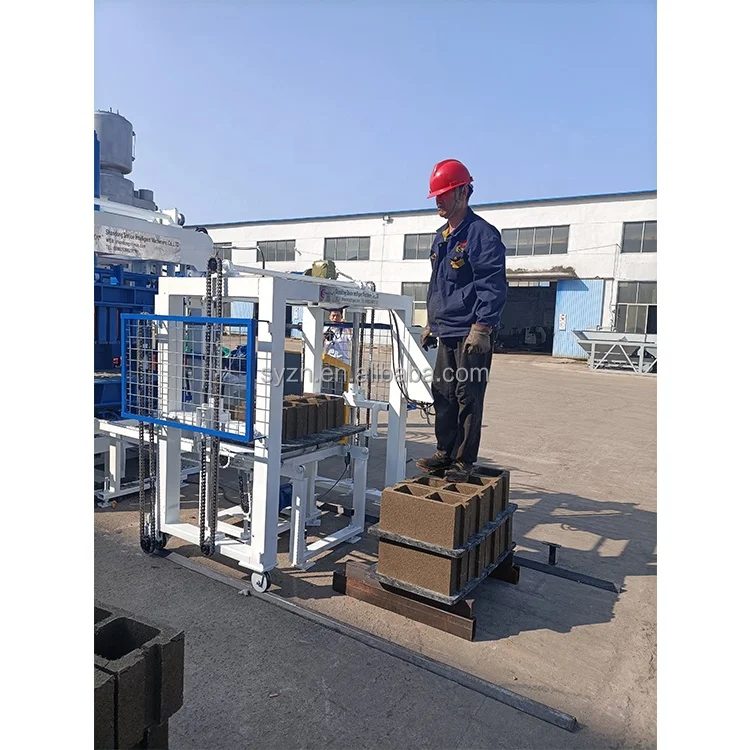
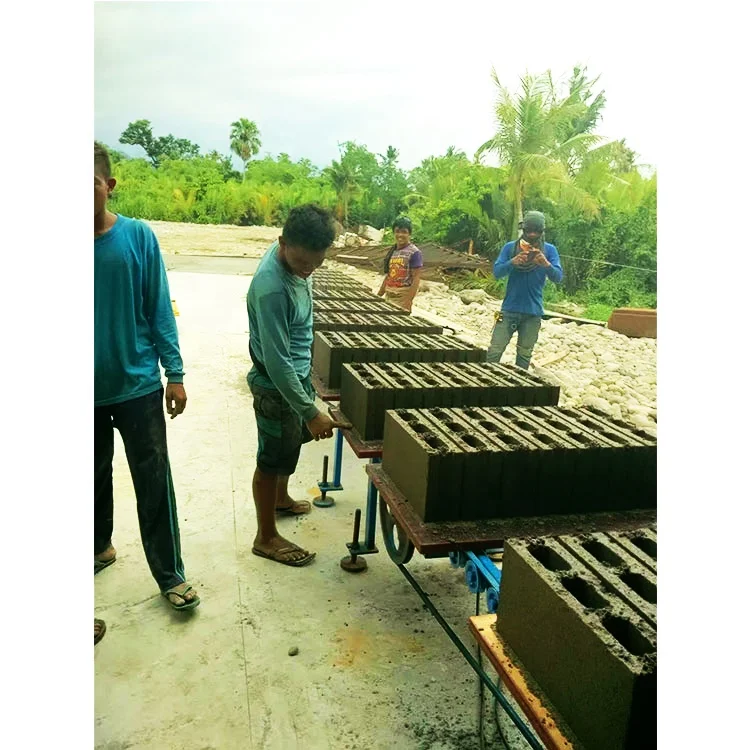
Matched System Sizing — every pallet, mould and handling element is specified around the block format you actually sell, not a catalogue default.
Technical Specifications
| Parameter |
Value |
| Model |
QTJ4-25 |
| Product Type |
Automatic Concrete Block Making Machine |
| Overall Dimensions (L×W×H) |
6400×1500×2700 mm |
| Molding Cycle |
25 s |
| Vibration Frequency |
2800–5100 r/min |
| Exciting Force |
60 kN |
| Rated Power |
17.9 kW |
| Mixer Model |
JQ350 |
| Pallet Size |
850×550×20 mm |
| Net Weight |
2500 kg |
| Applied Products |
Concrete hollow blocks (8 inch, 6 inch), solid bricks |
| Raw Materials |
Crushed stone, sand, cement, dust, fly ash |
| Control System |
PLC |
| Automation Level |
Automatic plate-supplying, material-disturbing, brick-discharging |
| Vibration Type |
Flat vibration with squeeze compression |
| Output Capacity (390×190×190 mm hollow block) |
480 pcs/h, 3800 pcs/8hr |
| Output Capacity (400×150×200 mm hollow block) |
600 pcs/h, 4800 pcs/8hr |
| Output Capacity (240×115×53 mm solid brick) |
2100 pcs/h, 17000 pcs/8hr |
| Voltage & Frequency |
Configurable — confirm before production |
| PLC Display Language |
Configurable — confirm before production |
Application Suitability
| Application |
Material or Output |
| First-time block plant setup |
Crushed stone, sand, cement and fly ash for hollow block and solid brick production |
| On-site block production by construction contractors |
Hollow block (8 inch, 6 inch) using locally sourced aggregate within a compact footprint |
| Product range expansion for building material distributors |
Adding 240×115×53 mm solid brick alongside standard hollow block formats |
| Small to medium concrete block production plants |
Continuous daily runs targeting regional building material markets |
Why "Pieces per Hour" Means Nothing Without a Block Format
A single cycle time produces vastly different daily totals depending on which mould sits on the machine.
I have watched buyers receive a QTJ4-25 automatic block machine manufacturer quotation promising high throughput, only to discover the number assumed solid brick while their market demanded hollow block. The real output dropped to a fraction of expectation [NEED_CITE: typical output variance across block formats on the same press]. Capacity must be quoted per format, with the mould and block dimensions stated beside the figure, so the buyer can plan labour, pallets and curing space accurately.
Where the QTJ4-25 Sits in the Full Range
The QTJ4-25 occupies the entry-automatic tier within the complete block machine range. It introduces PLC-controlled automatic plate-supplying, material-disturbing and brick-discharging — the functions that remove manual pallet handling from the operator’s shift. For a buyer surveying options between semi-automatic, automatic and mobile tiers, this model represents the point where automation begins without requiring a large plant footprint or the investment level of a high-capacity line.
How the Tiers Relate to Plant Footprint
Semi-automatic machines demand less floor area but require manual pallet movement between press and curing zone. The QTJ4-25 automatic block machine manufacturer configuration adds automated pallet feeding and brick discharge, which increases the line length but reduces headcount per shift. Mobile and egg-laying machines eliminate pallets entirely by curing blocks on the ground, trading format flexibility for lower capital outlay. Understanding these trade-offs before selecting a tier prevents costly site reconfiguration after delivery [NEED_CITE: plant layout requirements by automation tier].

Matching Vibration Force to Block Density Requirements
The flat vibration system with squeeze compression operates at 2800–5100 r/min with an exciting force of 60 kN. This combination targets blocks of average density and high strength — suitable for load-bearing hollow blocks where structural standards demand consistent compressive values. The vibration frequency range allows adjustment when switching between hollow block and solid brick formats, since solid brick requires shorter vibration exposure at the same exciting force to achieve adequate compaction across a thinner cross-section.
Pallet Size and Curing Area Coordination
The specified pallet size of 850×550×20 mm must align with the buyer’s existing curing racks and forklift dimensions. A pallet chosen without this coordination forces the buyer to either replace curing infrastructure or handle output manually — negating the automation investment. The 17.9 kW rated power covers the full cycle including mixer operation through the JQ350, but power draw during simultaneous vibration and hydraulic actuation requires dedicated circuit capacity confirmed against local supply [NEED_CITE: electrical supply requirements for block making machinery installation].
What Happens When Configuration Is Skipped
A machine configured for a mix design the buyer cannot source locally forces a costly material change or produces blocks that fail compressive strength tests. Mould change time that consumes most of a shift cancels the format flexibility the buyer paid for. Voltage and PLC display language left unconfirmed delay commissioning by weeks after the machine arrives on site. These issues are not equipment failures — they are specification gaps that surface only after production begins.
What a Matched-System Approach Delivers
The QTJ4-25 is specified as one system: machine, mould, pallet and handling equipment configured against the buyer’s target block format and local aggregate. Capacity calculations state the exact block dimensions assumed for each output figure, so daily planning starts from a real number. Mould options cover the formats the buyer’s market actually sells, with custom design available from buyer drawings. Automation level is selectable, meaning a buyer can commission the QTJ4-25 in semi-automatic mode and add automatic stacking later.
Documentation & Verification
- Line layout drawing with capacity stated per specific block format and mould combination
- Machine specification sheet with voltage, frequency and PLC language confirmed in writing
- Mould drawing and format list matching the buyer’s local market block sizes
- Factory test record with pallet and block samples photographed before dispatch
- Operation and maintenance manual written for the confirmed PLC display language
- Wear parts and mould list with part numbers for first replacement order
Installation, Commissioning & Support
- Foundation requirements based on 6400×1500 mm footprint and 2500 kg net weight
- Dedicated electrical circuit sized for 17.9 kW rated power including JQ350 mixer draw
- Voltage and frequency verified against local grid before production begins
- PLC display language set and operator training delivered in confirmed language
- Mould change procedure demonstrated on-site with buyer’s specific format set
- First replacement cycle for vibration components and hydraulic wear parts scheduled
What We Need to Build Your Quotation
Send your target block format with exact dimensions, the daily output you need in that format, and the raw materials available at your site including aggregate type and grading. Confirm your local voltage, frequency and preferred PLC display language. If you have existing curing racks or forklifts, share their dimensions so the pallet specification matches your current handling setup.
Frequently Asked Questions
Q: How does the QTJ4-25 fit within the full block machine range compared to semi-automatic and mobile tiers?
A: The QTJ4-25 sits at the entry-automatic level, adding PLC-controlled pallet feeding and brick discharge that semi-automatic models omit. Mobile tiers eliminate pallets entirely for on-site ground curing. This model suits buyers who need format flexibility and consistent cycle execution without the investment of a high-capacity fully automatic line.
Q: What block formats does the capacity table assume, and how does real daily output compare?
A: Each output figure is tied to a specific block size — 480 pcs/h for 390×190×190 mm hollow block, 600 pcs/h for 400×150×200 mm hollow block, and 2100 pcs/h for 240×115×53 mm solid brick. Real daily output depends on shift length, mould changes and material flow continuity across the full line.
Q: What plant footprint and investment level does the QTJ4-25 tier require?
A: The machine itself measures 6400×1500×2700 mm, but the total line footprint includes pallet return path, curing rack area and raw material storage. The entry-automatic tier requires moderate floor space compared to semi-automatic setups while remaining accessible for first-time plant buyers.
Q: Can I start with semi-automatic operation and upgrade automation later?
A: Yes. The automation level is selectable at commissioning, and the QTJ4-25 can be configured for semi-automatic pallet handling initially. Automatic stacking and cubing functions can be added as production volume grows, protecting the initial investment while leaving an upgrade path open.
Q: Are moulds, pallets and handling equipment specified as one system or sourced separately?
A: Everything is specified as a matched system — machine, mould, pallet and handling equipment are configured together against your target block format and local conditions. This prevents the mismatch that occurs when components are assembled from separate suppliers without coordination of cycle times and dimensions.

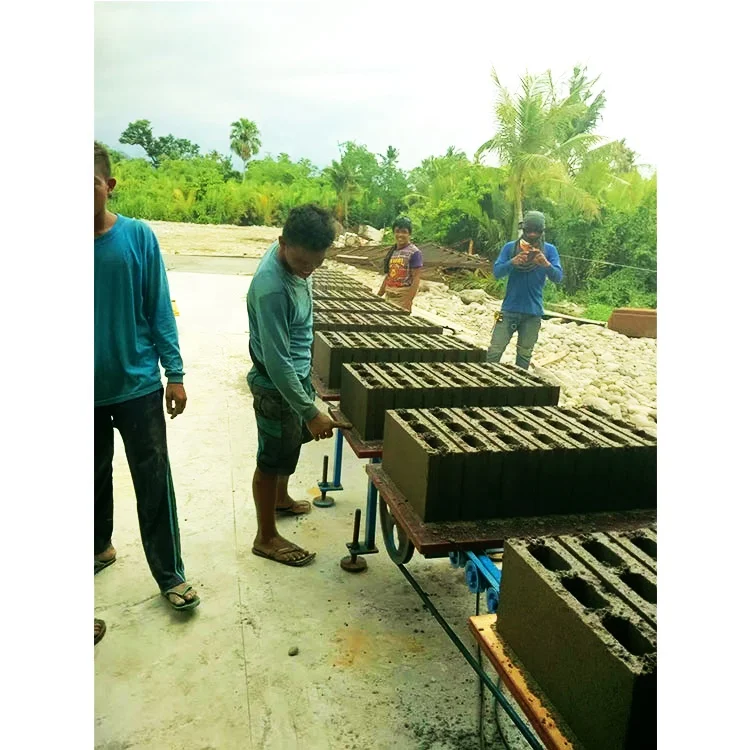
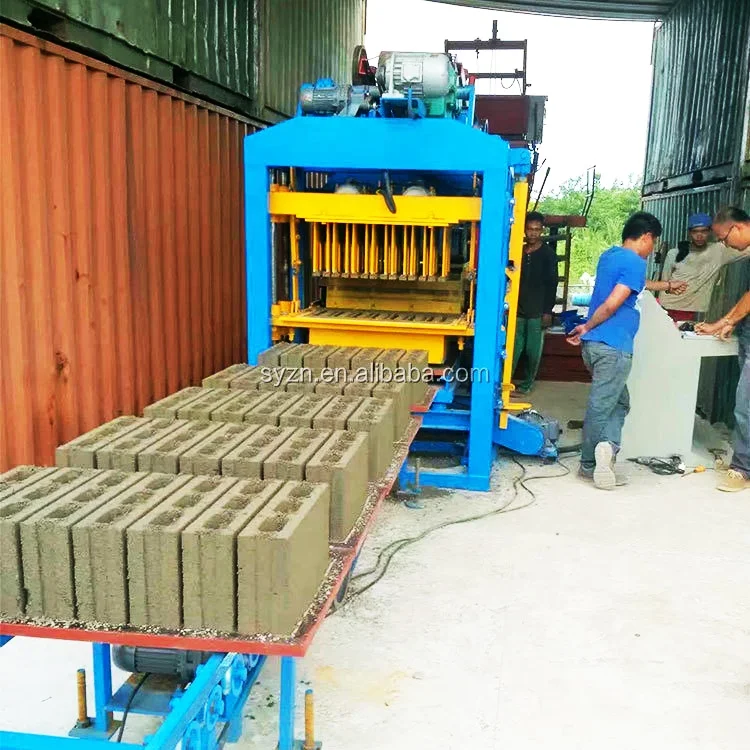 High quality block machine