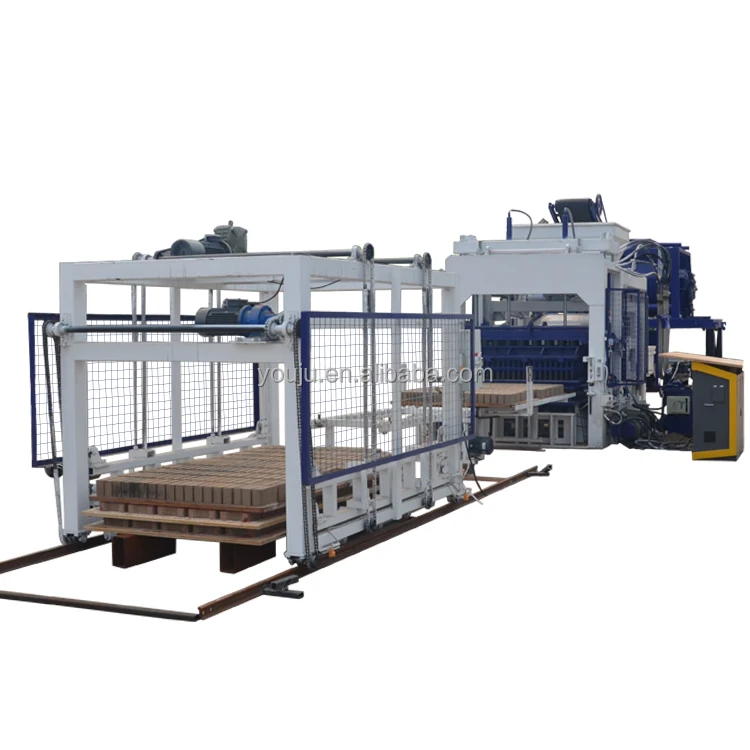
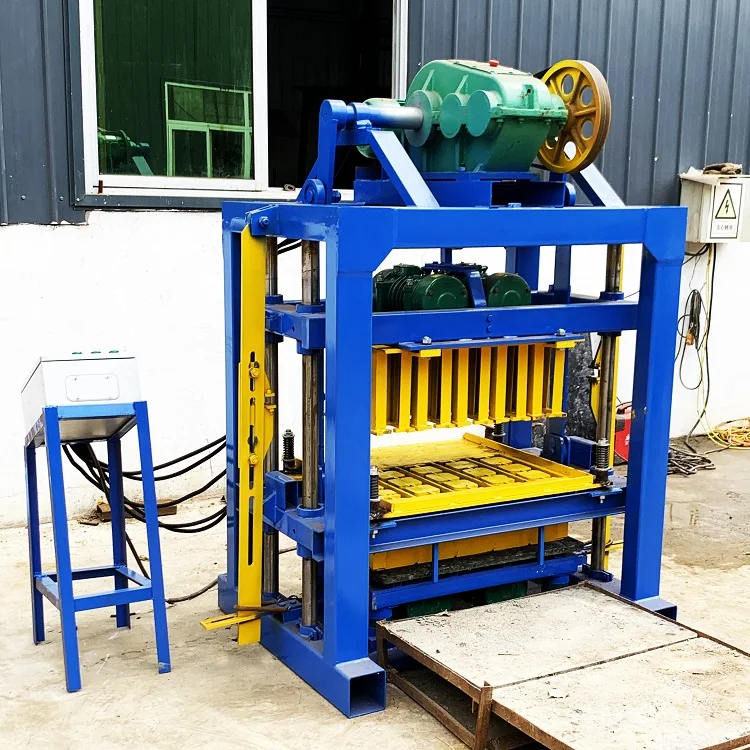
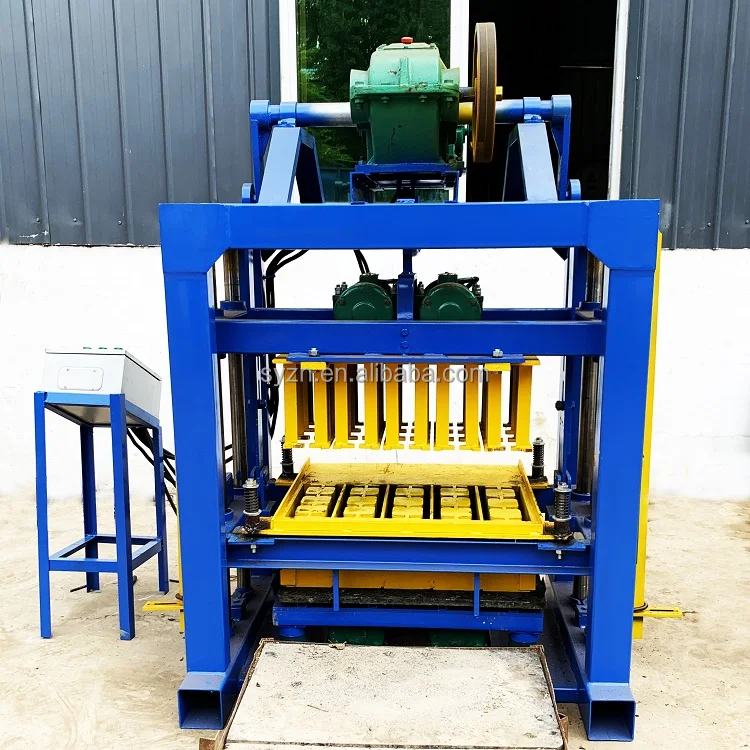
Mid-Tier Automatic Line — the QT5-15 sits between entry-level and high-capacity tiers, sized for buyers scaling up without overbuilding their plant footprint.
Technical Specifications
| Parameter |
Value |
| Model |
QT5-15 |
| Product Type |
Automatic Concrete Block Making Machine |
| Overall Dimensions (L×W×H) |
7400 × 1950 × 2800 mm |
| Rated Pressure |
21 MPa |
| Main Vibration Form |
Platform Vibration |
| Vibration Frequency |
2800–4500 r/min |
| Pallet Size |
1100 × 550 mm |
| Molding Cycle |
15–25 s |
| Overall Power |
26.5 kW |
| Demolding Method |
Hydraulic |
| Output Capacity — Hollow Brick |
1800 pcs/h (basis: 400×200×200 mm, 5 pcs/mould, 16–20 s cycle) |
| Output Capacity — Hollow Block |
1300 pcs/h (basis: 400×150×200 mm, 6 pcs/mould, 15–20 s cycle) |
| Output Capacity — S Paver |
3700 pcs/h (basis: 225×112.5×60 mm, 16 pcs/mould, 15–17 s cycle) |
| Applied Products |
Concrete blocks, hollow/solid blocks, pavers, interlocking blocks, curbstone, colored pavers |
| Raw Material |
Crushed stone, sand, cement, dust, fly ash, gravel, slag |
| Standard |
CE |
Application Suitability
| Application |
Material or Output |
| Hollow block production for housing projects |
Crushed stone, sand, cement, fly ash blends |
| Solid load-bearing block manufacturing |
Gravel, cement, and slag mixes |
| Interlocking paver and colored paver runs |
Fine sand, cement, pigment, and dust aggregates |
| Kerbstone and curb production for infrastructure |
Coarse aggregate and cement at higher pressure settings |
| On-site block production for development contractors |
Locally sourced gravel and sand with cement binder |
What "1800 Blocks per Hour" Actually Means for Your Plant
Capacity numbers only matter when you know exactly which block format and cycle time produced them.
Many buyers receive a single headline figure for an automatic concrete block making machine for sale and assume it applies across every mould they plan to run. In practice, a machine that cycles 400×200×200 mm hollow bricks at 1800 pieces per hour will produce a completely different daily total when you switch to smaller pavers or taller kerbstones. The mould cavity count, the cycle duration, and the curing time all shift [NEED_CITE: block format impact on daily output calculation]. I once saw a buyer plan an entire housing project schedule around a catalogue number, only to discover the real output on their specified block format was nearly half. That mismatch delays projects and erodes trust with end buyers.

Where the QT5-15 Fits in the Full Machine Range
The QT5-15 occupies the middle tier of Shiyue’s stationary automatic block machine lineup. Below it, semi-automatic models serve smaller workshops with lower capital outlay but higher labour dependence. Above it, higher-capacity lines handle the volumes demanded by large-scale paver plants and continuous-shift operations. This model targets buyers who have outgrown entry-level equipment and need consistent output across multiple block formats without committing to a full high-capacity line. The 7400 mm machine length keeps the plant footprint manageable for first-time automatic concrete block making machine for sale buyers while still accommodating the pallet feed and block ejection stations required for steady production.
Choosing Between Automation Tiers Before You Commit
Automation level determines not just how many operators you need on the floor, but also how your plant can grow over time. The QT5-15 is configurable across automation levels, meaning a buyer can start with manual pallet handling and add automatic stacking or cubing modules later as production volume justifies the investment [NEED_CITE: automation upgrade paths in block production]. This staged approach matters for entrepreneurs building their first block plant and for established manufacturers adding a new format line without disrupting their existing operation. The decision between tiers should be driven by your daily output target, your available labour pool, and whether your curing area can absorb the pace the press delivers.
Reading the Specs That Actually Shape Your Daily Output
The 21 MPa rated pressure combined with platform vibration at 2800–4500 r/min determines how densely the raw mix is compacted into each mould cavity. Higher vibration frequency suits finer aggregates like fly ash and dust, while coarser crushed stone benefits from lower frequency with longer dwell time. The 1100 × 550 mm pallet size is not arbitrary — it must match the curing racks and forklifts already in your yard, or you face the cost of replacing your entire handling infrastructure. The 15–25 second molding cycle range reflects the spread between a simple hollow block and a more complex interlocking paver; each format demands a different vibration profile and pressure hold duration to achieve target strength.
The Cost of Skipping the Configuration Conversation
When a buyer selects a pallet size without checking their curing rack spacing, the entire post-press handling chain breaks down. Blocks pile up on the floor because they cannot be racked, and output drops to whatever the manual crew can move. Similarly, when vibration frequency is set to a catalogue default rather than matched to the buyer’s local aggregate, block strength becomes inconsistent — some batches pass compression tests while others crumble during transport [NEED_CITE: aggregate variability and block compressive strength]. These are not warranty issues; they are configuration failures that surface weeks after commissioning, when the supplier has already left the site.
Why Buyers Source This Tier from Shiyue
Block machinery is the single focus of this operation, so the press, mould, pallet, and handling equipment are specified as one matched system rather than assembled from unrelated suppliers. Every configuration is set against the buyer’s actual mix design and local aggregate, not pulled from a catalogue default. Mould design covers the formats your market actually sells, with custom drawings available when standard options do not fit. The automation level is selectable, so you can start at a point that matches your current volume and upgrade modules as demand grows. Installation includes commissioning support and operator training so the machine runs correctly from the first shift.
Documentation & Verification
- Line layout and capacity calculation stating the exact block format behind each output figure
- Machine specification sheet with confirmed voltage, frequency, and PLC display language
- Mould drawing and format list showing all available and custom cavity designs
- Factory test record with photographs taken before container loading
Installation, Commissioning & Support
- Foundation must support the 7400 mm frame length with level tolerance for platform vibration stability
- Dedicated power circuit rated for 26.5 kW total draw with voltage and frequency confirmed before production
- Machine ships dismantled for container loading and requires on-site reassembly of vibration platform and hydraulic unit
- Commissioning includes vibration frequency tuning to match your local aggregate and mix design
- Operator training covers mould change procedure, cycle time adjustment, and daily maintenance checkpoints
- Wear parts list and hydraulic seal kit provided for first replacement cycle
What to Prepare Before Requesting a Quotation
Send your target block formats with dimensions, the daily output you need per format, and a sample or lab report of your local raw materials. Confirm your site voltage, frequency, and the language your operators need on the control display. If you already have curing racks, forklifts, or a mixer in place, share their specifications so the pallet size and line layout can be matched to your existing equipment.
Frequently Asked Questions
Q: How is the output capacity calculated, and which block format does each figure assume?
A: Each capacity figure on this page states the exact block dimensions, mould cavity count, and cycle time range used for the calculation. For example, 1800 pieces per hour assumes 400×200×200 mm hollow bricks with five cavities per mould and a 16–20 second cycle. Your actual output on a different format will differ, and we provide a per-format capacity sheet before you commit.
Q: Can I start with semi-automatic operation and add automation later?
A: Yes. The QT5-15 is available with selectable automation levels, allowing you to begin with manual pallet handling and add automatic stacking or cubing modules as your production volume grows. This staged approach keeps initial investment aligned with your current daily output target and local labour availability.
Q: What voltage and control language options are available?
A: Voltage and frequency are configured to match your site supply before production begins, and the PLC display language is set to your operator preference. We confirm both in writing during the quotation stage so there are no commissioning delays when the automatic concrete block making machine for sale arrives at your plant.
Q: How do I choose the right pallet size for my operation?
A: The standard pallet for the QT5-15 is 1100 × 550 mm, but the right choice depends on your existing curing rack dimensions and forklift capacity. We cross-check your handling equipment specifications during configuration to ensure the pallets move smoothly from press to curing area without requiring new infrastructure.
Q: Is pallet handling and stacking equipment included in the quotation?
A: The quotation specifies exactly which stations are included — raw material feeding, mixing, pallet feeding, stacking, and curing rack handling can all be part of the line. We list each station separately so you know what is covered and what you are supplying from your own equipment before the order is placed.

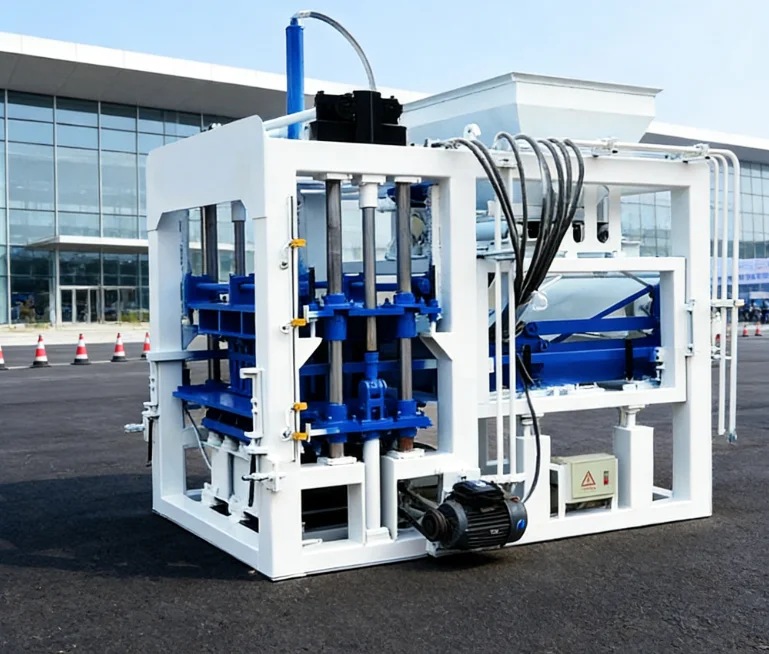
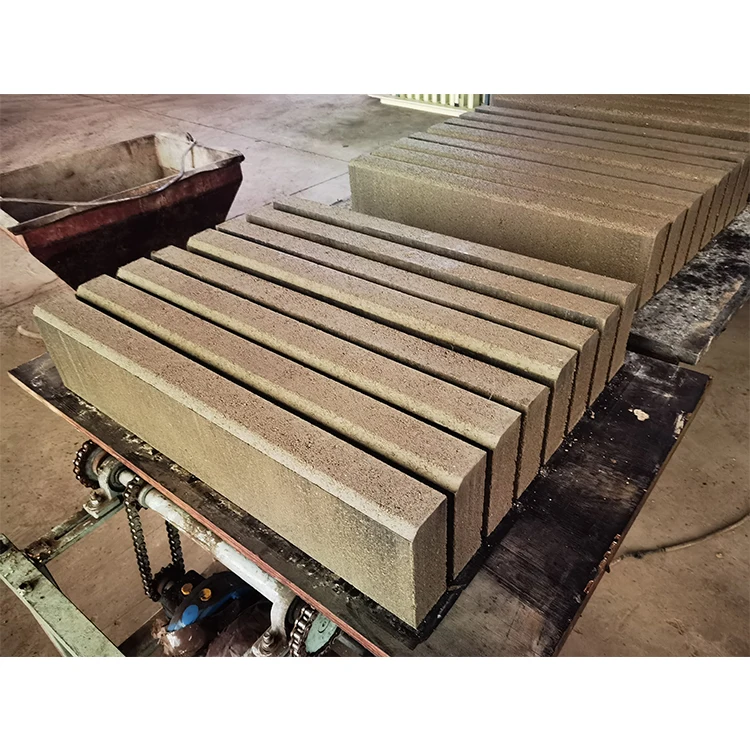 Stationary block machine