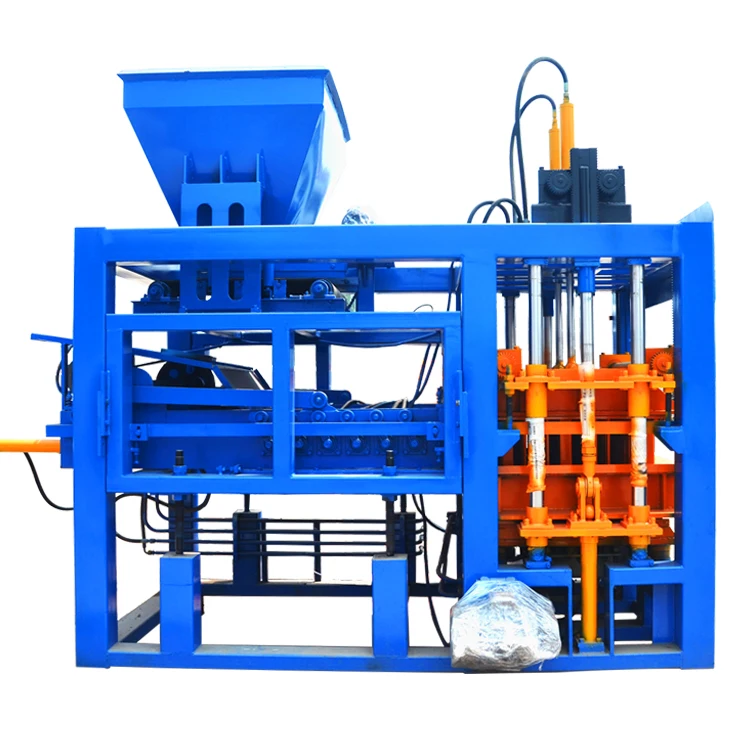
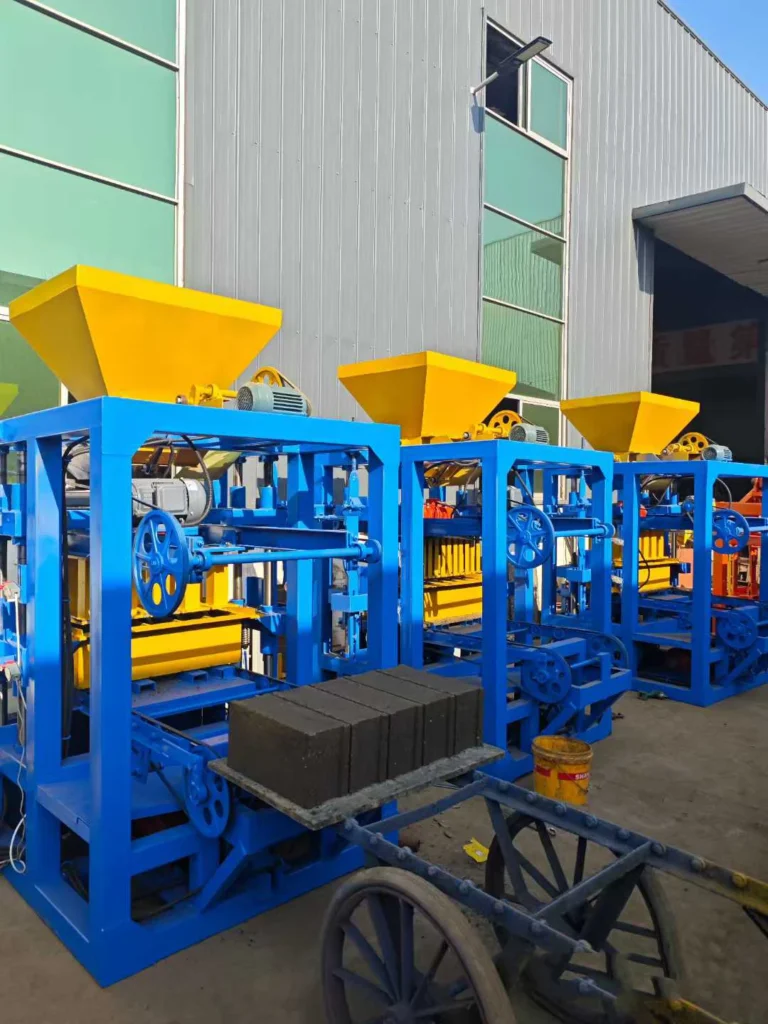
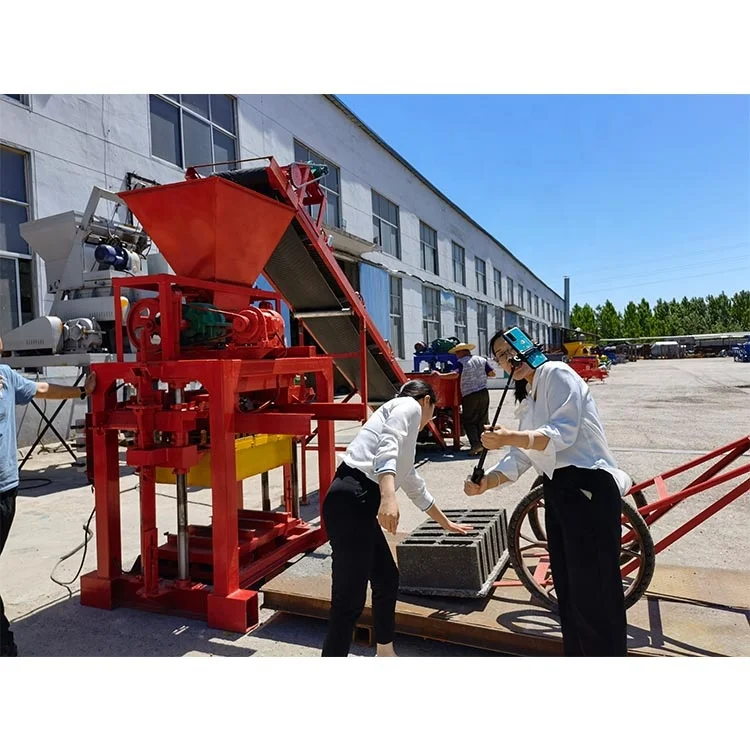
Matched System Sizing — We configure the QT8-15 hydraulic pressure, vibration force, and pallet dimensions as one coordinated unit against your specific block format and local aggregate, not from a generic catalog default.
Technical Specifications
| Parameter |
Value |
| Model |
QT8-15 |
| Product Type |
Fully Automatic Hydraulic Block Making Machine |
| Overall Dimensions (L×W×H) |
8300×1860×3000 mm |
| Rated Hydraulic Pressure |
21 MPa |
| Main Vibration Form |
Platform vibration |
| Vibration Frequency Range |
2800~4500 r/min |
| Vibration Force |
45 kN |
| Pallet Size |
950×900 mm |
| Molding Cycle |
15-25 s (basis not stated in source — confirm block format / material / thickness) |
| Overall Power |
55.5 kW |
| Total Mass |
9 T |
| Demolding Method |
Hydraulic |
| Recommended Factory Area |
500 m² |
| Control System |
Computer controlled, fully automatic (PLC brand / language to be confirmed) |
| Voltage & Frequency |
To be confirmed before ordering |
| Applied Products |
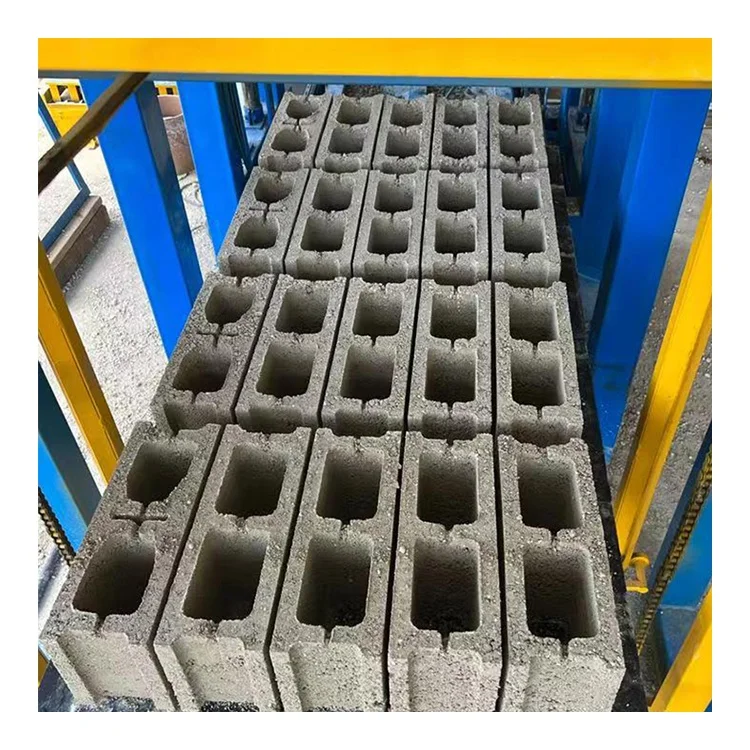
Concrete blocks, hollow/solid blocks, pavers, interlocking blocks, curbstone, colored pavers |
| Automation Level |
Fully automatic |
| Standards |
CE, ISO 9001 |
| Warranty |
1-year guarantee for the whole machine |
Application Suitability
| Application |
Material or Output |
| Hollow block production |
Crushed stone, sand, cement, fly ash |
| Solid block manufacturing |
Gravel, slag, cement blends |
| Interlocking paver production |
Colored concrete mixes with fine aggregate |
| Curbstone forming |
High-density concrete with coarse aggregate |
| Porous permeable brick |
Open-graded aggregate with controlled cement ratio |
What "Cycles per Hour" Leaves Out When Sizing a Fully Automatic Hydraulic Block Making Machine Manufacturer
A molding cycle quoted without naming the block format it assumes is not a capacity figure — it is a starting point for calculation.
I learned this the hard way on a Middle East project years ago. A client ordered a stationary block machine based on a sample capacity number. The local aggregate had high clay content, and the vibration parameters had to be completely reworked on site. Daily output ended up at roughly half the catalog claim, and the client nearly refused acceptance. Since then, I never quote a fully automatic hydraulic block making machine manufacturer without first running trial blocks with the buyer’s actual raw material [NEED_CITE: aggregate testing protocols for concrete block production]. The QT8-15’s 15–25 second cycle range is only meaningful once we lock in the format, wall thickness, and mix design you will actually run.

Positioning the QT8-15 Across the Stationary Machine Range
The QT8-15 occupies the upper-mid tier in our stationary lineup, sitting between the smaller semi-automatic models and the high-capacity automatic lines like the QT10-15 class. Buyers evaluating a first plant or replacing an aging press use this tier to balance output ambition with site footprint. The 950×900 mm pallet and 500 m² recommended factory area define the physical envelope, letting you compare investment level before committing to a configuration. As a fully automatic hydraulic block making machine manufacturer, we map every tier against the format mix your market actually buys.
How the Automation Tier Affects Your Labor and Line Layout
At the QT8-15 level, computer-controlled operation manages the full press cycle, pallet indexing, and material feed timing. This removes the operator from manual pallet handling and lets the press run continuously within its cycle window. The distinction matters when you compare it to a semi-automatic tier where an operator must load and retrieve pallets by hand [NEED_CITE: automation level comparison in block plant operations]. Starting at the QT8-15 tier also leaves an upgrade path open — a buyer can begin with manual stacking and add automatic cubing later once production volume justifies the additional station.
Reading the Specs That Actually Shape Your Output
The 21 MPa rated hydraulic pressure and 45 kN platform vibration force work together to determine block density and green strength. Pressure alone does not guarantee a strong block; the vibration must fluidize the mix so the hydraulic head can compact it uniformly. If your local aggregate is angular and poorly graded, the vibration frequency range of 2800–4500 r/min gives the commissioning technician room to find the right resonance for your specific mix. The 9 T machine mass anchors the platform during high-frequency vibration, reducing energy loss into the foundation. Pallet size of 950×900 mm must match the curing racks and forklifts already in your yard — specifying a pallet from a catalog default creates a handling mismatch that slows the entire line [NEED_CITE: pallet handling logistics in block curing yards].
The Hidden Cost of Skipping Configuration Alignment
When a machine arrives configured for a mix the buyer cannot source locally, the first weeks of production become an expensive material experiment. Pallet handling, stacking, and curing left out of the quotation means output piles up on the floor waiting for manual labor. Voltage, frequency, and PLC display language unconfirmed before shipment delay commissioning by days or weeks while transformers and translators are arranged. Mould change systems that require most of a shift negate the format flexibility the buyer paid for. Every one of these issues traces back to a quotation that listed a press in isolation instead of a matched line [NEED_CITE: common commissioning delays in imported block machinery].
Why Source the QT8-15 Through Our Range
Block machinery is our single focus, which means the press, mould, pallet, and handling equipment are specified as one system rather than assembled from separate suppliers. We set the QT8-15 configuration against your actual mix design and local aggregate, not a default table. Mould design covers the formats your market sells, including custom drawings when standard options do not match. The automation level is selectable so you can start at the QT8-15 tier and add stations as demand grows. Installation and commissioning include operator training on your specific mould set and mix recipe.
Documentation & Verification
- Line layout showing QT8-15 capacity calculation with assumed block format stated
- Machine specification sheet confirming voltage, frequency, and PLC language before production
- Mould drawing and format list matched to your target product range
- Factory test record with the QT8-15 running your chosen mould format before dispatch
- Pallet specification aligned to your existing curing racks and forklift capacity
Installation, Commissioning & Support
- Foundation plan sized for the QT8-15’s 9 T mass and platform vibration load
- Dedicated power circuit matched to the confirmed voltage and 55.5 kW overall power draw
- Assembly sequence for the 8300 mm machine length within your 500 m² factory area
- On-site vibration frequency tuning against your local aggregate and mix design
- Operator training covering PLC interface language and mould change procedure
- Wear parts and hydraulic seal list provided with first shipment for planned maintenance
What to Include in Your Inquiry
Send us the block formats your market demands, including dimensions and daily volume targets. Tell us about your local aggregate source and any cement or fly ash suppliers you plan to use. Share your available factory footprint, ceiling height, existing curing area layout, and the voltage and frequency standard at your site.
Frequently Asked Questions
Q: Where does the QT8-15 sit compared to smaller and larger models in the stationary range?
A: The QT8-15 occupies the upper-mid tier, above the QT6-15 class and below high-capacity lines. It suits buyers who need consistent volume beyond a small workshop but are not yet ready for a full-scale automatic plant. The 950×900 mm pallet and 500 m² footprint define the investment bracket.
Q: What factory area and budget should I plan for the QT8-15 tier?
A: The recommended factory area is 500 m², which covers the press, material feed, pallet circulation, and a basic curing zone. Budget should also account for pallet inventory, a forklift suited to the pallet size, and power supply work to deliver the confirmed voltage to a 55.5 kW load.
Q: Can I begin with semi-automatic operation and add automation later?
A: Yes. The QT8-15 platform supports a selectable automation level. You can start with manual pallet handling and stacking, then add automatic pallet feeding and cubing stations as production volume grows, without replacing the core press.
Q: How is daily output calculated and which block format does it assume?
A: Daily output depends on the molding cycle for your specific block format, wall thickness, and mix design. The 15–25 second cycle range is a starting point. We provide a capacity calculation that names the exact format assumed, so the figure reflects what the machine will actually produce in your plant.
Q: Which pallet sizes are available across the stationary range and how do I pick the right one?
A: Pallet sizes vary by machine tier. The QT8-15 uses a 950×900 mm pallet. Selection must account for your curing rack dimensions and forklift capacity. Choosing a pallet without this check creates handling bottlenecks that slow the entire line.

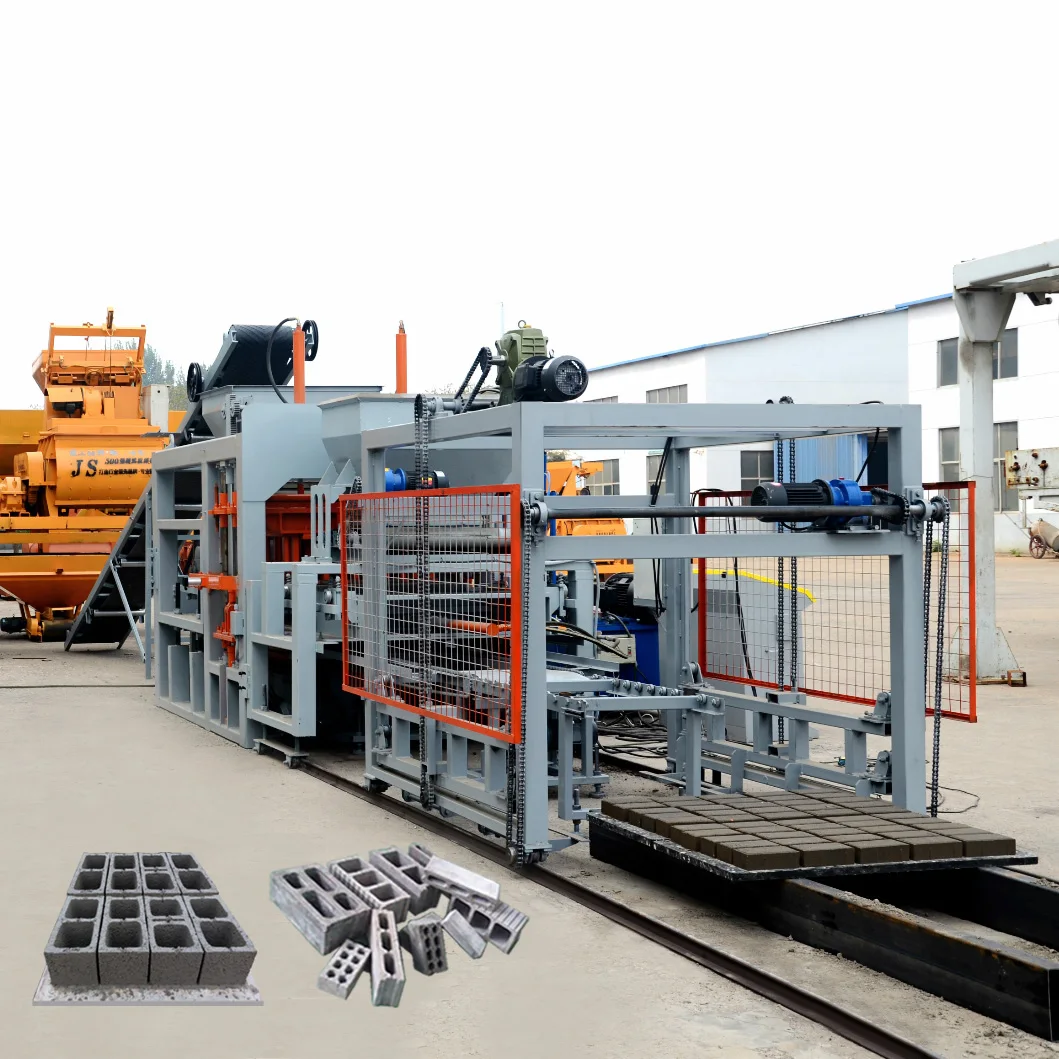
 Stationary block machine