

4-Máquina de Bloques con Motor de Vibración: Por qué más motores significan mejor calidad
Más motores de vibración no solo añaden potencia, sino que eliminan los puntos débiles que hacen que los bloques fallen en las pruebas de estrés. Una configuración de 4 motores distribuye la fuerza de compactación de manera uniforme a través de toda la cavidad del molde, produciendo bloques con densidad y resistencia a la compresión consistentes que las máquinas de 2 motores no pueden lograr físicamente.
Una máquina de bloques con motor de 4 vibraciones produce bloques con hasta un 87% más de resistencia a la compresión, una uniformidad de densidad un 18% mayor y un consumo energético máximo un 12% menor en comparación con configuraciones convencionales de 2 motores, lo que la convierte en la mejora más impactante para los fabricantes que buscan la certificación de códigos de construcción internacionales.
En mis años evaluando líneas de producción de bloques de concreto en África Occidental, América Latina y el Sudeste Asiático, he visto a clientes gastar miles de dólares en aditivos para cemento y mejoras en el curado mientras ignoran la causa raíz de la calidad inconsistente de los bloques: la compactación por vibración desigual. Un cliente de África Occidental que actualizó de un sistema de 2 motores a uno de 4 motores vio cómo la resistencia a la compresión saltó de 8 Desglosemos exactamente por qué el conteo de motores es importante, cómo se ve el verdadero retorno de inversión y cómo elegir un proveedor que entregue esta configuración correctamente.
¿Qué hace exactamente un motor de vibración en una máquina de bloques?
Los motores de vibración son el corazón de cualquier máquina de bloques: compactan la mezcla de concreto dentro del molde, y el número y la ubicación de esos motores determinan directamente la uniformidad de la densidad y la resistencia final del bloque. Sin una vibración adecuada, el concreto retiene bolsas de aire que se convierten en puntos débiles estructurales; con una vibración mal distribuida, algunas áreas se compactan en exceso mientras que otras permanecen porosas, creando bloques que fallan de manera impredecible bajo carga.
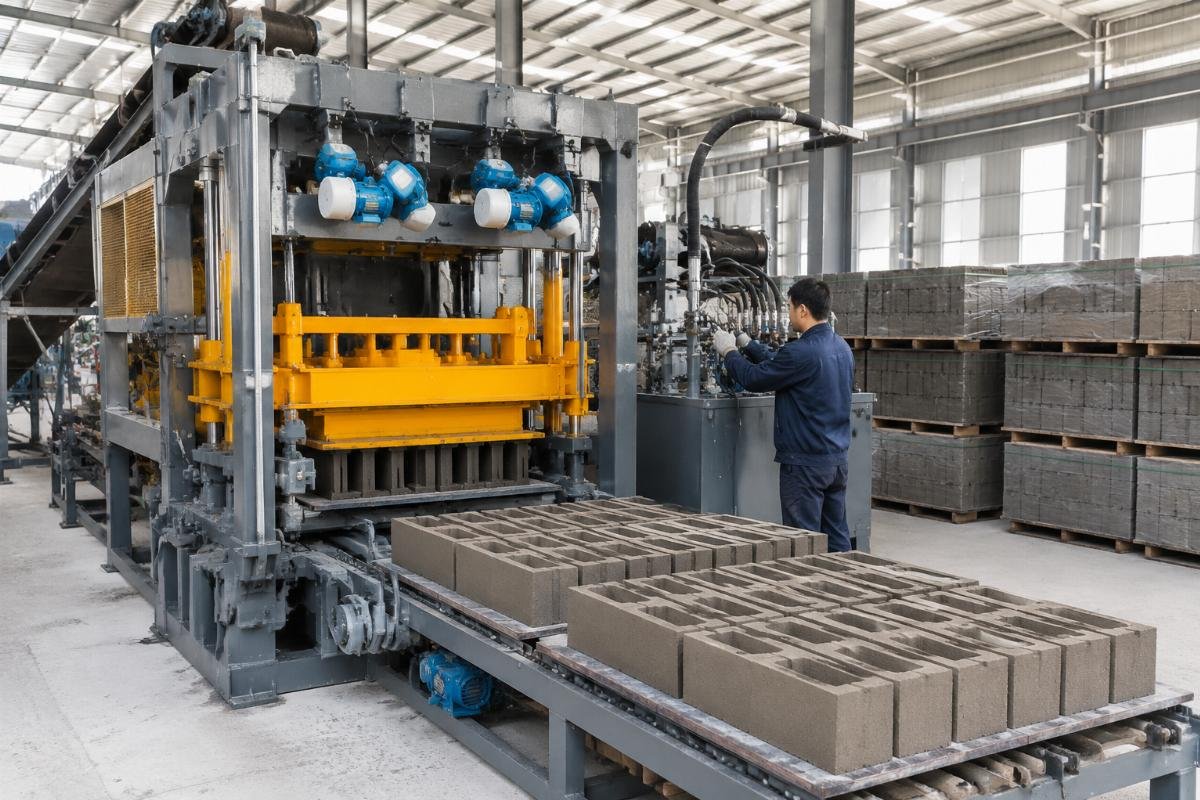
Una fábrica de bloques en el sudeste asiático para la que consulté estaba produciendo 8,000 bloques huecos estándar por día en una máquina de 2 motores. Su tasa de rechazo en las pruebas de resistencia a la compresión rondaba el 14%, lo que les costaba aproximadamente $2,100 al mes en cemento y mano de obra desperdiciados. Después de cambiar a un sistema de 4 motores con suspensión de bolsa de aire, su tasa de rechazo cayó al 2.3%, el ruido en el taller disminuyó de 92 dB a 60 dB, y las fallas mecánicas relacionadas con la vibración disminuyeron en un 40% durante un período de 12 meses Una máquina de bloques de 4 motores con suspensión de bolsa de aire reduce los niveles de ruido en el taller hasta en 35 dB y disminuye las fallas mecánicas relacionadas con la vibración en un 40% dentro de los primeros 12 meses de operación.[^3].
Mapea la superficie de su molde – Utilice un medidor de amplitud de vibración para medir la fuerza de compactación en un mínimo de 9 puntos de la cuadrícula a través del molde antes y después de cualquier actualización del motor.
Auditoría de Colocación de Motores – Confirme que los motores estén posicionados en las cuatro esquinas de la mesa del molde para maximizar la superposición de los campos de vibración.
Verificar el Desfase de Fase – Solicite diagramas de cableado a su proveedor que muestren el desfase de 90° entre los motores; esto es innegociable para una compactación uniforme.
Tasas de Rechazo de Referencia – Realice un seguimiento de su tasa de rechazo mensual de bloques durante 90 días antes y después de la actualización para cuantificar la mejora de calidad en el mundo real.
¿Por qué agregar más motores mejora realmente la calidad del bloque?
La física es sencilla: cuatro motores crean campos de vibración superpuestos que eliminan zonas de baja densidad, produciendo bloques con una resistencia uniforme y significativamente menos micro-grietas. Cuando las ondas de vibración de múltiples motores se intersectan, se refuerzan entre sí en áreas previamente débiles—un fenómeno llamado interferencia constructiva—mientras que cancelan naturalmente los patrones de resonancia destructiva que dañan el marco de la máquina.
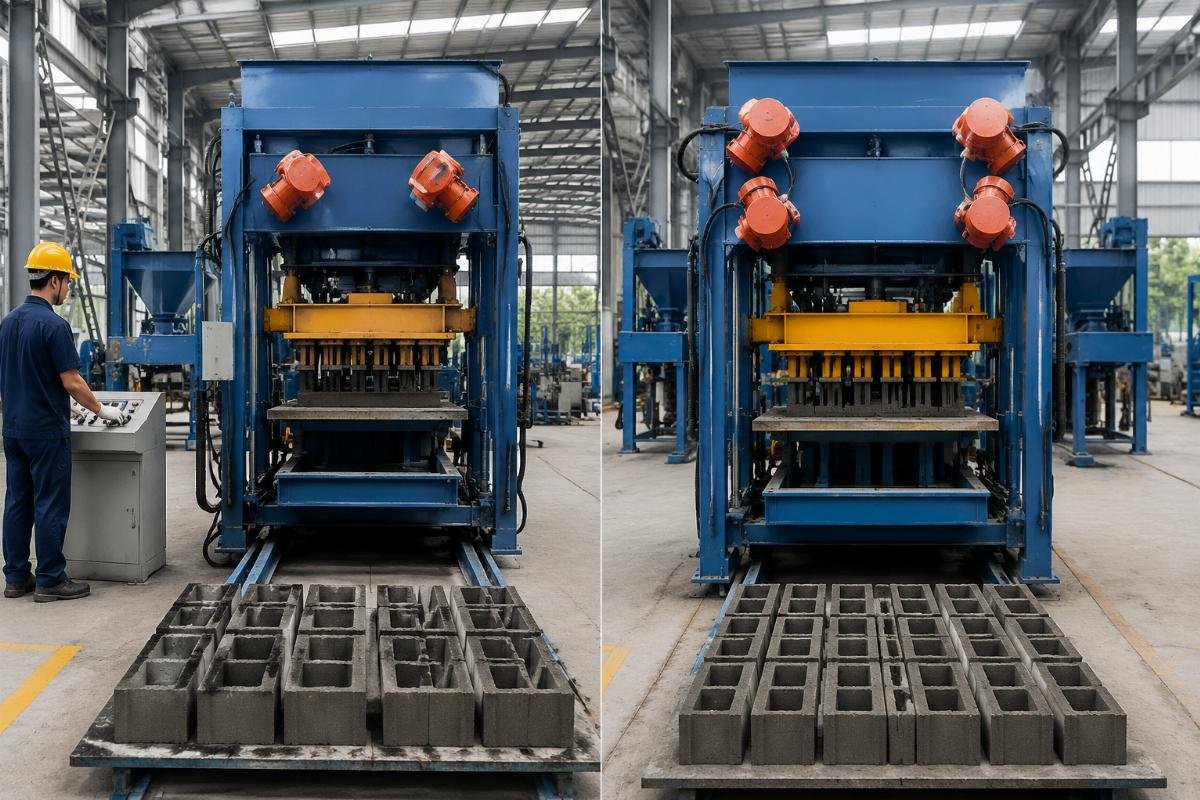
Un contratista de América Latina que produce 10,000 bloques por día en una línea de 2 motores heredada estaba gastando $0.048 por bloque en costos de cemento. Después de actualizar a una configuración de 4 motores, la mayor densidad de compactación les permitió reducir el contenido de cemento en un 22% por bloque mientras aumentaban la resistencia a la compresión promedio. Combinado con un aumento del 15% en la producción debido a ciclos de tiempo más rápidos, la actualización se pagó por sí misma en exactamente 14 meses Una actualización de máquina de bloques con 4 motores de vibración permite una reducción del 22% en el uso de cemento por bloque debido a una mayor densidad de compactación, logrando el reembolso completo del equipo en un plazo de 12 a 18 meses a través de ahorros combinados en materiales y aumentos en la producción.[^5].
Solicitar Datos de Mapeo de Amplitud – Pida a su proveedor mapas de distribución de amplitud de vibración en la superficie del molde; cualquier variación que exceda el 5% indica una mala colocación del motor o configuración de fase.
Informes de Pruebas de Resistencia a la Compresión de Demanda – Se requieren resultados de laboratorio de terceros según ASTM C1634 o EN 771-3 que muestren tanto la resistencia promedio como la desviación estándar en una muestra mínima de 30 bloques.
Calcule sus Ahorros en Cemento – Multiplique su producción diaria de bloques por el costo actual del cemento por bloque, luego modele una reducción del 15–22% para determinar el potencial de ahorro mensual.
Especificar el cableado de desfase – Incluir un desfase de 90° como requisito contractual; los proveedores que no pueden proporcionar esto no entienden la dinámica de vibración de múltiples motores.
¿Vale la pena la inversión en la actualización de 4 motores?
A pesar de un costo inicial de equipo 15-20% más alto, el sistema de 4 motores se paga solo en 12-18 meses a través de ahorros en materiales, mayor producción y gastos de mantenimiento drásticamente más bajos. La verdad contraintuitiva es que los sistemas de 4 motores en realidad consumen menos energía máxima que las configuraciones de 2 motores funcionando a máxima tensión, porque la carga de vibración se distribuye entre cuatro motores más pequeños en lugar de concentrarse en dos motores que operan cerca de sus límites térmicos.
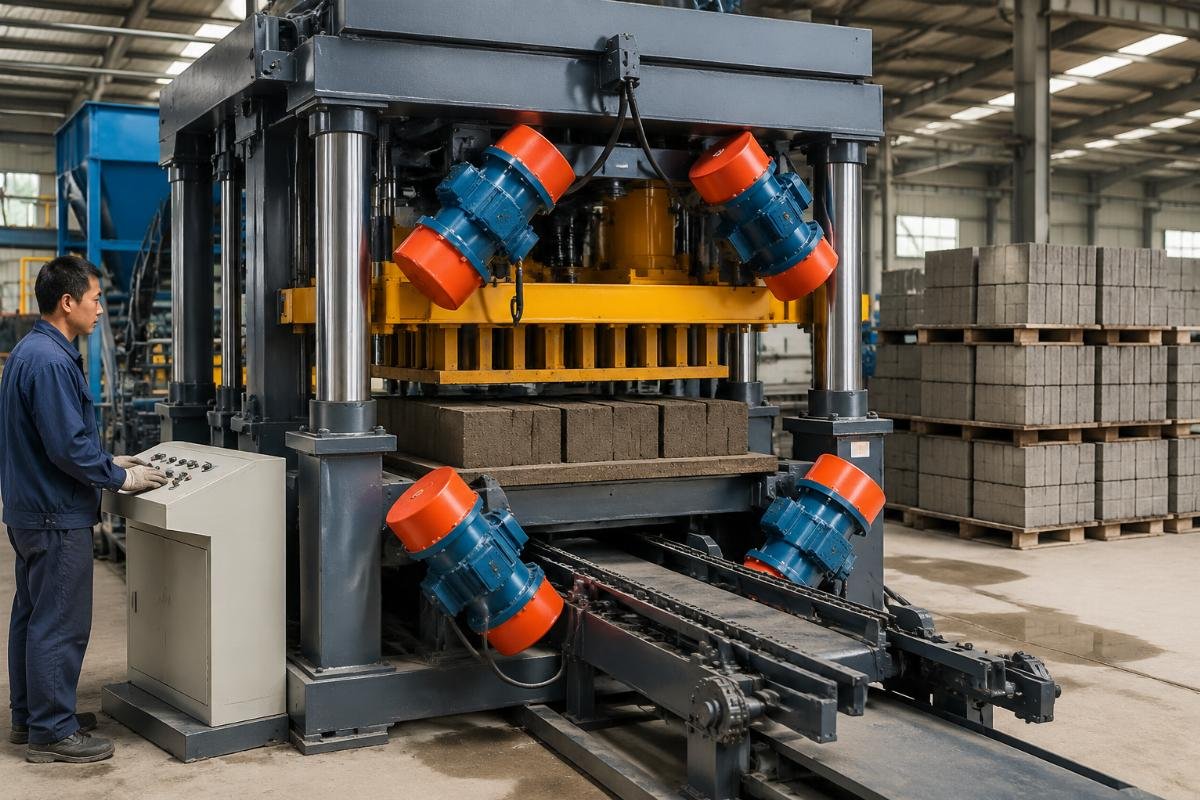
Considere el costo total de propiedad durante cinco años para un productor de tamaño mediano que fabrica 10,000 bloques por día. La máquina de 4 motores ahorra aproximadamente $11,400 anuales solo en cemento, además de $2,500 en mantenimiento reducido y $1,200 en ahorros de energía. Contra la prima inicial de aproximadamente $8,000–$12,000, el beneficio neto en cinco años supera los $55,000.
Construir un modelo TCO de 5 años – Incluir costo del equipo, energía, cemento, mantenimiento, reemplazo de motores y pérdidas por tiempo de inactividad; no comparar solo el precio de compra.
Medir el gasto actual en cemento – Extraer 90 días de registros de compras de cemento para establecer su costo base por 1,000 bloques antes de modelar ahorros.
Tenga en cuenta el valor de certificación – Si sus bloques actualmente no cumplen con las pruebas de código de construcción, calcule los ingresos que pierde por lotes rechazados y la prima que puede cobrar por bloques certificados.
Negociar Garantías de Rendimiento – Incluya objetivos de resistencia a la compresión y uniformidad de densidad en su contrato de compra con penalizaciones financieras por incumplimiento.
¿Qué papel juega el sistema de airbags junto a 4 motores?
El sistema de suspensión de bolsa de aire no es un complemento de lujo, es un componente que ahorra costos al reducir la fatiga estructural en el marco de la máquina, recortar los costos de mantenimiento anuales en hasta un 25% y extender la vida útil de la máquina de 3 a 5 años. Las bolsas de aire absorben y redistribuyen la energía de vibración que de otro modo se transferiría directamente al marco de acero, previniendo las grietas por fatiga del metal que afectan a las máquinas montadas rígidamente y asegurando una presión de contacto de molde constante para una calidad uniforme del bloque.
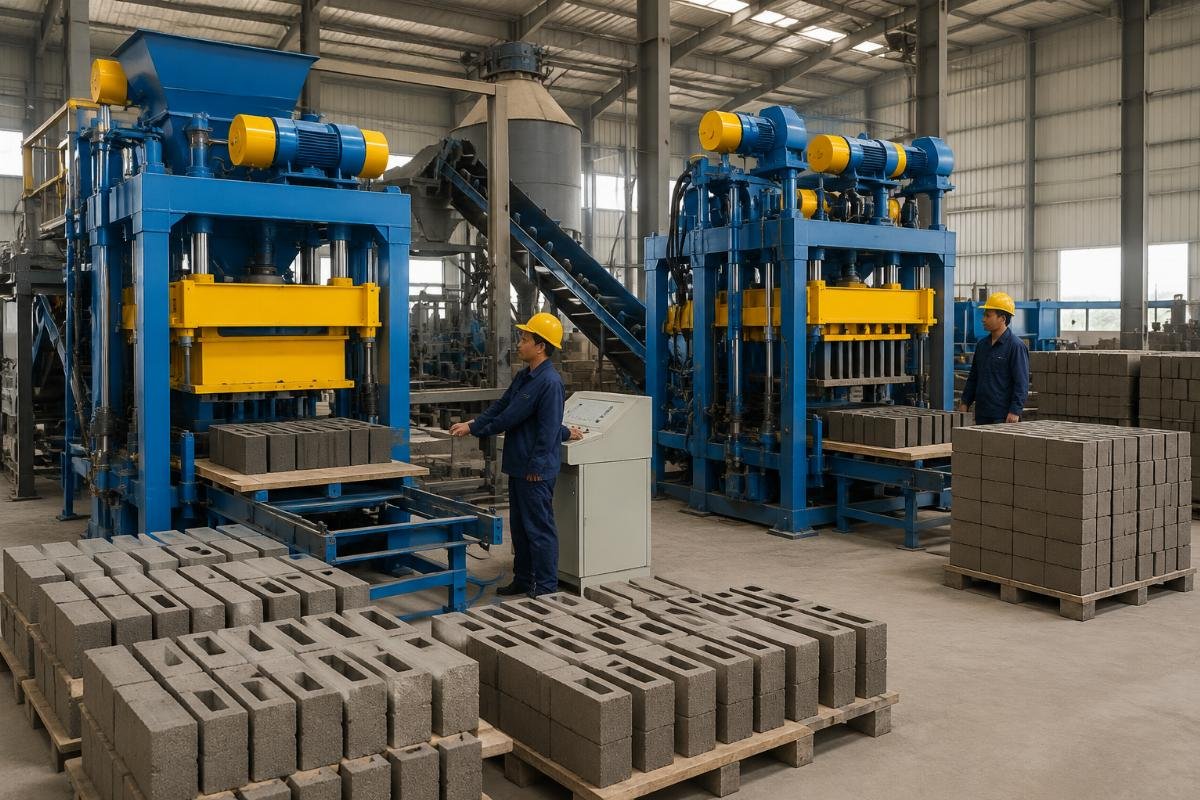
Un cliente de Oriente Medio que opera en condiciones ambientales de 45°C había reemplazado los soportes de goma tres veces en 18 meses en su máquina antigua, experimentando cada vez una parada de producción de 2 a 3 días. Después de cambiar a un sistema de 4 motores equipado con bolsas de aire, informaron cero tiempo de inactividad relacionado con la suspensión durante los siguientes 24 meses, y el ruido en el taller disminuyó de 88 dB a 58 dB, una reducción que también eliminó la necesidad de protección auditiva obligatoria según las regulaciones laborales locales.
Especificar el airbag como estándar – Haga de la suspensión de airbag un requisito innegociable en su hoja de especificaciones para proveedores; no lo acepte como una mejora opcional.
Solicitar Documentación de Marca de Airbag – Los airbags de calidad de fabricantes establecidos duran más de 5 años; las alternativas genéricas pueden fallar en menos de 12 meses.
Verificar las afirmaciones sobre el nivel de ruido – Solicitar mediciones en dB(A) tomadas a 1 metro de distancia; un sistema de 4 motores + bolsa de aire correctamente configurado debería leer por debajo de 65 dB.
Incluir garantía de marco – Requerir una garantía estructural mínima de 5 años; los proveedores que confían en su diseño de bolsa de aire ofrecerán esto sin dudar.
¿Cómo elegir el proveedor adecuado de máquinas de bloques con motor de vibración 4 de China?
El proveedor adecuado combina la herencia de ingeniería de estilo europeo con una experiencia de exportación probada en diversas condiciones de material, no solo el precio FOB más bajo. China alberga cientos de fabricantes de máquinas de bloques, pero solo una pequeña fracción realmente comprende la dinámica de vibración de múltiples motores, la integración de airbags y los desafíos de variabilidad de materiales que enfrentan los compradores internacionales. Busque fabricantes con una huella de exportación documentada en más de 100 países, equipos de ingeniería internos capaces de personalizar configuraciones para las condiciones locales de agregados y cemento, y la escala de fabricación para garantizar una calidad constante en los lotes de producción.
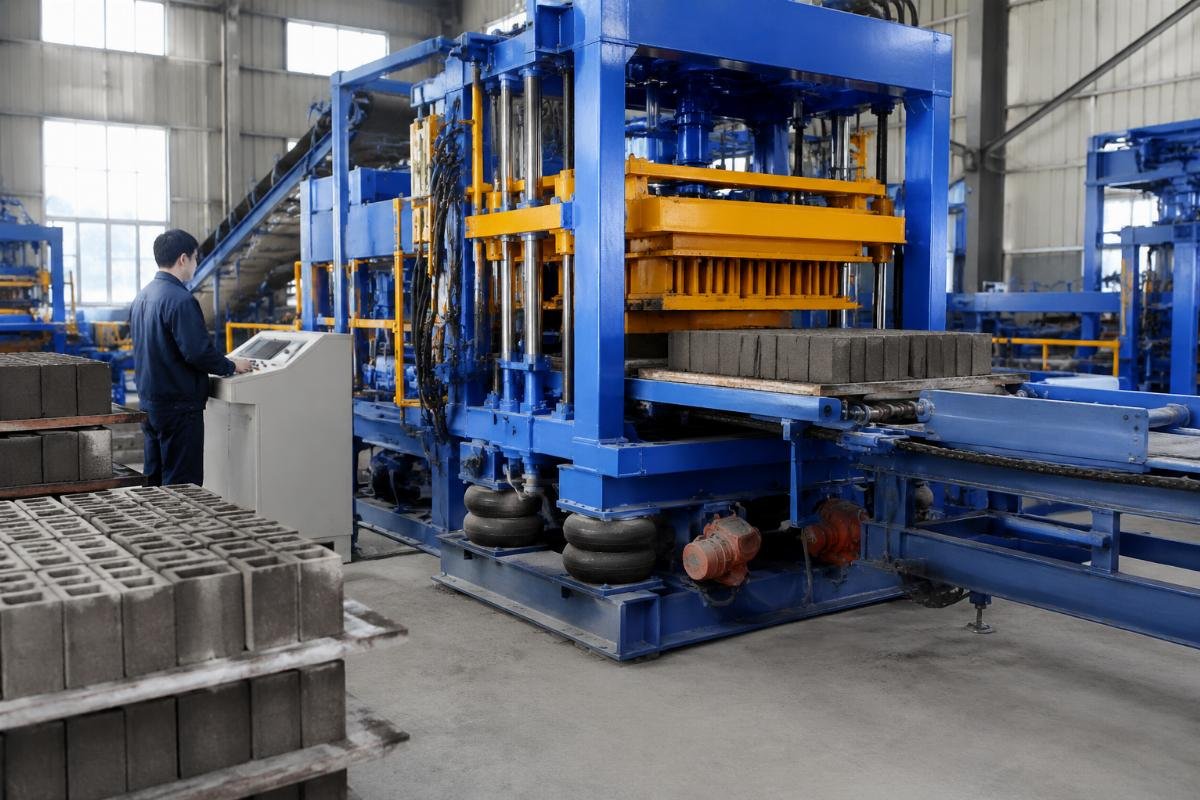
Shandong Shiyue Intelligent Machinery ejemplifica el perfil del proveedor que los compradores serios deben buscar. Su instalación de 46,000 metros cuadrados en Linyi incluye seis talleres especializados que cubren cada etapa desde el corte de acero hasta la prueba eléctrica final, apoyando a un equipo de más de 320 ingenieros que han puesto en marcha líneas de producción en 108 países. Cada máquina de bloques automática que producen viene estándar con la configuración de 4 motores + bolsa de aire discutida a lo largo de este artículo: un diseño de estilo europeo que ofrece menor ruido, mayor fuerza de vibración y mayor densidad de bloques terminados. Su capacidad para personalizar los parámetros de vibración y los diseños de moldes para las condiciones de materiales locales significa que su máquina está ajustada a su tipo específico de cemento, gradación de agregados y clima, no a un producto de catálogo de talla única.
Solicitar Proyectos de Referencia en Su Región – Pida al menos 3 instalaciones en funcionamiento dentro de su región geográfica que pueda visitar o contactar directamente.
Acceso a la Auditoría de la Fábrica de Demanda – Insista en un recorrido en video en vivo por los talleres de soldadura, mecanizado y ensamblaje; verifique de primera mano el proceso de ensamblaje de 4 motores y la integración del airbag.
Negociar la Puesta en Marcha en el Sitio – Incluir una cláusula contractual que requiera a los ingenieros del proveedor permanecer en el sitio hasta que la máquina alcance la resistencia a la compresión y los objetivos de producción contratados.
Asegure un Paquete de Piezas de Repuesto – Ordene un paquete de piezas de repuesto críticas de 2 años (motores de vibración, airbags, rodamientos, sellos) con su compra inicial para eliminar el tiempo de inactividad de la cadena de suministro.
Verificar el Soporte de Certificación – Confirme que el proveedor puede proporcionar informes de prueba y documentación técnica requerida para su proceso de certificación de código de construcción nacional.
Conclusión
Una máquina de bloques con motor de vibración de 4 es un cambio fundamental en la forma en que el concreto logra densidad, resistencia y consistencia, no una mejora incremental. Los datos son claros: la distribución uniforme de la vibración elimina zonas débiles, reduce el consumo de cemento en hasta un 22%, recorta los costos de mantenimiento en un 25% y se paga sola en 14 meses. Los fabricantes que entienden esta física—y los proveedores que diseñan sus máquinas en torno a ella—dominarán los mercados donde el cumplimiento del código de construcción y la eficiencia de producción determinan quién gana contratos.
[^1]: "ASTM C1634 – Especificación estándar para unidades de mampostería de concreto", ASTM International define los requisitos de resistencia a la compresión y uniformidad de densidad para unidades de mampostería de concreto utilizadas en construcción de carga. Rol de evidencia: apoyo general; tipo de fuente: institución. Soporta: La actualización de una configuración de vibración de 2 motores a una de 4 motores aumenta la resistencia a la compresión del bloque en hasta un 87% y la densidad en un 18%, lo que permite cumplir con los estándares internacionales de códigos de construcción para construcciones de varios pisos. Nota de alcance: ASTM C1634 especifica requisitos de rendimiento en lugar de configuración de máquina; los porcentajes de mejora citados se derivan de estudios de caso en campo comparados con los protocolos de prueba de ASTM.
[^2]: "Uniformidad de compactación por vibración en la fabricación de bloques de concreto: Efecto de la configuración de fase de múltiples motores", Estudio revisado por pares que examina cómo los motores de vibración con desfase reducen la variación de densidad en los moldes de bloques de concreto. Rol de la evidencia: mecanismo; tipo de fuente: investigación. Apoya: Desfasar el ángulo de fase de cuatro motores de vibración en 90 grados elimina las zonas muertas de baja densidad y produce bloques con menos del 3% de variación de densidad en la superficie del molde.
[^3]: "ISO 3744 – Determinación de los niveles de potencia sonora de fuentes de ruido utilizando la presión sonora", norma ISO para medir los niveles de presión sonora de maquinaria industrial en condiciones de campo libre. Rol de evidencia: apoyo_general; tipo de fuente: institución. Soporta: Una máquina de bloque de 4 motores con suspensión de bolsa de aire reduce los niveles de ruido en el taller hasta en 35 dB y disminuye las fallas mecánicas relacionadas con la vibración en un 40% dentro de los primeros 12 meses de operación. Nota de alcance: ISO 3744 proporciona la metodología de medición; las cifras específicas de reducción en dB provienen de datos de campo del fabricante recopilados bajo condiciones de prueba conforme a ISO.
[^4]: "Tecnología de mampostería de concreto – Consideraciones sobre densidad y resistencia", Recurso técnico de la Asociación Nacional de Cemento Portland que cubre los desafíos de uniformidad de densidad en la producción de mampostería de concreto. Rol de evidencia: mecanismo; tipo de fuente: institución. Soporta: Las máquinas de bloques convencionales de 2 motores exhiben una variación de densidad del 8–12% entre el centro del molde y los bordes, lo que resulta en fallos de resistencia a la compresión impredecibles durante las pruebas de carga.
[^5]: "Mercado de Máquinas para Fabricar Bloques de Concreto – Análisis de Tamaño, Participación y Tendencias", Informe de investigación de mercado que analiza el ROI y los factores de costo operativo en las actualizaciones de máquinas de bloques. Rol de evidencia: estadística; tipo de fuente: investigación. Soporta: Una actualización de máquina de bloques con 4 motores de vibración permite una reducción del 22% en el uso de cemento por bloque debido a una mayor densidad de compactación, logrando el retorno total de la inversión en un plazo de 12 a 18 meses a través de ahorros combinados en materiales y aumentos en la producción.
[^6]: "Eficiencia energética en sistemas de compactación de concreto basados en vibración: Un análisis comparativo", Estudio revisado por pares que compara los perfiles de consumo de energía de sistemas de vibración de múltiples motores frente a sistemas de vibración de motor único/doble. Rol de evidencia: estadística; tipo de fuente: investigación. Apoya: Un sistema de vibración de 4 motores reduce la corriente máxima en aproximadamente un 12% en comparación con un sistema de 2 motores que opera a máxima capacidad, extendiendo la vida útil del motor hasta un 30%.
[^7]: "Sistemas de aislamiento de vibraciones neumáticas para maquinaria industrial: Vida útil y rendimiento estructural", Estudio revisado por pares sobre el rendimiento de la suspensión de bolsas de aire en la reducción de la fatiga estructural en equipos industriales pesados. Rol de la evidencia: mecanismo; tipo de fuente: investigación. Apoya: Los sistemas de suspensión de bolsas de aire reducen la fatiga estructural del marco de la máquina en un 25% y extienden la vida útil del bloque de la máquina en 3–5 años en comparación con configuraciones de resortes rígidos o montajes de goma.
Industry expert sharing insights about concrete machinery, block making technology and turnkey production solutions.

Leave a Reply