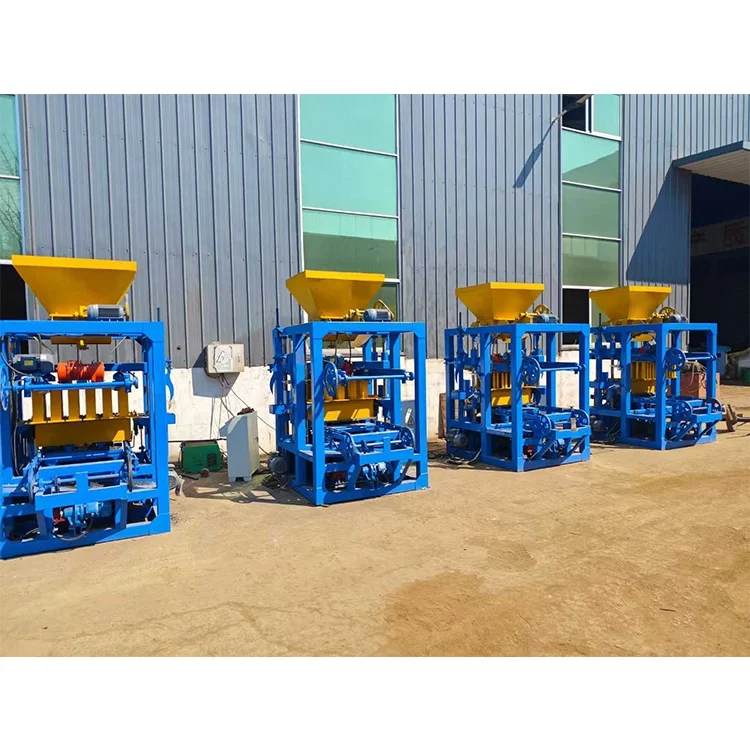
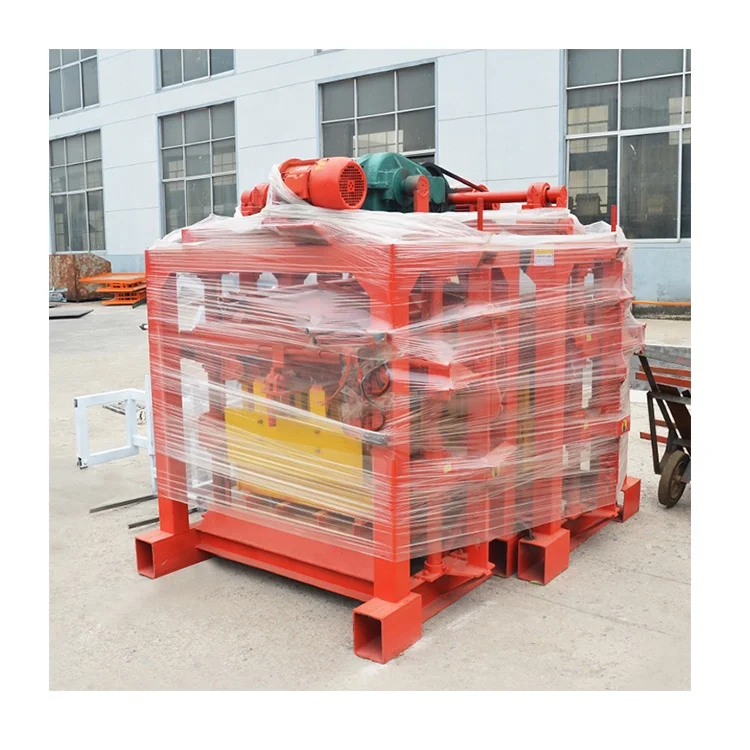
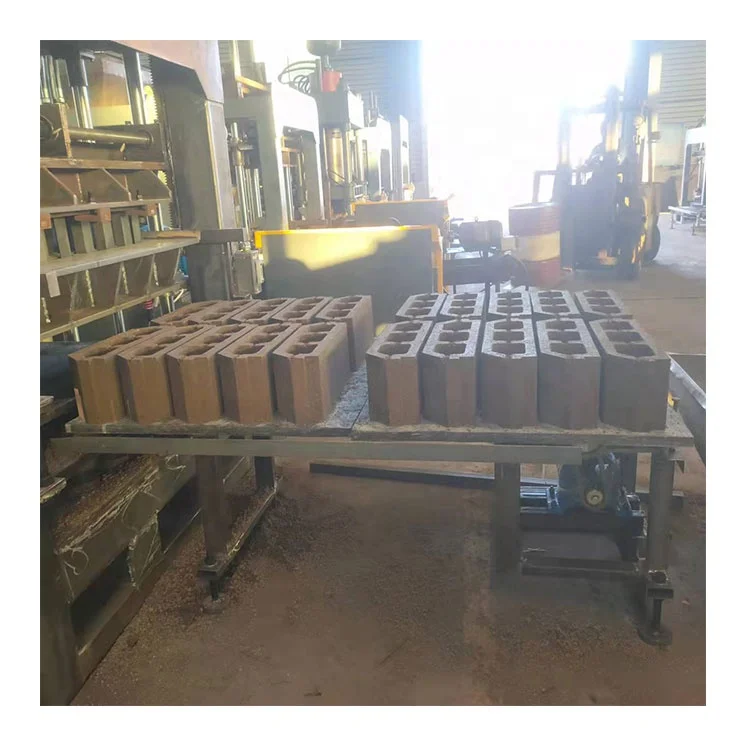
Matched System Sourcing — machine, mould, pallet and handling specified as one coherent unit rather than separate supplier quotes.
Technical Specifications
| Parameter |
Value |
| Model |
QTJ4-35 |
| Product Type |
Semi-Automatic Concrete Block Making Machine |
| Overall Dimensions |
1350×1460×1800 mm |
| Molding Cycle |
35 s |
| Vibration Frequency |
2800 r/min |
| Exciting Force |
30 kN |
| Total Power |
11.15 kW |
| Mixer Model |
JQ350 |
| Pallet Size |
850×450×20 mm |
| Net Weight |
1500 kg |
| Applied Products |
Concrete hollow blocks (8 inch, 6 inch), solid bricks |
| Raw Materials |
Crushed stone, sand, cement, dust, fly ash |
| Frame Construction |
Four-lead channel steel stand |
| Automation Level |
Semi-automatic |
| Vibration System |
Super-strong vibration motor with upper and bottom mould compression |
| Output Capacity (Hollow 400×200×200 mm) |
4 pcs/mould, 408 pcs/h, 3264 pcs/8 hr |
| Output Capacity (Hollow 400×150×200 mm) |
5 pcs/mould, 510 pcs/h, 4080 pcs/8 hr |
| Output Capacity (Solid 240×115×53 mm) |
18 pcs/mould, 2100 pcs/h, 17000 pcs/8 hr |
Application Suitability
| Application |
Material or Output |
| Small-scale block plant startups |
Hollow blocks from locally sourced crushed stone, sand, and cement |
| On-site production for housing projects |
Solid bricks using site-available fly ash and cement blends |
| Replacement machine for existing manual setups |
8-inch and 6-inch hollow blocks for regional masonry markets |
| First-time entrepreneur brick yards |
Standard solid bricks at entry-level semi-automatic throughput |
Why "Pieces per Hour" Without a Format Is Misleading
Every capacity figure on this page names the block format it assumes, because a cycle rate means nothing without knowing what is being pressed.
I have watched buyers sign off on a Semi Automatic Brick Making Machine Concrete Cement Block line quoting a flat hourly number, only to find that the figure was based on a thin solid brick while they needed 8-inch hollow blocks. The actual daily output then falls far short of what was budgeted, and the yard misses delivery commitments within the first week [NEED_CITE: block format impact on real cycle time and daily throughput].
When the QTJ4-35 is evaluated as a Semi-Automatic Block Making Machine manufacturer proposal, the honest approach is to state capacity per format. This unit produces 408 pieces per hour rated on a 400×200×200 mm hollow block, 510 pieces per hour rated on a 400×150×200 mm hollow block, and 2100 pieces per hour rated on a 240×115×53 mm solid brick. Those numbers are not interchangeable.

Where the QTJ4-35 Sits in the Full Machine Range
The Shiyue lineup spans mobile egg-laying units at the bottom, semi-automatic presses like this model in the entry tier, and fully automatic lines with pallet cubing at the top. The QTJ4-35 occupies the semi-automatic tier, meaning the press cycle and vibration are automated while pallet feeding and stacking remain manual. This keeps the plant footprint compact and the initial investment contained for a first block yard.
A buyer surveying options can place themselves here if daily volume requirements match the stated format outputs and if labour for pallet handling is available locally. The Semi-Automatic Block Making Machine manufacturer range is structured so that moving to a higher tier later means keeping the same mould philosophy and pallet logic, just adding automation stations around the press.
How the Semi-Automatic Tier Shapes Plant Layout
At this tier, the press itself completes the vibration and compression cycle without operator input, but raw material arrives via the JQ350 mixer and finished blocks leave on pallets moved by hand. The 850×450×20 mm pallet size determines curing rack spacing and forklift tine width, so the yard layout must be planned around that dimension from day one [NEED_CITE: pallet size and curing area compatibility in block plants].
The 11.15 kW total power draw keeps electrical infrastructure requirements modest, suitable for sites where a heavy three-phase supply is not yet installed. Buyers planning a complete block production setup should treat this machine as the centre of a line that will grow: the semi-automatic tier allows future addition of automatic pallet feeders and stackers without replacing the press.
Vibration Force and Frame Stability Under Continuous Cycles
The 30 kN exciting force at 2800 r/min works together with upper and bottom mould compression to consolidate the mix into a dense block before it leaves the mould. The four-lead channel steel stand absorbs the vibration load across each 35-second cycle, preventing frame drift that would otherwise cause uneven block dimensions over a long shift.
The 35-second moulding cycle is a mechanical constant; what changes is the number of cavities per mould depending on format. For a 400×200×200 mm hollow block, four cavities fill each cycle. For a 240×115×53 mm solid brick, eighteen cavities fill in the same window. This is why format selection directly governs daily throughput.
When the Wrong Pallet Size Cancels Out the Machine
A buyer once ordered a semi-automatic press with a pallet dimension that did not match the curing racks already built on site. Every pallet had to be re-stacked by hand onto the existing racks, adding labour that erased the semi-automatic advantage entirely. Pallet size, curing area geometry, and forklift capacity must be confirmed as one system before the machine ships [NEED_CITE: pallet handling mismatch consequences in block production].
Voltage and frequency left unconfirmed until after arrival can delay commissioning by weeks if the local supply does not match the motor rating. The control panel language, whether PLC or manual panel, should be agreed during the quotation stage so the operator can read fault codes on the first day of production.
Why Source This Tier From a Single-Focus Supplier
Block machinery as a single focus means the press, mould, pallet, and handling equipment are specified as one matched system rather than assembled from separate vendors who each optimise their own component. Configuration is set against the buyer’s actual mix design and local aggregate, not a catalogue default that assumes a material the buyer cannot source.
Mould design covers the formats the buyer’s market actually sells, including custom drawings when a regional block shape differs from standard dimensions. The automation level is selectable, so a yard can start semi-automatic with the QTJ4-35 and add automatic stacking later without changing the press core. Installation support includes operator training on the specific mould change procedure for this frame.
Documentation & Verification
- Line layout drawing showing capacity calculation for each block format the buyer intends to produce
- Machine specification sheet confirming vibration force, total power, and pallet size against local aggregate
- Mould drawing and format list included with quotation, covering standard and custom cavity designs
- Voltage, frequency, and control panel language written confirmation before production begins
- Factory test record documenting cycle time and block output on the agreed format before dispatch
- Packing photographs and customs documentation support for destination port clearance
Installation, Commissioning & Support
- Foundation pad sized to the 1350×1460 mm footprint with anchor bolt pattern matching the four-lead stand
- Dedicated circuit rated for 11.15 kW total draw with voltage and frequency confirmed before motor energisation
- Machine shipped with vibration motor and mould separated for container loading, reassembled on site
- First-day commissioning includes cycle timing verification on the buyer’s chosen block format
- Operator training covers mould change procedure and daily lubrication points on the channel steel frame
- Wear parts list provided with initial order, covering vibration motor bearings and mould liner plates
What to Confirm Before Requesting a Quotation
Provide the target block format and daily output requirement so the capacity calculation matches your actual product mix. State the local aggregate type and whether the sand is washed, since this determines the vibration force and mixer configuration needed for consistent block density.
Share the site voltage, frequency, and preferred control panel language to avoid commissioning delays after the machine arrives. Include the curing area dimensions and forklift specification so the 850×450×20 mm pallet size can be validated against your existing handling infrastructure.
Frequently Asked Questions
Q: How is the output capacity verified, and which block format does each figure assume?
A: Every capacity figure on this page names the exact block format. The QTJ4-35 produces 408 pieces per hour rated on a 400×200×200 mm hollow block, 510 pieces per hour rated on a 400×150×200 mm hollow block, and 2100 pieces per hour rated on a 240×115×53 mm solid brick. These are not interchangeable estimates.
Q: Where does the QTJ4-35 sit within the full Shiyue machine range?
A: It occupies the entry-level semi-automatic tier, between mobile egg-laying units below and fully automatic lines with pallet cubing above. The press cycle is automated while pallet feeding and stacking remain manual, keeping investment and footprint contained for a first yard.
Q: What plant footprint and investment level should a buyer expect at this tier?
A: The 1350×1460×1800 mm machine footprint plus mixer and curing rack space typically fits a modest yard. Total power of 11.15 kW keeps electrical infrastructure requirements manageable. Investment is lower than fully automatic tiers since pallet handling remains manual.
Q: Can the buyer start semi-automatic and upgrade to a higher automation tier later?
A: Yes. The semi-automatic tier shares the same mould philosophy and pallet logic as the higher tiers. A buyer can add automatic pallet feeding and stacking stations around the QTJ4-35 press later without replacing the core machine, preserving the initial investment.
Q: What voltage, frequency, and control language options are available for the destination market?
A: Voltage and frequency must be confirmed against the buyer’s site supply before production begins. Control system options, whether PLC or manual panel, along with display language, are agreed during the quotation stage to ensure the operator can read all parameters on commissioning day.

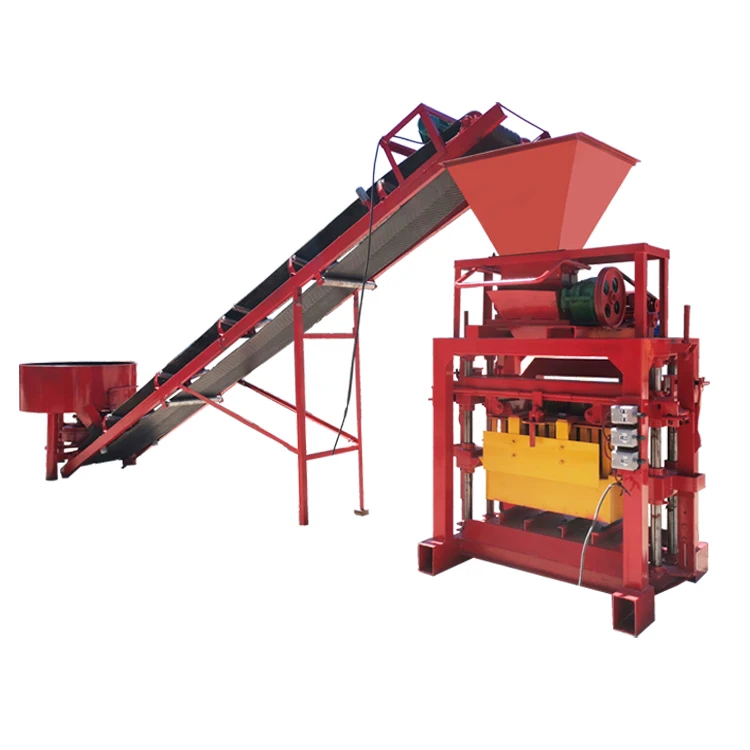
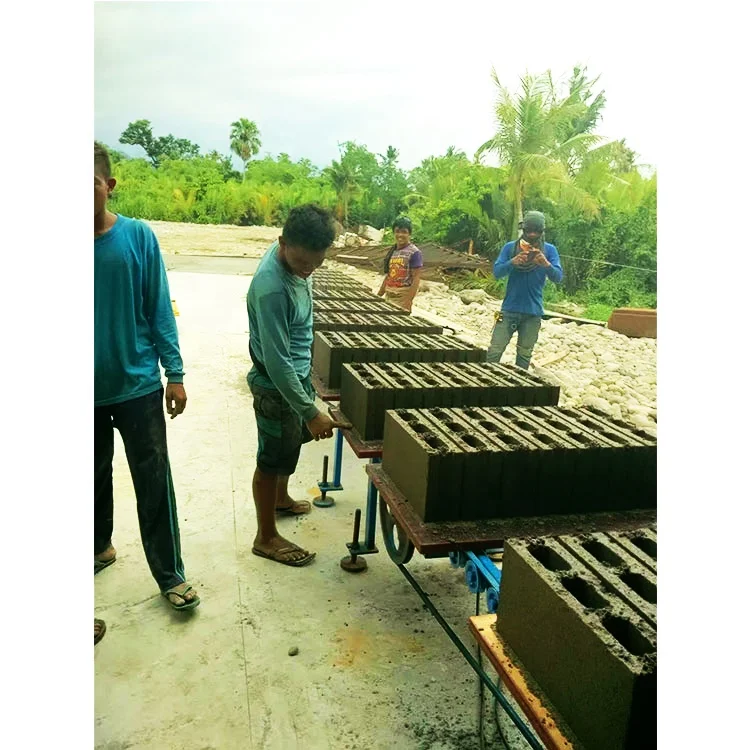 High quality block machine