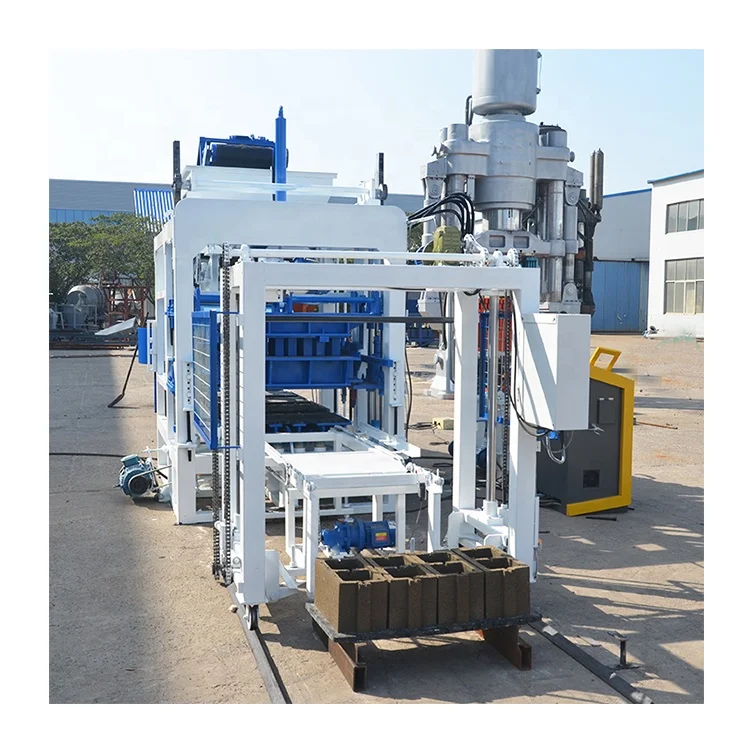
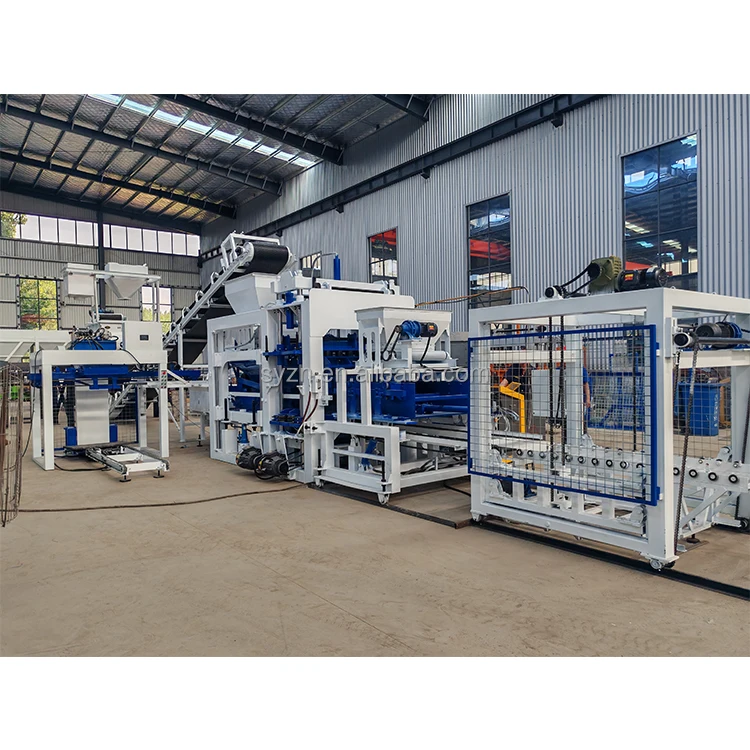
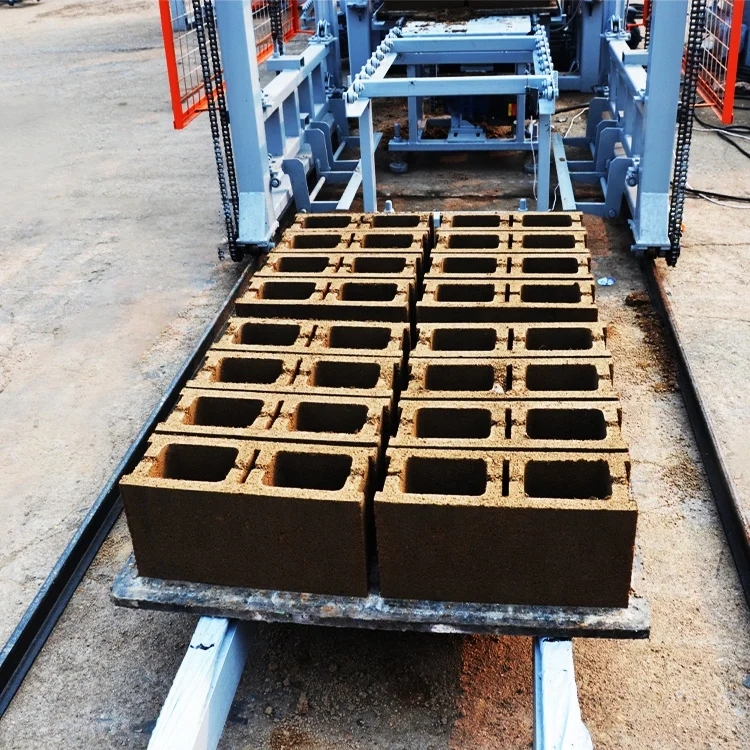
Matched System Design — Every QTJ4-35 ships with its mixer, pallet size, and mould list specified together so the line works as one unit, not a collection of separate purchases.
Technical Specifications
| Parameter |
Value |
| Model |
QTJ4-35 |
| Product Type |
Small Semi-Automatic Concrete Block Making Machine |
| Overall Dimensions (L×W×H) |
1350×1460×1800 mm |
| Molding Cycle |
35 s |
| Vibration Frequency |
2800 r/min |
| Exciting Force |
30 kN |
| Total Power |
11.15 kW |
| Mixer Model |
JQ350 |
| Pallet Size |
850×450×20 mm |
| Total Weight |
1500 kg |
| Frame Construction |
Four-lead channel steel stand |
| Applied Products |
Hollow blocks (8 in, 6 in), solid bricks |
| Raw Materials |
Crushed stone, sand, cement, stone dust, fly ash |
| Output (400×200×200 mm hollow block) |
4 pcs/mould, 408 pcs/h, 3264 pcs/8 hr |
| Output (400×150×200 mm hollow block) |
5 pcs/mould, 510 pcs/h, 4080 pcs/8 hr |
| Output (240×115×53 mm solid brick) |
18 pcs/mould, 2100 pcs/h, 17000 pcs/8 hr |
| Voltage & Frequency |
Configurable — confirm before order |
| Control System |
Semi-automatic (manual pallet handling) |
Application Suitability
| Application |
Material or Output |
| Small-scale block plant start-up |
8-inch and 6-inch hollow blocks from crushed stone, sand, and cement |
| On-site construction block making |
Solid bricks and hollow blocks produced directly at the job site |
| Building material yard expansion |
Standard solid bricks from fly ash, stone dust, and cement blends |
| Rural housing project supply |
Hollow blocks using locally sourced aggregate and river sand |
What "408 Pieces per Hour" Actually Means for Your Daily Plan
Every capacity figure here is tied to a specific block format, so your production target matches what the machine actually delivers on the floor.
I once watched a buyer in West Africa take delivery of a small block making machine for sale rated at a certain hourly output. The quotation never specified which block size that number assumed. When they ran their 6-inch hollow blocks — the format their market actually bought — the cycle stretched and daily output dropped well below what they had planned around. With the QTJ4-35 block machine manufacturer configuration, each output row states the exact mould and block dimension behind it [NEED_CITE: block machine capacity calculation standards by format]. You can plan your shift knowing whether you are running 400×200×200 mm hollow blocks at 4 pcs per mould or switching to solid bricks at 18 pcs per mould.

Where the QTJ4-35 Sits on the Full Shiyue Range
The QTJ4-35 occupies the entry tier of the Shiyue block machine lineup. It is a vibration-based, semi-automatic press aimed at buyers who need a compact footprint and modest investment before committing to a fully automatic line. The machine handles manual pallet feeding and removal, which keeps the initial setup straightforward. For buyers who later need higher throughput or automatic stacking, the pallet size and mould interface are designed so a future upgrade path exists within the same system family.
How Vibration and Frame Mass Work Together at This Scale
At 30 kN exciting force and 2800 r/min vibration frequency, the QTJ4-35 relies on the mass of its four-lead channel steel frame to absorb reaction forces and keep the mould cavity stable during each 35-second cycle. A lighter frame would transmit vibration into the foundation, reducing compaction consistency across the pallet surface. The 1500 kg total weight is distributed through the stand to maintain uniform block density — particularly important when you switch between hollow block and solid brick moulds that demand different vibration energy profiles [NEED_CITE: vibration compaction principles in concrete block forming].
Reading the Specs That Matter for Daily Operation
The 35-second molding cycle applies to standard hollow block formats under normal aggregate conditions; denser local stone or higher fly ash content can extend this. The 850×450×20 mm pallet size determines your curing rack spacing and forklift fork width — order pallets that match your existing yard infrastructure, not a generic size. The JQ350 mixer is included in the line so batch consistency starts upstream of the press; running a separate mixer with a different drum geometry often produces a mix that feeds differently into the hopper. Total power of 11.15 kW means the machine can run on a standard three-phase supply, but voltage and frequency must be confirmed against your site before production begins.
The Cost of Skipping the Aggregate Conversation
I have stood on sites where a brand-new small block making machine for sale produced crumbling blocks on the first day — not because the press was faulty, but because the local volcanic aggregate required a completely different vibration profile than the river gravel the factory had tested with. When vibration force and cycle time are not adjusted to the actual stone and sand available at your location, block strength becomes unpredictable and breakage during handling rises sharply. The mould gap may also need adjustment for coarser aggregate gradations. Sorting this out after arrival means lost production days and frustrated crews [NEED_CITE: effect of local aggregate properties on concrete block strength].
Why Source This Machine Through Shiyue
Block machinery is our single focus, which means the QTJ4-35 press, JQ350 mixer, pallets, and moulds are specified as one matched system rather than assembled from unrelated suppliers. We set the configuration against your actual mix design and target block format, not a catalogue default. Mould design covers the formats your market sells, and custom mould drawings are available when you need a non-standard size. The semi-automatic level lets you start lean and add automation stations later. Installation support includes operator training so your crew knows how to adjust vibration parameters for different mixes.
Documentation & Verification
- Line layout and capacity calculation stating the block format assumed for each output figure
- Machine specification sheet with vibration force, cycle time, and pallet dimensions
- Mould drawing and format list showing every block size the machine produces
- Voltage and control language confirmation document before production begins
- Factory test record on your specified block format before dispatch
- Pallet specification matched to your curing rack and forklift dimensions
Installation, Commissioning & Support
- Foundation slab must support 1500 kg static load plus dynamic vibration across the 1350×1460 mm footprint
- Dedicated three-phase circuit required for 11.15 kW total draw including JQ350 mixer
- Machine ships as a single skid unit — no field assembly of the main frame required
- First-run commissioning includes vibration tuning against your local aggregate sample
- Operator training covers mould change procedure and pallet handling workflow
- Wear parts list and mould maintenance schedule provided at handover
Before You Request a Quote
Tell us which block formats sell in your market — hollow block dimensions, solid brick size, or both — along with your target daily output per format. Share your local aggregate type and a sample if possible, plus your site voltage, frequency, and preferred control language. If you already have curing racks and forklifts, send the pallet dimensions they accommodate so we match the pallet spec from day one.
Frequently Asked Questions
Q: How is the QTJ4-35 capacity calculated, and which block format does each figure assume?
A: Each capacity row states the exact block dimension and pieces per mould. The 408 pcs/h figure assumes 400×200×200 mm hollow blocks at 4 pcs per mould on a 35-second cycle. Switching to 400×150×200 mm hollow blocks yields 510 pcs/h at 5 pcs per mould. Your actual daily output depends on which format you run.
Q: Where does the QTJ4-35 sit on the Shiyue range compared to other tiers?
A: It is the entry-level semi-automatic model, positioned below higher-output automatic lines. It suits first-time plant owners and on-site contractors who need a compact footprint. The pallet size and mould system are designed to allow a future step up to automatic pallet handling and stacking within the Shiyue family.
Q: What voltage, frequency, and control language options are available?
A: Voltage and frequency are configurable to match your local supply — this must be confirmed before production starts. Control language for any PLC interface is also confirmed at the order stage so the display reads correctly when the machine arrives and your operators can run it without translation delays.
Q: Which mould formats are included, and can I request a custom block size?
A: Standard moulds cover 8-inch and 6-inch hollow blocks plus 240×115×53 mm solid bricks. Custom mould design to your drawings is available for interlocking bricks, paving blocks, or other formats your market requires. Mould drawings are provided for your approval before manufacturing begins.


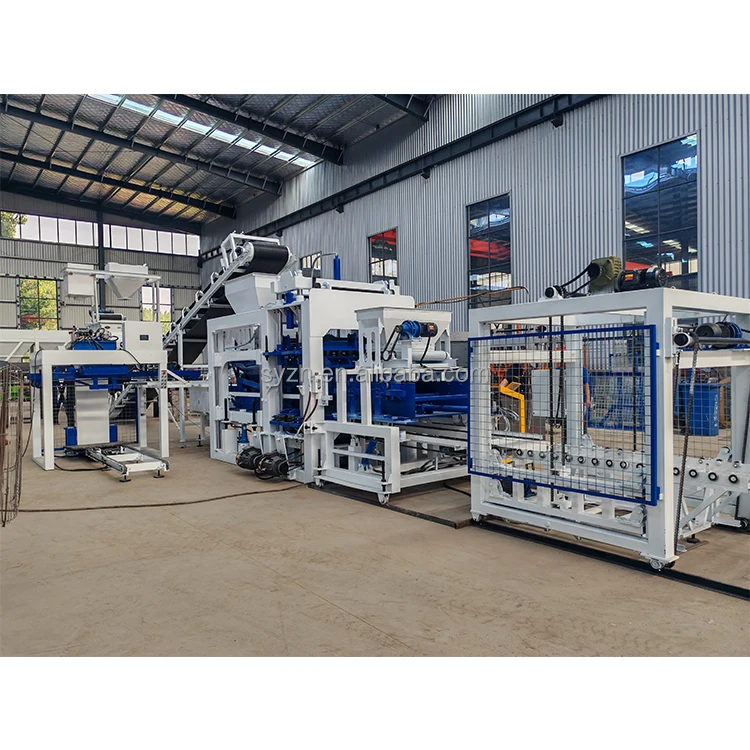 High quality block machine