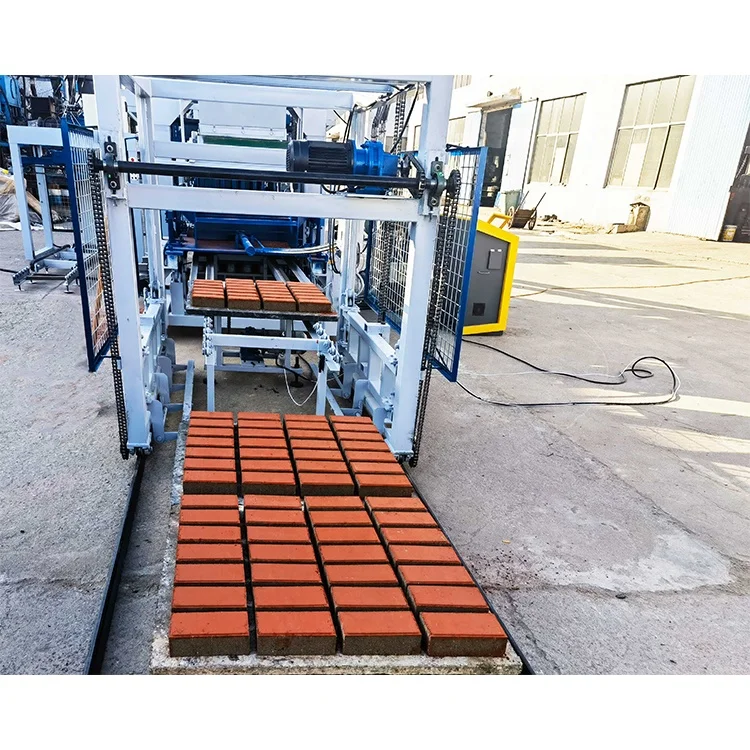
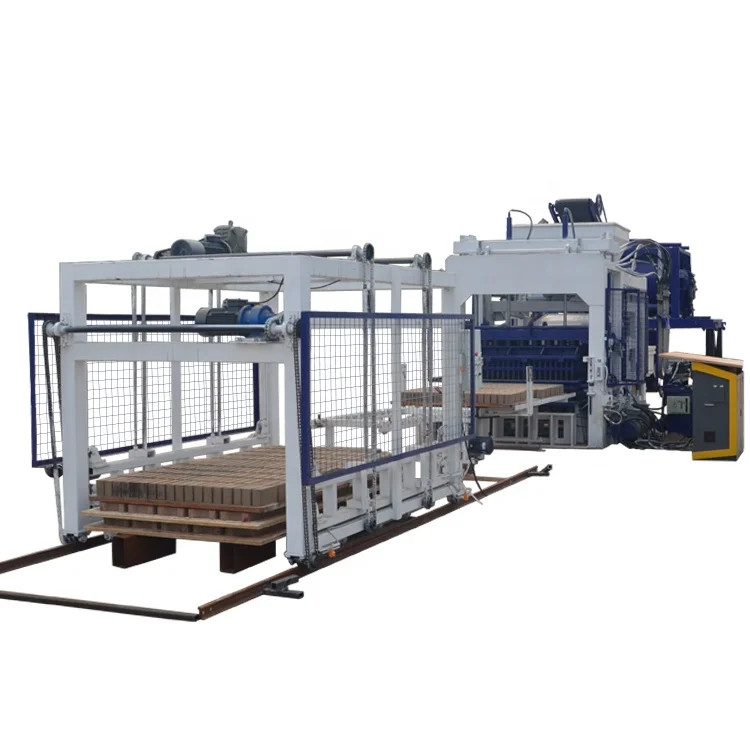
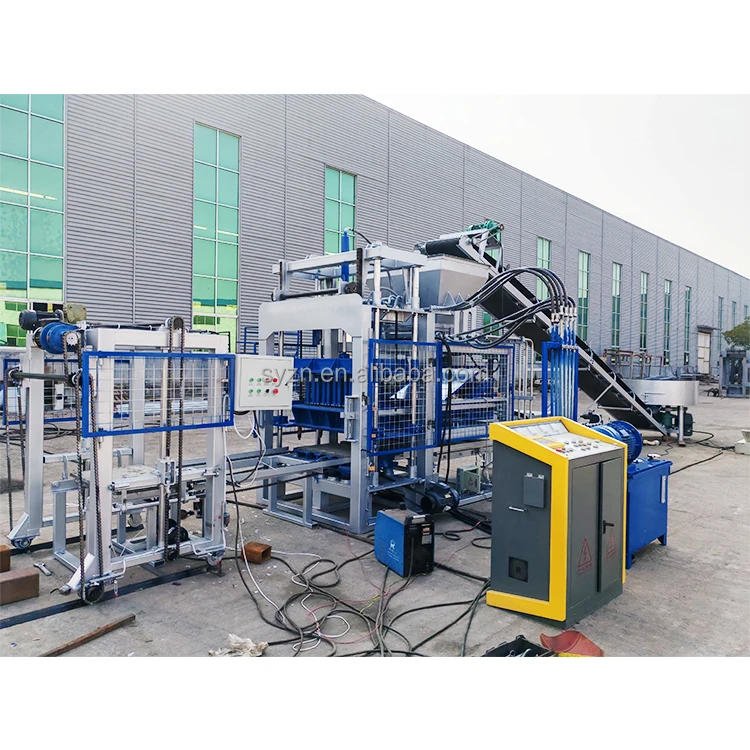
Matched System Integration — The QT8-15 block making machine, mould, pallet, and handling equipment are specified as one coordinated line rather than sourced from separate suppliers.
Technical Specifications
| Parameter |
Value |
| Model |
QT8-15 |
| Product Type |
Hydraulic Block Making Machine |
| Overall Dimensions (L×W×H) |
8300×1860×3000 mm |
| Rated Pressure |
21 MPa |
| Main Vibration Form |
Platform Vibration |
| Vibration Frequency |
2800-4500 r/min |
| Vibration Force |
45 kN |
| Pallet Size |
950×900 mm |
| Molding Cycle |
15-20 s (basis to be confirmed by block format) |
| Overall Power |
55.5 kW |
| Demolding Method |
Hydraulic |
| Total Mass |
8 T |
| Recommended Factory Area |
300 m² |
| Raw Materials |
Crushed stone, sand, cement, fly ash, gravel, slag |
| Applied Products |
Hollow/solid blocks, pavers, interlocking blocks, curbstone |
| Output Capacity |
Source image only (basis not stated in source — confirm block format and material) |
| Voltage & Frequency |
Configurable to buyer’s local supply |
| Control System |
Available with PLC or MCC control |
| Warranty |
1 year (whole machine, excluding spare parts) |
Application Suitability
| Application |
Material or Output |
| Hollow block production plants |
Crushed stone, sand, and cement with fly ash or slag admixture |
| Solid block manufacturing for housing projects |
Locally sourced gravel and cement mixes |
| Paving block and interlocking brick production |
High-strength concrete with fine aggregate |
| Curbstone and colored paver runs |
Pigmented concrete with controlled moisture content |
| On-site production for construction contractors |
Site-available aggregates including dust and sand |
What the Molding Cycle Figure Hides About Your Daily Output
A 15-20 second cycle means nothing until the block format and mould configuration are defined.
I have watched buyers receive a QT8-15 block making machine manufacturer catalogue listing cycles per hour, only to discover that the number assumed a small solid block — while they planned to run 200 mm hollow blocks with a cycle nearly twice as long. The vibration frequency range of 2800-4500 r/min must be tuned to the actual mix and format, not left at a default. When the frequency and the 21 MPa hydraulic pressure are matched to your local aggregate and target block, real daily output becomes predictable [NEED_CITE: block format and cycle time relationship in hydraulic press operations].

Positioning Within the Full Machine Range
The QT8-15 block making machine sits in the mid-to-high output tier of our range, bridging the gap between small workshop presses and fully continuous high-capacity lines. Buyers comparing tiers should look at pallet size, vibration force rating, and the level of supporting automation available at each level. This model’s 950×900 mm pallet and 45 kN vibration force place it where production plants need to serve multiple block formats without stepping up to the largest presses in the lineup.
How Automation Levels Change the Line Layout
A QT8-15 can be configured from semi-automatic with manual pallet handling through to a line with automatic pallet feeding, stacking, and cubing. The choice affects the factory area requirement — a semi-automatic setup may need less conveyor space but more manual curing-area handling, while a fully automatic configuration demands coordinated cycle timing across every station so the press is never left waiting. Buyers planning a future upgrade should confirm that the base machine frame and hydraulic system support added automation modules [NEED_CITE: automation upgrade paths for hydraulic block presses].
Reading the Numbers That Actually Matter
The 21 MPa rated pressure and 45 kN vibration force work together to determine block density and compressive strength. Pressure alone compresses the mix; vibration settles fine particles into voids. If either is mismatched to your aggregate grading, blocks emerge weak or surface-finished poorly. The 2800-4500 r/min adjustable vibration frequency range lets the operator tune for a coarse gravel mix versus a fine sand and fly ash blend. Pallet size of 950×900 mm must be checked against the curing racks and forklift already on site — a mismatch here means buying new handling equipment before the line even starts. The 55.5 kW overall power draw requires a dedicated circuit with capacity overhead for start-up surge.
The Cost of Skipping Pallet and Curing Coordination
A buyer who confirmed pallet size without checking curing rack spacing ended up with 950×900 mm pallets that could not stack on existing racks, forcing a complete rack replacement before production could begin. Another received a machine wired for a voltage and frequency that did not match the local grid, delaying commissioning by weeks while transformers were sourced. These are not machine defects — they are specification gaps that surface only after the QT8-15 arrives on site [NEED_CITE: common commissioning delays from unconfirmed site electrical supply].
Why Sourcing the QT8-15 Here Reduces Specification Risk
Every QT8-15 block making machine proposal starts with the buyer’s target block format, local raw material, and site conditions — not a catalogue default. The machine, mould, pallet, and handling equipment are specified as a single matched system, eliminating the gaps that arise when components come from separate vendors. Configuration is set against your actual mix design and aggregate, with vibration and hydraulic parameters adjusted accordingly. Mould design covers the formats your market sells, and custom mould drawings are available. Automation level is selectable, so the line can start semi-automatic and add modules later. Installation includes operator training so the crew understands mould change procedure and daily maintenance from day one.
Documentation & Verification
- Line layout showing QT8-15 capacity calculation stated per block format
- Machine specification sheet with confirmed voltage, frequency, and PLC language
- Mould drawing and format list with cycle time noted for each block type
- Pallet specification matched to buyer’s curing rack and forklift dimensions
- Factory test record and packing photographs provided before shipment
Installation, Commissioning & Support
- 300 m² factory area with level concrete floor rated for 8 T static and dynamic loads
- Dedicated power circuit sized for 55.5 kW total draw plus motor start-up overhead
- Machine arrives partially dismantled; reassembly and platform alignment on site required
- Vibration frequency and hydraulic pressure set to buyer’s confirmed mix during commissioning
- Operator training covers 950×900 mm pallet handling, mould change, and daily inspection
- Wear parts and mould replacement list provided with recommended reorder intervals
Before Requesting a Quote
Share your target block formats, daily output goal, and the local aggregate you plan to use so the QT8-15 configuration can be matched to your actual conditions. Include your site voltage, frequency, preferred control language, and existing curing or forklift equipment so the pallet and handling spec aligns from the start.
Frequently Asked Questions
Q: How is the QT8-15 capacity calculated, and which block format does each figure assume?
A: Output figures are calculated per block format, not as a single blanket number. The 15-20 second molding cycle applies to a specific block type and mix, so we provide a capacity table showing cycles and daily output for each format you plan to produce.
Q: Where does the QT8-15 sit in your full machine range?
A: It occupies the mid-to-high tier, above small workshop presses and below continuous high-capacity lines. The 950×900 mm pallet and 45 kN vibration force suit plants that need multiple block formats with moderate-to-high daily volumes.
Q: Can I start with a semi-automatic QT8-15 and upgrade later?
A: Yes. The machine frame and hydraulic system are specified to support added automation modules such as automatic pallet feeding and stacking, so you can begin semi-automatic and expand as production volume grows.
Q: What voltage and PLC language options are available?
A: Voltage and frequency are configured to your local grid before production. PLC display language is confirmed during the quotation stage so operators can read controls and diagnostics in their working language from commissioning day.
Q: What plant footprint and supporting equipment does the QT8-15 require?
A: A recommended 300 m² factory area accommodates the press, raw material feed, mixer, pallet return, and stacking zone. Supporting equipment specification depends on your chosen automation level and curing layout.

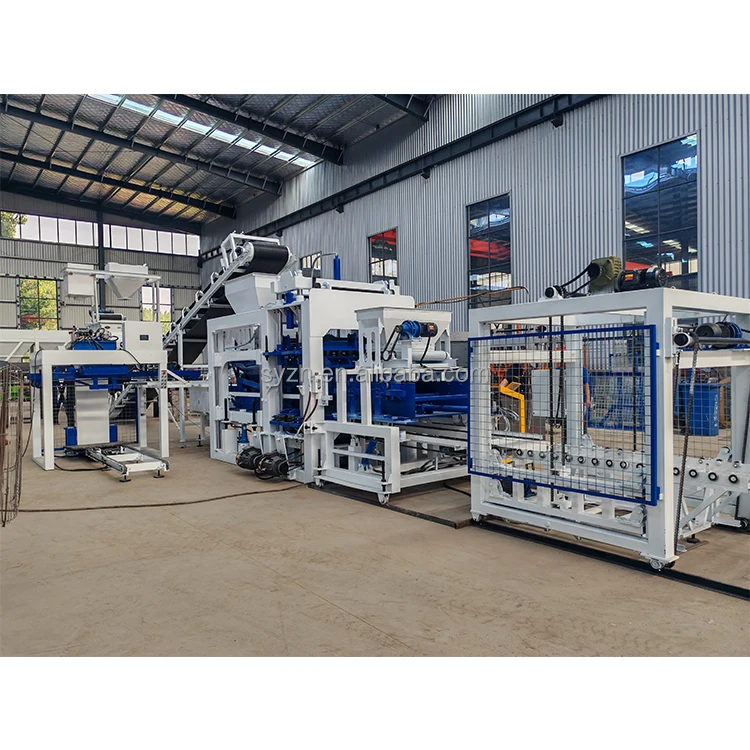
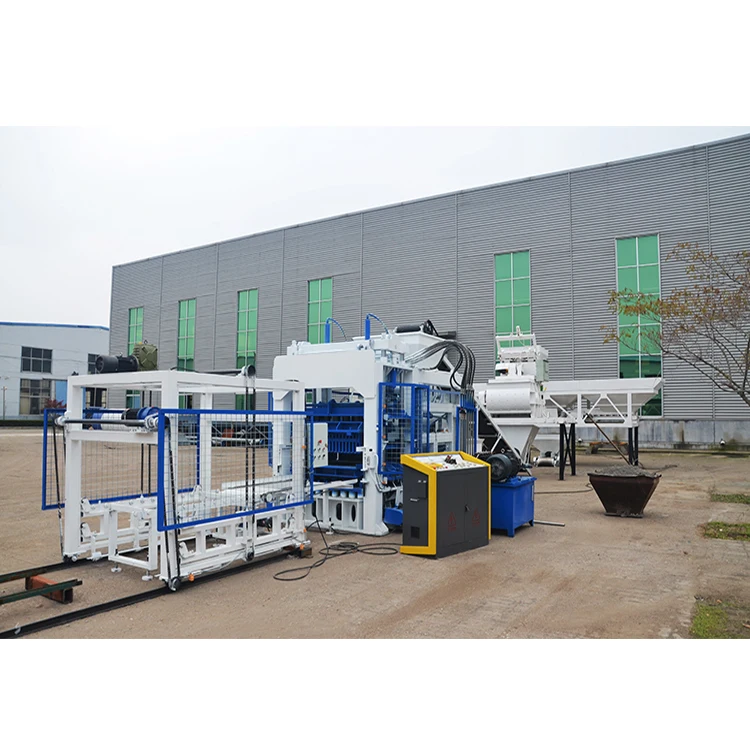 High quality block machine