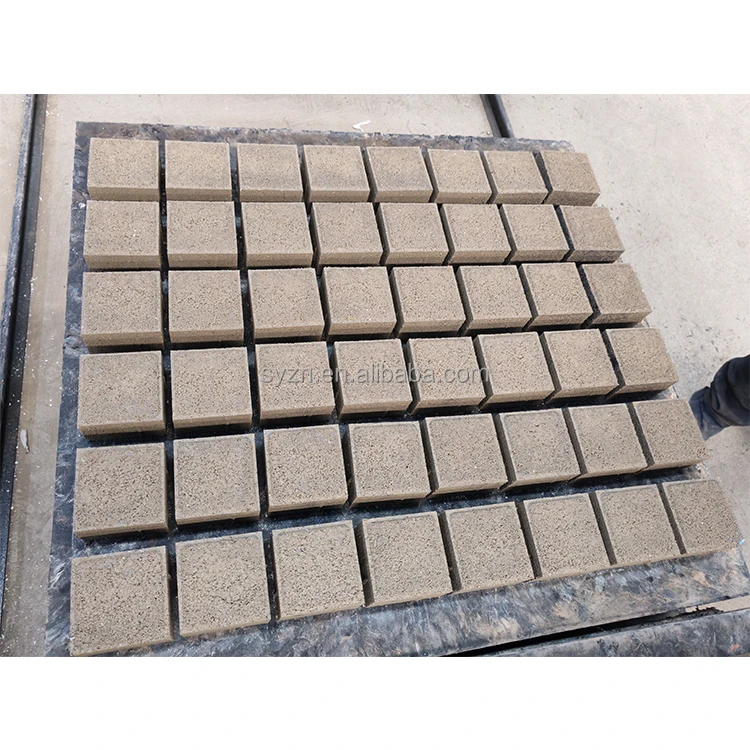
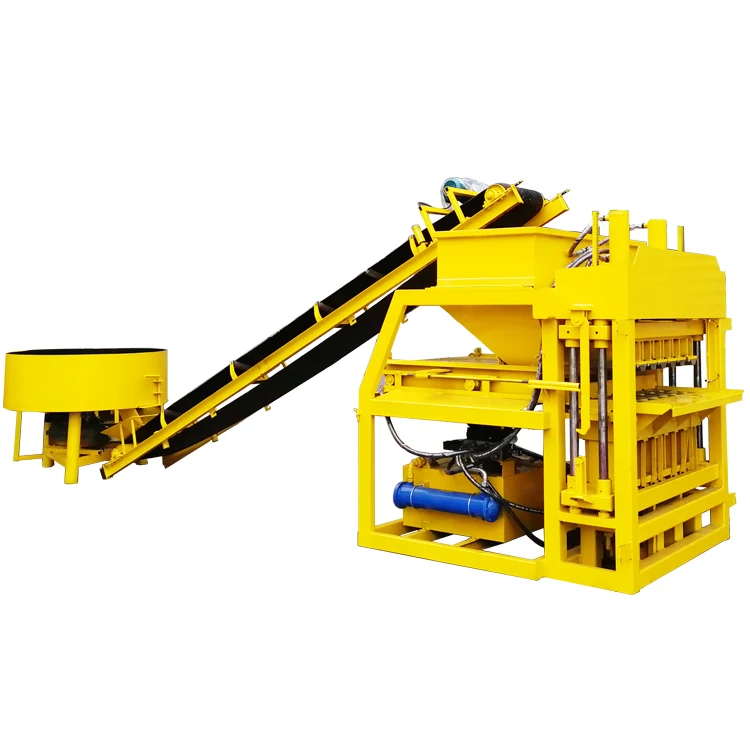
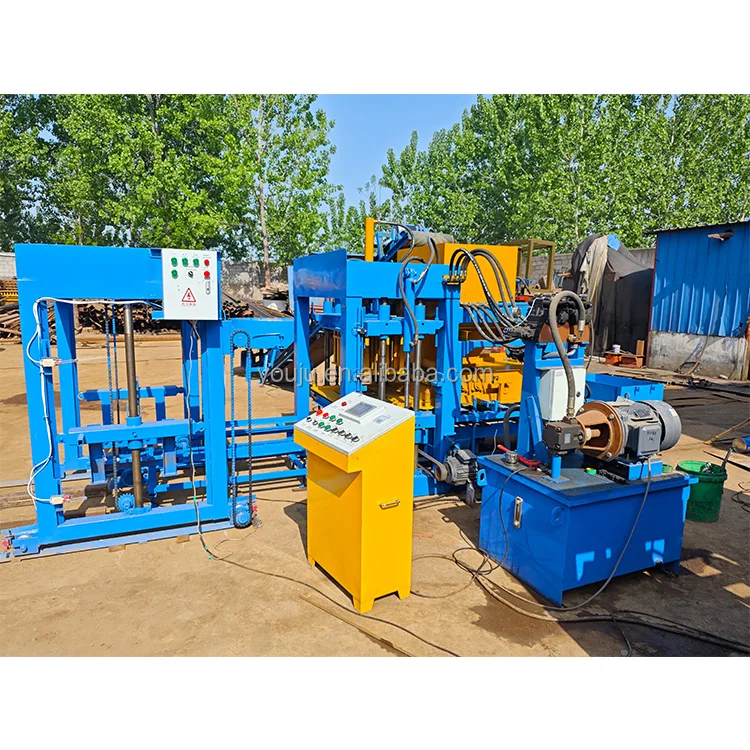
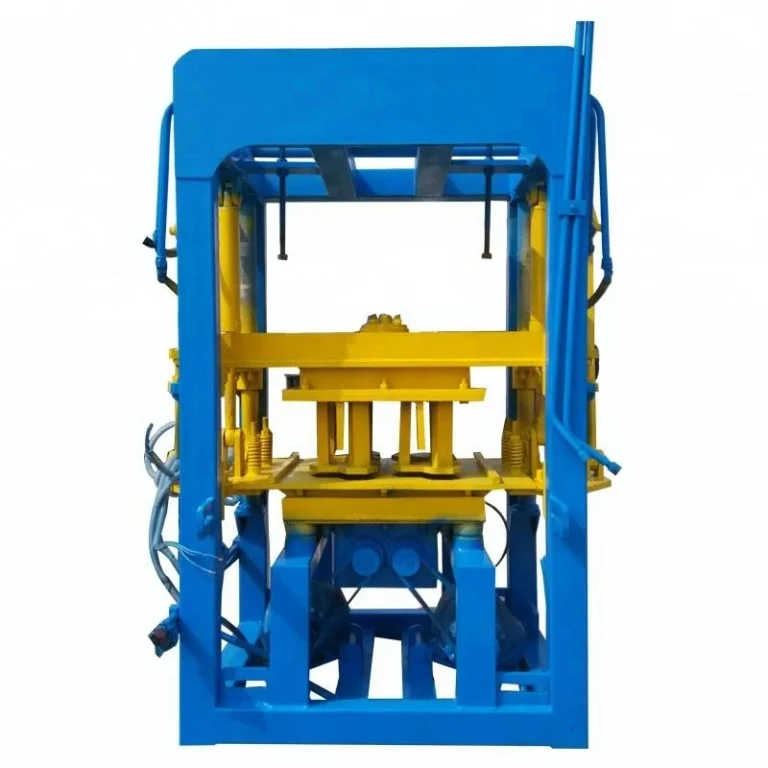
Single-Focus Machinery Engineering — The QTJ4-24 block making machine, moulds, pallets and handling are specified as one matched system rather than assembled from separate suppliers, so buyers avoid integration gaps that typically surface after installation.
Technical Specifications
| Parameter |
Value |
| Model |
QTJ4-24 |
| Product Type |
Stationary Block Making Machine |
| Overall Dimensions (L×W×H) |
3600×1700×2560mm |
| Pallet Size |
850×450mm |
| Molding Cycle |
24–26s (basis to be confirmed per block format) |
| Overall Power |
11.95kW |
| Vibration Force |
45kN |
| Total Mass |
2T |
| Molding Method |
Mechanical |
| Vibration System |
2×3kW lower vibrators + 2×1.5kW upper vibrators |
| Material Distribution |
Full-automatic spiral |
| Reducer for Mold Lifting |
350-type |
| Materials Processed |
Cement, sand, stone |
| Automation Level |
Semi-automatic |
| Control System |
To be confirmed (PLC or manual) |
| Voltage & Frequency |
To be confirmed before order |
| Warranty |
1 year (whole machine, excluding spare parts) |
Application Suitability
| Application |
Material or Output |
| Hollow block production |
Cement, crushed stone, sand mixes for 100–200mm cavity blocks |
| Solid block production |
Dense aggregate blends for load-bearing masonry units |
| Paving brick production |
Fine sand and cement mixes for pedestrian and light-traffic pavers |
| Interlocking brick production |
Graded stone and cement for dry-stack wall systems |
| On-site contractor block production |
Local aggregate and cement for project-specific hollow and solid formats |
Why "24 Seconds per Cycle" Means Nothing Without the Block Format
A cycle time is only honest when stated against a specific block size and mix design.
Many quotations list a molding cycle without disclosing which block format or aggregate blend was used during testing. I have seen buyers in arid regions assume a 24–26s cycle applies uniformly across every mould they ordered, only to discover that porous local sand required longer vibration to achieve target density, pushing actual cycle times well beyond expectations. The QTJ4-24 block making machine manufacturer specification of 24–26s must always be verified against the buyer’s actual block format and raw material before daily output projections are calculated [NEED_CITE: block density standards vary by regional building codes]. Without that verification, capacity numbers on paper diverge sharply from what the line delivers on the first production day.

Where the QTJ4-24 Sits in a Stationary Range
The QTJ4-24 occupies the entry-to-mid tier of stationary block presses, using mechanical vibration rather than full hydraulic pressing. This positioning makes it a practical choice for buyers who need consistent hollow and solid block output without the footprint, power draw, or capital outlay of a large hydraulic line. The 11.95kW total power consumption reflects that mechanical approach — lower than hydraulic models in the same output class, which matters where workshop electrical supply is limited.
Pallet Size as the Real Constraint on Daily Throughput
The 850×450mm pallet determines how many blocks are pressed per cycle, and that number changes with every mould swap. A pallet that size accommodates multiple hollow blocks or a larger count of pavers per press stroke. Buyers planning a curing yard must match pallet dimensions to their existing rack spacing and forklift fork width before confirming the order — a mismatch here forces manual repalletizing that cancels out any cycle time advantage [NEED_CITE: pallet handling standards in small block plants].
Reading the Vibration and Power Numbers
The dual-layer vibration system pairs two 3kW lower vibrators with two 1.5kW upper vibrators to deliver 45kN total force. Lower vibrators compact the mix from the pallet upward, while upper vibrators settle the surface — this combination produces blocks with consistent density through their full height rather than a hard shell over a weak core. The 350-type reducer dedicated to mold lifting isolates that mechanical load from the vibration system, which extends reducer service life under the repeated shock cycles that block presses endure. Full-automatic spiral material distribution feeds the mould cavity evenly, reducing the variation in block weight that occurs when material is hand-shoveled or gravity-fed.
What Happens When Voltage Is an Afterthought
Confirming voltage and frequency after the machine is built leads to motor rewinds, transformer additions, or PLC replacements at the destination port. I have watched commissioning stall for weeks because a machine wired for 380V/50Hz arrived in a 440V/60Hz market, tripping breakers on every start attempt. The QTJ4-24 block making machine manufacturer documentation should include a signed voltage and frequency confirmation sheet before production begins, not after [NEED_CITE: industrial voltage standards across export markets]. Control system language is equally easy to overlook — an operator facing an unfamiliar script on the control panel makes errors that damage moulds and waste material.
Why Buyers Source the Press and Handling Together
Block machinery specified as a single system means the pallet size, mould formats, vibration force and material feed are all calculated against one another. When a buyer sources the press from one supplier and pallets from another, pallet warping under vibration or incorrect rack spacing during curing becomes a problem neither supplier accepts responsibility for. Our documentation package for the QTJ4-24 includes the line layout showing how the spiral feeder, press station and pallet return connect, along with capacity calculations that state which block format was assumed. Mould drawings confirm the exact cavity dimensions and block formats the 850×450mm pallet supports, and a pallet specification sheet matches the buyer’s curing area and forklift. Factory test records document actual cycle times and block dimensions before the machine leaves the workshop. Voltage and control language confirmation is signed off before assembly begins, preventing rewiring delays at the destination.
Documentation & Verification
- Line layout drawing with capacity calculation per confirmed block format
- Mould cavity drawings showing dimensions for each ordered format
- Pallet specification matched to buyer’s curing rack and forklift
- Voltage, frequency and control language confirmation signed before build
- Factory test record with measured cycle times and block dimensions
- Packing photographs and customs documentation support
Installation, Commissioning & Support
- Foundation pad leveled to support the 2T mass across the 3600×1700mm footprint
- Dedicated electrical circuit sized for 11.95kW continuous draw with motor start surge allowance
- Machine arrives factory-assembled; vibration motors and spiral feeder are aligned before dispatch
- First-run testing on buyer’s actual cement and aggregate blend to set vibration duration
- Operator training covers mould change procedure and spiral feeder adjustment
- Wear parts list identifies vibration motor bearings and spiral flighting as primary service items
Preparing a Meaningful Inquiry
A useful inquiry for the QTJ4-24 includes the target block formats, local aggregate type and cement grade, and the daily output expectation tied to those formats. Confirming workshop voltage, frequency and preferred control language at the inquiry stage prevents specification mismatches later. Buyers should also note their existing pallet size and curing rack dimensions so the pallet specification can be aligned from the start.
Frequently Asked Questions
Q: How do I verify the real daily output of the QTJ4-24 for my block format?
A: The 24–26s molding cycle must be tested with your specific block size and mix. Request a capacity calculation that names the exact block format assumed, then confirm with a factory test using your local aggregate sample before shipment.
Q: Which block formats fit the 850×450mm pallet?
A: The pallet supports hollow blocks, solid blocks, paving bricks and interlocking bricks. The exact cavity count per press stroke depends on block dimensions — request the mould drawing for each format you plan to produce to confirm output per cycle.
Q: Can the QTJ4-24 be wired for my local voltage and frequency?
A: Voltage and frequency are confirmed before production begins. Provide your site supply specification at the inquiry stage so motors and control components are sourced to match, avoiding rewiring or transformer costs after arrival.
Q: How long does a mould change take on this machine?
A: Mould change time depends on the lifting mechanism and bolt configuration. The 350-type reducer handles the mould lifting mechanically. Request the specific change procedure and estimated time for your ordered mould set to plan shift scheduling.
Q: Where does the QTJ4-24 sit compared to higher-tier automatic models?
A: It is a semi-automatic mechanical press with spiral feeding, suited for buyers who do not yet need full hydraulic pressure or automatic stacking. Buyers can move to higher automation tiers later as production volume grows.

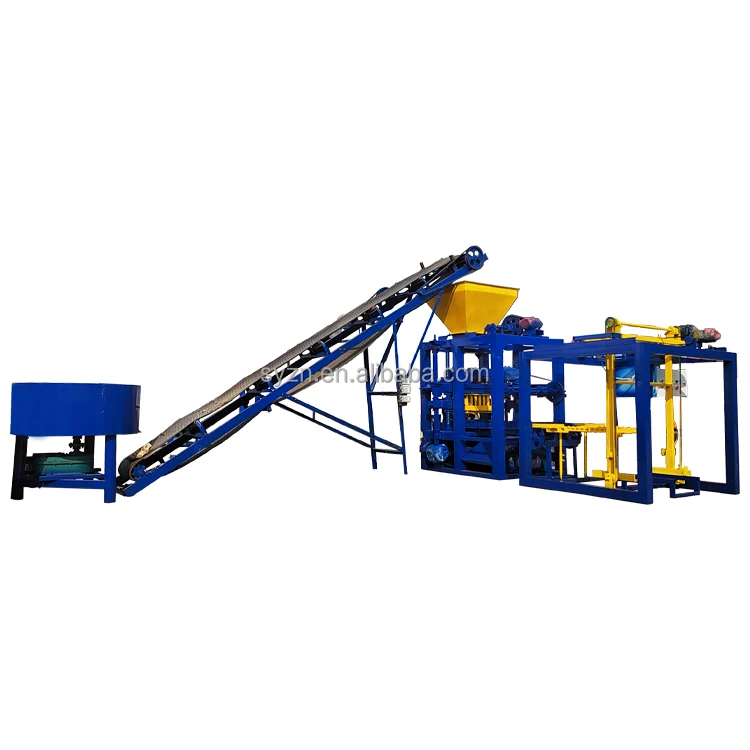
 Stationary block machine