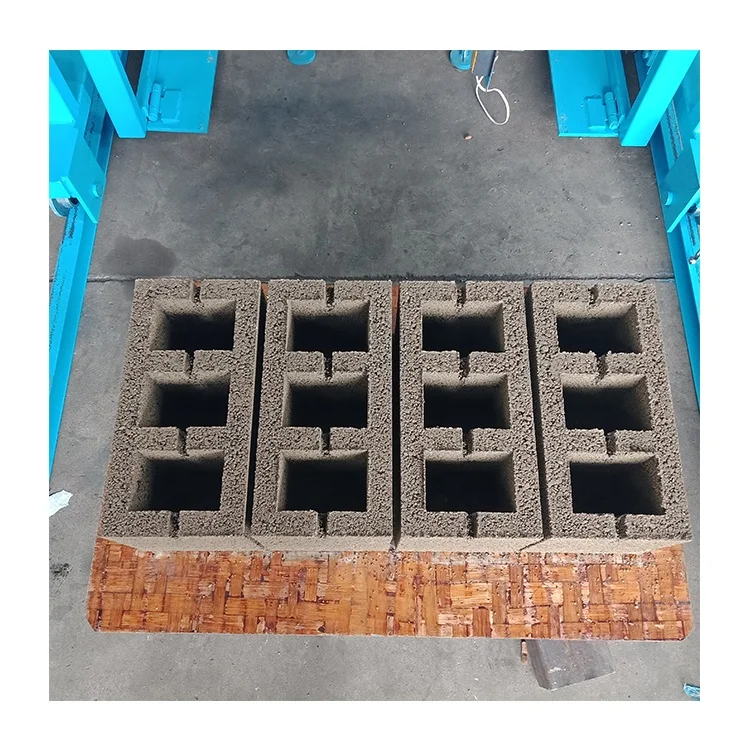
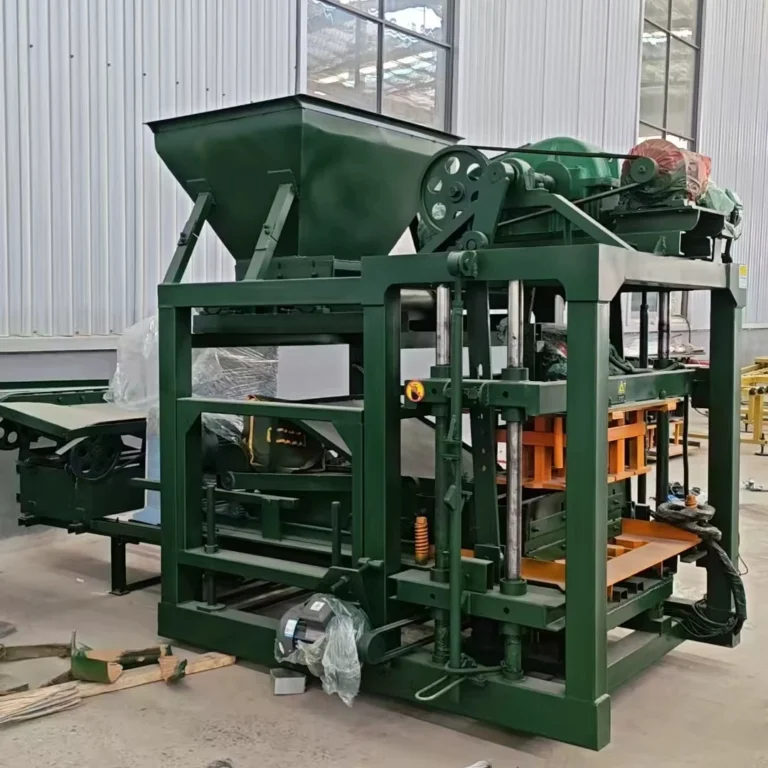
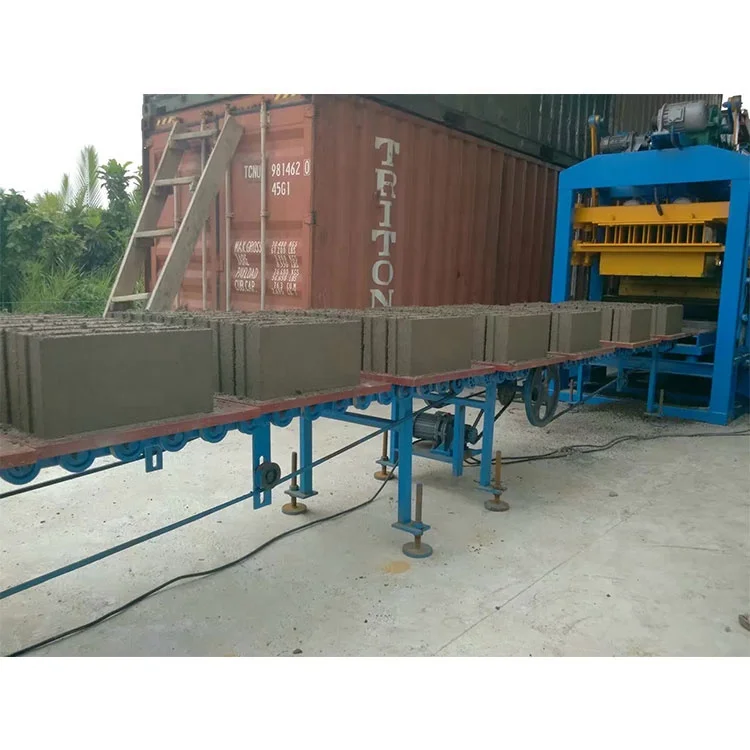
Full-range positioning — the LY7-10 sits in our stationary compressed earth block machine lineup as a mid-tier automatic option, presented alongside lower semi-automatic and higher-capacity models so buyers can place themselves before committing to an output tier.
Technical Specifications
| Parameter |
Value |
| Model |
LY7-10 |
| Product Type |
Automatic Compressed Earth Interlocking Block Making Machine |
| Automation Level |
Automatic |
| Block Format |
Compressed earth interlocking block |
| Primary Raw Material |
Clay soil |
| Machine Type |
Stationary |
| Hydraulic Pressure (MPa) |
basis to be confirmed |
| Vibration Force (kN) |
basis to be confirmed |
| Pallet Size |
basis to be confirmed |
| Mould Format |
Interlocking block (other formats to be confirmed) |
| Output Capacity |
basis to be confirmed — confirm block format, material and thickness |
| Control System |
basis to be confirmed |
| Voltage & Frequency |
basis to be confirmed |
| Overall Dimensions (L×W×H) |
basis to be confirmed |
| Assembly State |
basis to be confirmed |
Application Suitability
| Application |
Material or Output |
| Interlocking block production for building walls |
Locally sourced clay soil mixed with stabilizer |
| Compressed earth blocks for single-story and low-rise construction |
Clay soil screened for organic content and oversized gravel |
| On-site block production for housing projects |
Soil excavated from or near the construction site |
| Rural and community building programs |
Clay-dominant subsoil with controlled moisture content |
| Pilot plant for entrepreneurs entering the block market |
Available soil tested for compressibility before line configuration |
What "Pieces per Hour" Hides When Sizing a Compressed Earth Block Line
Capacity means nothing without naming the block size, soil mix, and stabilizer ratio behind the number.
I have watched buyers receive an automatic compressed earth block machine manufacturer’s quote that lists a single hourly figure — no mention of whether that assumes a 290×140×90 mm interlocking block or a thicker 250×250×125 mm paver. The LY7-10 output tier is therefore presented here within the full stationary range so you can see where this model sits against both semi-automatic entry-level machines and higher-capacity automatic presses. When soil moisture, clay plasticity, and stabilizer percentage shift even slightly, cycle time changes with them [NEED_CITE: soil stabilization variables affecting compressed earth block cycle time]. Any capacity calculation that omits these variables sets the wrong expectation before the machine even ships.

Where the LY7-10 Sits in the Stationary Lineup
This model occupies the mid-range of our automatic compressed earth block machine manufacturer lineup for stationary presses. Below it, semi-automatic machines require manual pallet handling and deliver lower daily volume for smaller operations. Above it, higher-tier automatic models add faster cycle times and integrated stacking systems for plants running continuous production shifts. The LY7-10 targets buyers who need automatic operation but whose daily output requirements do not yet justify the footprint and investment of the largest tier.
Matching the Machine Tier to Your Project Timeline
Construction contractors and housing project developers often face a deadline that determines which output tier is viable. A mid-tier automatic compressed earth block machine manufacturer solution like the LY7-10 allows on-site production of interlocking blocks using soil already available at the project location, reducing transport costs compared to hauling finished blocks from a distant yard. The decision between this tier and the next one up depends on how many square metres of wall you must close per week and whether the curing area can absorb the faster output [NEED_CITE: compressed earth block curing requirements for structural strength]. Choosing the wrong tier in either direction wastes capital or creates a bottleneck the rest of the project waits on.
Reading the Specs That Actually Shape Output
Hydraulic pressure and vibration force together determine how densely the clay soil is compressed inside the mould cavity. Insufficient pressure leaves blocks that crumble during demoulding, while excessive force on a high-clay mix can cause surface spalling. The mould format for the LY7-10 is designed around the interlocking profile, where the tongue-and-groove geometry must release cleanly without dragging the freshly pressed face. Pallet size governs how many blocks fit per cycle and must align with the curing racks and handling equipment the buyer already has or plans to install. Voltage and frequency need to be confirmed against the destination site’s grid before production begins, because a mismatch discovered after arrival delays commissioning by weeks [NEED_CITE: voltage and frequency standards by export market].
What Happens When the Wrong Tier Is Chosen
A buyer who selects a semi-automatic machine for a project demanding continuous output quickly discovers that manual pallet handling becomes the constraint, not the press itself. Conversely, an entrepreneur who jumps to the highest-capacity tier without the market demand to absorb that volume carries the depreciation and power costs of idle equipment. I have seen soil that tested well in the dry season turn into a different material after the first rains, forcing cycle-time adjustments that a correctly sized mid-tier machine can accommodate more flexibly than an oversized line running at a fraction of its design speed. These mismatches are avoidable when the output tier is chosen against actual soil samples and confirmed block format rather than a brochure headline [NEED_CITE: compressed earth block material variability across seasons].
Why Source This Tier Through a Dedicated Block Machine Supplier
Our stationary range covers automatic, semi-automatic, and mobile block machines within a single lineup, so the LY7-10 is compared internally against real sibling models rather than against catalogue pages from unrelated manufacturers. Mould design and supply for interlocking block profiles are handled in-house, meaning custom drawings from the buyer can be accommodated without routing through a third-party tooling shop. Configuration is set against the buyer’s actual soil test results and stabilizer availability, not a generic default. Automation level can be selected now and upgraded later if production demand grows. Installation and commissioning include operator training so the crew understands how soil moisture changes translate into cycle adjustments on the LY7-10.
Documentation & Verification
- Line layout and capacity calculation stating the exact interlocking block format and soil mix assumed
- Machine specification sheet confirming hydraulic pressure, vibration force, and pallet dimensions
- Mould drawing and profile list showing all interlocking block geometries available for the LY7-10
- Voltage, frequency, and control language confirmation recorded before production starts
- Factory test record on your supplied soil sample before dispatch
- Operation and maintenance manual with wear parts and mould replacement schedule
Installation, Commissioning & Support
- Foundation pad level and load-bearing capacity verified against LY7-10 overall dimensions and net weight
- Dedicated power circuit sized to the machine’s rated power with correct voltage and frequency
- Machine arrives in assembly state confirmed at order; on-site reassembly supervised by our technician
- First production run sets cycle time and pressure against your actual clay soil sample
- Operator training covers mould change procedure and daily maintenance checkpoints
- Wear parts list and recommended spare mould inventory provided at handover
What We Need From You to Size the Line
Send us your soil test report including clay fraction, plasticity index, and moisture range across seasons. Tell us the interlocking block dimensions your market sells and the daily volume your curing area can absorb. Specify your site’s voltage, frequency, and the language your operators need on the control display. With these inputs we can position the LY7-10 accurately within the range and confirm whether this tier or an adjacent model better fits your output target.
Frequently Asked Questions
Q: How is the output capacity of the LY7-10 verified, and which block format is it based on?
A: Output capacity is calculated against a specific interlocking block dimension, soil mix ratio, and stabilizer percentage. We state the assumed block format alongside any capacity figure so you can compare it to your own target product. If your block size differs, we recalculate cycle time and daily volume before the quotation is finalized.
Q: Where does the LY7-10 sit in the range compared to semi-automatic and higher-tier automatic models?
A: The LY7-10 is a mid-tier automatic model in our stationary block machine lineup. Semi-automatic machines below it require manual pallet handling and suit lower daily volumes. Higher-tier automatic models above it deliver faster cycle times and integrated stacking for continuous multi-shift production. We present all tiers together so buyers can choose based on actual demand.
Q: What voltage and frequency options are available, and is the control language configurable?
A: Voltage and frequency are configured to match your site’s electrical supply and must be confirmed before production begins. The control system display language is specified at the order stage so operators can read instructions in their working language. We record both parameters in writing to prevent delays during commissioning.
Q: What plant footprint and installation conditions does this tier require versus larger automatic lines?
A: The LY7-10 requires a level concrete foundation sized to its overall dimensions, a dedicated power circuit matching its rated power, and sufficient curing area downstream to absorb daily output. Compared to higher-tier automatic lines, the mid-range footprint is smaller and the utility connections less demanding, making it suitable for project sites with limited prepared space.

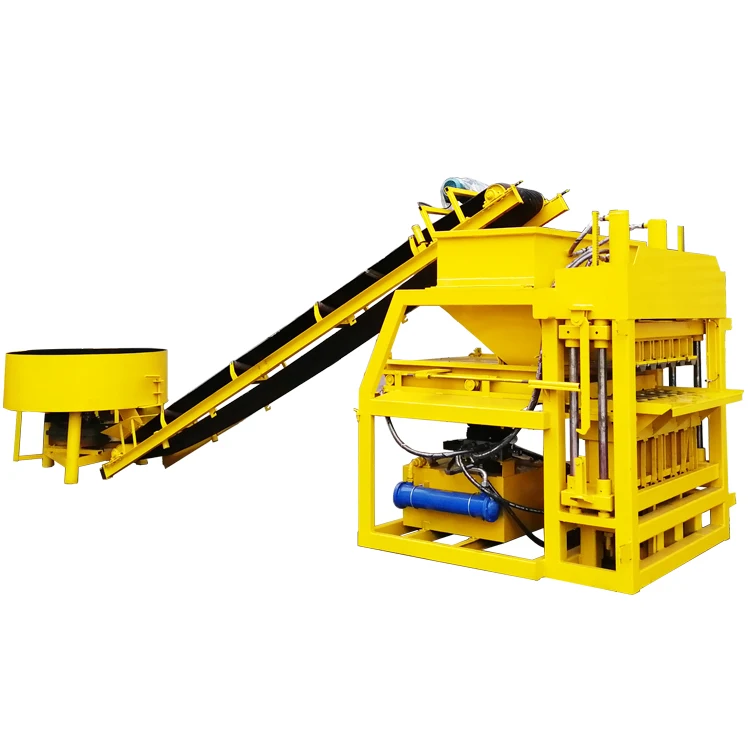
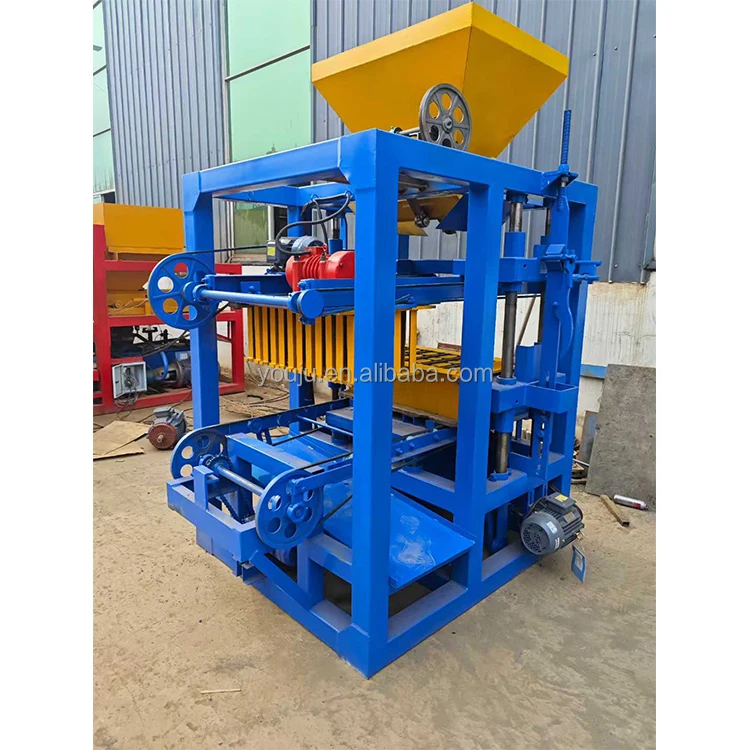 Stationary block machine