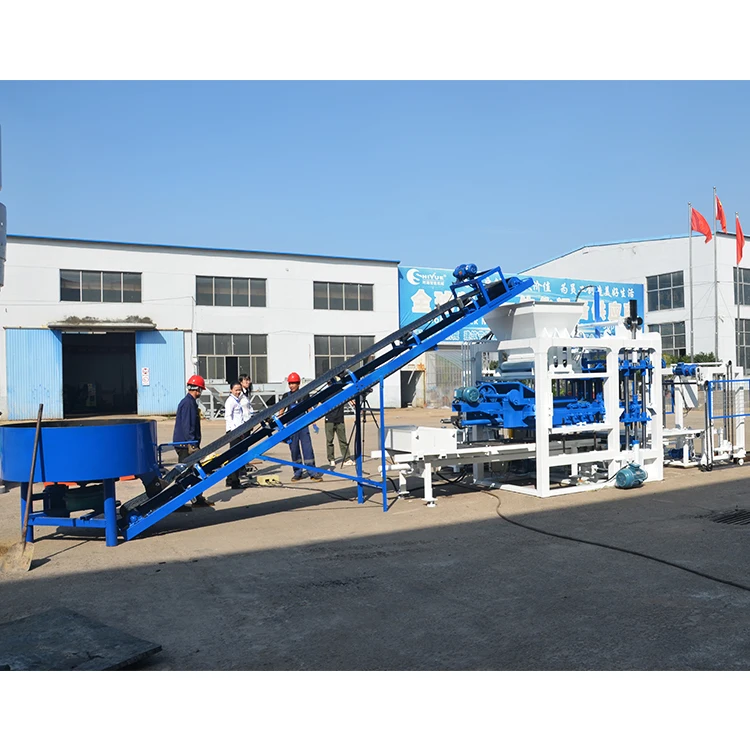
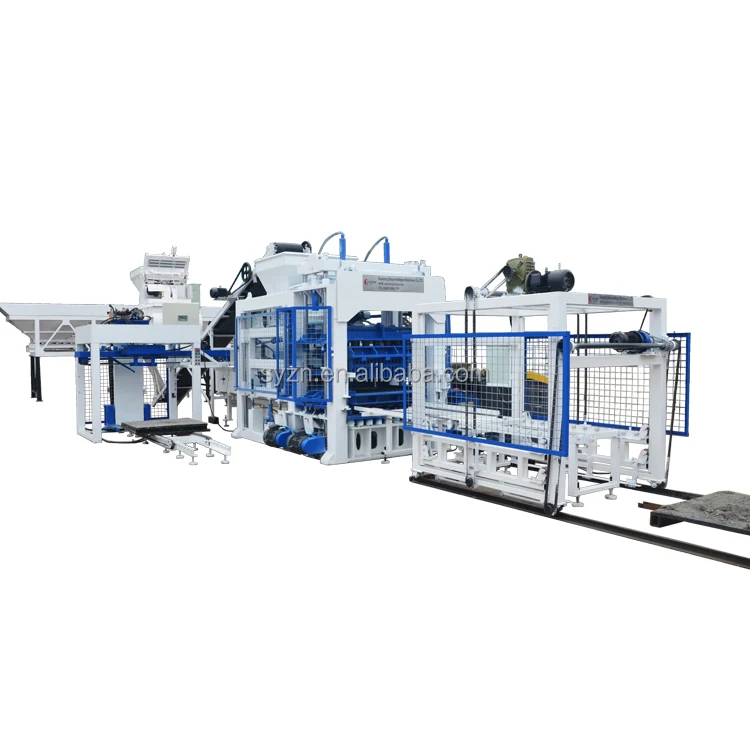
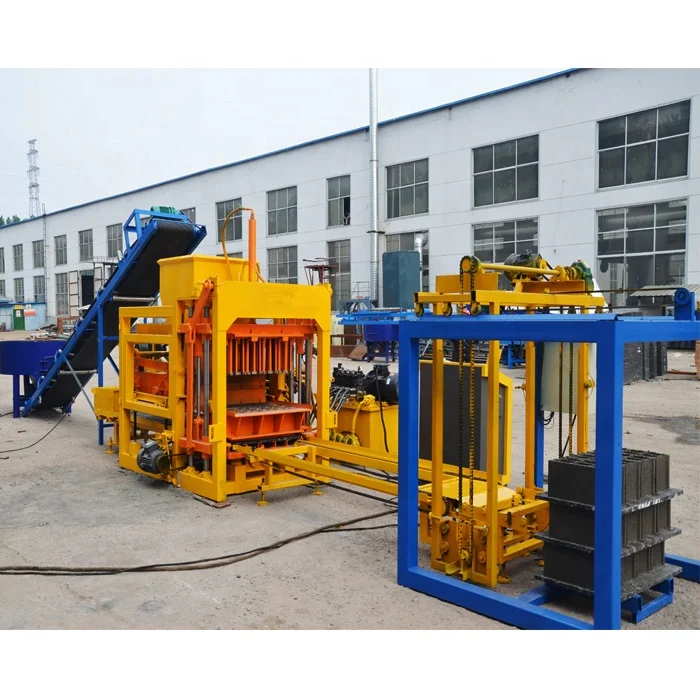
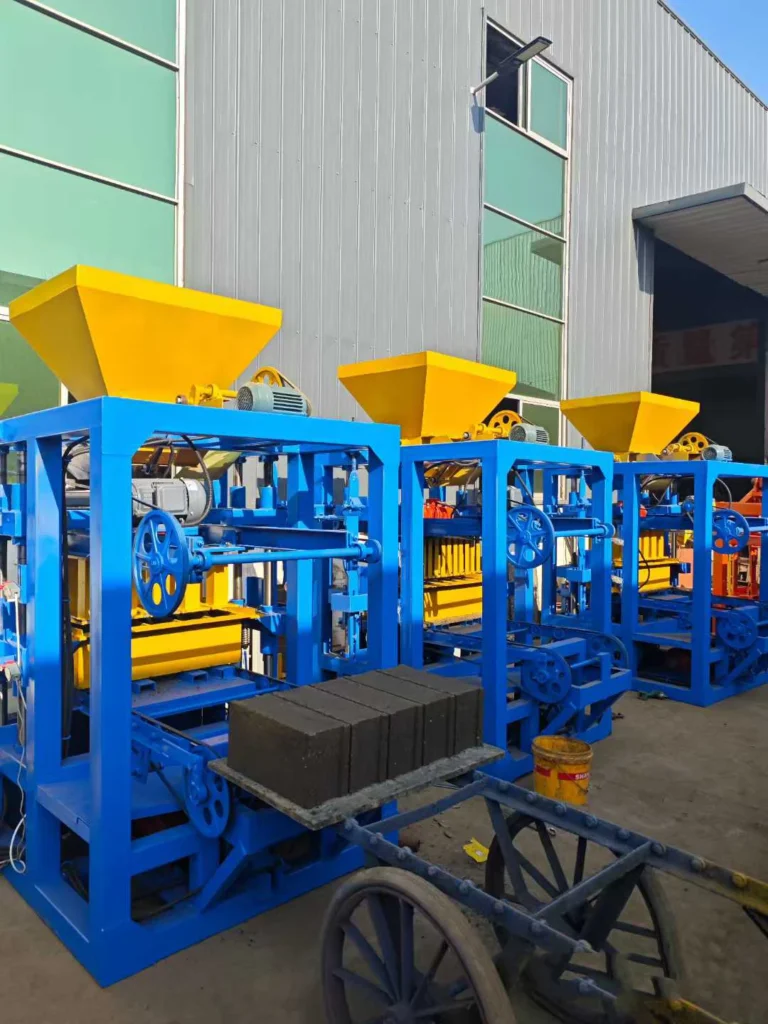
Entry-Tier Stationary Range — the QTJ4-24 anchors the semi-automatic segment of our full machine lineup, giving first-plant buyers a platform-vibration press that can later integrate into a higher-automation line.
Technical Specifications
| Parameter |
Value |
| Model |
QTJ4-24 |
| Product Type |
Semi-Automatic Concrete Block Making Machine |
| Machine Type |
Stationary, platform vibration |
| Molding Method |
Platform Vibration |
| Pallet Size |
850 mm × 450 mm |
| Overall Power |
14.25 kW |
| Overall Dimension (working state) |
3600 mm × 1700 mm × 2560 mm |
| Net Weight |
1750 kg |
| Mould Format — Hollow Block |
390 mm × 190 mm × 190 mm (4 pcs/mould) |
| Mould Format — Solid Brick |
240 mm × 115 mm × 53 mm (21 pcs/mould) |
| Automation Level |
Semi-automatic |
| Vibration System |
Lower platform (2 × 3 kW) + upper device (1.5 kW) |
| Elevating System |
Cone-shape motor with JZQ250 speed reducer, V-belt drive |
| Delivery Device |
Cycloidal pin wheel speed reducer, chain and V-belt drive |
| Machine Frame |
Gantry style, super steel construction, four wear-resisting vertical shafts |
| Control System |
Mechanical and electronic combined |
| Voltage & Frequency |
Configurable to target market (basis to be confirmed) |
| Cycle Time per Format |
Basis to be confirmed per block format and mix |
| Output Capacity |
Basis to be confirmed per block format, material and shift length |
| Assembly State |
Complete with material storing and delivery device |
| Line Configuration |
Paired with JQ350 pan mixer and 6 m belt conveyor |
| Stacking Method |
Optional auto stacker (3-6 layers) or standard manual trolley |
Application Suitability
| Application |
Material or Output |
| Small-scale hollow block production |
Crushed stone, sand, cement blends |
| Solid clay-format brick manufacturing |
Fly ash, sand, cement mixes |
| On-site block making for construction projects |
Locally sourced aggregate and cement |
| Startup block plant operations |
Standard concrete mixes with regional sand |
| Workshop-based production for building material distributors |
Crusher dust, gravel, cement combinations |
What "Pieces per Hour" Leaves Out When Sizing a Semi-Automatic Block Machine for Sale
Every cycle-time claim rests on a block format, a mix design, and an operator rhythm — remove any one and the number means nothing.
I have watched buyers compare two machines on a single output figure, only to discover after delivery that the quoted capacity assumed a solid brick format while they needed hollow blocks. The QTJ4-24 can produce four hollow blocks or twenty-one solid bricks per mould cycle, and the cycle duration shifts with each format, with material flow, and with how fast your crew feeds pallets. [NEED_CITE: block format assumptions in capacity quotations across the industry] Without a format-stated capacity calculation, you are purchasing a guess. That is why our proposal always lists output per format, per shift length, so the semi-automatic block machine for sale you evaluate is matched to what you actually intend to produce.

Where the QTJ4-24 Sits in the Full Stationary Range
Our stationary lineup spans from this entry-tier semi-automatic block machine for sale through mid-range hydraulic presses up to fully automatic lines with pallet return systems. The QTJ4-24 occupies the starting position: platform vibration rather than hydraulic pressing, manual pallet handling as standard, and an output tier suited to first plants or replacement units in existing small workshops. Buyers who know their market volume falls below high-capacity thresholds choose this tier to keep capital outlay modest while preserving the option to add automatic stacking later.
Upgrade Path Without Replacing the Press
Because the pallet size is fixed at 850 mm × 450 mm, a buyer can start with manual trolley stacking and introduce an auto stacker rated for three to six layers when demand grows. The frame geometry and mould interface remain constant, so the semi-automatic block machine for sale today does not become obsolete tomorrow. [NEED_CITE: typical upgrade cycles in small block plants] This matters for entrepreneurs who cannot justify a full automatic line on day one but want a clear migration route.
Vibration Architecture and Block Density
The dual-vibration setup pairs two 3 kW lower-platform motors with a 1.5 kW upper device, compacting the mix from both directions. Lower vibration settles aggregate into the mould cavity while upper vibration tightens the surface finish, which together influence block density and early-stage strength. The gantry-style frame uses four wear-resisting vertical guide shafts to keep the upper mould head aligned during each cycle, preventing uneven compaction that would otherwise produce blocks with weak corners. For a machine in this output tier, that alignment precision is what separates consistent output from a high scrap rate.
Pallet Size, Curing Yard, and Forklift Matching
The 850 mm × 450 mm pallet dimension was chosen to align with standard curing rack spacing and common forklift tine widths in small to medium block plants. When a buyer’s existing curing area is designed around a different pallet footprint, every pallet of wet blocks requires repositioning before it can be stacked for curing. We confirm pallet compatibility during the proposal stage so the semi-automatic block machine for sale arrives matching the racks and handling equipment already on site.
The Hidden Cost of Skipping Voltage and Language Confirmation
I once saw a machine sit idle for three weeks at a West African job site because the control panel was wired for a voltage the local grid did not supply. The QTJ4-24 ships with configurable voltage and frequency, but only if the buyer states the local supply standard before production begins. [NEED_CITE: voltage and frequency standards by export market] A control display in a language the operator cannot read adds further delay during commissioning. These are not engineering failures — they are communication gaps that a two-minute confirmation email would prevent.
Why Source This Machine Here
Block machinery is our single focus, so the QTJ4-24 arrives as part of a matched system: press, mould, pallet, mixer, and conveyor specified together rather than assembled from separate vendors. We configure the vibration frequency and pressure recommendation against the buyer’s actual mix design and local aggregate, not a catalogue default. Mould formats are selected based on what sells in the buyer’s market, with custom drawing options available. The automation level is selectable, letting a buyer begin semi-automatic and plan a future stacking upgrade. Installation support includes operator training on the specific controls and cycle routines of this press.
Documentation & Verification
- Line layout and capacity calculation stating the block format assumed for each output figure
- Machine specification sheet covering power, dimension, vibration ratings, and pallet size
- Mould drawing and format list for both hollow block and solid brick configurations
- Pallet specification matched to buyer’s curing rack spacing and forklift type
- Voltage, frequency, and control display language confirmation before production
- Factory test record using the buyer’s target block format and mix where sample material is available
Installation, Commissioning & Support
- Foundation pad leveled to the 3600 mm × 1700 mm working footprint with anchor bolt provisions
- Dedicated power circuit rated for the 14.25 kW total draw with correct breaker sizing
- Machine shipped complete with material delivery device, requiring platform and frame assembly on arrival
- First-run vibration tuning and cycle adjustment based on local aggregate sample
- Operator training covering mould change routine, pallet feed timing, and daily lubrication points
- Wear parts list identifying guide shafts, vibration motor brushes, and mould liner replacement intervals
Before You Request a Quote
Tell us the block formats your market moves fastest — hollow, solid, paving — along with the daily volume you need to hit per shift. Share your local aggregate type and cement availability so we can adjust the vibration and mix recommendation. Confirm your site voltage, frequency, and preferred control panel language to avoid commissioning hold-ups. If you already have curing racks or forklifts in place, send us the dimensions so the pallet and stacking configuration arrive compatible.
Frequently Asked Questions
Q: Where does the QTJ4-24 sit compared to fully automatic block machines?
A: The QTJ4-24 is the entry tier of our stationary range. It uses platform vibration and semi-automatic pallet handling, keeping investment lower than a hydraulic fully automatic line. Buyers who need moderate daily output without a large capital commitment start here, with the option to add automatic stacking equipment as volume grows.
Q: What realistic daily output can I expect from this machine?
A: Daily output depends on the block format you produce, your mix design, shift length, and crew speed. A capacity calculation that does not state the assumed format is unreliable. We provide a per-format, per-shift output table in every proposal so you can evaluate the QTJ4-24 against your actual product mix.
Q: Can I add automatic stacking to the QTJ4-24 later?
A: Yes. The standard configuration includes a manual trolley for pallet handling. An auto stacker rated for three to six layers can be integrated afterward because the pallet size and frame geometry remain constant. This upgrade path is one reason buyers choose this tier for a first plant.
Q: What voltage and control language options are available?
A: The QTJ4-24 is configurable to the voltage, frequency, and control display language of your target market. We confirm these details before production starts to prevent delays during on-site commissioning. Providing your local grid specification early is essential.
Q: What supporting equipment comes with the machine?
A: The basic production line includes a JQ350 pan mixer and a 6 m belt conveyor alongside the QTJ4-24. The standard stacking method is a manual trolley. Optional items include an auto stacker, block clamper, and pallet handling accessories. We quote each component separately so you choose only what your site requires.

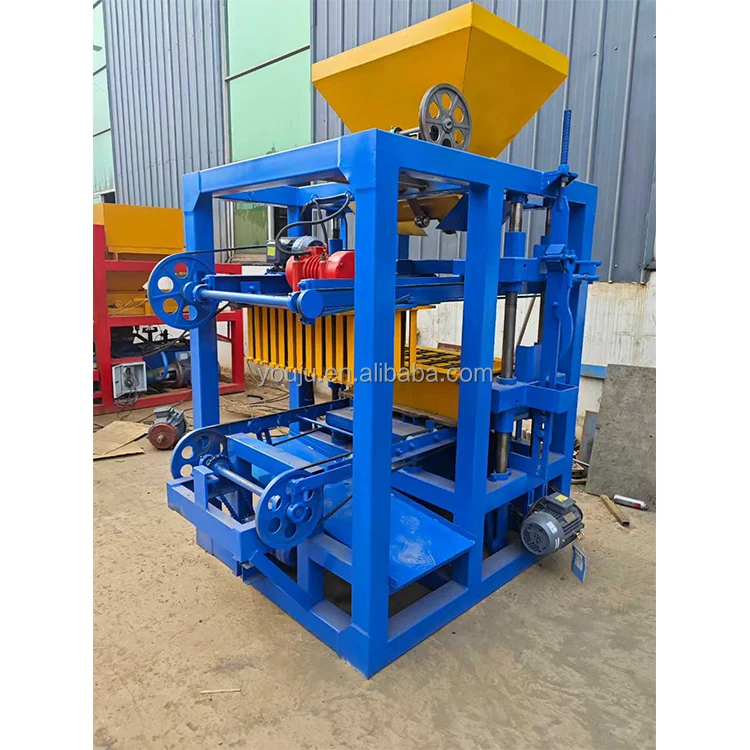
 Stationary block machine