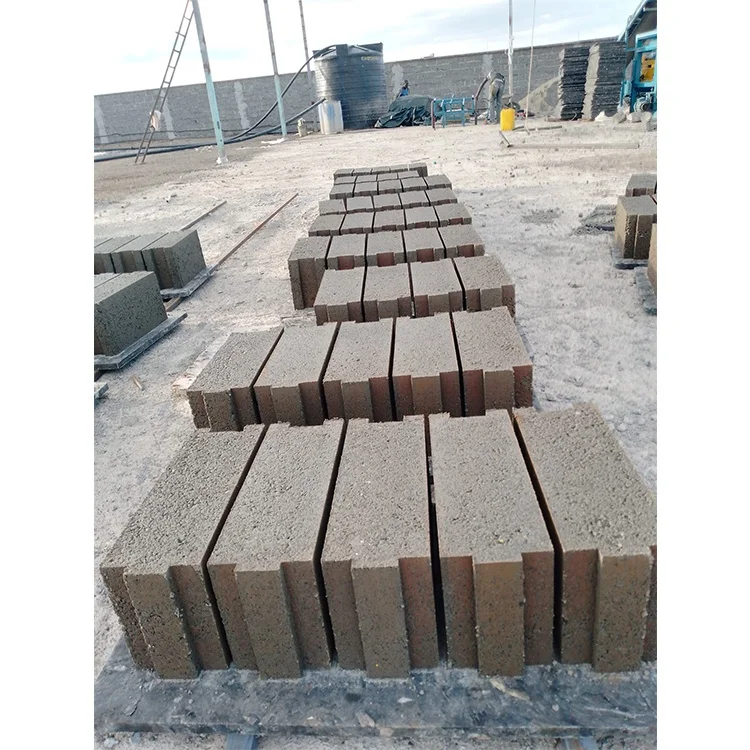
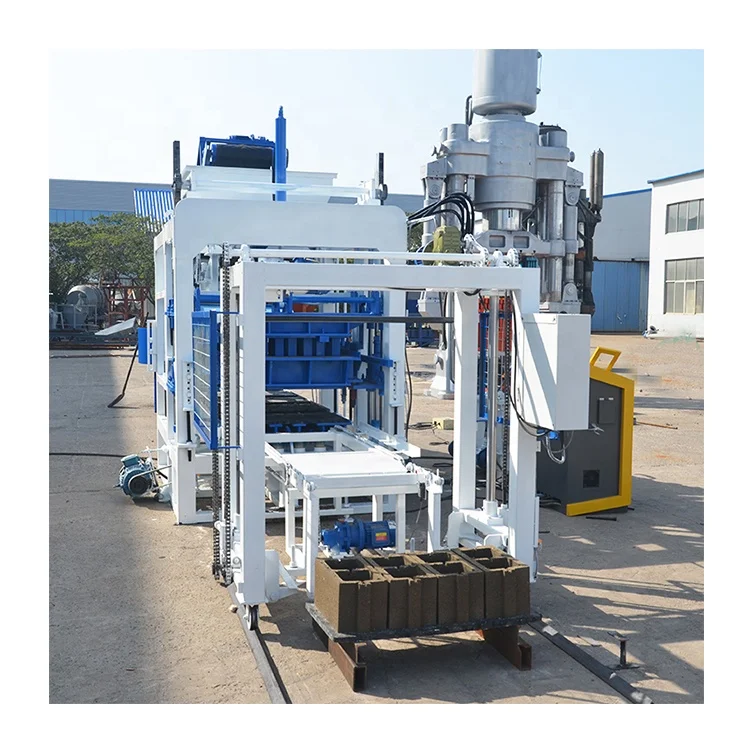
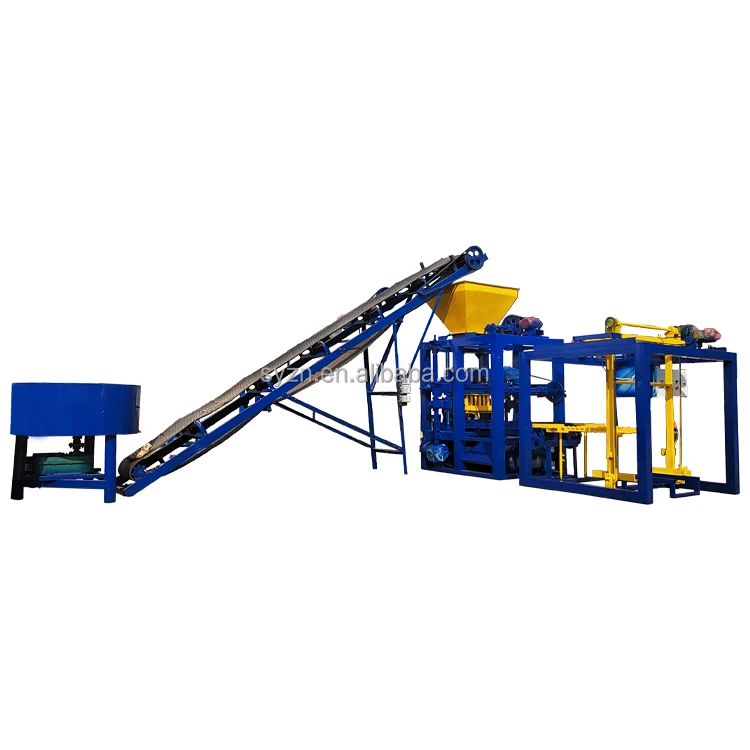
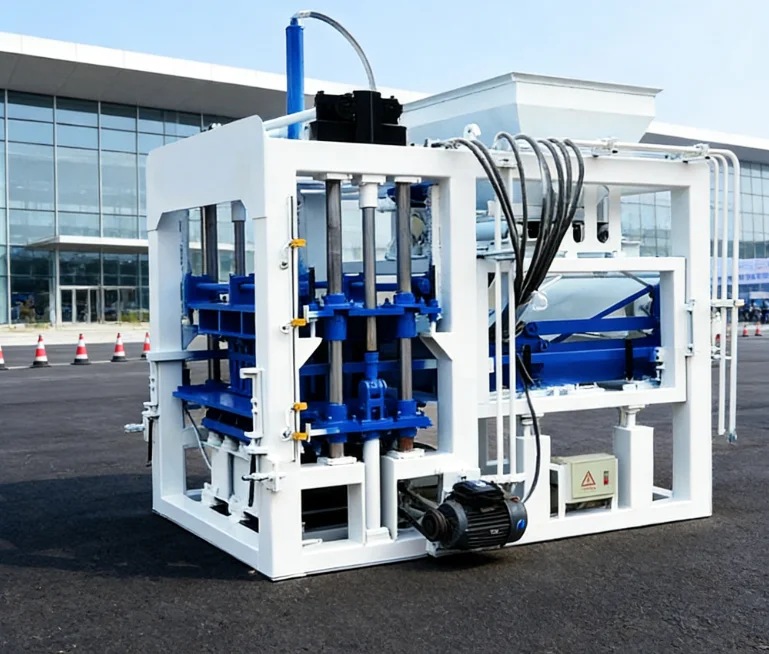
Matched System Engineering — the QT10-15 is specified as a complete press, mould, pallet and handling package rather than sourced from separate suppliers, so cycle times align across every station on your block line.
Technical Specifications
| Parameter |
Value |
| Model |
QT10-15 |
| Product Type |
Fully Automatic Hydraulic Block Making Machine |
| Vibration Technology |
Dynamic and static table with frequency conversion control |
| Vibration Acceleration |
Up to 20g |
| Vibration System |
Four-axis vibration with forced synchronization gear shaft |
| Feeding System |
360° rotating press-in arch breaker for material distribution |
| Noise Reduction |
Flexible vibration reduction on pressure head; adjustable air bag vibration reduction in mold box |
| Mould Compatibility |
Interchangeable moulds for hollow blocks, interlocking bricks, paving bricks, porous bricks, slope protection bricks |
| Automation Level |
Full automatic |
| Wear Parts |
Replaceable cloth platform wear-resistant plate |
| Output Capacity |
(basis to be confirmed per block format) |
| Standards |
CE declaration where applicable |
Application Suitability
| Application |
Material or Output |
| High-volume block plants |
Hollow and solid blocks from crushed stone, river sand and cement |
| Housing and infrastructure projects |
Interlocking and paving blocks for on-site production at scale |
| Concrete product manufacturers |
Kerbstones and slope protection bricks on interchangeable moulds |
| Paver production lines |
Porous and permeable bricks for urban drainage applications |
What Catalogue Cycle Times Leave Out When Sizing an Automatic Block Making Machine Manufacturer
Real daily output depends on the exact block format, mix design and pallet handling speed — not just the press cycle.
I have sat with plant owners who ordered a high-capacity press based on a single cycles-per-hour figure, only to discover that number assumed a standard hollow block while their market actually demanded thinner paving bricks with a longer cure window. The QT10-15 vibration system can reach up to 20g acceleration, but that force must be matched to your local aggregate grading and moisture content before a meaningful output figure can be calculated. When the mix does not suit the vibration profile, the machine still cycles, but the blocks come out under-compacted or cracked, and your real throughput drops well below the brochure number. [NEED_CITE: effect of aggregate grading on block compaction in hydraulic presses]

Positioning the QT10-15 Within the Stationary Range
The Shiyue stationary lineup spans semi-automatic models for smaller workshops up to high-capacity automatic lines like the QT10-15. This model sits in the upper tier, designed for plants that need continuous production across multiple block formats without manual pallet handling between stations. Buyers evaluating an automatic block making machine manufacturer should first determine whether their daily target justifies the footprint and supporting equipment that a full automatic line requires.
How Format Changes Affect Line Throughput
Interchangeable moulds allow the QT10-15 to produce hollow blocks, interlocking bricks, paving bricks, porous bricks and slope protection bricks on the same platform. However, each format carries its own cycle time, vibration profile and pallet spacing. A plant switching between three formats per shift needs to factor in the mould change procedure and the recalibration window, not just the raw press cycle. [NEED_CITE: mould change procedures and downtime in multi-format block plants]
Reading the Vibration and Hydraulic Parameters
The four-axis vibration system with a forced synchronization gear shaft ensures that all four vibration points stay in phase, which keeps block height consistent across the entire pallet. Without synchronization, the outer edges of the pallet receive less compaction, producing blocks that vary in density and strength. The frequency conversion control allows the operator to adjust vibration intensity for different formats — a heavy hollow block needs a longer, lower-frequency pulse, while a thin paving brick requires a short, high-frequency burst. The 360° rotating press-in arch breaker prevents material bridging in the hopper, ensuring that each mould cavity fills uniformly before the press descends. On the maintenance side, the replaceable cloth platform wear-resistant plate means that routine surface wear does not require a full table replacement, keeping service intervals manageable for plants running extended shifts.
The Cost of Skipping Pallet and Curing Specification
When pallet size is chosen without considering the curing rack dimensions and the forklift already in your yard, you end up either wasting curing space or buying new handling equipment you did not budget for. Similarly, if the stacking and cubing station is left out of the quotation, blocks pile up at the end of the line and must be moved by hand, negating the labour savings that full automation was supposed to deliver. These gaps rarely show up on a spec sheet but they appear quickly once the line is running. [NEED_CITE: pallet size mismatch and curing area inefficiency in block plants]
Why Source the QT10-15 Through This Range
The machine, mould, pallet and handling equipment are specified together as one matched system, so cycle times at each station align and the press is not left waiting. Configuration starts from your actual mix design and local aggregate rather than a catalogue default, which prevents the strength and finish issues that arise when the machine is set up for materials you cannot source. Mould design covers the formats your market actually sells, including custom drawings when standard options do not fit. Automation level is selectable, allowing a buyer to begin with semi-automatic pallet handling and upgrade to full stacking and cubing as volume grows. Installation includes on-site commissioning and operator training, so the team running the line knows how to adjust vibration profiles and feeding parameters for each format.
Documentation & Verification
- Line layout and capacity calculation stating the specific block format assumed for output figures
- Machine specification sheet confirming vibration force, pallet size and cycle time per format
- Mould drawing and format list covering every interchangeable mould included in the scope
- Voltage, frequency and PLC display language confirmed in writing before production begins
- Factory test record on the buyer’s selected block format before dispatch
- Hydraulic and electrical schematic with wear parts and mould list for local maintenance planning
Installation, Commissioning & Support
- Foundation plan matched to the QT10-15 vibration load and overall footprint
- Dedicated power circuit sized for the full automatic line including feeding and stacking stations
- Machine dismantled for container loading and reassembled on-site with alignment checks
- Vibration frequency and hydraulic pressure calibrated to the buyer’s mix during first run
- Operator training covering mould change, cloth platform plate replacement and daily checks
- Wear parts list identifying the cloth platform plate and other routine replacement items
What to Prepare Before Requesting a Quotation
Share your target block formats with dimensions, the daily output you need per format and the raw material test report showing aggregate grading and moisture content. Confirm the voltage and frequency at your site along with the preferred PLC display language. If you already have pallets, forklifts or curing racks on site, provide their dimensions so the line can be configured around your existing handling setup.
Frequently Asked Questions
Q: What output can the QT10-15 achieve, and which block format is that figure based on?
A: Output depends entirely on the block format, mix design and pallet cycle time. A capacity calculation is prepared per format — for example, a 400×200×200mm hollow block will yield a different daily figure than a 200×100×60mm paving brick. Request the calculation sheet that states the exact format and cycle assumption behind every output number.
Q: Where does the QT10-15 sit in the range compared to semi-automatic and mobile models?
A: The QT10-15 occupies the high-capacity fully automatic tier of the stationary range. Semi-automatic models suit smaller plants with lower investment and manual pallet handling, while mobile egg-laying machines serve on-site production without a fixed curing area. The QT10-15 is intended for dedicated block plants running continuous shifts across multiple formats.
Q: What plant footprint and supporting equipment does a QT10-15 automatic line require?
A: The line includes raw material feeding, mixing, pallet feeding, the press itself, automatic stacking and curing rack handling. Total footprint depends on pallet size, curing rack layout and whether a cubing station is included. A line layout drawing is provided during the proposal stage so you can verify the space against your available floor area.
Q: Which mould formats are available, and how is mould change handled?
A: Standard interchangeable moulds cover hollow blocks, interlocking bricks, paving bricks, porous bricks and slope protection bricks. Custom moulds can be designed to buyer drawings. Mould change involves releasing the clamping system, lifting out the current mould and lowering the replacement, followed by vibration profile adjustment for the new format.
Q: What voltage, frequency and control language options are confirmed before shipment?
A: Voltage, frequency and PLC display language are confirmed in writing before production begins. This prevents commissioning delays caused by mismatched power supply or an interface the operator cannot read. The confirmation document is included with the shipment paperwork.

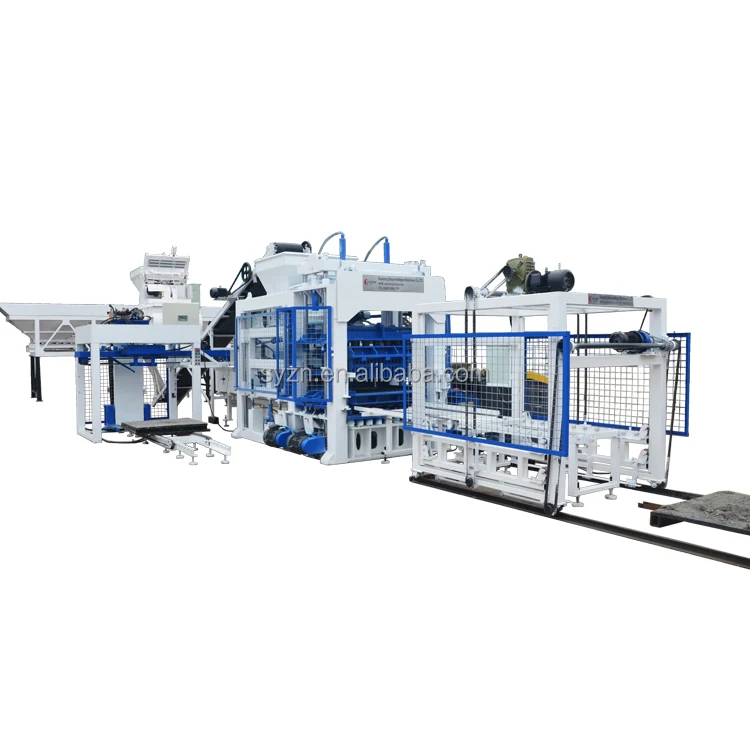
 Stationary block machine