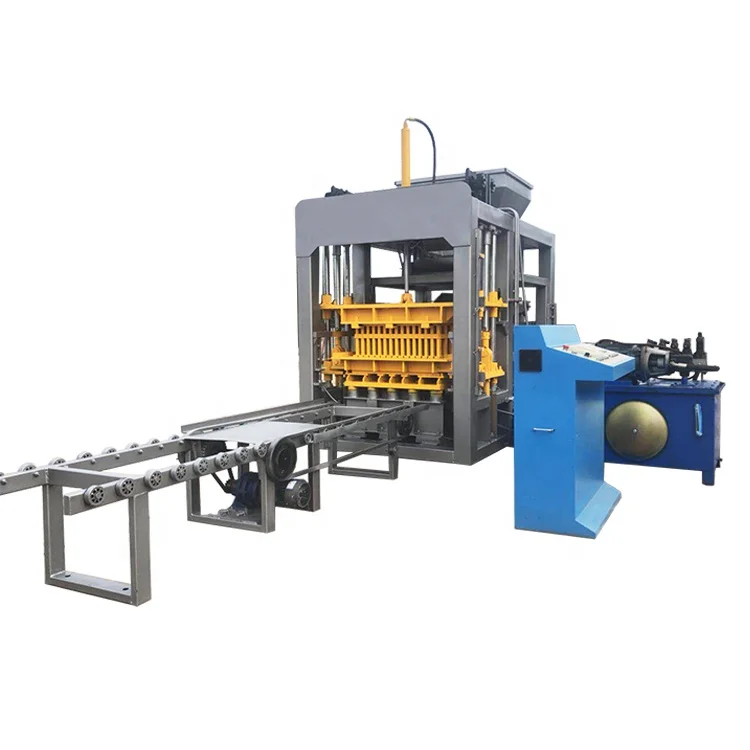
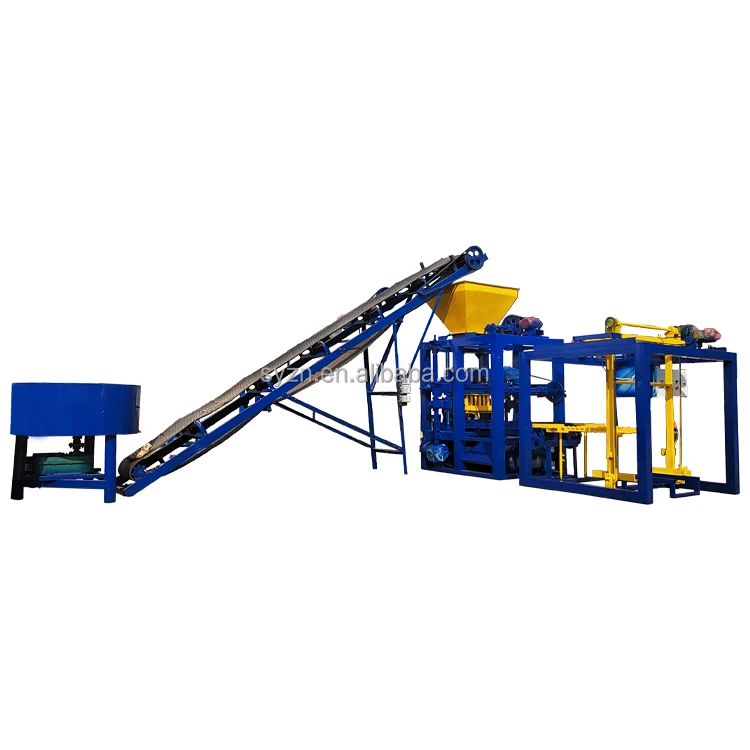
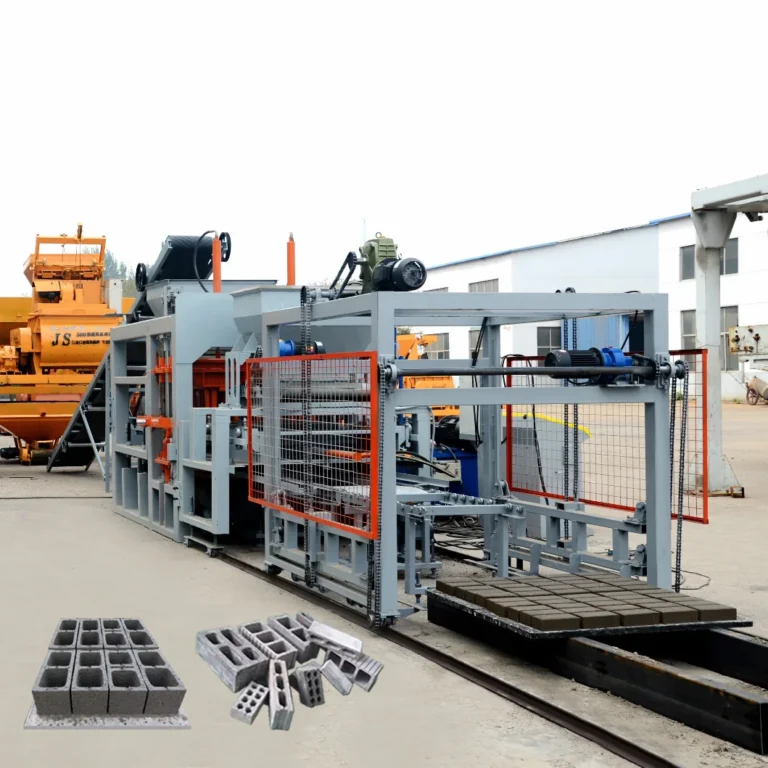
Hydraulic Vibration Matched to Your Mix — The QT7-15 automatic block making machine for sale is specified against your local aggregate and target block format, not a catalogue default, so the 100 kN vibration force and hydraulic pressure work together to produce consistent density across every cycle.
Technical Specifications
| Parameter |
Value |
| Model |
QT7-15 |
| Product Type |
Automatic Hydraulic Hollow Block Making Machine |
| Host Machine Power |
45 kW |
| Voltage |
220 / 380 / 415 / 440 V (configurable to site supply) |
| Control System |
Siemens PLC with independently developed control program |
| Overall Dimensions (L × W × H) |
3200 × 2300 × 2750 mm |
| Net Weight |
6 Tons |
| Molding Area |
1150 × 700 mm |
| Workshop Area Required |
200 m² |
| Vibration Force |
100 kN |
| Vibration Method |
Hydraulic + Platform Vibration |
| Vibration Frequency |
2800 – 4500 times / min (adjustable) |
| Pallet Size |
1150 × 700 × 25 mm |
| Molding Period |
15 seconds (basis not stated in source — confirm block format and material) |
| Motor |
Germany SIEMENS or CE standard brand |
| Travel Switch |
France Schneider / Japan Omron |
| Mould Hardness |
54 – 58 HRC (heat treatment + carburizing, lifespan > 100,000 cycles) |
| Welding Standard |
CO₂ protection welding, CE standard materials |
| Automation Level |
Automatic (pallet feeder, brick receiver, hydraulic station included) |
| Grouped Equipment |
PLD1200 Batching Machine, JS500 Mixer, Conveyor Belt, Hydraulic Trolley, SY-4 Stacker (3 kW, 600 kg) |
| Color Paver Option |
Available with add-on color feeding system |
| Certification |
CE (materials and spare parts per international CE standards) |
Application Suitability
| Application |
Material or Output |
| Hollow block production |
Crushed stone, sand, cement, fly ash aggregates |
| Solid block production |
Dense aggregate mixes for load-bearing walls |
| Paving block production |
Fine aggregate and cement blends for interlocking pavers |
| Color paver production |
Dual-layer mix with surface color feeding system |
| Medium-to-high capacity stationary plants |
Daily output scaled to pallet cycle and format chosen |
What "15-Second Cycle Time" Actually Means for Your Daily Output
A cycle time without a named block format is not a capacity figure — it is a stopwatch reading.
I spent years on the buying side before switching to selling, and one pattern repeated across every plant I visited: the quoted cycle time looked impressive on paper, but nobody had pinned down which block size, wall thickness, or mix design that number assumed. When the buyer ran a different format — say a 200 mm solid block instead of a 150 mm hollow block — the real output dropped and the production plan fell apart before the first week ended [NEED_CITE: block format impact on actual cycle time in hydraulic vibration presses]. The QT7-15 automatic block making machine for sale is quoted with cycle time stated alongside the exact format so your capacity planning starts from an honest baseline.

Placing the QT7-15 Within the Full Stationary Machine Range
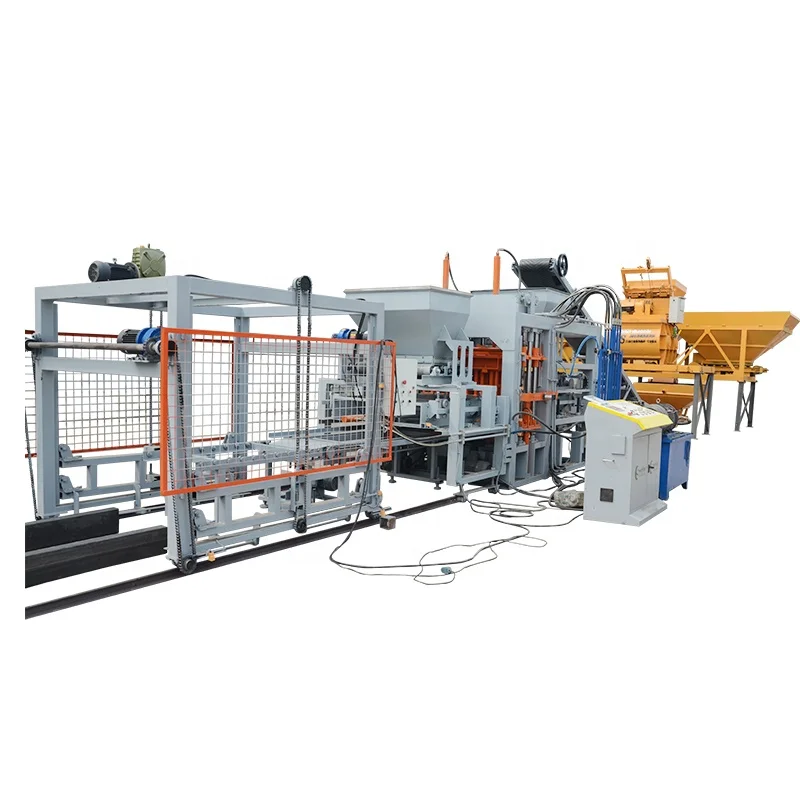
Our stationary block machine range spans from small semi-automatic units suited to first-time entrepreneurs up to high-capacity fully automatic lines. The QT7-15 sits in the mid-to-high tier, positioned for buyers who have outgrown manual pallet handling and need the complete line — batching, mixing, pressing, pallet feeding, stacking — specified as one matched system. This is where an automatic block making machine for sale starts to deliver the consistency and labour reduction that a semi-automatic setup cannot reach.
Why the Full Line Grouping Matters at This Tier
At the QT7-15 output tier, the press itself is only as productive as the stations feeding and receiving around it. The PLD1200 batching machine, JS500 mixer, conveyor belt, hydraulic trolley and SY-4 stacker are included in the standard grouping so upstream material delivery and downstream pallet handling keep pace with the press cycle. When these stations are sourced separately, mismatched cycle times leave the press idle between strokes, and the daily output never reaches the quoted figure [NEED_CITE: line balancing in stationary block production plants]. Specifying the entire line as one unit eliminates that gap.
Reading the Specs That Determine Block Quality
The 100 kN vibration force combined with hydraulic pressure determines how densely the mix is compacted into the mould cavity. Vibration frequency is adjustable between 2800 and 4500 times per minute, which allows the operator to dial in the right energy level for different aggregate gradations — finer sand needs higher frequency, coarser crushed stone benefits from stronger amplitude. The mould is heat-treated and carburized to 54–58 HRC hardness, rated for over 100,000 cycles, which keeps dimensional accuracy stable across long production runs and delays the first mould replacement order. Pallet size at 1150 × 700 × 25 mm must match the curing racks and forklifts already on site; ordering pallets that do not fit existing curing infrastructure creates a bottleneck no amount of press speed can fix.
The Cost of Skipping Voltage Confirmation Before Production
Early in my career a client ordered a QT7-15 hollow block machine and nobody confirmed the local power supply. The machine shipped wired for 380 V / 50 Hz while the project site ran on 440 V / 60 Hz. That unit sat wrapped in plastic under the sun for three weeks waiting for a transformer, while the contractor paid idle crew wages and the project schedule slipped [NEED_CITE: electrical mismatch delays in construction equipment commissioning]. Voltage, frequency and PLC display language are now confirmed before any production drawing is released, because a machine that cannot start on arrival is not an asset — it is a liability.
Why Buyers Source This Tier From a Single-System Supplier
Block machinery is the sole product focus here, which means the press, mould, pallet and handling equipment are specified as one matched system rather than assembled from unrelated vendors. Configuration is set against the buyer’s actual mix design and local aggregate, not a catalogue default. Mould design covers the formats the buyer’s market actually sells, including custom drawings when standard formats do not apply. Automation level is selectable — a buyer can start semi-automatic and move to this automatic tier when volume justifies it. Installation and commissioning support includes on-site operator training so the crew is productive from the first production day.
Documentation & Verification
- Line layout and capacity calculation stating the exact block format assumed for each output figure
- Machine specification sheet covering host press, grouped equipment and pallet spec as one matched set
- Mould drawing and format list showing which block formats the mould set covers
- Voltage, frequency and PLC display language confirmation record signed before production release
- Hydraulic and electrical schematic for on-site maintenance team reference
- Factory test record on buyer’s chosen block format before dispatch
Installation, Commissioning & Support
- Foundation pad sized to 3200 × 2300 mm machine footprint with anchor bolt plan provided
- Dedicated 45 kW power circuit with confirmed voltage and frequency before wiring at factory
- Machine shipped in dismantled state with numbered components for on-site reassembly
- First-run commissioning includes vibration frequency tuning to buyer’s specific mix design
- Operator training covers PLC navigation, mould change procedure and daily maintenance checklist
- Wear parts and mould list supplied with first replacement order planning included
What to Include in Your First Inquiry
To configure the QT7-15 correctly for your plant, share the block formats your market demands, the daily output you need for each format, and your local raw material type and gradation. Confirm your site voltage, frequency and preferred PLC display language so electrical design starts right. Let us know your available workshop area and whether existing curing racks and forklifts dictate the pallet size. If you are replacing an aging machine, tell us what worked and what did not on the previous line.
Frequently Asked Questions
Q: Where does the QT7-15 sit within the full block machine range?
A: The QT7-15 occupies the mid-to-high tier of our stationary automatic block making machine for sale lineup. Below it, semi-automatic models suit lower investment and smaller output. Above it, higher-tier automatic lines serve large-scale plants. The QT7-15 is positioned for buyers who need full-line grouping — batching, pressing, stacking — without stepping to the largest footprint.
Q: How is the 15-second cycle time verified and what format does it assume?
A: The 15-second figure is measured on a specific block format and mix that must be stated in the capacity calculation document. Different formats, wall thicknesses and aggregate types change the cycle. We provide a written capacity table showing cycle time and daily output for each block format you plan to produce.
Q: What voltage and frequency options are available for my market?
A: The QT7-15 supports 220, 380, 415 and 440 V configurations at either 50 or 60 Hz. PLC display language is configurable to match your operator team. Voltage and frequency are confirmed in writing before production begins so the machine arrives ready to connect.
Q: How much workshop space does this automatic line require?
A: The QT7-15 and its grouped equipment need approximately 200 m² of workshop area. This accounts for the press, batching station, mixer, conveyor path, pallet circulation and stacking zone. A line layout drawing is provided during the proposal stage to verify fit within your building.
Q: Can I start semi-automatic and upgrade to this automation level later?
A: Yes. The automation architecture allows a buyer to begin with semi-automatic pallet handling and add automatic pallet feeding, stacking and cubing as volume grows. The press platform and PLC remain the same, so the upgrade path does not require replacing the host machine.

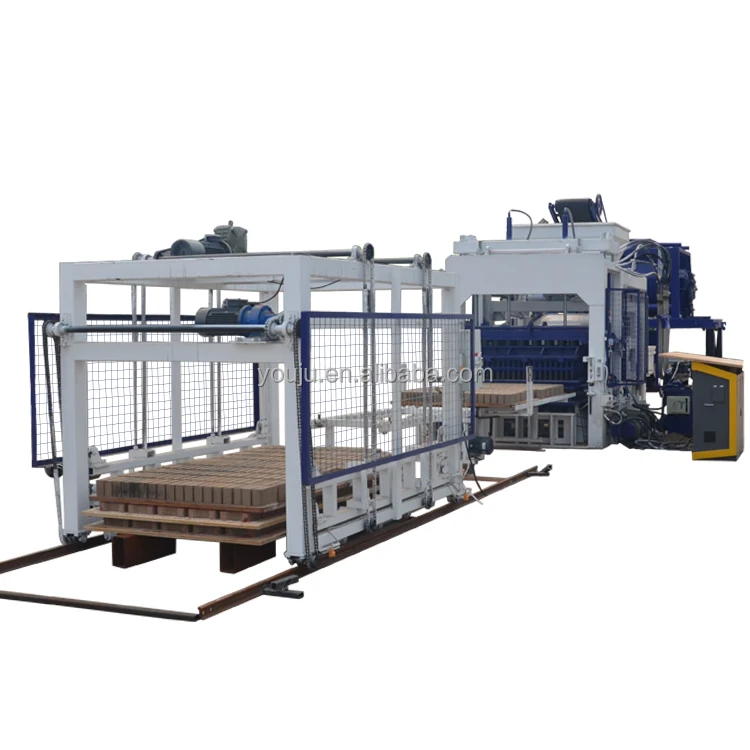 Stationary block machine