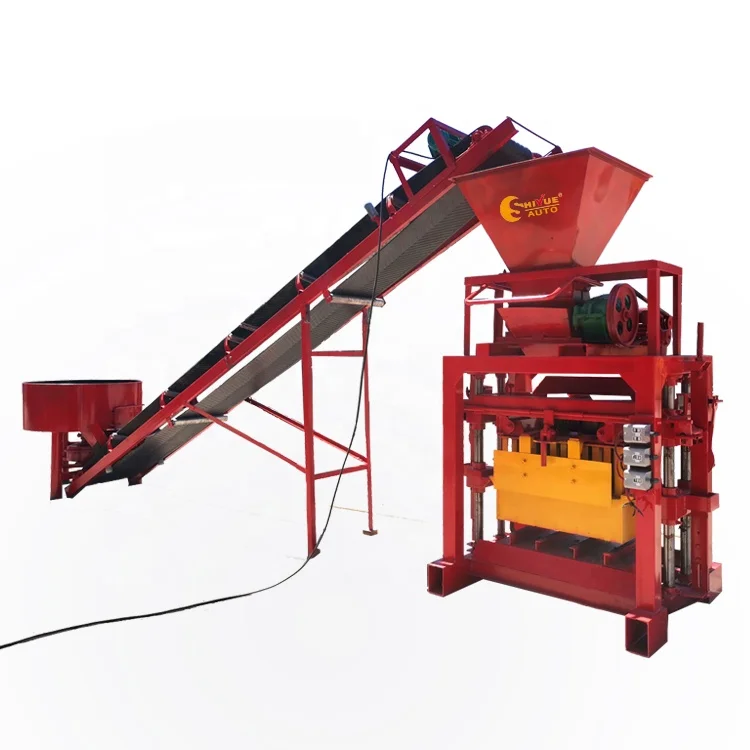
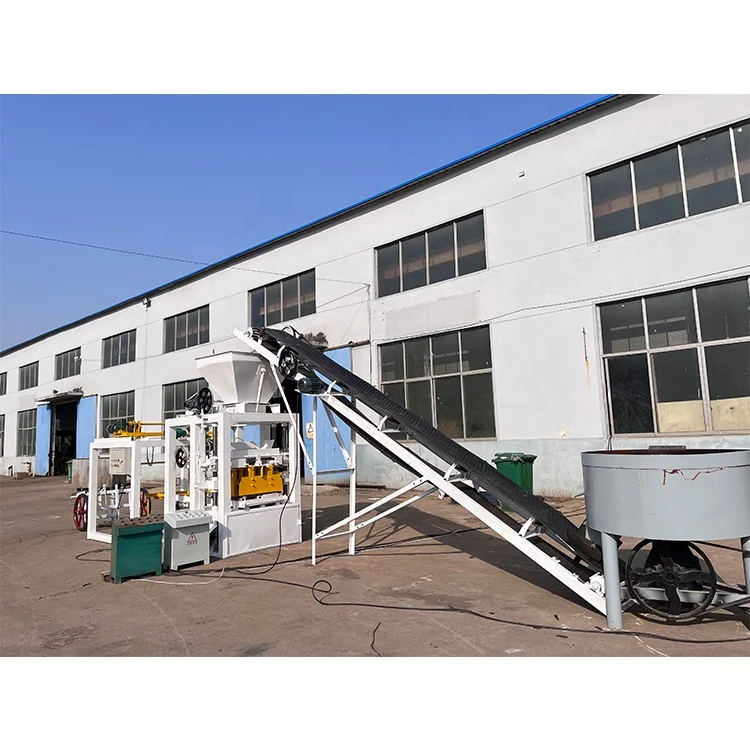
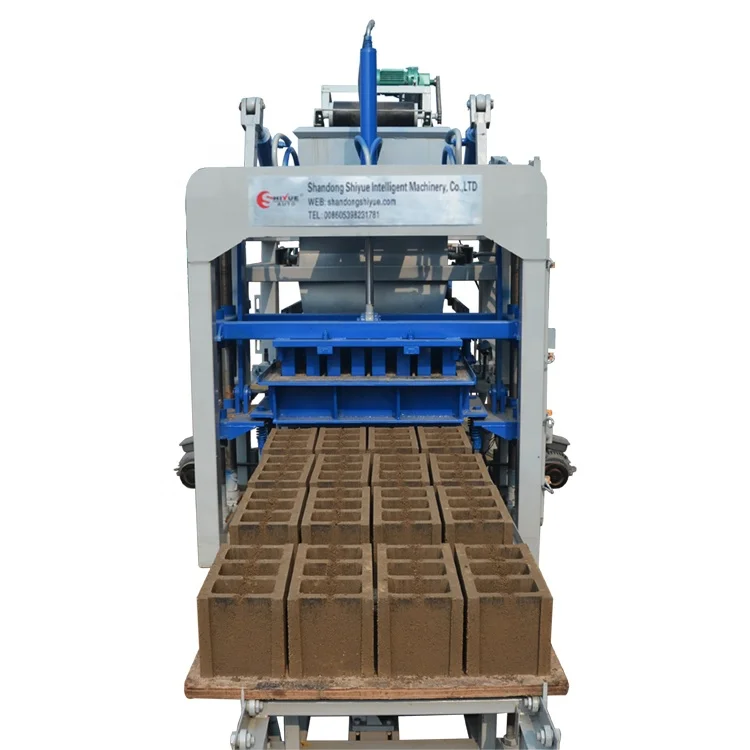
Matched System Configuration — The QT6-15 block press, moulds, pallets and handling equipment are specified as one integrated line rather than sourced from separate suppliers, ensuring cycle times and format changes align across every station.
Technical Specifications
| Parameter |
Value |
| Model |
QT6-15 |
| Product Type |
Automatic Concrete Block Making Machine |
| Overall Dimensions (L×W×H) |
8200×1700×2950 mm |
| Vibration Frequency |
0-60 Hz (adjustable) |
| Vibration Form |
Platform Vibration |
| Vibration Force |
45 kN |
| Moulding Mode |
Automatic loading, vibration moulding |
| Demolding Method |
Hydraulic |
| Pallet Size |
880×850 mm |
| Molding Cycle |
15-20 s (basis not stated in source — confirm block format / material / thickness) |
| Overall Power |
37 kW |
| Total Mass |
7 T |
| Control System |
PLC with touch screen HMI |
| Hydraulic System |
Independent integrated hydraulic station, isolated from dust and vibration |
| Output — Hollow Block 400×200×200 mm |
1080-1440 pcs/h, 8640-11520 pcs/8 hr |
| Output — Hollow Block 400×150×200 mm |
1440-1920 pcs/h, 11520-15360 pcs/8 hr |
| Output — Solid Brick 240×115×53 mm |
5760-7680 pcs/h, 46080-61440 pcs/8 hr |
| Output — Rectangular Paver 200×100×60 mm |
2160-2880 pcs/h (cycle 20-25 s), 17280-23040 pcs/8 hr |
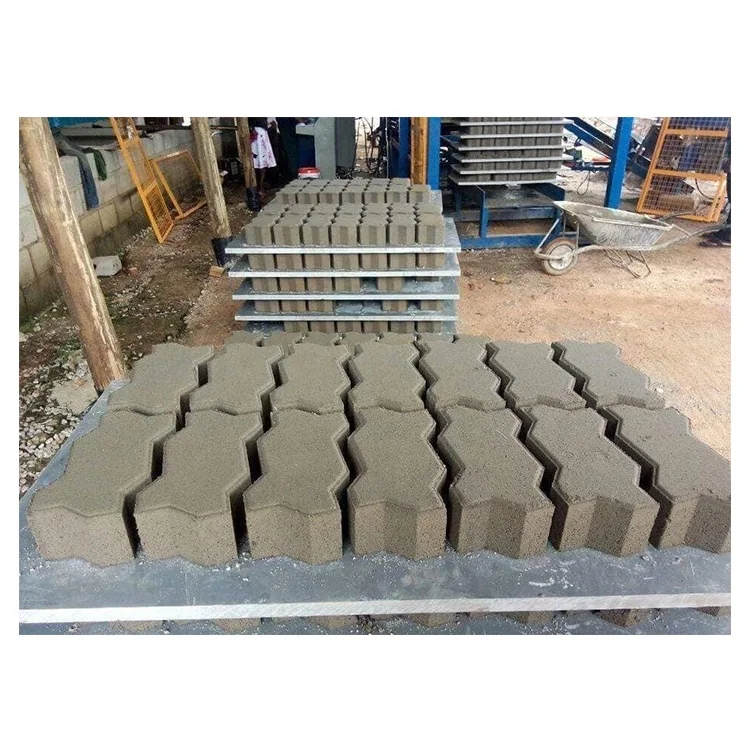
| Output — Zigzag Paver 225×112.5×60 mm |
2160-2880 pcs/h (cycle 20-25 s), 17280-23040 pcs/8 hr |
| Recommended Factory Area |
1200 m² |
| Warranty |
1 year (excluding spare parts) |
| Certification |
CE (where applicable) |
Application Suitability
| Application |
Material or Output |
| Hollow block production for load-bearing and partition walls |
Crushed stone, sand, cement, fly ash blends |
| Solid brick manufacturing |
Cement-stabilised aggregate mixes |
| Rectangular and interlocking paving blocks |
High-density concrete with fine aggregate |
| On-site production by construction and housing contractors |
Locally sourced aggregate matched to site conditions |
| Format expansion for existing concrete product plants |
Multiple mould formats on one pallet size |
What the "Cycles per Hour" Figure Never Tells You
Every output number must name the block format it assumes, or it means nothing on the factory floor.
Buyers regularly sign contracts based on a headline capacity figure, then discover their actual daily tally falls well short once production starts. The reason is simple: the quoted number assumed a thin paver on a short cycle, while the buyer’s daily orders are mostly 200 mm hollow blocks that need longer vibration and heavier hydraulic pressure. On projects across the Middle East, I have watched crews run machines well outside their intended cycle window because the format was never factored into the capacity calculation [NEED_CITE: block format impact on actual daily output in concrete masonry production]. The QT6-15 automatic block making machine manufacturer documentation addresses this by listing output per individual format rather than a single blended figure.

Mapping Each Output Tier to Its Block Format
Capacity claims become meaningful only when tied to the specific block the buyer sells. The QT6-15 produces hollow blocks at 400×200×200 mm within a stated range of 1080-1440 pieces per hour, while the smaller 400×150×200 mm hollow block runs at 1440-1920 pieces per hour because the lighter mould completes its cycle faster. Paver formats, both rectangular and zigzag, are rated at 2160-2880 pieces per hour on a longer 20-25 second cycle that accounts for the higher density required for traffic-bearing surfaces. This format-by-format breakdown is how the QT6-15 automatic block making machine manufacturer lets buyers plan realistic shifts.
Positioning the Press Within the Full Shiyue Range
The QT6-15 occupies the mid-capacity tier in the Shiyue automatic block machine lineup. Smaller semi-automatic models serve workshops that run one or two formats with manual pallet handling, while higher-tier automatic lines add fully integrated stacking, cubing and curing rack systems for continuous three-shift operation. A buyer stepping up from a semi-automatic press gains PLC-controlled process consistency and fault diagnosis without committing to the footprint and capital of the largest models. The recommended 1200 m² factory area for the QT6-15 reflects a line that includes raw material feeding and mixing but leaves room to add pallet return conveyors and automatic stacking later as output targets grow.
How Vibration, Pressure and Pallet Size Shape Every Block
The platform vibration system operates across an adjustable 0-60 Hz range and delivers 45 kN of vibration force — two variables that must be tuned together with the hydraulic pressure to suit the buyer’s specific aggregate gradation and cement content. On sites where local sand carries higher fines or clay content, vibration frequency needs to drop while pressure increases to push air out of a stickier mix; getting this balance wrong produces blocks that crack during curing or fail compressive strength tests. The independent hydraulic station sits away from the main press vibration and dust ingress, which matters because hydraulic valve wear accelerates quickly when contaminated oil circulates through the demolding cylinders [NEED_CITE: hydraulic contamination effects on block press reliability]. The 880×850 mm pallet size must be checked against the buyer’s existing curing racks and forklift capacity before the order is confirmed, since a mismatch here forces costly pallet replacement across the entire plant.
When the Wrong Configuration Follows You for Years
A pallet size chosen without checking the curing area means blocks are stacked by hand at the end of every shift, cancelling the throughput the press was bought to achieve. Voltage and frequency confirmed too late lead to motors that overheat or PLC boards that refuse to boot on commissioning day. A mould change system that takes most of a morning makes format flexibility theoretical rather than practical, especially for plants running three or four block types in a single week [NEED_CITE: mould change time impact on multi-format block plants]. These are the consequences that show up months after installation, long after the purchase order is signed.
Why Buyers Source This Press Through Shiyue
Block machinery is the single manufacturing focus, so the QT6-15 press, its moulds, pallets and handling stations leave the factory as one matched system rather than a collection of components from different vendors. Configuration starts from the buyer’s actual mix design and local aggregate sample, not a catalogue default, which means vibration and hydraulic parameters are set before the machine ships. Mould design covers every format the buyer’s market demands, including custom profiles produced to buyer-supplied drawings. Automation level is selectable, allowing a plant to begin with semi-automatic pallet handling and add stacking or cubing modules as demand grows. Installation support includes on-site commissioning and operator training so the crew can run independent shifts from the first week.
Documentation & Verification
- Line layout and capacity calculation stating the block format behind each output figure
- Machine specification sheet with hydraulic and electrical schematics for the QT6-15
- Mould drawing and format list supplied with quotation, including custom profiles
- Voltage, frequency and PLC display language confirmation before production starts
- Factory test record with photographs taken on the buyer’s target block format
- Packing photographs and customs documentation support before container loading
Installation, Commissioning & Support
- 1200 m² factory area required to accommodate the 8200 mm press length plus material feed and pallet return zones
- 37 kW total power draw needs a dedicated circuit with confirmed voltage and frequency matching the PLC and motor ratings
- Machine dismantled into container-load sections and reassembled on-site with alignment checks on the vibration platform
- First-run commissioning covers vibration frequency, hydraulic pressure and cycle timing tuned to the buyer’s aggregate sample
- Operator training on PLC touch screen HMI, fault diagnosis menus and safe logic interlock circuits
- Wear parts list and mould inventory supplied at delivery so replacements are on hand before first changeover
Start the Conversation With the Right Details
To size the QT6-15 correctly for your plant, share the block formats you plan to produce, your target daily output per format, and the raw materials available locally including aggregate type and cement grade. Confirm your site voltage, frequency and preferred PLC display language so electrical components are specified before production begins. Let us know your existing curing area dimensions and forklift capacity to verify pallet compatibility, and indicate whether you need supporting equipment such as pallet feeders or stacking systems included in the line layout.
Frequently Asked Questions
Q: How is the QT6-15 output capacity calculated for each block format?
A: Output figures are stated per specific block dimension and cycle time. For example, the 400×200×200 mm hollow block rating of 1080-1440 pieces per hour assumes the standard molding cycle for that format. Different formats have different cycle lengths, so daily shift totals must be recalculated for whichever block dominates your production schedule.
Q: Where does the QT6-15 fit compared to other models in the Shiyue range?
A: It sits in the mid-capacity automatic tier, above semi-automatic workshop presses and below high-output fully integrated lines. Buyers choosing the QT6-15 typically need PLC-controlled consistency across multiple formats without the larger footprint and capital commitment of the top-tier models.
Q: What electrical and control options should I confirm before ordering?
A: Voltage, frequency and PLC display language must match your site supply and operator preference. These are confirmed before production so motors, transformers and the touch screen HMI arrive ready for commissioning without rewiring or board replacement on site.
Q: Can automation levels be upgraded after the machine is installed?
A: Yes. The QT6-15 supports a staged automation path. Buyers can start with manual or semi-automatic pallet handling and later add automatic pallet feeding, stacking or cubing modules as production volume grows and labour costs shift.
Q: Which supporting equipment items are included versus quoted separately?
A: The core press, hydraulic station and PLC are standard. Raw material feeding, mixers, pallet return conveyors, stacking systems and curing rack handling are configured based on your line layout and may appear as separate line items depending on the automation level selected.

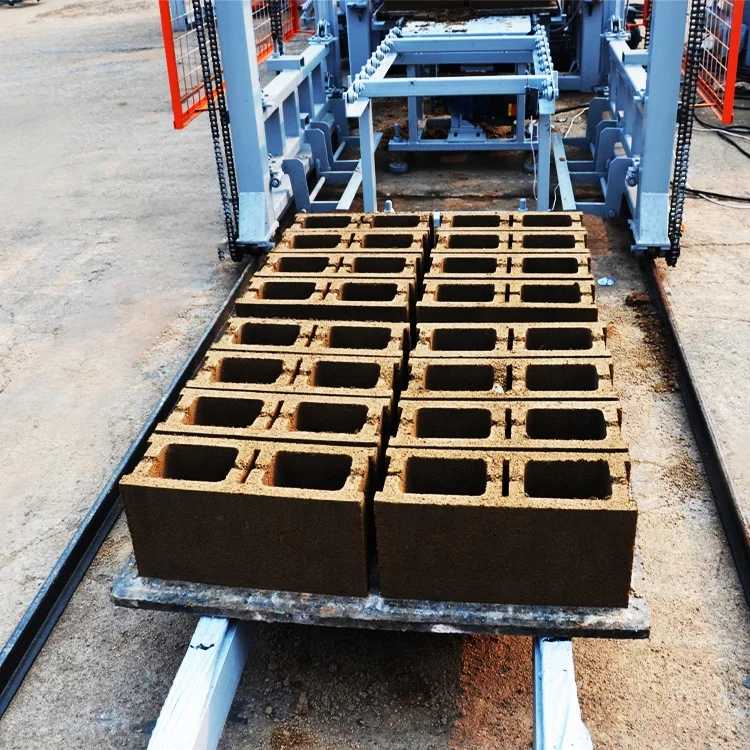
 High quality block machine