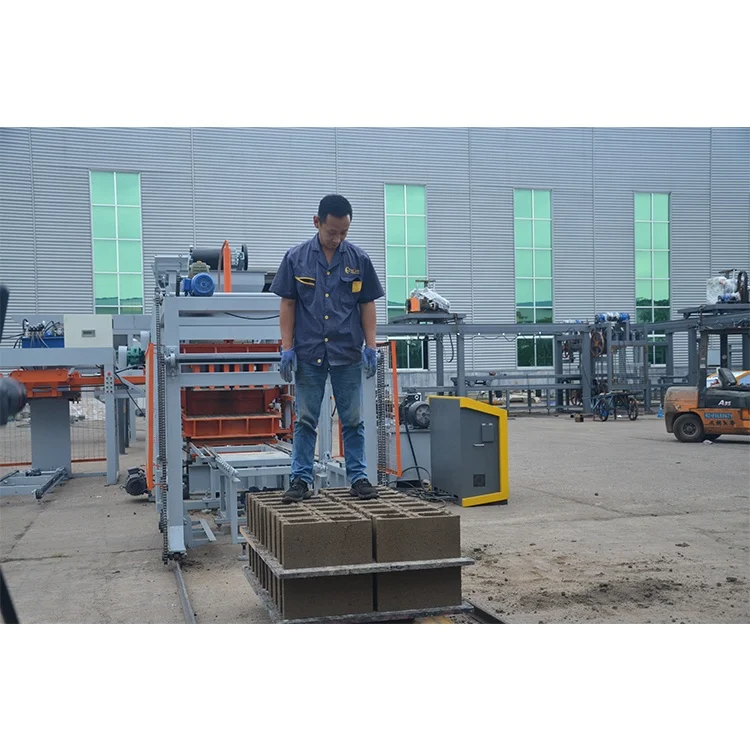
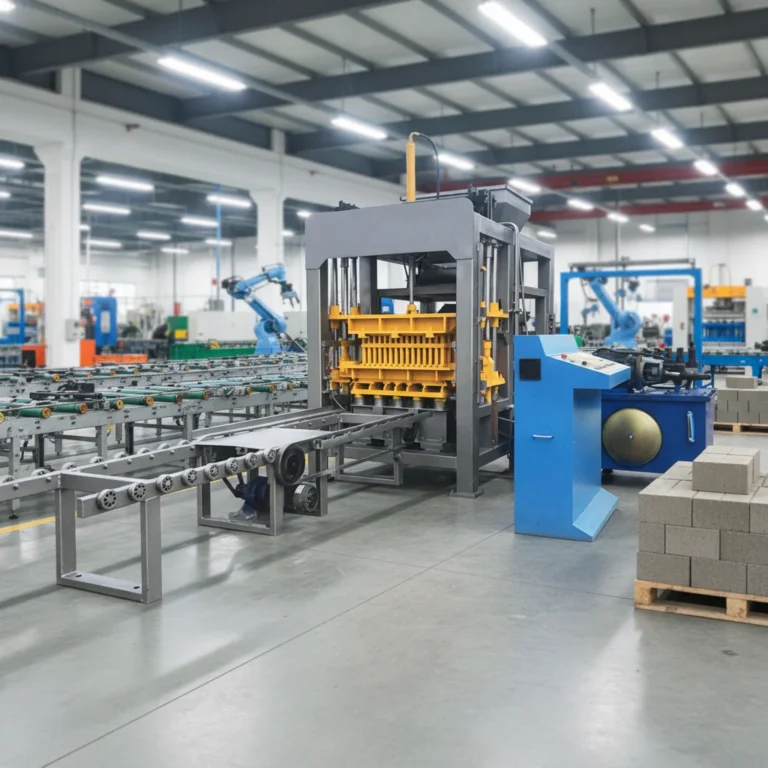
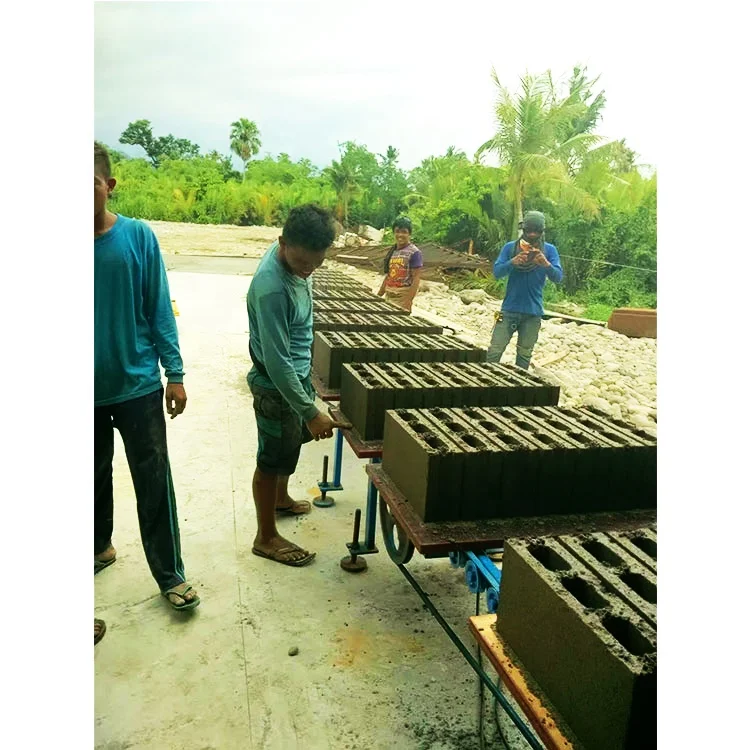
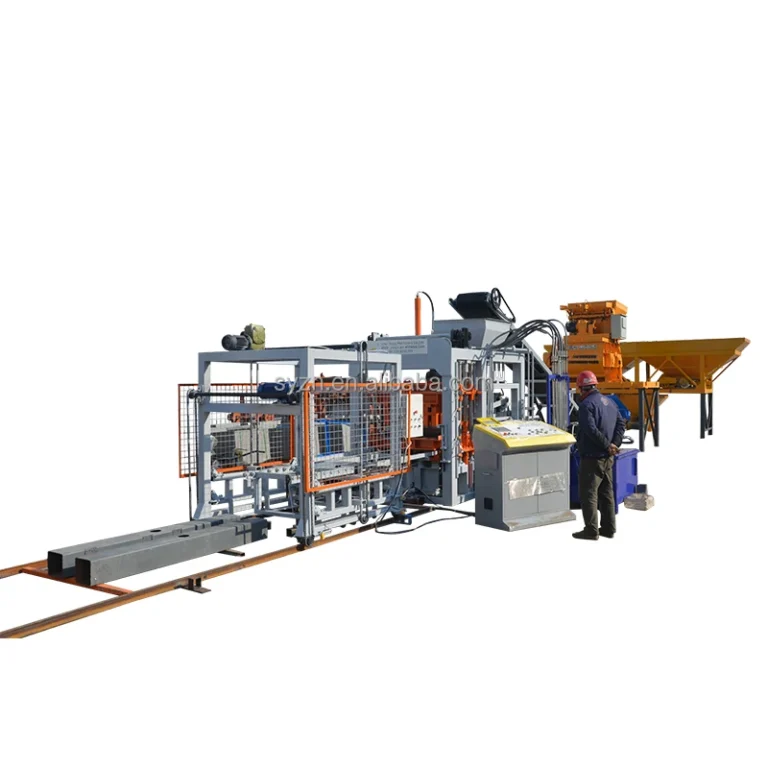
Matched System Sizing — the QT4-15 is specified as one integrated press, mould, pallet and handling layout against your actual block format rather than pulled from a catalogue default.
Technical Specifications
| Parameter |
Value |
| Model |
QT4-15 |
| Product Type |
Fully Automatic Concrete Block Making Machine |
| Overall Dimensions (L×W×H) |
7100×1600×2610 mm |
| Net Weight |
5800 kg |
| Rated Power |
27.5 kW |
| Voltage & Frequency |
380V or configurable to buyer site supply (frequency to be confirmed) |
| Control System |
PLC (brand and display language to be confirmed before production) |
| Vibration Force |
60 kN |
| Hydraulic Pressure |
To be confirmed against buyer mix design |
| Pallet Size |
1020×850×40 mm |
| Automation Level |
Fully Automatic |
| Mould Format Range |
Hollow block 400×200×200 mm, Hollow block 400×150×200 mm, Solid brick 225×112.5×53 mm |
| Output Capacity |
960 pcs/h based on 400×200×200 mm hollow block, 4 pcs/mould |
| Output Capacity |
1440 pcs/h based on 400×150×200 mm hollow block, 6 pcs/mould |
| Output Capacity |
3840 pcs/h based on 225×112.5×53 mm solid brick, 16 pcs/mould |
| Daily Output |
7680 pcs/day based on 400×200×200 mm hollow block, 8-hour shift |
| Daily Output |
11520 pcs/day based on 400×150×200 mm hollow block, 8-hour shift |
| Daily Output |
30720 pcs/day based on 225×112.5×53 mm solid brick, 8-hour shift |
| Cycle Time per Format |
To be confirmed |
| Mould Change Time |
To be confirmed |
| Color Options |
According to buyer request |
| Warranty |
1 year |
| Standards |
ISO 9001:2008, CE |
Application Suitability
| Application |
Material or Output |
| Concrete block production plants |
Hollow blocks from crushed stone, sand and cement |
| On-site construction contractors |
Solid bricks and hollow blocks produced locally at housing project sites |
| Building material distributors |
Mid-range automatic machines for import and resale to plant operators |
| Entrepreneurs setting up a first plant |
Hollow blocks and solid bricks with moderate daily volume |
| Existing manufacturers expanding formats |
Additional block sizes added to current product lines |
What "960 Pieces per Hour" Leaves Out When the Format Changes
Every output figure on this page names the exact block size and mould cavity count it is built on.
Capacity numbers in the block machinery trade often appear without the format assumption behind them, so a buyer expecting one daily tonnage ends up producing far less once the mould is swapped. The QT4-15 block making machine manufacturer rates this press at 960 pieces per hour only when running the 400×200×200 mm hollow block on a four-cavity mould. Switch to the smaller 400×150×200 mm hollow block on a six-cavity mould and the hourly figure rises to 1440 pieces per hour. Move to solid brick on a sixteen-cavity mould and the number jumps again to 3840 pieces per hour. Each figure assumes an uninterrupted eight-hour shift with no downtime for pallet restocking, mould change or raw material gaps [NEED_CITE: realistic shift utilization rates in block production].

Where the QT4-15 Sits on the Full Machine Range
The Shiyue lineup spans from small workshop semi-automatic presses through to high-capacity fully automatic lines. The QT4-15 occupies the middle tier, built for buyers who need consistent output above manual or egg-laying machines but are not yet ready to commit the floor space and capital of a large-scale automatic plant. Its 7100×1600×2610 mm footprint fits a standard production bay without requiring a dedicated building, and its 27.5 kW rated power draw stays within the supply envelope of most industrial sites in developing markets.
Choosing the Right Tier for Your Actual Situation
A first-time entrepreneur producing for a single housing development will find the QT4-15 covers daily hollow block volumes without the overhead of a high-capacity line. A contractor who has been renting blocks from a third-party supplier can bring production on-site with a moderate investment and a plant footprint that leaves room for curing and storage. On the other hand, a distributor planning to supply multiple construction sites across a region should consider stepping up to a higher-capacity model where the per-unit cost justifies the larger installation [NEED_CITE: block plant investment thresholds by market size].
How Vibration, Pressure and Pallet Size Shape the Block You Sell
The 60 kN vibration force works together with hydraulic pressure to compact the concrete mix into the mould cavity. Higher vibration frequency alone does not guarantee a dense block; the hydraulic pressure must be matched to the buyer’s specific mix design and local aggregate gradation. If the pressure is too low for a coarse aggregate blend, the block emerges with weak edges and inconsistent weight. The 1020×850×40 mm pallet size determines how many blocks cure per rack position, and it must align with the buyer’s existing curing area dimensions and forklift capacity. A pallet that is too large for the curing racks forces a costly rack rebuild, while one that is too small leaves curing space underutilized.
The Hidden Cost of Skipping Configuration Details
A machine configured for a mix the buyer cannot source locally forces a material change that erodes margin from day one. Voltage and frequency left unconfirmed until arrival can delay commissioning by weeks while transformers or motor replacements are shipped [NEED_CITE: voltage and frequency standards by export market]. A mould change time that takes most of a shift cancels the format flexibility the buyer paid for, leaving the plant running only one block type regardless of market demand. These are not engineering failures but specification failures that surface only after the press is bolted to the floor.
Why Buyers Source the QT4-15 from This Range
Block machinery is the single focus here, so the press, mould, pallet and handling equipment are specified as one matched system rather than assembled from separate suppliers. The configuration is set against the buyer’s actual mix design and target block format, not a catalogue default. Mould design and supply cover the formats the buyer’s market actually sells, with custom drawings available when standard formats do not match local building codes. The automation level is selectable, allowing a buyer to start with the QT4-15 and add pallet handling or stacking upgrades later as volume grows. Installation includes operator training so the crew running the line on day one understands mould change, daily greasing and PLC fault codes.
Documentation & Verification
- Line layout and capacity calculation stating the block format assumed for each output figure
- Machine specification sheet with confirmed voltage, frequency and PLC display language
- Mould drawing and format list showing cavity count per block size
- Pallet specification with dimensions and material grade cross-checked to your curing racks
- Factory test record showing actual cycle times per block format before dispatch
- Packing photographs and customs documentation support for your import clearance
Installation, Commissioning & Support
- Foundation pad sized to 7100×1600 mm footprint with anchor bolt layout provided before pour
- 27.5 kW rated power requires a dedicated circuit; confirm local supply matches quoted voltage
- Machine arrives with SKD or CBU status to be confirmed; on-site assembly included
- First-run commissioning covers PLC parameter setup, vibration tuning and hydraulic pressure calibration
- Operator training on mould change procedure, daily maintenance checkpoints and fault code response
- Wear parts list with hydraulic seals and mould liner plates identified for first reorder cycle
What to Include in Your Inquiry
To receive a configuration that matches your site rather than a default quotation, share the block format your market demands most, your target daily output and the shift length you plan to run. Confirm your local voltage and frequency, the PLC display language your operators need, and whether your existing curing area and forklift can accommodate the 1020×850 mm pallet. If you are producing from a specific local aggregate, provide a sample or gradation report so the vibration and pressure settings can be matched before the machine leaves the factory.
Frequently Asked Questions
Q: How is output capacity verified for each block format, and what shift length is assumed?
A: Each output figure is tied to a specific block size and mould cavity count, tested on the factory floor before dispatch. The daily figures assume an uninterrupted eight-hour shift. Actual throughput depends on pallet handling speed, raw material feed continuity and mould change frequency during the shift.
Q: Where does the QT4-15 sit between semi-automatic and high-capacity automatic lines?
A: It occupies the mid-tier, suited to first-time plant operators and contractors who need consistent volume without the footprint of a large line. Buyers with single-site demand benefit from this tier, while those supplying multiple regional markets should evaluate higher-capacity models.
Q: What voltage and frequency options are available, and how is the PLC language confirmed?
A: The machine is configurable to the buyer’s site supply, with 380V as the baseline. Frequency and PLC display language must be confirmed in writing before production starts to avoid commissioning delays upon arrival.
Q: What plant footprint and supporting equipment does the QT4-15 require?
A: The press itself measures 7100×1600×2610 mm. A complete line also requires a mixer, raw material feeder, pallet circulation system and curing racks sized to the 1020×850 mm pallet. The total footprint depends on the automation level and curing capacity you select.
Q: Can the automation level be upgraded later?
A: Yes. The QT4-15 supports upgrades to automatic pallet feeding, stacking and cubing as production volume grows. The base PLC system accommodates additional I/O modules, and mechanical interfaces for stacking equipment are built into the frame.

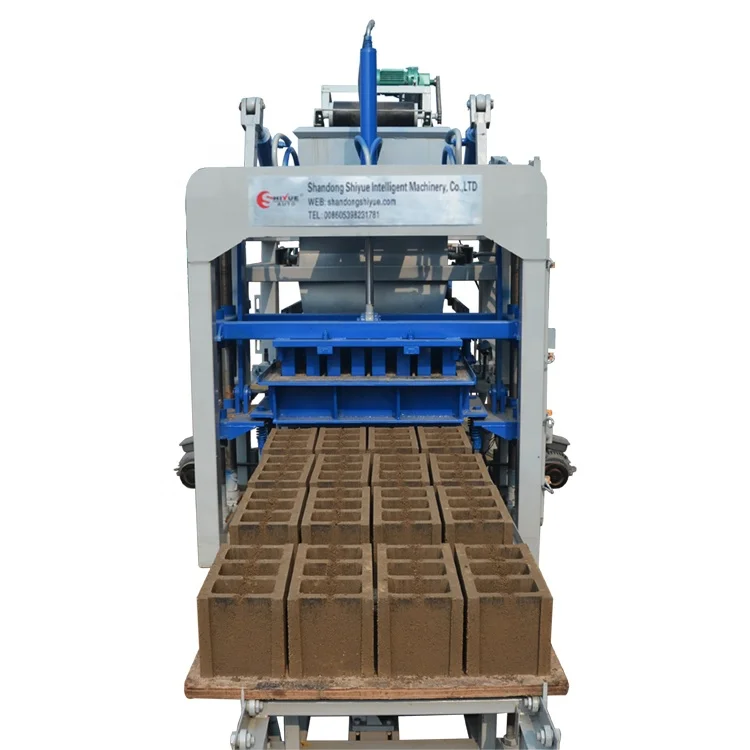
 High quality block machine