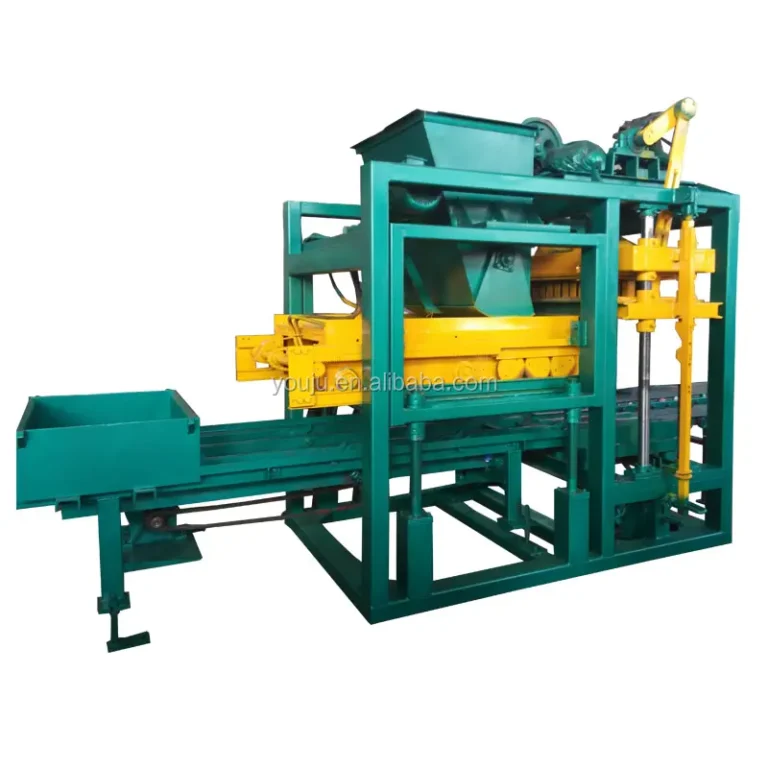
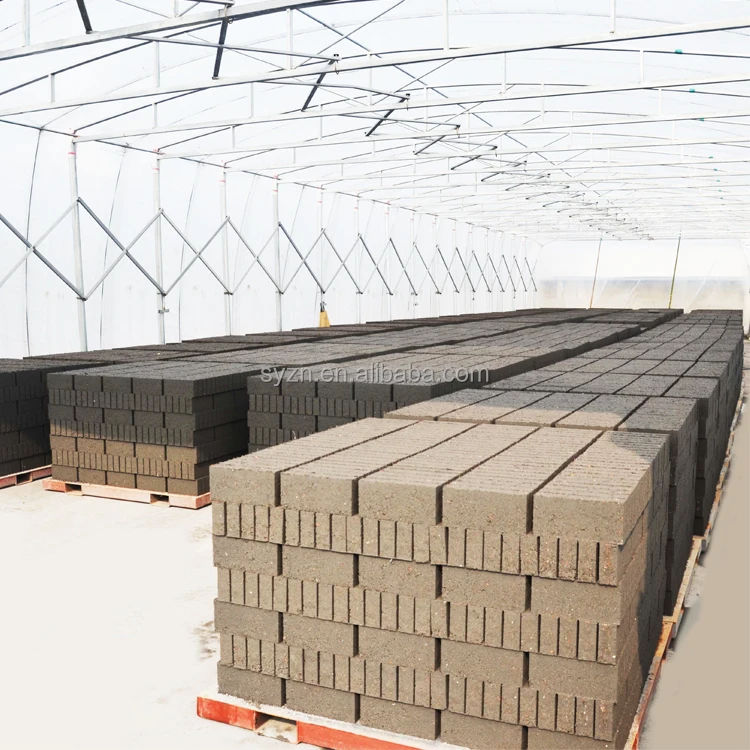
Matched System Sizing — the QT5-15 is specified as a coordinated press, mould, pallet and handling package, so capacity figures reflect the block format you actually plan to run.
Technical Specifications
| Parameter |
Value |
| Model |
QT5-15 |
| Product Type |
Fully Automatic Hydraulic Block Making Machine |
| Overall Dimensions (L×W×H) |
7400 × 1950 × 2800 mm |
| Rated Pressure |
21 MPa |
| Main Vibration Form |
Platform Vibration |
| Vibration Frequency |
2800–4500 r/min |
| Pallet Size |
1100 × 550 mm |
| Molding Cycle |
15–25 s |
| Overall Power |
26.5 kW |
| Demolding Method |
Hydraulic |
| Control System |
PLC (language options to be confirmed) |
| Automation Level |
Fully Automatic (scope of pallet feeding, stacking and cubing to be confirmed) |
| Output — Hollow Brick 400×200×200 mm |
1800 pcs/h (5 pcs/mould, 16–20 s cycle) |
| Output — Hollow Block 400×150×200 mm |
1300 pcs/h (6 pcs/mould, 15–20 s cycle) |
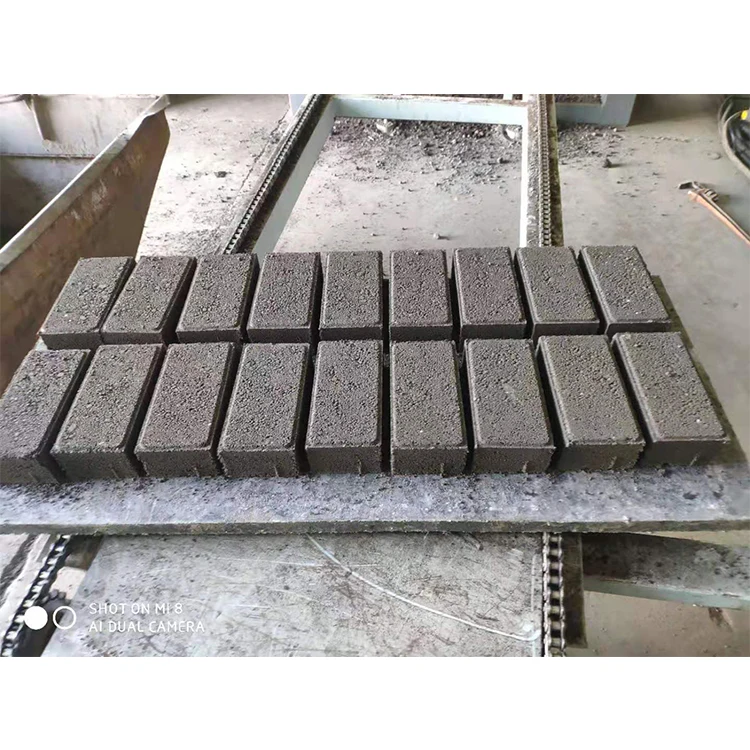
| Output — S Paver 225×112.5×60 mm |
3700 pcs/h (16 pcs/mould, 15–17 s cycle) |
| Applied Products |
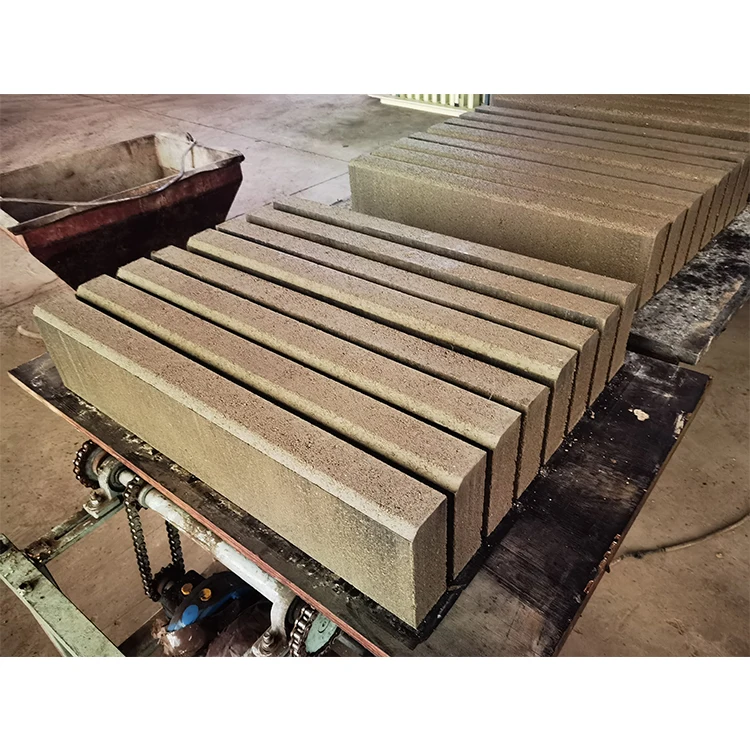
Concrete blocks, hollow blocks, solid blocks, pavers, interlocking blocks, curbstone, colored pavers |
| Raw Materials |
Crushed stone, sand, cement, dust, fly ash, gravel, slag |
| Voltage & Frequency |
To be confirmed before production |
| Net Weight |
To be confirmed |
| Mould Change Time |
To be confirmed |
| Stacking Method |
To be confirmed |
| Warranty |
1 year |
Application Suitability
| Application |
Material or Output |
| Stationary hollow block plant |
Crushed stone, sand and cement mixes for 150 mm and 200 mm wall blocks |
| Solid concrete block production |
Dense aggregate blends for load-bearing and partition blocks |
| Interlocking paver manufacturing |
Fine aggregate and cement for driveway and walkway pavers |
| Curbstone and kerb production |
Coarse aggregate mixes for road and pavement edge stones |
| Fly ash brick runs |
Fly ash, slag and cement blends for lightweight masonry units |
| Colored paver runs |
Pigmented face-mix layers over standard base concrete |
What "1,800 Blocks per Hour" Actually Means on the QT5-15
Capacity only matters when tied to the exact block format and cycle time you will run.
Catalogue sheets often quote a single headline number pulled from the fastest possible cycle on the smallest block. On a real shop floor, that figure rarely survives first contact with your aggregate, your mix moisture and your target product. The QT5-15 block machine manufacturer specifications list three separate output rates, each tied to a specific mould cavity count and cycle window, so a buyer producing 200 mm hollow blocks can plan around 1,800 pieces per hour at a 16–20 second cycle, while the same press running 150 mm hollow blocks shifts to roughly 1,300 pieces per hour. The difference is not a defect — it is simply how mould geometry and compaction time interact. [NEED_CITE: how block format and cycle time determine actual daily output]

Where the QT5-15 Fits in a Buyer’s First Plant Decision
A stationary block plant starts with a choice between semi-automatic, mid-tier automatic and high-capacity automatic lines. The QT5-15 fully automatic hydraulic block making machine sits in the middle of that range, offering PLC-controlled cycles and hydraulic demolding without the footprint and capital outlay of a high-output line. For an entrepreneur funding a first block plant, this tier provides room to grow: you can begin with manual pallet handling and add automatic stacking later, rather than over-investing on day one. The 1100 × 550 mm pallet size is small enough to suit a modest curing yard yet large enough to keep cycle counts reasonable on standard hollow block formats.
Why Platform Vibration and Hydraulic Pressure Must Be Read Together
Platform vibration alone does not guarantee block density. The vibration frequency on the QT5-15 spans 2800 to 4500 r/min, but that range only delivers consistent compaction when the 21 MPa hydraulic pressure is applied at the right moment in the cycle. If pressure arrives too early, the mix locks before air is expelled; too late and the block slumps before full densification. Matching these two forces to the buyer’s actual aggregate grading and cement content is the step that separates a machine that looks good in a factory test from one that holds strength on a curing rack two weeks later. [NEED_CITE: relationship between vibration frequency and hydraulic pressure in block compaction]
Reading the Spec Sheet Against Your Local Aggregate
Three numbers on the QT5-15 spec table carry the most weight once the machine is on your floor. The 15–25 second molding cycle range tells you the press can compress a dense crushed-stone mix at the slower end and still keep up on a lighter fly ash blend at the faster end. The 26.5 kW overall power draw indicates the motor and hydraulic pump package is sized for continuous shifts rather than peak bursts, which matters when your local grid fluctuates under afternoon load. Finally, the 1100 × 550 mm pallet dimension must match both your curing rack spacing and the forklift tine width already in your yard — a mismatch here means rebuilding racks or buying a new forklift before the first block is made.
The Cost of Skipping the Mix-Design Conversation
When a press is configured for a standard river-sand mix but the buyer’s region only supplies weathered or high-fines sand, the vibration energy scatters through the fines instead of compacting the aggregate skeleton. Blocks leave the mould looking intact but crumble under handling. The fix is never a bigger motor — it is a recalibration of vibration frequency, pressure timing and moisture tolerance, all of which should happen before the machine ships. Buyers who skip this step often spend the first six months chasing strength failures they attribute to the press rather than the mix. [NEED_CITE: aggregate quality impact on concrete block compressive strength]
Why Buyers Source the QT5-15 from a Single-System Supplier
Block machinery is the only product line here, so the press, mould, pallet and handling equipment are specced as one package rather than assembled from separate vendors. Each QT5-15 configuration is set against the buyer’s target block format and local raw material, not a default catalogue setting. Moulds are designed for the formats the buyer’s market actually sells, and custom drawings are accepted when standard cavities do not match. Automation is selectable — the same press can run semi-automatic today and accept automatic stacking upgrades later. Installation support includes operator training on the specific PLC language and voltage confirmed for the destination site.
Documentation & Verification
- Line layout showing QT5-15 placement with curing yard and pallet flow paths
- Capacity calculation table listing output per block format and assumed cycle time
- Mould drawing set covering every cavity format included in the order
- Pallet specification matching the 1100 × 550 mm size to your curing rack layout
- Factory test record filmed on your target mix before container loading
- Voltage and PLC language confirmation signed off before production starts
Installation, Commissioning & Support
- Foundation plan sized for the 7400 × 1950 mm footprint and dynamic vibration loads
- Dedicated electrical circuit matching confirmed voltage and the 26.5 kW total draw
- Machine shipped in dismantled modules with reassembly guidance on site
- First-run cycle tuning against your local aggregate and target block density
- Operator training on PLC screen navigation in the confirmed display language
- Wear parts list identifying hydraulic seals and mould liner replacement intervals
Before You Send an Inquiry
To size the QT5-15 block machine manufacturer package correctly, share your target block formats with dimensions, the daily output you need per format, and the type of aggregate available locally. Include your site voltage and frequency, the PLC display language your operators read, and the dimensions of any curing yard or forklift already on hand. If you have existing mixers or pallet circulation systems, note those as well so the line layout accounts for them.
Frequently Asked Questions
Q: Where does the QT5-15 sit compared to smaller semi-automatic and larger automatic models?
A: The QT5-15 occupies the mid-tier automatic position, offering PLC control and hydraulic demolding above entry-level semi-automatic presses but below high-capacity lines that demand larger footprints and greater capital. It suits a first stationary plant or a manufacturer adding formats without committing to top-tier output.
Q: How do I verify daily output for my specific block format?
A: Request the capacity calculation sheet that lists each block format, mould cavity count and cycle time. Compare the stated output per hour against your planned shift length and curing capacity. The figures assume a standard mix and well-maintained mould — your actual daily count will also depend on pallet circulation speed and raw material feed continuity.
Q: What plant footprint does a QT5-15 line require?
A: The press itself measures 7400 × 1950 mm, but the full line includes raw material feeding, mixer, pallet return and product handling. Plan for a linear layout roughly double the press length, plus curing rack area sized for at least one full day of output at your target format.
Q: Can I begin with semi-automatic pallet handling and upgrade later?
A: Yes. The QT5-15 platform supports manual pallet feeding at startup and can accept automatic pallet feeders, stackers and cubing modules as demand grows. Confirm the upgrade path in writing so mounting points and PLC I/O are reserved during initial build.
Q: What voltage and control language options should I confirm before ordering?
A: Provide your site voltage, phase and frequency so the motor and control panel are wound and programmed accordingly. Specify the PLC display language your operators need. Both items should be confirmed in writing before production begins to avoid commissioning delays on arrival.

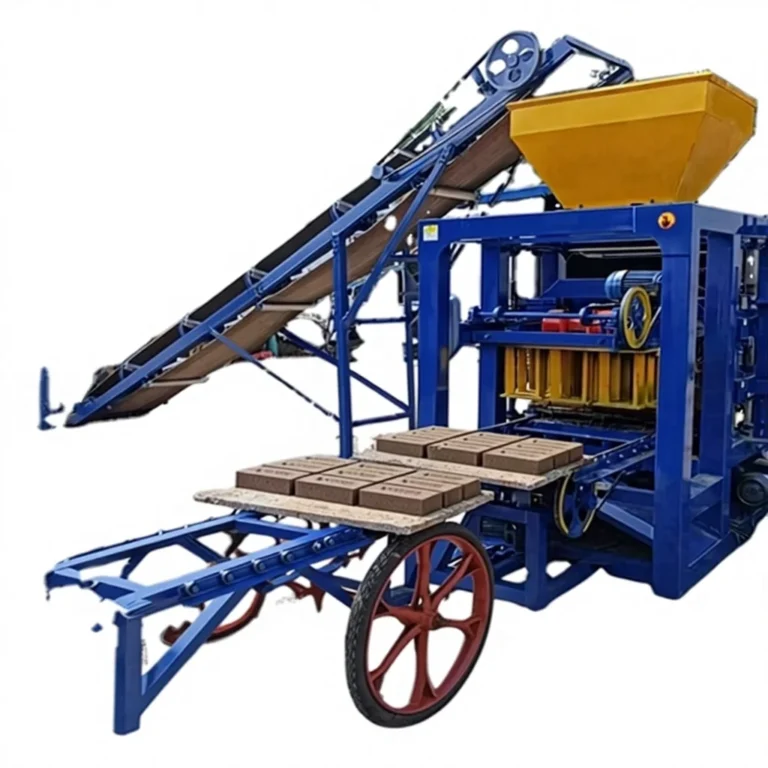 Stationary block machine