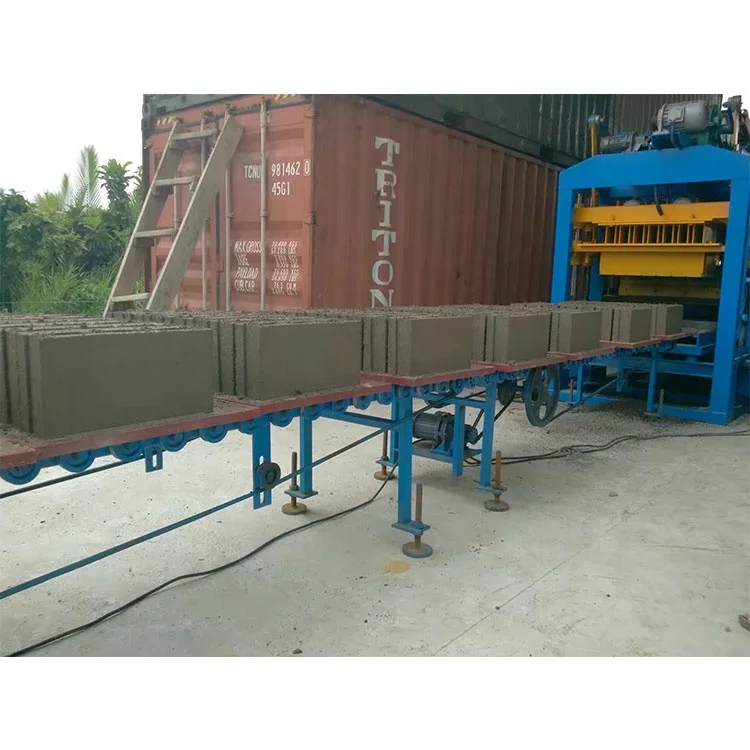
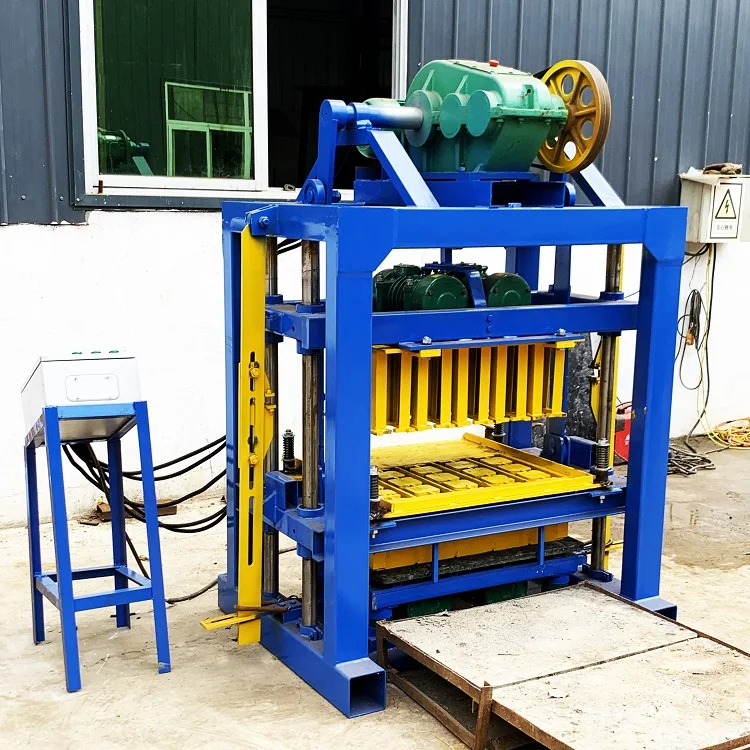
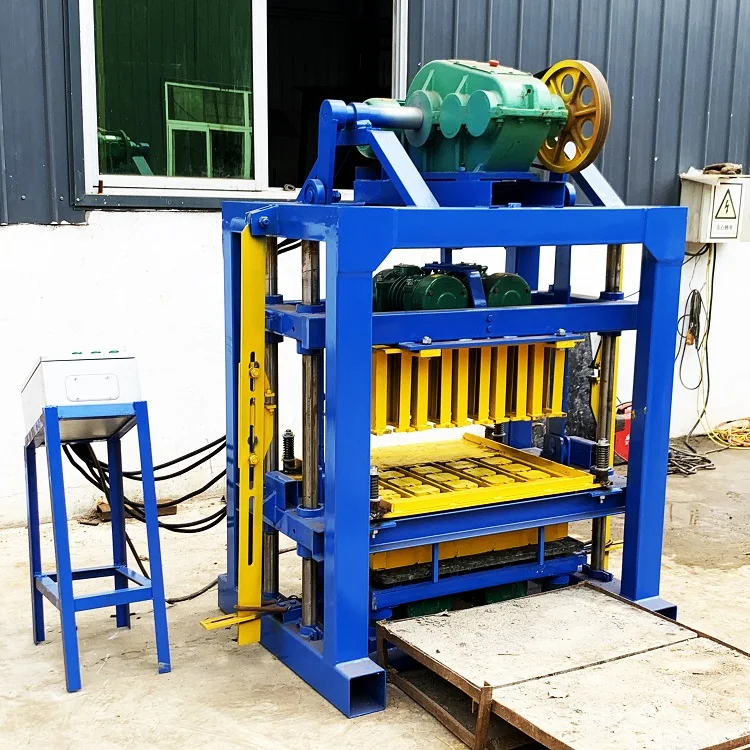
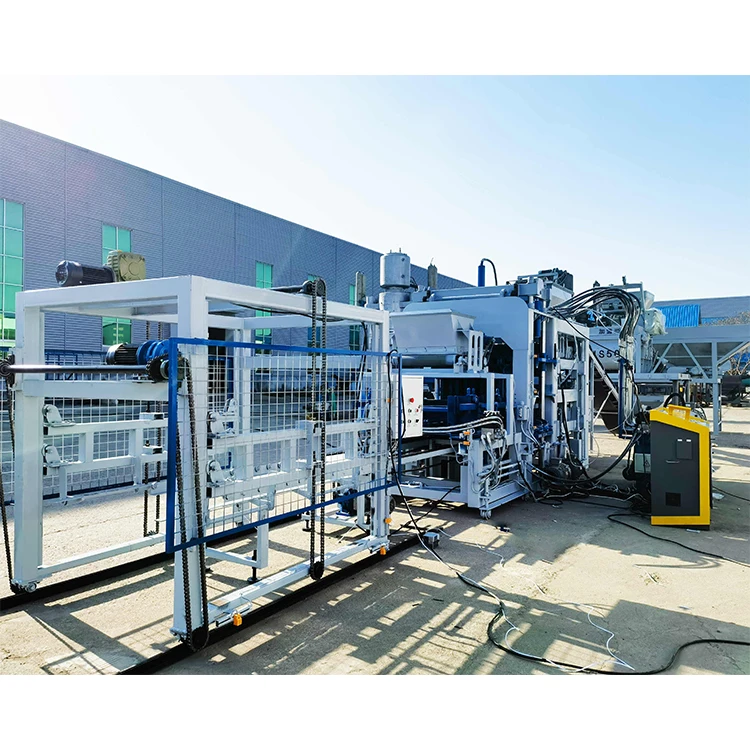
Matched System Sizing — QTJ4-25 host, mould, pallet and mixer specified together against your local aggregate report rather than a catalogue default.
Technical Specifications
| Parameter |
Value |
| Model |
QTJ4-25 |
| Product Type |
Stationary Concrete Block Making Machine |
| Rated Power |
17.9 kW |
| Overall Dimensions (L×W×H) |
6400 × 1500 × 2700 mm |
| Total Mass |
2500 kg |
| Molding Cycle |
25 s |
| Pallet Size |
850 × 550 × 20 mm |
| Vibration Frequency |
2800 r/min |
| Vibration Force |
60 kN |
| Output Capacity |
960 pcs/hour (basis: 400×200×200mm hollow block, 4 pcs/mould) |
| Daily Output |
7680 pcs/day (basis: 400×200×200mm hollow block, 8-hour shift) |
| Automation Level |
Semi-automatic, PLC controlled |
| Hydraulic Station |
Equipped, high pressure |
| Mould Formats |
Hollow, solid, paver, curbstone (mould change required) |
| Configuration Included |
Host machine 1 set, block mould 1 set, JQ350 mixer |
| Voltage & Frequency |
Configurable (basis to be confirmed before order) |
| Stacking Method |
Manual pallet handling with trolley |
Application Suitability
| Application |
Material or Output |
| Hollow block production for residential walls |
Crushed stone, sand, cement, water — 400×200×200mm standard |
| Solid block manufacturing for load-bearing structures |
Dense aggregate mix with cement binder |
| Paving block runs for walkways and yards |
Fine aggregate surface layer over concrete base |
| Curbstone production for road edging |
High-density mix requiring extended vibration hold |
| On-site block making for construction contractors |
Local quarry aggregate with portable mixer feed |
What "960 Pieces per Hour" Actually Means on a Job Site
The cycle time is measured on one format — swap the mould and the number changes.
Every stationary block machine manufacturer quotes a headline capacity, but the figure only holds true for the block format used during testing. When a buyer in my region took delivery of a semi-automatic press rated on 400×200×200mm hollow blocks, they expected the same throughput on 6-inch solid blocks. The denser mix and longer vibration hold dropped their hourly count noticeably, and the curing rack layout had to be recalculated mid-week. That gap between brochure output and daily reality is where most first-year plants lose money [NEED_CITE: block format cycle time variation across mould sizes]. A realistic capacity plan starts from the specific format you sell most, not the one that looks best on paper.

Where This Model Sits in the Output Tier Ladder
The QTJ4-25 occupies the entry-to-mid tier of the Shiyue stationary block machine range. It gives a first-time plant owner a defined starting position — 60 kN of vibration force, a 25-second cycle, and manual pallet handling — before stepping up to higher tiers with automatic stacking and cubing. Buyers surveying options can use this model as a baseline to measure whether their daily target justifies the investment jump to a fully automatic line.
Semi-Automation and the Upgrade Path Ahead
A semi-automatic press with PLC control removes timing guesswork from the operator’s hands while leaving pallet transfer and stacking as manual stations. This keeps the initial capital requirement contained and shortens commissioning time on sites with limited electrical infrastructure. When production volume grows, the upgrade path involves adding automatic pallet feeding and stacking modules rather than replacing the host machine entirely [NEED_CITE: automation upgrade compatibility across block press tiers]. The QTJ4-25 footprint stays constant through that transition.
Reading the Vibration and Hydraulic Numbers Together
Vibration force of 60 kN at 2800 r/min works in tandem with the hydraulic station to compact the mix inside the mould cavity. Higher vibration frequency accelerates particle rearrangement, while hydraulic pressure clamps the mould head to prevent material blowout during the 25-second cycle. If your local aggregate contains a high percentage of fines or clay, the effective compaction time may need to extend beyond the standard cycle, reducing throughput but preserving block density. The 850×550 mm pallet format determines how many blocks cure per rack level and which forklift class can handle loaded pallets — a mismatch here creates a bottleneck downstream of the press.
The Hidden Cost of Skipping the Aggregate Report
I once saw a buyer specify a stationary block machine manufacturer based on cycle speed alone, ignoring the local sand source. The delivered mix had nearly double the clay content the press was tuned for, and every block cracked during curing because vibration time was too short to drive trapped air out. Retuning the PLC parameters on site recovered density, but daily output dropped sharply and the first month’s production schedule collapsed [NEED_CITE: aggregate clay content effect on block compaction cycle]. Requesting a sieve analysis and moisture report before finalizing the configuration prevents this category of loss.
Why Buyers Return to This Configuration Source
The QTJ4-25 arrives as one matched system — host press, mould, pallet specification, and JQ350 mixer sized to the same hourly throughput — rather than components sourced from separate vendors and bolted together at your gate. Capacity calculations state the assumed block format per output figure, so you compare against your own daily target honestly. Mould design covers the formats your local market actually buys, with custom cavity plates available from buyer drawings. Automation level is selectable at order, meaning a buyer can start semi-automatic and add stacking modules later without changing the press. Factory testing runs your specific mix proportion before the crate is sealed, so PLC parameters arrive pre-set for your material rather than a generic default.
Documentation & Verification
- Line layout drawing with capacity stated per block format you confirmed at inquiry
- Machine specification sheet matching the exact voltage and frequency for your site
- Mould cavity drawing and format list for every block type in your product plan
- Pallet material and dimension certificate tied to your curing rack spacing
- Factory test record on your submitted mix proportion before dispatch
- PLC program language confirmation sheet signed off before crating
Installation, Commissioning & Support
- Foundation pad leveled for the 6400 × 1500 mm footprint with anchor bolt template provided
- Dedicated 17.9 kW circuit at confirmed voltage and frequency with phase rotation checked
- Host machine shipped as one assembly; mixer and pallets packed separately for container loading
- PLC parameters verified against your on-site aggregate during first production run
- Operator trained on mould change procedure and vibration timing adjustment per format
- Hydraulic seals, vibration motor bearings, and mould liner plates listed with part numbers for reorder
- Weekly greasing schedule on guide columns and pallet feed track tied to shift count
What to Prepare Before Requesting a Quotation
Share the block formats your market moves in highest volume, along with target daily output per format and an aggregate sieve analysis from your nearest quarry source. Confirm the voltage, frequency, and PLC display language standard in your region so the electrical cabinet is wound correctly before production. Let us know your existing curing area dimensions and forklift capacity so the pallet size and material are matched to equipment you already own.
Frequently Asked Questions
Q: How is the 960 pcs/hour figure calculated, and does it change for solid blocks?
A: The 960-piece hourly rate is based on 400×200×200mm hollow blocks with four cavities per mould and a 25-second cycle. Solid blocks and pavers require longer vibration holds for adequate density, so the actual hourly count drops when those moulds are installed. We provide a per-format capacity table with every proposal so your daily plan reflects the mix you will actually run.
Q: When should a buyer move from this semi-automatic tier to a fully automatic line?
A: The transition typically makes sense once daily output targets exceed what manual pallet handling and stacking can sustain within a single shift. If your curing area is large and labour cost per pallet moved is high, automatic stacking and cubing modules reduce headcount. The QTJ4-25 host press can accept these modules later, so the upgrade does not require a full machine replacement.
Q: What voltage and frequency options are available for export markets?
A: The electrical cabinet is configurable for common industrial voltages and frequencies across different regions. Voltage, phase, and frequency must be confirmed before the motor and transformer are sourced, as changes after production starts delay commissioning. The PLC display language is also set at this stage to match your operator’s working language.
Q: What is the total plant footprint including the mixer and drying area?
A: The press itself occupies 6400 × 1500 mm, and the JQ350 mixer sits adjacent to the feed hopper. Pallet drying and curing rack space depends on your daily output target and local climate — humid conditions require longer curing intervals, expanding the rack area. A site layout drawing is provided with each quotation showing all stations to scale.
Q: Can the mould cavity plates be customized for non-standard block sizes?
A: Custom mould plates are produced from buyer-supplied drawings or dimension lists. The host machine accepts any cavity plate that fits within the 850×550 mm pallet boundary and stays within the hydraulic clamping force range. Mould change time depends on the quick-lock system fitted; we confirm the procedure and estimated duration for each format in the specification sheet.

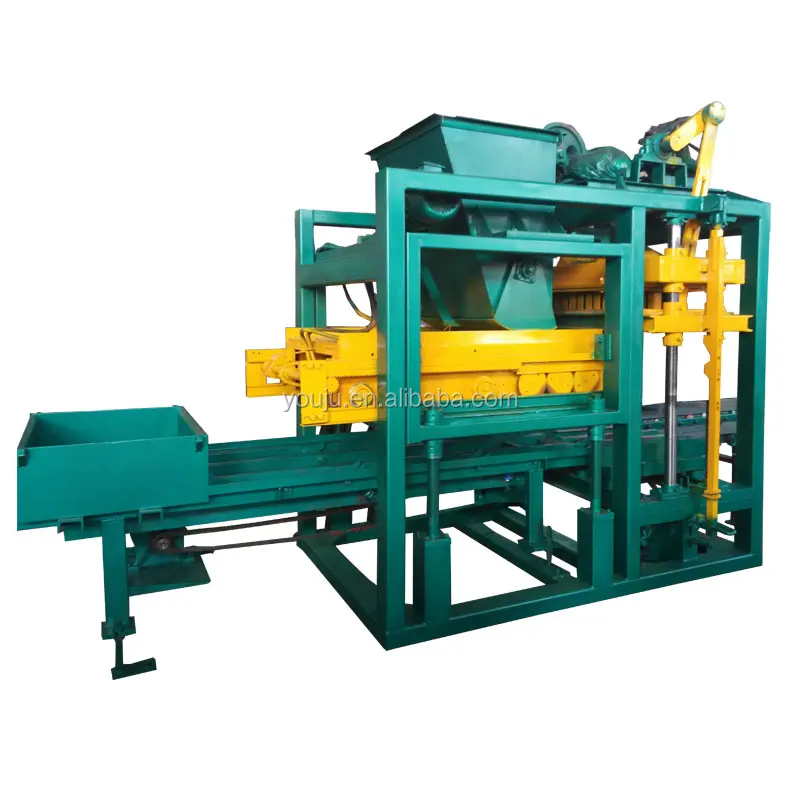
 Stationary block machine