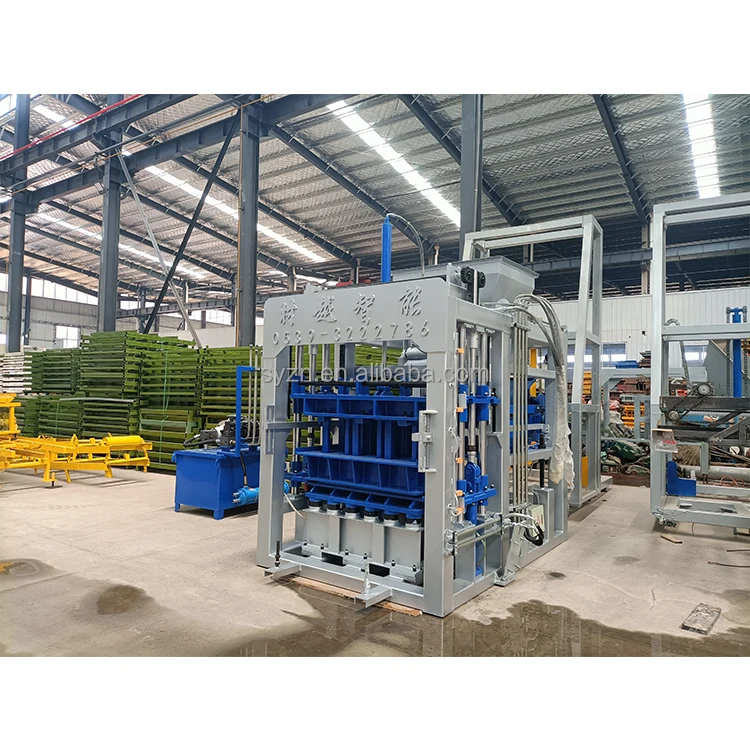
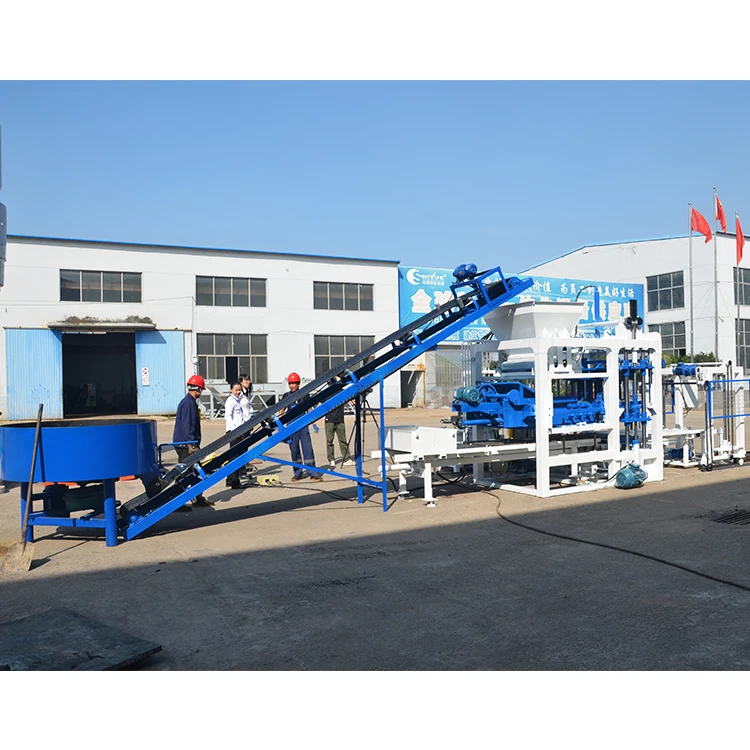
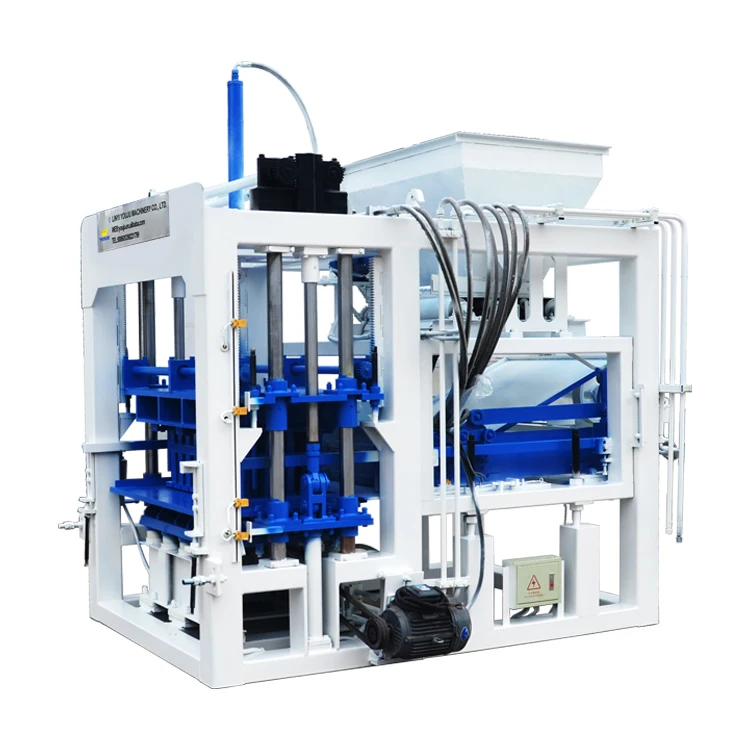
System-Matched Configuration — The QT4-15B is specified as a complete production unit with vibration force, hydraulic pressure, and mould cavity count aligned to your target block format, not quoted as a standalone press disconnected from its line.
Technical Specifications
| Parameter |
Value |
| Model |
QT4-15B |
| Product Type |
Automatic Concrete Block Making Machine |
| Automation Level |
Fully automatic, computer controlled |
| Vibration Mode |
Multiaxis synchronizer vibration (vertically downward) |
| Hydraulic System |
High thermal efficiency, low heat generation (pressure rating to be confirmed) |
| Guide System |
Long-period over-length guide bearing for upper mould and mould box alignment |
| Mixer System |
Multiaxis forced mixer |
| Control System |
Computer / PLC controlled |
| Rack Construction |
High-strength steel with special welding technique, vibration-shock resistant |
| Cycle Time |
15–20 seconds (basis: all listed block formats) |
| Output Capacity |
900–1,200 pcs/h (based on 400×200×200mm hollow block, 4 pcs/mould) |
| Output Capacity |
1,080–1,440 pcs/h (based on 400×150×200mm block, 5 pcs/mould) |
| Output Capacity |
1,440–1,920 pcs/h (based on 400×100×200mm block, 8 pcs/mould) |
| Output Capacity |
2,880–3,840 pcs/h (based on 200×100×60mm paving block, 16 pcs/mould) |
| Output Capacity |
5,930–6,720 pcs/h (based on 240×115×53mm standard brick, 28 pcs/mould) |
| Daily Output (8 hr) |
7,200–9,600 pcs (based on 400×200×200mm hollow block) |
| Daily Output (8 hr) |
47,400–53,700 pcs (based on 240×115×53mm standard brick) |
| Mould Compatibility |
Hollow block, solid block, paving block, standard brick |
| Warranty |
1 year (excluding spare parts) |
| Voltage & Frequency |
Configurable to buyer requirement (to be confirmed before production) |
| PLC Display Language |
Configurable (to be confirmed before production) |
| CE Declaration |
Where applicable |
Application Suitability
| Application |
Material or Output |
| Hollow block production |
Crushed stone, sand, cement, and water mix for load-bearing and partition walls |
| Solid block production |
Dense aggregate blends for foundation and structural wall courses |
| Paving block production |
Fine aggregate and cement for pedestrian and vehicular surface laying |
| Standard brick production |
Graded sand and cement for masonry infill and facing brickwork |
What the Cycle Time Figure Actually Means on Site
A 15–20 second cycle only holds when the press, mixer, and pallet feeder run at matched intervals.
Quoting an automatic concrete block making machine manufacturer at a single cycle time without naming the block format, mould cavity count, and supporting line speed leaves buyers building projections on incomplete data. I once watched a mid-tier stationary press sit idle for four seconds every cycle because the pallet feeder could not keep pace — the press was rated for a certain output, but the line as a whole never reached it. When you evaluate the QT4-15B, the capacity figures above each name a specific block size and cavity count, so you can match the projection to the format your market actually buys [NEED_CITE: block format demand by regional construction market].

Where the QT4-15B Sits in the Full Machine Range
Buyers surveying stationary block machines need to see the tiers before committing capital. The QT4-15B occupies the mid-range automatic position in the Shiyue lineup — above the semi-automatic models that require manual pallet handling and below the high-capacity fully automatic lines with integrated stacking and cubing. For an entrepreneur setting up a first block plant, this tier offers computer-controlled consistency without the investment and floor space of a top-tier line. The automatic concrete block making machine manufacturer range lets you compare each tier’s output envelope and automation depth before narrowing the choice.
Planning the Line Around the Press, Not Just the Press Itself
A stationary block machine does not produce blocks in isolation. Raw material feeding, the multiaxis forced mixer, pallet circulation, and output handling all have their own cycle times that must align with the QT4-15B’s 15–20 second press cycle. If the mixer batch size is too small, the press waits for material. If the pallet return loop is too slow, finished blocks queue at the press exit. Specifying the QT4-15B within a matched line means each station is sized so the press is never the bottleneck — and never left waiting [NEED_CITE: line synchronization principles for stationary block production].
Reading the Specs That Matter for Block Density
The multiaxis synchronizer vibration applies vertically downward force across the mould cavity, compacting the mix uniformly from top to bottom. This matters because uneven vibration leaves density gradients — blocks that pass a visual check but fail compressive strength tests at the construction site. The long-period over-length guide bearing keeps the upper mould and mould box aligned over thousands of cycles, preventing the uneven wear that causes one side of a block to come out thinner than the other. The high-strength steel rack with vibration-shock resistant welding absorbs the repeated impact without frame distortion, which would otherwise throw the entire mould alignment off over time. The multiaxis forced mixer handles varied aggregate — from coarse crushed stone to fine sand — ensuring the feed entering the mould is consistent batch after batch, which is the precondition for the vibration system to do its job properly.
The Cost of Skipping Line-Level Specification
When a buyer orders the press alone and sources pallets, mixer, and handling equipment separately, mismatches emerge at commissioning. Pallets arrive in a size that does not fit the curing racks already on site. The mixer output does not match the press hopper capacity, forcing manual shoveling between batches. The automation level on the press expects a pallet feeder that was never ordered. These are not warranty issues — they are specification gaps that surface as lost production hours and extra labor costs during the first weeks of operation [NEED_CITE: common commissioning delays in block plant installations].
Why Buyers Source This Tier from Shiyue
Block machinery is the single focus here, so the QT4-15B press, its moulds, pallets, and handling equipment are specified as one matched system rather than assembled from separate suppliers. The configuration is set against your actual mix design and local aggregate, not pulled from a catalogue default. Mould design covers the formats your market sells, with custom drawings available. The automation level is selectable — you can start with the QT4-15B in its current configuration and add handling automation as volume grows. Installation and commissioning support includes operator training so your team is producing acceptable blocks before the technician leaves site.
Documentation & Verification
- Line layout with capacity calculation stating the exact block format assumed for QT4-15B output figures
- Machine specification sheet confirming voltage, frequency, and PLC language before production starts
- Mould drawing and format list matched to your target market product mix
- Factory test record demonstrating cycle time and block quality on your chosen format
- Hydraulic and electrical schematic for QT4-15B system maintenance reference
Installation, Commissioning & Support
- Foundation pad sized to QT4-15B rack footprint and dynamic vibration load
- Dedicated power circuit matching confirmed voltage and frequency before energizing the PLC
- Machine arrives in assembly state to be confirmed; on-site bolt-up and alignment check required
- First-run parameter setting for vibration duration, hydraulic pressure, and cycle timing on your mix
- Operator training covering mould change procedure, PLC navigation, and daily greasing points
- Wear parts list with mould and hydraulic seal replacements identified for first reorder cycle
What to Include in Your Inquiry
To configure the QT4-15B correctly for your plant, share the block formats you intend to produce and the daily volume target for each. Confirm the local aggregate type and source so the mixer and vibration settings can be matched. State your site voltage and frequency, along with the PLC display language your operators need. If you have existing pallets, curing racks, or forklifts on site, send their dimensions so the handling equipment fits what you already own.
Frequently Asked Questions
Q: Where does the QT4-15B sit compared to semi-automatic and higher-capacity models in the range?
A: The QT4-15B is positioned in the mid-tier automatic range. It offers computer-controlled production above semi-automatic models that require manual pallet handling, while staying below the investment level and floor space demands of high-capacity fully automatic lines with integrated cubing. It suits buyers who need consistent output without over-investing on a first plant.
Q: What supporting equipment does the QT4-15B need to run a complete production cycle?
A: The press requires a raw material feeding and mixing station sized to its hopper capacity, a pallet circulation system matched to the 15–20 second cycle, and a curing area with racks or floor space planned around the pallet dimensions. Specifying these as one line prevents the press from idling between cycles.
Q: Can I start with the QT4-15B and add more automation later?
A: The automation level is selectable, and the machine can accommodate upgraded pallet feeding, stacking, or cubing modules as your production volume grows. This lets you begin with a lower initial investment and expand the line without replacing the press itself.
Q: How does block output change when I switch formats on the QT4-15B?
A: Output varies with mould cavity count and block size. For example, the QT4-15B produces 900–1,200 hollow blocks per hour at 400×200×200mm with four cavities, while standard bricks at 240×115×53mm with 28 cavities reach 5,930–6,720 per hour. Each figure is tied to a specific format.
Q: What investment step separates this tier from the next automatic model up?
A: The gap involves both machine cost and supporting line investment. Higher-capacity automatic models add pallet stacking, cubing, and larger mixer stations, increasing both capital outlay and plant footprint. Requesting a tiered quotation with line layouts for each option lets you compare the total investment for each configuration.

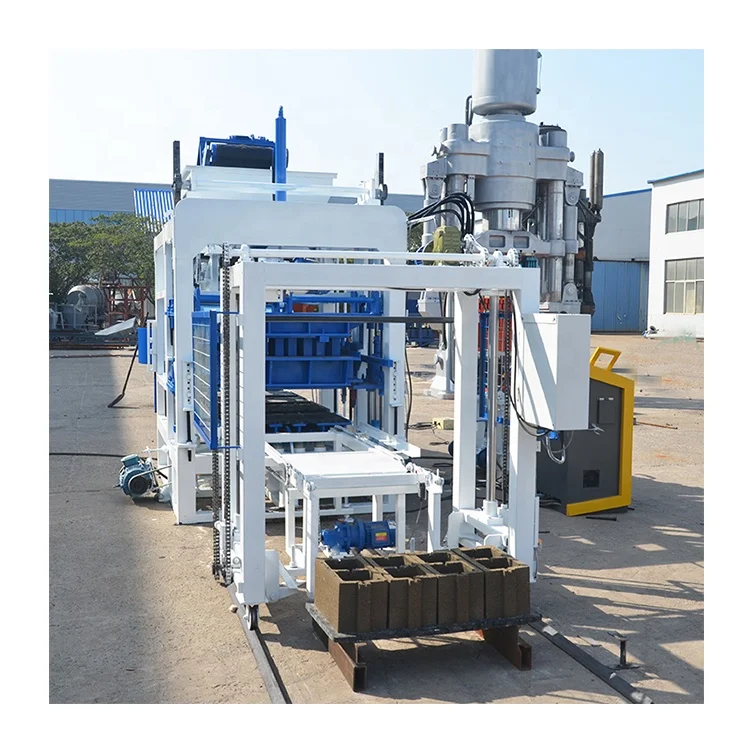
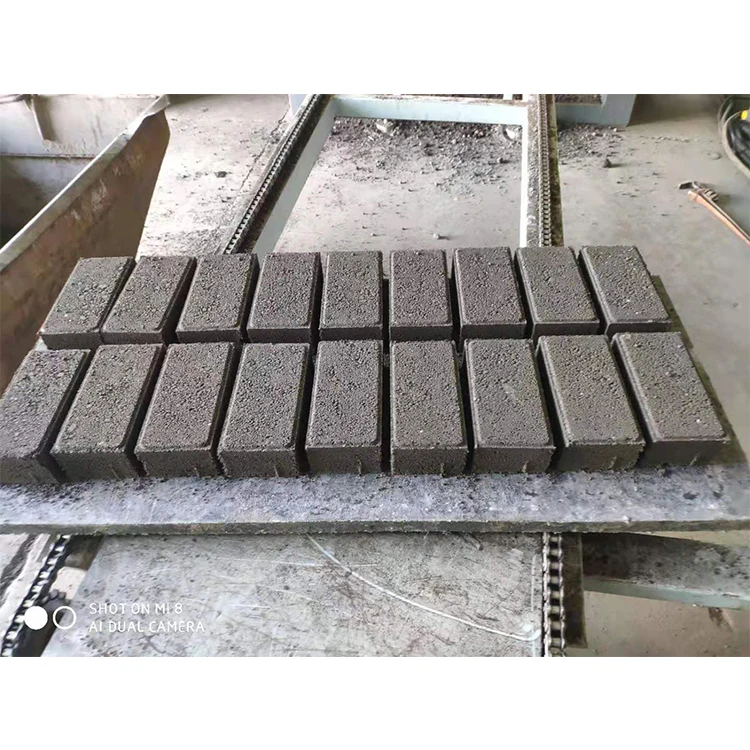 Stationary block machine