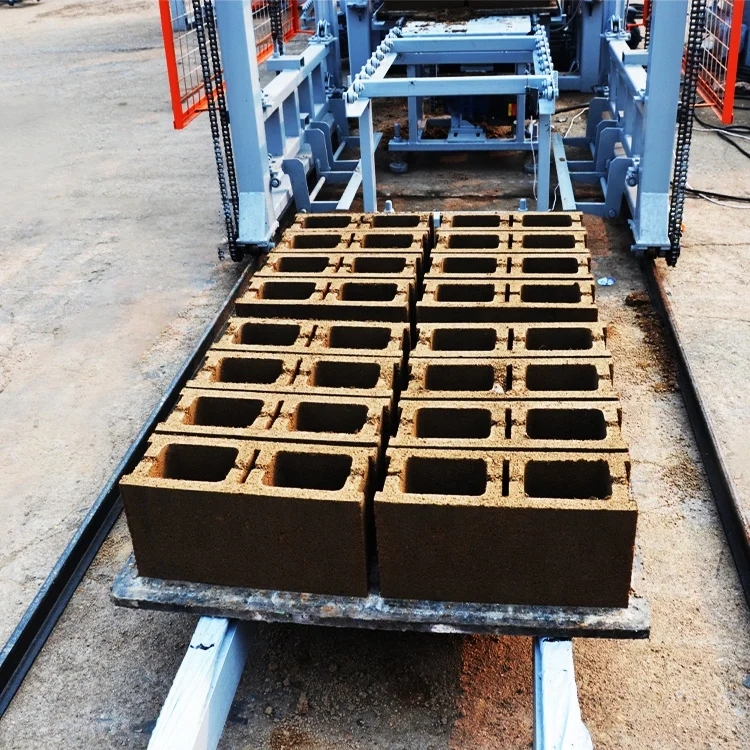
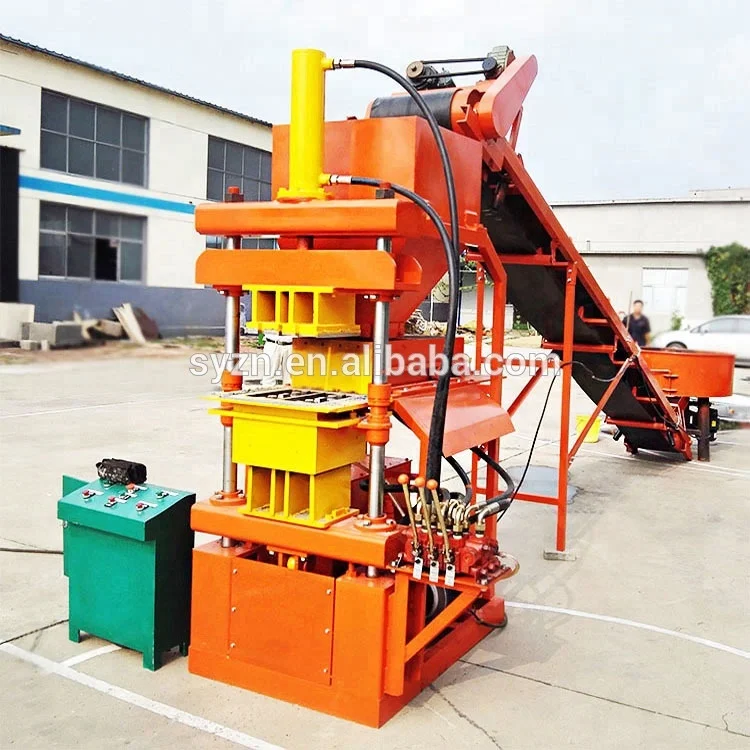
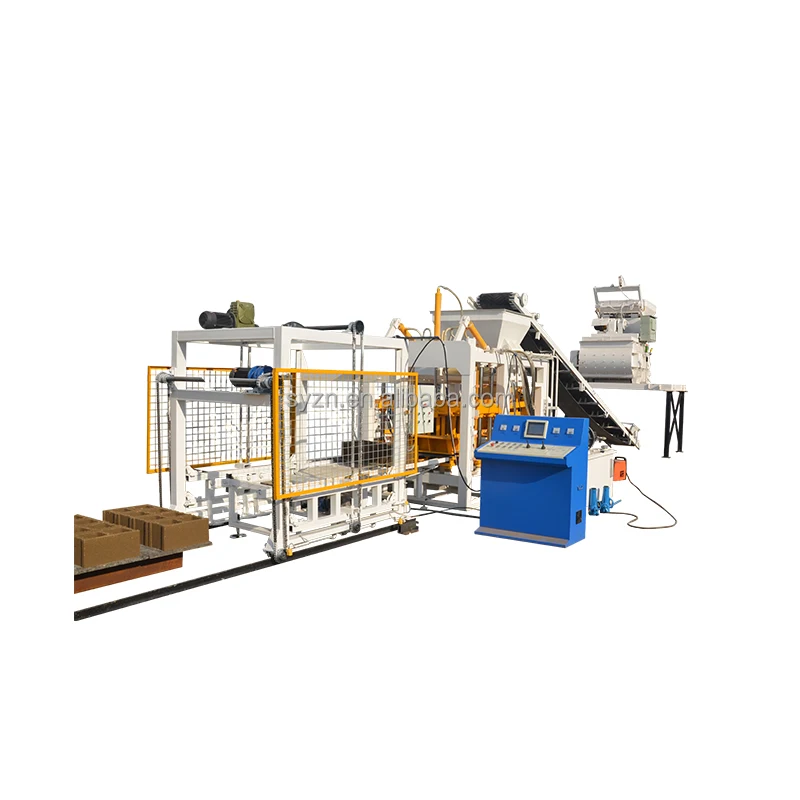
Matched System Specification — The SHIYUE QT4-15A is configured as a complete block making unit with matched vibration force, hydraulic pressure, pallet dimensions, and automation peripherals rather than assembled from disconnected components.
Technical Specifications
| Parameter |
Value |
| Model |
QT4-15A |
| Product Type |
Fully Automatic Hydraulic Block Making Machine |
| Overall Dimensions (L×W×H) |
7100 × 1600 × 2610 mm |
| Molding Cycle |
15–25 s (format and mix dependent) |
| Vibration Frequency |
4600 r/min |
| Exciting Power (Vibration Force) |
40–50 KN |
| Total Power |
18.45 kW |
| Mixer Model |
JQ350 |
| Pallet Size |
850 × 550 × 25 mm |
| Total Weight |
3 T |
| Control System |
PLC control system |
| Hydraulic Station |
Included |
| Applied Products |
Paver, solid block, hollow block, curbstone |
| Raw Materials |
Crushed stones, sand, cement, dust, fly ash |
| Output — Hollow Block 400×200×200 mm |
408 Pcs/Hr, 3264 Pcs/8hr (based on stated format) |
| Output — Hollow Block 400×150×200 mm |
510 Pcs/Hr, 4080 Pcs/8hr (based on stated format) |
| Output — Solid Brick 240×115×53 mm |
2100 Pcs/Hr, 17000 Pcs/8hr (based on stated format) |
| Included Auxiliary Equipment |
Pallet feeder, brick conveyor, block sweeper, manual hydraulic trolley |
| Standards |
CE declaration where applicable |
Application Suitability
| Application |
Material or Output |
| Hollow block production for building walls |
Crushed stone, sand, cement, fly ash mixes |
| Solid brick manufacturing for load-bearing structures |
Dense aggregate and cement blends |
| Paver production for walkways and driveways |
Fine aggregate with cementitious binder |
| Curbstone forming for road and infrastructure projects |
High-strength concrete mixes with coarse aggregate |
| On-site block production for housing developments |
Locally sourced sand, dust, and cement |
Why the Capacity Figure on the Quotation Is Not the Full Story
A cycle rate only becomes meaningful when tied to a specific block format, mix design, and curing protocol.
I have stood on project sites in West Africa watching crews wait for a block machine to finish a cycle, only to realise the quoted hourly output assumed a hollow block format while the contractor actually needed solid bricks for a retaining wall. The Fully Automatic Hydraulic Block Making Machine manufacturer should always state which format each capacity number assumes [NEED_CITE: block format assumptions in capacity quotations]. The QT4-15A outputs 408 pieces per hour for 400×200×200 mm hollow blocks but reaches 2100 pieces per hour for 240×115×53 mm solid bricks — a five-fold difference driven entirely by the mould geometry, not by any change in the press itself. Buyers who skip this clarification often find their real daily output falls far short of expectation before the first week of production ends.

Where the QT4-15A Sits in the Complete Block Machine Range
The QT4-15A occupies the mid-tier automatic position in the SHIYUE complete block machine range. Below it sit semi-automatic models that require manual pallet handling and lower capital outlay; above it are high-capacity lines with fully automatic stacking and cubing systems designed for large-volume plants. This tier suits buyers who need PLC-controlled consistency and included auxiliary equipment — pallet feeder, brick conveyor, block sweeper — without the footprint and investment of a top-tier line.
Plant Footprint and Line Integration for This Tier
At 7100 × 1600 mm for the main press alone, the QT4-15A requires a production bay that also accommodates the JQ350 mixer, raw material feeding area, pallet return path, and curing zone. The 850 × 550 mm pallet size was selected to balance mould area with handling practicality, but the buyer must confirm that their existing forklift and curing racks accept this dimension before the machine ships [NEED_CITE: pallet and forklift compatibility in block plants]. Entrepreneurs setting up a first block plant should map the full line layout — from aggregate storage to finished block yard — before finalising the order.
Reading the Core Parameters Beyond the Brochure
The vibration force of 40–50 KN works together with the hydraulic station to compact the concrete mix into the mould cavity. Higher vibration frequency at 4600 r/min ensures fine aggregate particles settle densely, which directly influences block compressive strength. The 15–25 second molding cycle range reflects the adjustment needed when switching between a lightweight hollow block and a dense curbstone — a shorter cycle risks incomplete compaction, while an unnecessarily long cycle wastes throughput. Total power of 18.45 kW covers the press, hydraulic pump, and vibration motors; buyers must confirm their site supply can sustain this load continuously, not just at peak start-up.
The Hidden Cost of Specifying Without Local Aggregate in Mind
I once spent four days on a Cameroonian site re-tuning vibration and pressure parameters because the machine was configured for standard river sand while the customer’s local supply was volcanic ash. The blocks came out weak and crumbly until we adjusted the entire mix-to-machine relationship. When a Fully Automatic Hydraulic Block Making Machine manufacturer does not ask for your local aggregate sample before configuring the vibration force and cycle time, the machine arrives optimised for a material you cannot source [NEED_CITE: aggregate variability and block strength correlation]. The resulting production losses and mould wear from running incorrect parameters can outweigh any initial savings on the equipment purchase.
Why Buyers Source This Tier from SHIYUE
Block machinery is the single focus of SHIYUE, so the QT4-15A press, moulds, pallets, and handling equipment are specified as one matched system rather than assembled from separate suppliers. The machine is configured against the buyer’s actual mix design and target block format, not a catalogue default. Automation level is selectable — a buyer can begin with the included pallet feeder and brick conveyor and plan a future upgrade to automatic stacking. Mould design covers the formats the buyer’s market actually sells, with custom drawings available. Installation support includes on-site commissioning and operator training so the crew understands cycle adjustment and mould change procedures from day one.
Documentation & Verification
- Line layout drawing showing QT4-15A footprint with pallet return and curing zone placement
- Capacity calculation sheet stating the block format assumed for each output figure
- Machine specification sheet confirming 18.45 kW rating and 4600 r/min vibration frequency
- Pallet specification document matching 850 × 550 × 25 mm dimensions to buyer handling equipment
- Voltage, frequency, and PLC display language confirmation before production begins
- Factory test record on buyer’s target block format before dispatch
Installation, Commissioning & Support
- Foundation pad must support 3 T machine weight plus dynamic vibration loads across the 7100 mm length
- Dedicated electrical circuit sized for 18.45 kW continuous draw with voltage and frequency confirmed pre-shipment
- Main press ships assembled; JQ350 mixer and auxiliary conveyors require on-site positioning and alignment
- PLC control system language set and molding cycle parameters tuned to buyer’s mix during commissioning
- Operator training covers mould change procedure, vibration force adjustment, and daily hydraulic station checks
- Wear parts list and mould maintenance schedule provided for long-term production continuity
What to Prepare Before Requesting a Quotation
Share your target block formats with exact dimensions, the daily output you need for each format, and a sample or analysis of your local aggregate. Confirm your site voltage, frequency, and preferred PLC display language. If you already have forklifts and curing racks on site, provide their specifications so the 850 × 550 mm pallet can be verified against your existing infrastructure before the Fully Automatic Hydraulic Block Making Machine manufacturer finalises the configuration.
Frequently Asked Questions
Q: How is the output capacity of the QT4-15A calculated for different block formats?
A: Each capacity figure is tied to a specific block dimension. The 408 pieces per hour rating applies to 400×200×200 mm hollow blocks, while 2100 pieces per hour applies to 240×115×53 mm solid bricks. The molding cycle, mould cavity count, and pallet area all change with format, so buyers should request a capacity sheet that states the assumed format for every quoted number.
Q: What plant footprint does the QT4-15A require with its auxiliary equipment?
A: The main press measures 7100 × 1600 mm, but the complete working area must also accommodate the JQ350 mixer, pallet feeder, brick conveyor, and curing zone. Buyers should prepare a line layout showing aggregate storage, mixing station, press position, pallet return path, and finished block yard before confirming the order.
Q: Where does the QT4-15A sit compared to semi-automatic and higher-capacity lines?
A: It occupies the mid-tier automatic position in the SHIYUE complete block machine range. Semi-automatic models below it require manual pallet handling and suit lower investment levels. Higher-capacity lines above it add automatic stacking and cubing for large-volume plants. The QT4-15A balances PLC-controlled consistency with a moderate footprint and capital requirement.
Q: Can the automation level be upgraded after starting with the QT4-15A?
A: Yes. The machine ships with a pallet feeder, brick conveyor, and block sweeper as standard auxiliary equipment. Buyers can plan a future upgrade path to include automatic stacking and cubing systems as production volume grows, without replacing the core press or hydraulic station.

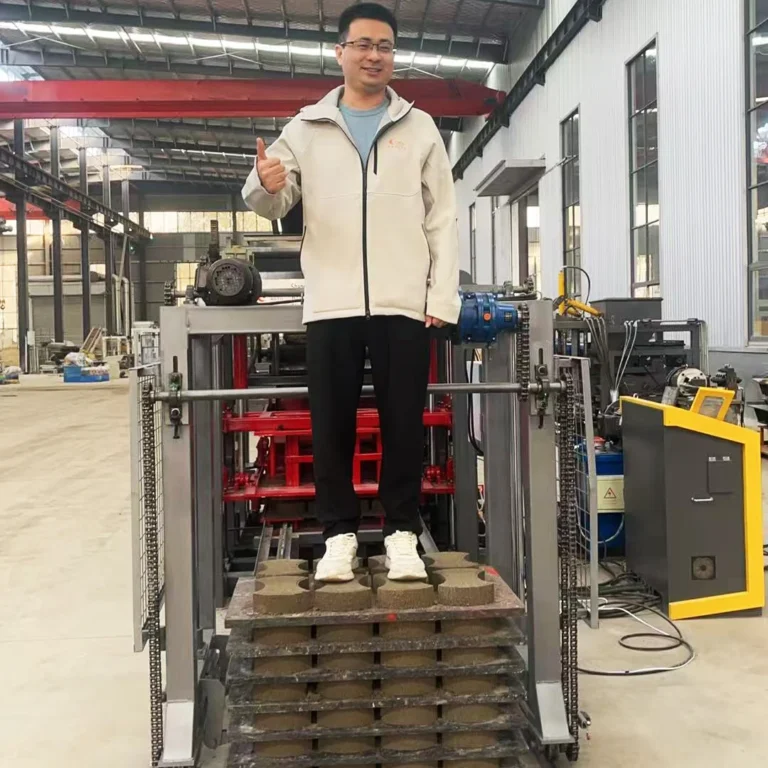 High quality block machine