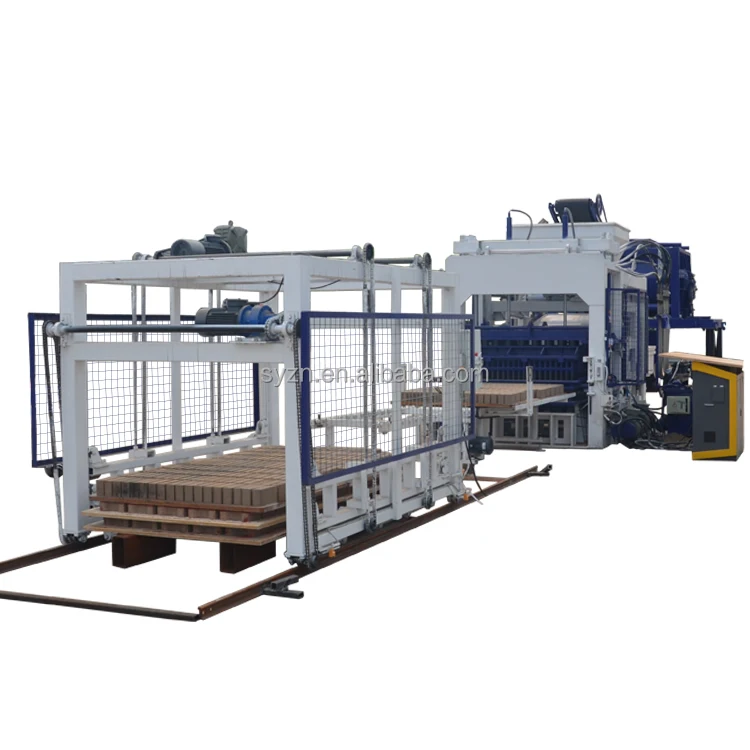
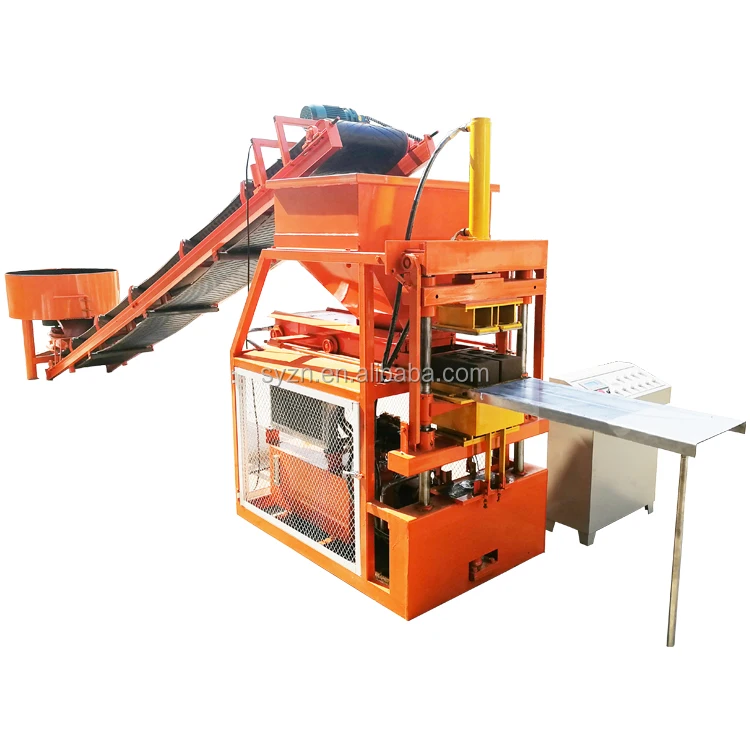
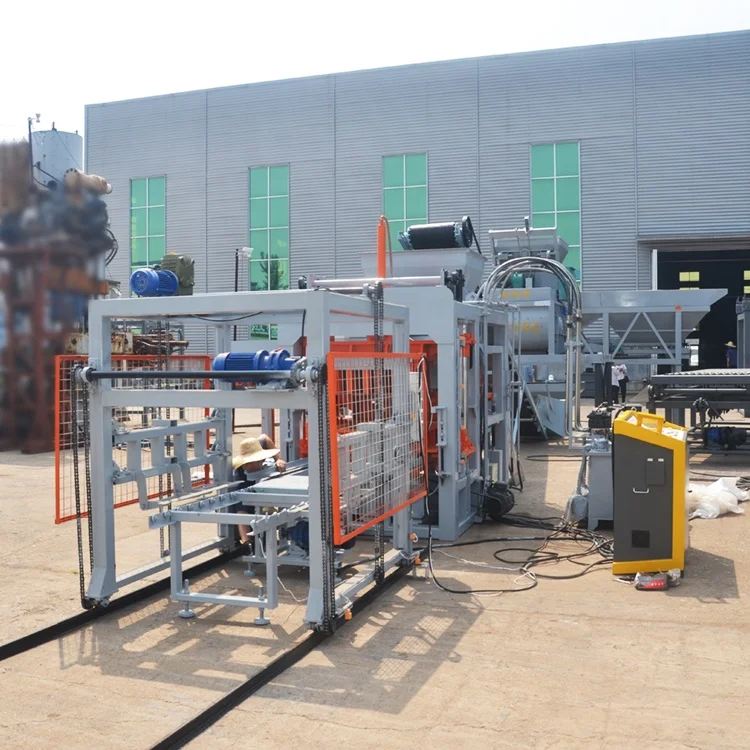
Mid-Range Automation Footprint — The QT4-15 occupies the middle of our fully automatic block machine lineup, configured as a complete matched system with mould, pallet and handling rather than sold as a standalone press.
Technical Specifications
| Parameter |
Value |
| Model |
QT4-15 |
| Product Type |
Fully Automatic Concrete Block Making Machine |
| Overall Dimensions |
4100 × 1600 × 2600 mm |
| Total Mass |
4 T |
| Rated Pressure |
16–21 MPa |
| Main Vibration Form |
Platform Vibration |
| Vibration Frequency |
4200 r/min |
| Vibration Force |
55 kN |
| Pallet Size |
880 × 550 mm |
| Molding Cycle |
25–30 s (basis not stated in source — confirm block format / material / thickness) |
| Overall Power |
18.45 kW (source value — verify against manufacturer catalog) |
| Demolding Method |
Hydraulic |
| Factory Area |
300 m² |
| Control System |
PLC (inferred from Fully Automatic designation — confirm with manufacturer) |
| Automation Level |
Fully Automatic |
| Warranty |
1 year (whole machine, excluding spare parts) |
Application Suitability
| Application |
Material or Output |
| Hollow block production for building walls |
Crushed stone, sand, cement, fly ash |
| Solid block manufacturing for load-bearing structures |
Gravel, sand, cement blends |
| Interlocking paver production for walkways and driveways |
Colored aggregates, cement, dust |
| Kerbstone and curb production for road edging |
Coarse aggregate and cement mixes |
| Porous brick production for permeable paving |
Slag, sand, cement combinations |
Why "Cycles per Hour" Tells Only Part of the Story
Real daily output depends on which block format the cycle time was measured against.
A molding cycle of 25–30 seconds sounds productive on paper, but that figure shifts depending on whether the press is forming standard hollow blocks, thinner paving slabs, or taller interlocking pavers. I have seen buyers compare two Fully Automatic Concrete Block Making Machine models on cycle time alone, only to discover that one was quoted on a small solid block while the other was measured on a large hollow unit. The daily tonnage difference was enormous [NEED_CITE: block format impact on cycle time in hydraulic press operations]. Before comparing any two machines, ask the manufacturer to state the exact block dimensions and material mix behind each quoted number.

Where the QT4-15 Sits in the Shiyue Range
The QT4-15 is positioned as a mid-tier Fully Automatic Concrete Block Making Machine for buyers who have moved past semi-automatic operation but do not yet need a high-capacity continuous line. It shares the same pallet footprint and mould mounting interface as other Shiyue models, which means a buyer can start here and step up to a higher-output press later without rebuilding the entire curing and handling layout. This range logic matters when planning a first plant or replacing an aging press that no longer meets growing market demand.
Matching the Line to Your Block Format and Market
Choosing the right tier is not only about output volume. A producer selling mainly standard hollow blocks to local construction sites has different needs from one making colored interlocking pavers for landscaping contracts. The QT4-15’s platform vibration and hydraulic demolding handle both categories, but the supporting equipment — mixer capacity, pallet return speed, stacking arrangement — must match the chosen format so the press is never left waiting. We configure the full line around the buyer’s product mix, not around a catalogue default [NEED_CITE: block production line synchronization principles].
Vibration, Pressure and Pallet Logic Behind the Numbers
The 55 kN vibration force working at 4200 r/min densifies the concrete mix from below the mould cavity, while the 16–21 MPa hydraulic pressure compresses from above. When these two forces are correctly matched to the buyer’s aggregate gradation and cement ratio, the resulting block achieves consistent density and edge definition across every cycle. The 880 × 550 mm pallet size determines how many blocks fit per press stroke and must align with the curing rack dimensions and forklift capacity already present at the site. A pallet that is too large for the existing curing area forces a costly floor reorganization, while one that is too small wastes press capacity. The hydraulic demolding system lifts the mould box clean off the green blocks, reducing surface damage that would otherwise increase scrap rates during the first hours of curing.
The Cost of Skipping the Configuration Conversation
I once supplied a mid-range automatic press to a Middle East project where the local aggregate carried high clay content. The machine ran, but block strength dropped and surface cracking appeared within days because the vibration frequency and hydraulic pressure had been set for clean crushed stone. We adjusted both parameters on site and production stabilized, but the delay cost the contractor two weeks of curing inventory. Skipping the raw material review before ordering creates this kind of hidden cost [NEED_CITE: effect of aggregate clay content on concrete block strength]. Voltage and control language mismatches cause similar delays — a press wired for the wrong frequency will overheat motors, and a PLC display in an unreadable language slows operator training and increases setup errors.
Why Buyers Place the QT4-15 Order with Shiyue
Block machinery is our single focus, so the QT4-15 is specified together with its mould, pallet and handling equipment as one matched system rather than assembled from separate suppliers. We set the vibration and hydraulic parameters against the buyer’s actual mix design and target block format, not a generic test mix. Mould design covers every format the buyer’s market demands, including custom drawings for non-standard shapes. The automation level is selectable, so a buyer can begin with manual pallet handling and add automatic stacking later without replacing the press. Installation support includes operator training on the specific block formats ordered, and wear parts and mould replacements are listed in the documentation before shipment.
Documentation & Verification
- Line layout showing QT4-15 placement with capacity per block format
- Machine specification sheet with confirmed pallet and power details
- Mould drawing and format list matching ordered block types
- Voltage, frequency and PLC display language written confirmation
- Factory test record on buyer’s specified block format before dispatch
- Hydraulic and electrical schematic for on-site maintenance reference
Installation, Commissioning & Support
- Foundation pad leveled to suit the 4100 × 1600 mm machine footprint
- Dedicated power circuit sized for the confirmed overall kW draw
- Machine arrives partially dismantled; reassembly guided by layout drawings
- First-run parameter tuning for vibration force and hydraulic pressure on buyer’s mix
- Operator training covering mould change and PLC navigation in confirmed language
- Wear parts list and mould spares identified before shipment for early replacements
What We Need to Size Your Line Correctly
To move from general interest to a firm configuration, we ask buyers to share the primary block formats they intend to produce, the daily output target for each format, and the local raw materials available including aggregate type and cement grade. We also need the site voltage and frequency, preferred PLC display language, and the dimensions of any existing curing area. This information lets us calculate a realistic capacity per format and specify the pallet, mould and handling equipment as one coordinated package.
Frequently Asked Questions
Q: How can I verify the real daily output of the QT4-15 for my specific block format?
A: We provide a capacity calculation that states the exact block dimensions, mix design and molding cycle behind each output figure. This document is part of the proposal, so you can compare it against your production targets before committing. If your format differs from our standard list, we run a test cycle on your specified mould and report the result.
Q: When should I choose the QT4-15 over a semi-automatic or higher-capacity model?
A: The QT4-15 fits buyers who need fully automatic operation but do not yet require a continuous high-capacity line. If your daily volume is moderate and you want room to add formats later, this mid-tier position gives you automatic pressing and demolding while keeping the plant footprint manageable. Higher-capacity models suit large-scale producers running a single format continuously.
Q: What factory area does the QT4-15 require compared to other tiers in the range?
A: The QT4-15 itself occupies a compact footprint within a roughly 300 m² working area that includes raw material storage, mixing, pressing and initial curing space. Larger automatic lines need more floor area for extended pallet conveyors and stacking systems. We provide a scaled line layout showing exact station placement so you can verify fit against your building dimensions before ordering.
Q: How are voltage, frequency and PLC language confirmed before shipment?
A: During the quotation stage we collect your site electrical specifications and preferred control language. These values are written into the production order and checked at the factory test. The PLC display, motor nameplates and control panel labels all reflect your confirmed requirements, so commissioning starts without electrical or language delays on arrival.
Q: What mould options are available and how does custom mould design work?
A: Standard moulds cover hollow blocks, solid blocks, pavers, interlocking bricks and kerbstones in common market sizes. For non-standard shapes, we work from your drawings or develop a design based on your dimensional requirements and the 880 × 550 mm pallet size. Each custom mould is tested at our factory before shipment to confirm cycle time and block density.

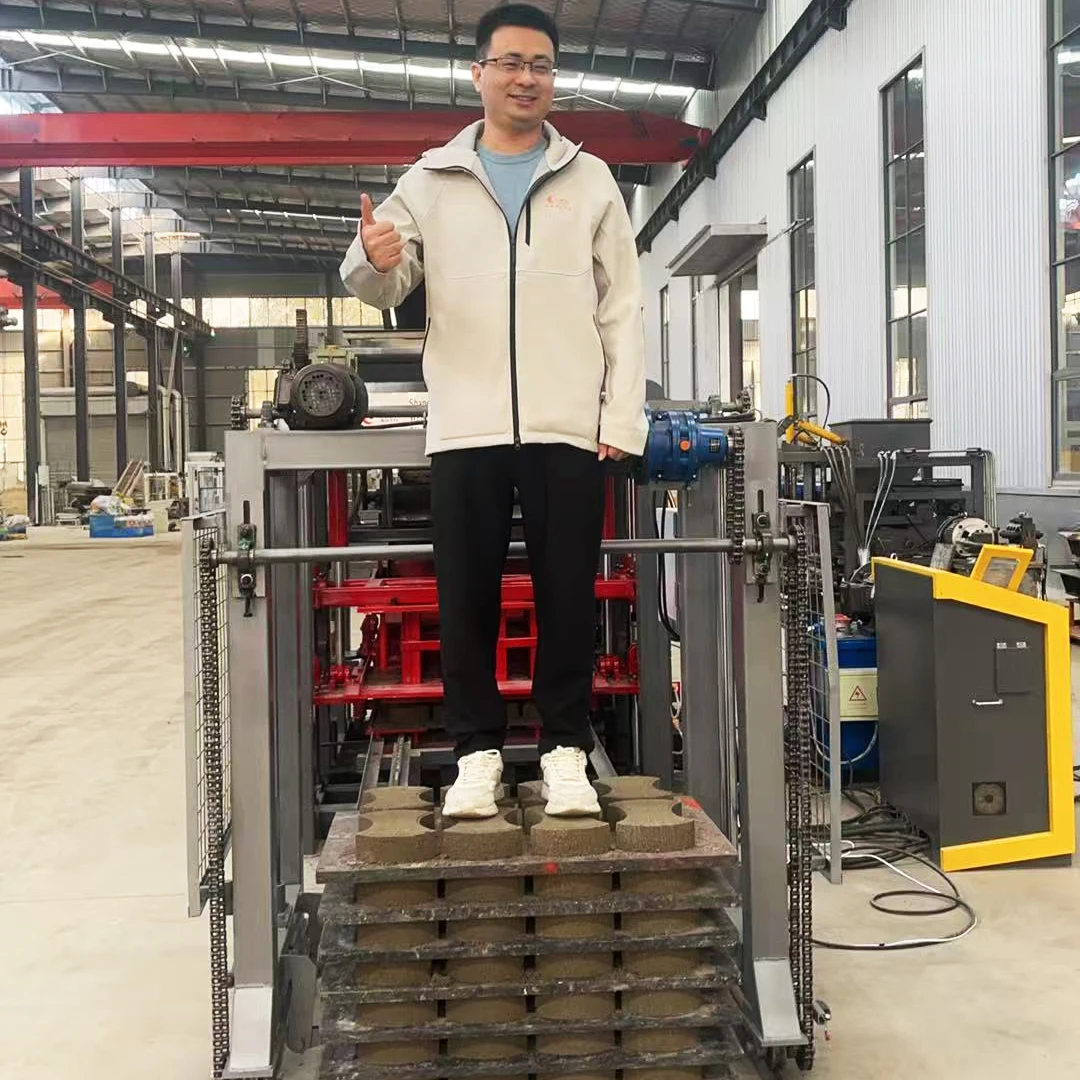
 High quality block machine